

This article was automatically translated from the original Turkish version.
+1 More
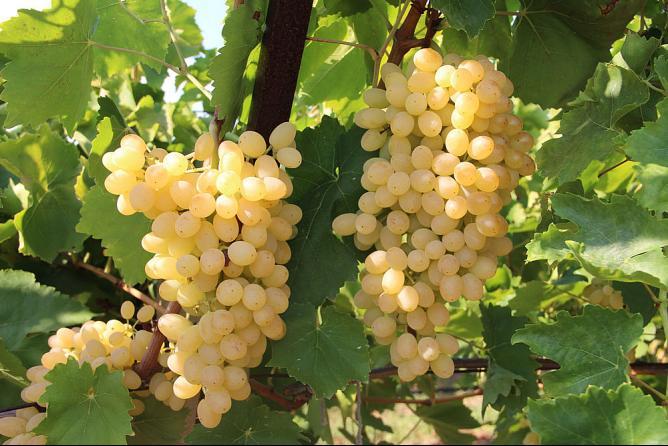
Isabey seedless grape is a variety of Vitis vinifera evaluated as seedless and table grape. This grape is cultivated in the town of Isabey and surrounding villages of Çal district in Denizli Province. It features white-colored, elongated elliptical berries and compact bunch structure. The average bunch weight is 811.63 grams and the average berry weight is 2.62 grams. Berries measure 1.82 cm in length and 1.50 cm in width. Its chemical composition includes 22.90 percent sugar, 24.25 BRIX soluble solids and a pH value of 3.33.
Isabey seedless grape is a plant belonging to the Vitaceae (grape family) and the order Rhamnales. This family comprises 12 genera and approximately 700 species. The botanical classification of the species is as follows: Genus: Vitis, Subgenus: Euvitis, Species: Vitis vinifera L., Subspecies: Vitis vinifera ssp. (Uzun, 1996). This grape variety belongs to the group of woody plants that possess climbing structures in their shoots or fruits.
Isabey seedless grape has white-colored, elongated elliptical berries. The average bunch weight is 811.63 grams. The average berry weight is 2.62 grams, with a length of 1.82 cm and a width of 1.50 cm. The soluble solids content measured at 20 °C is 24.25 BRIX. The pH value at the same temperature is 3.33. Total acidity, expressed as tartaric acid, is 4.57 g/L, while volatile acidity, expressed as acetic acid, is 0.06 g/L. The total sugar content is 22.90 percent, invert sugar content is 22.90 percent, sucrose content is 0.00 percent, and total ash content is 0.36 percent.
Isabey seedless grape is cultivated primarily in Isabey Town and the surrounding villages of Mahmutgazi, Bayıralan and Yazır in Çal district of Denizli Province, Türkiye. In local vineyards, 41B rootstocks, which are hybrids of the lime-tolerant Chasselas variety and Vitis berlandieri, are used. Plantings are generally established using grafted American vine cuttings. Vineyards are established by grafting local varieties onto ungrafted American rootstocks. Planting is typically carried out in February or March after the soil reaches suitable pH levels, followed by irrigation, root cleaning, fertilization and pest and disease control measures.
Approximately 70 percent of the harvested product is exported directly without refrigeration. The remaining portion is stored in cold storage facilities at temperatures between -1 and +1 °C for approximately three months. An average humidity level of 95 percent is recommended to minimize water loss from berries. During storage, sulfur dioxide (SO₂) gas is applied via fumigation, using gas-releasing grape protective papers placed inside packaged grapes.
Isabey seedless grape distinguishes itself from other varieties of the same species grown in different regions through its pronounced physical and chemical characteristics. These include high bunch and berry weight, specific levels of soluble solids, pH, total and volatile acidity, sugar and ash content. The attachment of berries to the pedicel and bunch is strong. The regional adaptation of the variety is shaped by environmental factors such as soil geological structure, climate patterns, topographic position, sunlight duration, temperature and wind.
The seedless nature of the berries, combined with its unique taste and aroma profile, ensures suitability for long-distance transport and extended storage conditions. This makes Isabey seedless grape the preferred variety for exports to European countries. Additionally, the fact that this variety constitutes 90 percent of local vineyards strengthens variety standardization within the regional production system.
Isabey seedless grape is predominantly consumed as a table grape but can also be used for drying and making grape molasses. The seedless nature and physical properties of the fruit enhance its suitability for these diverse uses.
The conformity of the product with technical specifications is monitored by a commission of approximately 24 members coordinated by Isabey Municipality, including personnel from the Çal District Directorate of Agriculture and local agricultural advisors. Inspections are conducted during the marketing period in August, September and October or upon complaint. Labeling is applied to ensure product recognition in the market.

No Discussion Added Yet
Start discussion for "Isabey Seedless Grape" article
Classification
Physical and Chemical Properties
Cultivation Area and Method
Harvest and Storage
Distinctive Characteristics
Uses
Inspection and Labeling