


This article was automatically translated from the original Turkish version.
Location | Kütahya | ||||||||
|---|---|---|---|---|---|---|---|---|---|
Coordinate(s) | 39°25′11″N 29°58′28″E | ||||||||
Number of Minarets | 1 | ||||||||
The İshak Fakih Camii in Kütahya is an important religious structure that embodies the architectural characteristics of the Anatolian Seljuk and early Ottoman periods. As part of the historic urban fabric of the city center, this mosque holds significant value for understanding the region’s cultural and architectural heritage. Although there are differing opinions regarding its founder and exact date of construction, it is generally dated to the late 14th or early 15th century. The İshak Fakih Camii not only reflects the architectural sensibilities of its time through its plan layout, material use and decorative features but also contains clues pointing to the transition toward later Ottoman mosque architecture. For these reasons, the mosque is a structure that must be examined within both the local history of Kütahya and the broader context of Anatolian Turkish architecture.

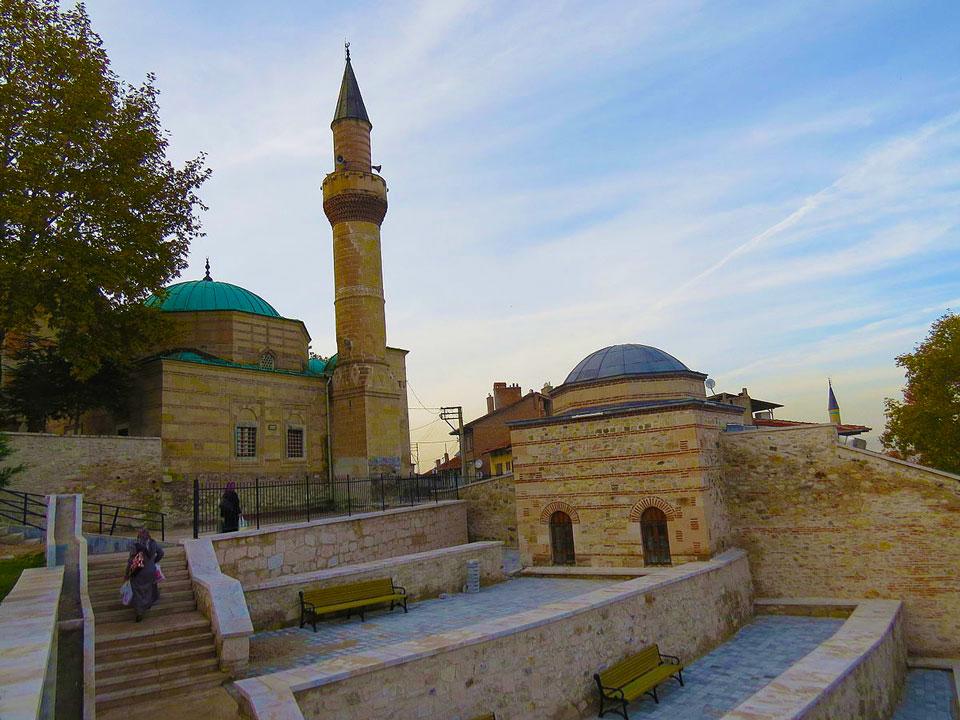
General view of the İshak Fakih Camii in Kütahya. The structure reflects the architectural features of its period and the region’s cultural heritage.-places to visit
The İshak Fakih Camii is typically classified as a “multi-columned” or “grand mosque” type; such mosques feature a rectangular prayer hall supported by numerous columns and spanning a large area. The interior space consists of multiple naves, each elevated on columns connected by arches.
The mosque is generally based on a transverse rectangular plan, with the prayer hall divided by a series of columns. These columns serve both structural and aesthetic functions, creating a rhythmic pattern within the interior. The space may be divided into naves running parallel or perpendicular to the qibla wall. Detailed plan drawings and descriptions of the İshak Fakih Camii have been produced by various researchers, and its transformations over time have been documented. The expansive prayer area was designed to accommodate the congregational needs of its era.
The construction of the mosque combines cut stone and brick, materials commonly used in the region. Wall construction techniques reflect the composite system typical of Anatolian Seljuk and early Ottoman buildings. Cut stone is used in the lower sections, while brick is prevalent in upper structures and arches. This variety of materials ensures structural integrity while also creating visual contrast. The roof covering is typically a lead-clad wooden system; however, modifications may have occurred during later repairs.
The decorative elements of the İshak Fakih Camii reflect the modest and functional architectural approach of its period. Rather than elaborate and ornate motifs, the aesthetic value of architectural elements themselves—arches, column capitals, and the mihrab—takes precedence. The mihrab and minbar are the most richly decorated parts of the mosque. The mihrab is usually adorned with stone carving, featuring geometric patterns or vegetal motifs. The minbar, made of wood or stone, draws attention through intricate carving. Particularly fine geometric transitions and Kufic script bands found on minbars offer excellent examples of the artistic sensibilities of the period.
Academic literature presents differing views on the exact date of construction and the identity of the founder of the İshak Fakih Camii. However, the general consensus dates the structure to the late 14th or early 15th century.
Some scholars suggest the mosque may have been built during the reign of Murad I, while others date it to the periods of Yıldırım Bayezid (1389–1402) or Çelebi Mehmed (1413–1421). Comparative analysis of its architectural and decorative features reveals characteristics typical of early Ottoman architecture. In particular, the multi-columned plan shows similarities with early Ottoman mosques in Bursa.
The identity of İshak Fakih, after whom the mosque is named, remains uncertain. Some sources describe him as one of the prominent religious scholars or state officials of his time. He is believed to have been a significant figure in Kütahya during or after its transition to Ottoman administration. Research based on his vakfiye and other historical documents suggests that İshak Fakih may have established a complex waqf encompassing the mosque and surrounding structures.
Throughout its history, the İshak Fakih Camii has undergone various repairs and additions. These interventions introduced modifications to the original architecture while also leading to the loss of some original features.
Since its construction, the mosque has been repaired multiple times due to earthquakes, fires, and natural deterioration. Especially during the 18th and 19th centuries, repairs resulted in changes to certain parts of the structure. During these interventions, the original roof covering, window openings, or interior arrangements may have been altered. In some cases, older sections were demolished and replaced, or new sections were added to the existing structure.
Comprehensive restoration projects have been carried out during the 20th century and in recent times to preserve the mosque and ensure its transmission to future generations. These efforts aim to conserve the building’s historical fabric, reveal its original features, and meet contemporary functional requirements. Restoration reports and documentation serve as vital sources for understanding the mosque’s transformations. During these projects, original materials and construction techniques have been尽可能 used wherever possible.
The İshak Fakih Camii holds a significant position within Kütahya’s historical and cultural fabric. It provides valuable insights into the city’s early Ottoman architecture and exhibits distinctive characteristics when compared with other mosques in the region.
The multi-columned plan and composite brick-stone construction technique of the İshak Fakih Camii reflect characteristic features of early Ottoman architecture. Such mosques were common in early Ottoman urban centers like Bursa and İznik. The İshak Fakih Camii is regarded as an important representative of this architectural tradition in Kütahya. Its significance is further enhanced by its role as an intermediate form between the multi-columned mosques and the later single-domed Ottoman mosque type.
Compared with other historical mosques and külliyes in Kütahya, the İshak Fakih Camii possesses a unique identity. For instance, it may show similarities or differences in materials, techniques, or decoration when compared with contemporaneous structures such as the Kurşunlu Camii or other medreses. These comparative analyses are essential for understanding Kütahya’s architectural development and regional variations. Other waqf structures in the vicinity—such as baths, tombs, and fountains—also provide clues about the social and cultural life of the period.
Aslanapa, Oktay. 1986. Türk Sanatı. İstanbul: Remzi Kitabevi.
Deniz, Necati. 2011. "Kütahya İshak Fakih Camii." Sanat Tarihi Dergisi 20 (2): 211-236.
Gönül, Macit. 1969. Türk Cami Mimarisinde Erken Devirler. İstanbul: Milli Eğitim Basımevi.
Karpuz, Haşim. 2007. "Kütahya’daki Selçuklu ve Osmanlı Dönemi Türk Mimarisi Eserleri Üzerine Bir Değerlendirme." Türk Dünyası İncelemeleri Dergisi 7 (1): 125-148.
Kuban, Doğan. 2007. Osmanlı Mimarisi. İstanbul: Yapı Kredi Yayınları.
Kütahya Vakıflar Bölge Müdürlüğü Arşivi. Accessed June 29, 2025.
Öney, Gönül. 1971. Anadolu Selçuklu Mimarisinde Süsleme. Ankara: Türk Tarih Kurumu Basımevi.

Location | Kütahya | ||||||||
|---|---|---|---|---|---|---|---|---|---|
Coordinate(s) | 39°25′11″N 29°58′28″E | ||||||||
Number of Minarets | 1 | ||||||||
Architectural Features
Plan Scheme and Spatial Organization
Materials and Construction Techniques
Decorative Elements
Date of Construction and Founder
Debates on Dating
Founder: İshak Fakih
Repairs and Alterations
Historical Repairs
Modern Restoration Efforts
Its Place in Kütahya Architecture
Influence on Early Ottoman Architecture
Relationship with Other Structures in the Region