This article was automatically translated from the original Turkish version.
+1 More
Registration Number | 1442 | ||||||||
|---|---|---|---|---|---|---|---|---|---|
Registration Date | 07.08.2023 | ||||||||
Application Number | C2022/000044 | ||||||||
Application Date | 04.02.2022 | ||||||||
Name of the Geographical Indication | Işıkeli Nohut Kahvesi | ||||||||
Product / Product Group(s) | Nohut kahvesi / Diğer | ||||||||
Type of Geographical Indication | Mahreç işareti | ||||||||
Applicant/Registrant(s) | 1- Biga Chamber of Agriculture 3- Biga Municipality 2- Biga Chamber of Commerce and Industry | ||||||||
Address of the Registrant | 1- İstiklal Mah. İnönü Cad. 37 A Biga ÇANAKKALE, 2- İstiklal Mah. Kevser Özengil Cad. 16 1 Biga ÇANAKKALE, 3- Sakarya Mah. Kıbrıs Şehitleri Cad. 10 A Biga ÇANAKKALE | ||||||||
Geographical Boundary | Çanakkale Province Biga District Işıkeli Village | ||||||||
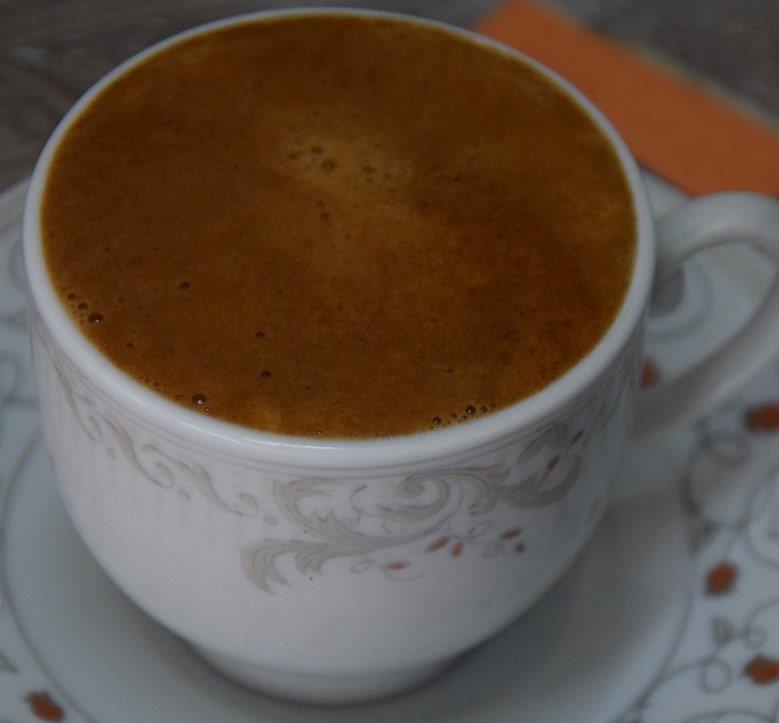
Işıkeli Nohut Kahvesi is a caffeine-free hot beverage produced in Işıkeli Village, within the Biga district of Çanakkale Province. It is made by roasting local small-sized legumes known as “sarı nohut” at temperatures of 200–250 °C over a wood fire and grinding them into particles of 200–300 microns in size. Traditionally consumed without sugar and accompanied by dried grapes, this coffee can also be prepared with sodium bicarbonate and optionally with sugar.
Işıkeli Nohut Kahvesi is a powdered beverage obtained by moderately roasting nohut beans at 200–250 °C and grinding them to a particle size of 200–300 microns. Before being offered for consumption, it is marketed in 200-gram sealed packages with aluminum barrier packaging to prevent air permeation. In its dry form, Işıkeli Nohut Kahvesi contains 5.5% protein and 8% fat and is free of caffeine. According to the C.I.E. color system, the color values of the powder fall within the range L=47–49; a=7–8; b=18–19.
The nohut beans used in Işıkeli Nohut Kahvesi are a traditional variety (Cicer arietinum) grown exclusively within the geographical boundary of Işıkeli Village and its surroundings. These beans are small in size (5–7 mm in diameter), nearly spherical but not perfectly round, and described as “bird’s head” shaped. This variety is smaller in structure compared to hybrid types and exhibits greater resistance to insect infestation and variable weather conditions.
The production process begins with sourcing the nohut beans from within the defined geographical boundary. The beans are first cleaned with water and then dried before being placed on trays. Roasting is carried out traditionally in wood-fired ovens at temperatures between 200 and 250 °C. This process lasts between two and four hours, depending on the moisture content of the beans and seasonal conditions. To prevent burning, the beans are periodically stirred during roasting. After roasting, the beans are ground in a hammer mill to achieve a particle size between 200 and 300 microns. The resulting powder is then packed in airtight aluminum barrier packaging in 200-gram portions for sale.
The preparation of Işıkeli Nohut Kahvesi follows traditional methods. The recommended ingredients for one serving are:
All ingredients are mixed in a cezve and cooked at a temperature of approximately 90–95 °C. Traditionally, it is prepared without sugar and served alongside dried grapes. However, in contemporary practice, it is also commonly served with lokum or chocolate.
Production of this product is permitted exclusively in Işıkeli Village, part of the Biga district in Çanakkale Province. Consequently, all stages of production—from sourcing raw materials to roasting and grinding—must be completed within this geographical boundary. Işıkeli Nohut Kahvesi has long been an integral part of the village’s culinary culture and plays a significant role in local economic activities. Therefore, a direct reputation link exists between the product and its geographical origin.
Işıkeli Nohut Kahvesi must be clearly labeled on its packaging with the term “geographical indication” and the phrase “Işıkeli Nohut Kahvesi.” In cases where the packaging cannot accommodate this labeling, the phrase and emblem must be visibly displayed at the point of sale.
Monitoring of the product is conducted by a minimum four-member oversight body coordinated by the Biga Chamber of Commerce and Industry, comprising representatives from the Biga Agricultural Chamber, the Biga District Governor’s Office, and the Biga Municipality. Inspections are carried out at least once annually, with additional inspections conducted in response to complaints or as deemed necessary. During inspections, compliance with product composition, adherence to the production process, and correct use of the geographical indication emblem and label are verified. Public institutions, private organizations, and their expert personnel may be engaged or services procured to support the monitoring process.
Turk Patent and Trademark Office. "Işıkeli Nohut Kahvesi Coğrafi İşaret Tescil Belgesi ve Teknik Şartnamesi (PDF)." Accessed July 20, 2025. https://ci.turkpatent.gov.tr/Files/GeographicalSigns/3d7c2fa8-8dd2-411c-849f-304537b8e9e0.pdf.
Turk Patent and Trademark Office. "Işıkeli Nohut Kahvesi." Accessed July 20, 2025. https://ci.turkpatent.gov.tr/cografi-isaretler/detay/6082.

Registration Number | 1442 | ||||||||
|---|---|---|---|---|---|---|---|---|---|
Registration Date | 07.08.2023 | ||||||||
Application Number | C2022/000044 | ||||||||
Application Date | 04.02.2022 | ||||||||
Name of the Geographical Indication | Işıkeli Nohut Kahvesi | ||||||||
Product / Product Group(s) | Nohut kahvesi / Diğer | ||||||||
Type of Geographical Indication | Mahreç işareti | ||||||||
Applicant/Registrant(s) | 1- Biga Chamber of Agriculture 3- Biga Municipality 2- Biga Chamber of Commerce and Industry | ||||||||
Address of the Registrant | 1- İstiklal Mah. İnönü Cad. 37 A Biga ÇANAKKALE, 2- İstiklal Mah. Kevser Özengil Cad. 16 1 Biga ÇANAKKALE, 3- Sakarya Mah. Kıbrıs Şehitleri Cad. 10 A Biga ÇANAKKALE | ||||||||
Geographical Boundary | Çanakkale Province Biga District Işıkeli Village | ||||||||
No Discussion Added Yet
Start discussion for "Işıkeli Nohut Kahvesi" article
Distinguishing Characteristics
Raw Material Characteristics
Production Method
Consumption Method
Geographical Boundary and Reputation Link
Packaging and Labeling
Monitoring Mechanism