This article was automatically translated from the original Turkish version.
+2 More
Location | Isparta Türkiye | ||||||||
|---|---|---|---|---|---|---|---|---|---|
Opening | 6 March 1985 | ||||||||
Collection | 17,976 works (archaeology, ethnography, coins) | ||||||||
Halls | Archaeology, Treasure, Ethnography, Carpet | ||||||||
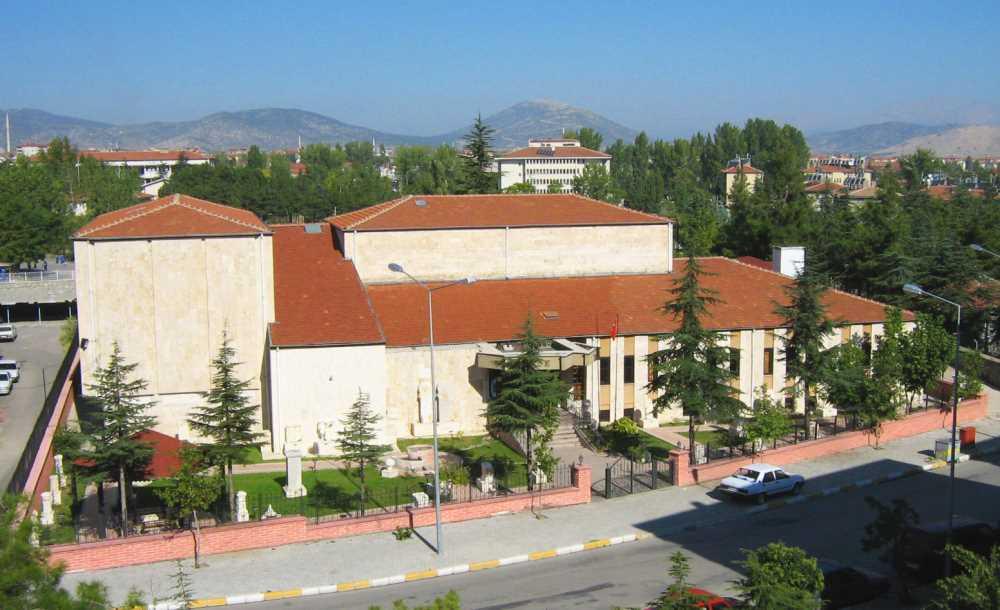
Isparta Museum is a museum located in the city of Isparta, Türkiye, featuring archaeological, ethnographic, and numismatic collections. The museum’s establishment traces its origins to cultural activities that began in the first half of the 20th century. The current museum building was opened to the public in 1985 and operates with four main exhibition halls. The museum houses a variety of artifacts that shed light on the regional history and reflects the cultural heritage of the Pisidia region.
.JPG&w=1280&q=75)
Isparta Museum (Türkiye Culture Portal)
Museum activities in Isparta began in 1933 with the opening of the Halkevi. During this period, archaeological artifacts and Islamic tombstones collected from the surrounding areas were displayed in one room of the Halkevi building. After the closure of the Halkevi, these artifacts were stored in various warehouses. In 1973, a room in the Halil Hamit Paşa Library was converted into a museum storage space, and the first museum staff position was established there.
The foundation of the museum building was laid in 1971, and the artifacts were transferred to the new building in 1977. That same year, the museum staff was upgraded to a museum directorate. Construction of the museum building was completed in 1984, and it was officially opened to the public on 6 March 1985. After undergoing restoration work in 1997, the museum was reopened to visitors in 2002 following updated exhibition and arrangement systems.
As of the end of 2008, the museum’s collection comprises 2,953 archaeological artifacts, 2,352 ethnographic items, and 12,671 coins, totaling 17,976 objects. The museum collections are organized into four main exhibition halls: Archaeology, Treasury, Ethnography, and Carpet halls. Additionally, in the transition area leading to the Archaeology Hall, a reconstructed “Isparta House” displays preserved elements of the 19th-century Hamamcı House.
The Archaeology Hall displays findings from the Göndürle (Harmanören) excavations, the Eurymedon statue located in front of the Aksu Zindan Cave, sculptural works from the ancient city of Perge, and a funerary stele from the 6th century BCE from Senirkent-Yassıören. Additionally, icons from the 18th century brought from Yukarı Kilise (Aya Yorgi), as well as a 19th-century door and bell, are exhibited. Glass cases contain ceramic artifacts from the Hellenistic and Roman periods.

Isparta Museum (Türkiye Culture Portal)
This hall displays coins from ancient cities of the Pisidia region, including Baris, Adada, Antiokheia, Konana, Prostanna, Seleukeia Sidera, Tymbriada, Sagalassos, Kremna, Kreraitai, Termessos, Selge, Ariassos, Andeda, İsinda, and Apollonia. Coins from the Roman Imperial period (30 BCE – 423 CE) are arranged chronologically. Byzantine and Venetian coins (5th–15th centuries CE), as well as Islamic coins from the Abbasid, Sassanian, Buyid, Seljuk, Mamluk, Ilkhanid, Timurid, and Ottoman periods, are also exhibited.
Prominent collections include the “Collection of II. Mahmud,” comprising coins minted during his 32-year reign, the “Eğirdir Treasure” containing 374 gold coins, and the “Karaağaç Neighborhood Treasure” with 468 silver coins. Additionally, glass objects, jewelry, mirrors, and various bronze and bone artifacts from the 1st and 3rd centuries CE are on display.
The Ethnography Hall recreates cultural scenes specific to the Isparta region, including themes such as bride-seeking ceremonies, henna nights, and Yörük women rolling out dough and churning butter. Glass cases display 19th and 20th-century lighting devices, rosewater flasks, healing bowls, incense burners, regional costumes, kitchen utensils, coffee culture items, scales, weapons, and official decrees.

Isparta Museum (Türkiye Culture Portal)
The Carpet Hall displays not only Isparta carpets but also examples from other major weaving centers such as Uşak, Gördes, Çanakkale, Bergama, Antalya (Döşemealtı), Nevşehir, Kırşehir, Kayseri, Eastern Anatolia, and Konya. Additionally, the distillation pot (imbik) used in the production of rose oil is exhibited in this hall.
In the front and back gardens of the museum, Roman-era funerary stelae from the Pisidia region and stone artifacts from various periods are displayed in open-air exhibits. The museum is two-storied: the ground floor houses offices, an archive, a library, a laboratory, an artifact documentation room, and access to the exhibition halls, while the lower floor contains carpet and ceramic workshops, a conference hall, and storage areas. At the museum entrance, small-scale examples of Roman-era tombstones from the ancient city of Tymbriada, Sofular Village, and Senitli Plateau are exhibited.
T.C. Ministry of Culture and Tourism. "Isparta Müzesi." *Turkey Culture Portal*. Accessed June 27, 2025. https://www.kulturportali.gov.tr/turkiye/isparta/gezilecekyer/isparta-muzesi.
T.C. Ministry of Culture and Tourism. "Isparta İl." *T.C. Ministry of Culture and Tourism Isparta Provincial Directorate of Culture and Tourism*. Accessed June 27, 2025. https://isparta.ktb.gov.tr/TR-70957/isparta-muzesi.html.

Location | Isparta Türkiye | ||||||||
|---|---|---|---|---|---|---|---|---|---|
Opening | 6 March 1985 | ||||||||
Collection | 17,976 works (archaeology, ethnography, coins) | ||||||||
Halls | Archaeology, Treasure, Ethnography, Carpet | ||||||||
History
Museum Collections and Exhibition Halls
Archaeology Hall
Treasury Hall
Ethnography Hall
Carpet Hall
Outdoor Exhibition and Museum Structure