

 Recently Added:
This article was automatically translated from the original Turkish version.
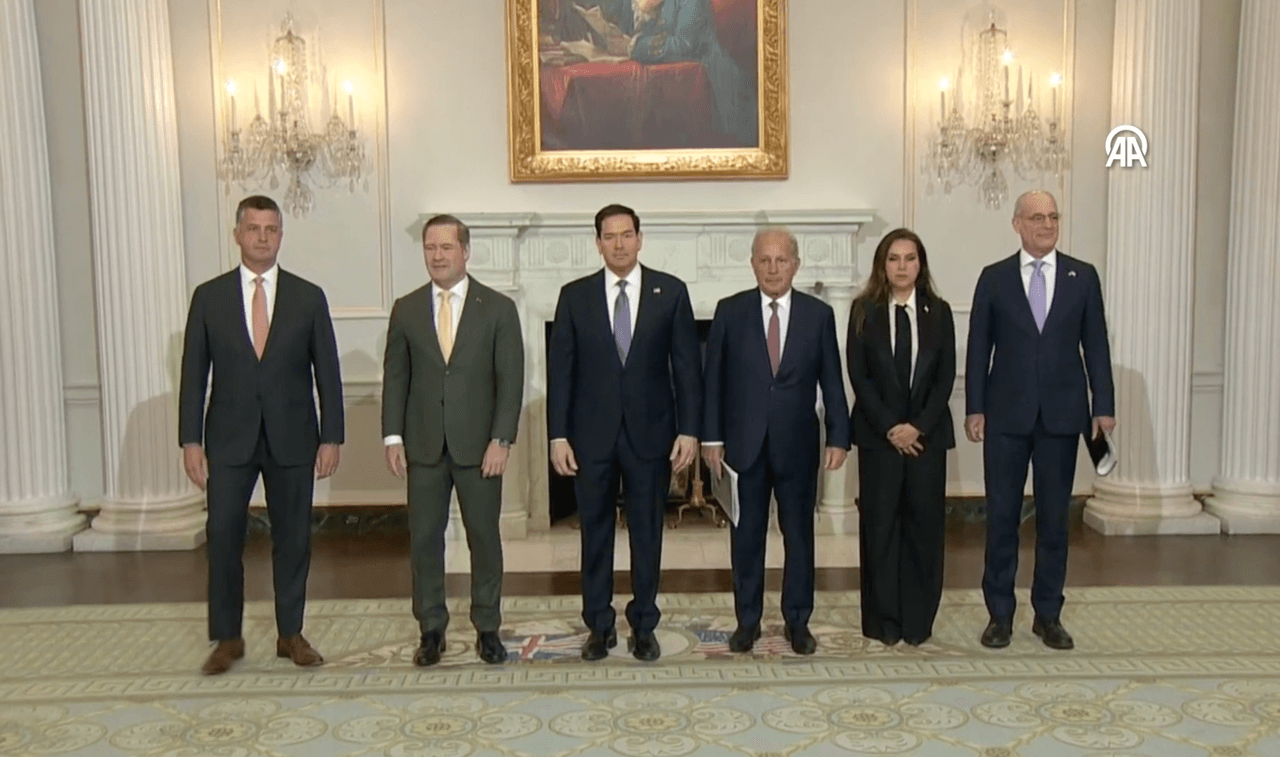
Direct talks between Israel and Lebanon, held in Washington, took place on 14 April 2026 in the capital of the United States, Washington D.C., under the hosting of U.S. Secretary of State Marco Rubio. The talks were conducted with the participation of the ambassadors of both countries to Washington and have been recorded as the highest-level direct contact between Israel and Lebanon since 1993.
Parties attending the Israel-Lebanon talks in Washington, 14 April 2026 - (Anadolu Agency)
A ceasefire agreement was implemented between Israel and Hezbollah on November 2024. Under this agreement, Israeli forces were to withdraw from southern Lebanon and Hezbollah was to end its military presence in the region.
However, following the implementation of the ceasefire, Israel continued its attacks against Lebanon, regularly carrying out aerial strikes especially in southern areas. Despite the ceasefire terms, Israel’s military did not fully withdraw from the border line and continued its military activities on the ground.
On 28 February 2026, a regional war process began with aerial attacks launched by the United States and Israel against Iran. Iran responded with missile and drone strikes targeting Israel, U.S. bases and regional allies.
On 2 March 2026, Hezbollah carried out a retaliatory attack against Israel in response to the attacks initiated by the United States and Israel on 28 February 2026, which it claimed resulted in the killing of Iran’s Supreme Religious Leader Ayatollah Ali Khamenei. Following this attack, the Israeli military launched a comprehensive military assault on Lebanon . Israeli officials cited the detection of rocket launches directed at the country’s north as justification for the operation. During the operation, Israel conducted intense aerial and naval strikes, targeted the capital Beirut, and decided to expand its ground occupation into southern regions.
On 8 April 2026, a two-week temporary ceasefire was declared between the United States and Iran under the mediation of Pakistan. The ceasefire was regarded as a temporary measure aimed at halting the ongoing war, with the expectation that negotiations for a lasting agreement would begin between the parties.
Disagreements emerged over the scope of the ceasefire. Pakistani Prime Minister Shehbaz Sharif stated that the ceasefire covered all conflict zones in the region, including Lebanon. In contrast, the U.S. and Israeli administrations asserted that Israel’s attacks on Lebanon were not included in the ceasefire and maintained that the Lebanese front would be treated as a separate process.
Iran emphasized that the continuation of the ceasefire depended on Israel halting its attacks on Lebanon. In this context, the fighting in Lebanon became directly linked to the U.S.-Iran ceasefire process, and the Israel-Lebanon talks in Washington were clearly shaped within this broader regional diplomatic framework.
According to data from the Lebanese Ministry of Health dated 14 April 2026, the number of people killed in Israeli attacks since 2 March has reached 2,124, while the number of injured has reached 6,921. It was reported that 168 of the deceased were children and 254 were women. The health sector also suffered heavy losses during the same period. 88 healthcare workers were killed, 206 were injured, six hospitals were rendered inoperable, and 102 ambulances became unusable. According to official Lebanese government figures, the number of displaced persons in the country has exceeded 1,162,000.
The U.S. Department of State announced the upcoming talks between Israel and Lebanon on Monday evening, 13 April 2026, stating that the meeting would take place on Tuesday, 14 April 2026, at the Department’s headquarters.
Prior to the talks, Israeli media reported that Israel would not accept a ceasefire and that its Ambassador to Washington, Yechiel Leiter, would attend the meeting under instructions not to endorse any ceasefire.
Meanwhile, prior to the talks, hundreds of people in Beirut staged protests accusing Lebanese Prime Minister Nawaf Salam of betraying the public by sitting at the negotiation table while Israel continued its bombing campaign.
Hezbollah General Secretary Naim Qassem, in a statement on 13 April 2026, urged the Lebanese government not to participate in the talks and described this stance as “a historic and heroic position”.
Representing the United States were U.S. Secretary of State Marco Rubio, U.S. Permanent Representative to the United Nations Mike Waltz, State Department Advisor Michael Needham and U.S. Ambassador to Beirut Michel Issa.
Israel was represented by Ambassador to Washington Yechiel Leiter, while Lebanon was represented by Ambassador to Washington Nada Hamadeh-Moawad.
At the start of the meeting held at the State Department building, U.S. Secretary of State Marco Rubio made a brief statement, emphasizing that the issues between the two countries could not be resolved immediately: “This is a historic opportunity. We have decades of historical lessons that brought us to this point and to this opportunity. I know you are asking about the ceasefire. The destruction caused by this situation that has persisted in this region for 20 to 30 years.”
Rubio described the talks as a process and said, “This is not just about one day. This process will take time, but we believe it is worth the effort.”
The Lebanese delegation viewed the talks in Washington as a preparatory step toward re-establishing the ceasefire. After the meeting, Lebanese Ambassador to Washington Nada Hamadeh-Moawad stated that the talks had been “productive” and reiterated the need for “the immediate full implementation of the ceasefire agreement reached in November 2024.”
Hamadeh-Moawad also noted that during the meeting Lebanon emphasized the importance of its territorial integrity and state sovereignty, and called for “practical steps” to alleviate the humanitarian crisis in Lebanon caused by ongoing hostilities. Lebanese Minister of Culture Ghassan Salame stressed that from Lebanon’s perspective, the talks were merely a “preparatory meeting” aimed at halting military activities.
Before the talks, Lebanese President Joseph Aoun stated, “I hope that tonight’s meeting in Washington marks the beginning of the end of the suffering endured by the Lebanese people, especially in the south.” Aoun also emphasized that stability in the region could not be achieved as long as Israel maintained its military presence in southern Lebanon.
According to reports from the Israeli newspaper Haaretz, Prime Minister Benjamin Netanyahu viewed the initiation of the talks as “a tactic to gain time without ending the war and to demonstrate goodwill to the Americans and U.S. President Donald Trump”. The same reports suggested that Ambassador Leiter had attended the meeting under instructions not to endorse any ceasefire.
The U.S. Department of State’s post-meeting statement summarized Israel’s position as follows: “The State of Israel expressed its support for the disarmament of all non-state terrorist groups in Lebanon and the dismantling of all terrorist infrastructure, and affirmed its determination to cooperate with the Lebanese government to ensure the security of both peoples.”
According to Al Jazeera, Israel also proposed a controversial plan to divide southern Lebanon into three security zones. Under this plan, “a sustained and prolonged Israeli military presence would continue in the zone from the border to 0–8 km until Hezbollah is fully dismantled; in the second zone, extending to the Litani River, Israeli forces would continue operations while gradually transferring control to the Lebanese Armed Forces; in the third zone north of the Litani River, only the Lebanese Armed Forces would be responsible for Hezbollah’s disarmament.”
The United States assumed a mediating role in the talks. The State Department statement noted that “the U.S. hopes the talks can go beyond the scope of the 2024 agreement and lead to a comprehensive peace accord. The U.S. also reaffirmed its support for Israel’s right to self-defense against Hezbollah’s ongoing attacks.” The statement further emphasized that future talks should also be conducted under U.S. mediation and that issues related to potential assistance for Lebanon’s reconstruction would be addressed.
Following the talks in Washington, the U.S. Department of State announced that the parties had agreed to begin direct negotiations at a mutually determined time and place.
The State Department described the meeting as “highly productive”, congratulated both sides, and claimed that the talks had established a strong foundation for future negotiations. Lebanese Ambassador to Washington Nada Hamadeh-Moawad stated that the date and location of the next meeting would be announced later. However, the talks ended without any concrete decision regarding the re-establishment of a ceasefire.
Hezbollah announced that it rejected the process of the talks held in Washington. Hezbollah General Secretary Naim Qassem described the negotiations as a “free concession” made to Israel and the United States.
Qassem stated that Israel’s primary objective in the negotiations was the disarmament of Hezbollah, adding, “Israel clearly reveals that its goal in these talks is to disarm Hezbollah; Netanyahu has repeatedly stated this. How can one enter negotiations with a predetermined objective?” He also declared in his speech, “We will not rest, we will not stop, and we will not surrender. Instead, we will speak through the battlefield.”
While the talks in Washington were ongoing, the Israeli military continued its attacks on southern Lebanon without interruption. According to information reported by the Lebanese National News Agency (NNA), on the evening of Tuesday, 14 April 2026, Israeli warplanes bombed the towns of Beraşit, Ayn Bial, Tayr Diba, Kasimiyye, Sadikayn, Deyr Kifa, Western Sir, Abbasiye, Adlun, Kana and Zibkin. Israeli artillery units also targeted the area around Kefr Rumman during the same hours.
The last direct and high-level diplomatic talks between Israel and Lebanon took place in 1993. The two countries have no diplomatic relations. Therefore, the talks held in Washington on 14 April 2026 were recorded as the first direct and high-level contact after more than thirty years of absence.
Following the outbreak of civil war in Lebanon, Israel launched a military intervention in 1978 and occupied southern Lebanon. In the same year, the United Nations Security Council called on Israel to withdraw its forces from Lebanon.
On 19 March 1978, at Lebanon’s request, the United Nations Security Council established the United Nations Interim Force in Lebanon (UNIFIL). United Nations Security Council Resolution 1701, adopted unanimously on 11 August 2006, called for Israeli forces to withdraw behind the Blue Line and for the area between the Blue Line and the Litani River to be demilitarized.
Al Jazeera. "Hezbollah Leader Urges Lebanon’s Government to Pull Out of Israel Talks." Accessed April 14, 2026. https://www.aljazeera.com/news/2026/4/13/hezbollah-leader-urges-lebanon-government-to-pull-out-of-israel-talks
Al Jazeera. "Israel-Lebanon Direct Talks in the US: All to Know." Accessed April 14, 2026. https://www.aljazeera.com/news/2026/4/14/israel-lebanon-direct-talks-in-the-us-all-to-know
Anadolu Ajansı. "Israel Rejects Lebanon Ceasefire During Washington Talks: Report." Accessed April 14, 2026. https://www.aa.com.tr/en/middle-east/israel-rejects-lebanon-ceasefire-during-washington-talks-report/3904896
Anadolu Ajansı. "Israeli Airstrikes Hit Southern Lebanon as Ceasefire Talks Underway in Washington." Accessed April 14, 2026. https://www.aa.com.tr/en/middle-east/israeli-airstrikes-hit-southern-lebanon-as-ceasefire-talks-underway-in-washington/3905608
Anadolu Ajansı. "İsrail ile Lübnan Washington’da Doğrudan Müzakerelere Başlama Kararı Aldı." Accessed April 14, 2026. https://www.aa.com.tr/tr/live-blog/israil-ile-lubnan-washingtonda-dogrudan-muzakerelere-baslama-karari-aldi/962
Axios. "Rubio to Host Israeli, Lebanese Ambassadors for Talks Amid Ceasefire Effort." Accessed April 14, 2026. https://www.axios.com/2026/04/14/iran-war-peace-talks-rubio-israel-lebanon-ambassadors
BBC News. "Israel and Lebanon Hold First Direct Talks Since 1993." Accessed April 14, 2026. https://www.bbc.com/news/articles/cp8ddydl18vo
The Washington Post. "Rubio Hosts Israel-Lebanon Talks in D.C. Here’s What to Know." Accessed April 14, 2026. https://www.washingtonpost.com/world/2026/04/14/iran-israel-lebanon-talks-washington/
The second round of preparatory talks took place on 23 April 2026 at the U.S. Department of State, following the first meeting on 14 April 2026. This meeting occurred just days before the end of the 10-day temporary ceasefire that came into effect on 17 April.
In the immediate lead-up to the second round of talks, the Israeli military continued its attacks against Lebanon. Lebanon’s official news agency, NNA, reported Israeli air strikes targeting southern villages. According to data released by Lebanon’s Ministry of Health as of 24 April 2026, the number of fatalities resulting from Israeli attacks since 2 March reached 2,491, with the number of injured rising to 7,719. During the same period, 100 healthcare workers were killed and 233 were injured; six hospitals were rendered inoperable and 116 ambulances were disabled.
Lebanese President Awn, speaking at the EU Leaders Summit in Cyprus on 24 April, stated that the Israeli military had carried out widespread destruction across Lebanon, targeting not only hospitals and medical personnel but also schools, journalists and places of worship. He noted that by 11 April, Lebanon had endured 6,800 air strikes, resulting in over 10,000 deaths and injuries, most of them women and children. Awn also recorded that the Israeli military had displaced residents of 311 villages through 1,300 evacuation orders.
As in the previous round, the second round was chaired by U.S. Secretary of State Marco Rubio. Lebanon was represented by Lebanon’s Ambassador to Washington Nada Hamade Muavvad, and Israel by Israel’s Ambassador to Washington Yehiel Leiter.
A senior Lebanese official source stated that the meeting was a continuation of the preparatory talks held on 14 April. The same source indicated that Lebanon would demand during the talks an extension of the ceasefire and an end to the destruction of homes and the desecration of land in occupied villages.
Lebanese President Awn framed Lebanon’s position in the negotiations as follows: "We will not accept any concession, compromise or surrender that does not guarantee sovereignty and the interests of all Lebanese." Awn also emphasized that experience from past wars has shown that war brings only death, destruction and forced displacement, and therefore a diplomatic solution remains Lebanon’s safest path.
Hezbollah’s Secretary General Naim Qassem stated prior to the second round that it supported an indirect negotiation approach rather than direct talks led by the United States, adding: "We call on the Lebanese leadership to withdraw from direct negotiations that grant Israel total gains and extract unconditional concessions."
Hezbollah also characterized the talks as part of a series of "lost concessions". Qassem stated: "We reject negotiations conducted under the presence of the occupying Israeli force. These negotiations are futile. These negotiations require an internal consensus among Lebanon’s components — which has not yet been achieved. No one has the right to push Lebanon in this direction without such an internal consensus."
Israel claimed that the talks revealed a common ground between the two sides on the disarmament of Hezbollah. Some Israeli officials implied that trade agreements and tourist exchanges between the two countries could begin soon. Lebanon rejected this interpretation, stating it preferred a framework based on the 1949 ceasefire agreement.
On 24 April 2026, U.S. President Trump hosted representatives of Israel and Lebanon at the White House and announced that the ceasefire would be extended by three additional weeks. Referring to the meeting held in the Oval Office, Trump stated: "The meeting went very well. The United States will cooperate with Lebanon to help it protect itself from Hezbollah. The ceasefire between Israel and Lebanon will be extended for three weeks." Trump also noted that he expected to host Israeli Prime Minister Netanyahu and Lebanese President Awn at the White House in the near future. UN Secretary-General António Guterres welcomed the extension of the ceasefire.
The third round of direct talks took place on 14–15 May 2026 at the U.S. Department of State, just days before the expiration of the temporary ceasefire that began on 17 April.
The Israeli military continued its attacks against Lebanon in the lead-up to the third round. On 13 May 2026, Israeli warplanes targeted the villages of Yahun, Ayta Cebel, Kefer Ruman, Mecdel Zun, Hinniyye, Sadıkın, Debaal, Abbasiyye, Deyr Kanun, Arabsalim, Halusiyye, Haris and Mansori. In addition, two separate air strikes were carried out against the Burç Şemali area of the city of Sur.
In the village of Arabsalim, located in the Nabatiye governorate, five members of the same family were killed. In the attack on Numeyriyye, four people died; one each in Upper Nabatiye and Şehhur. In seven separate attacks by Israeli drones on vehicles across various regions of Lebanon, 12 people were killed.
On 14 May, the day the talks were set to begin, the Israeli military conducted air strikes on the villages of Sadıkın, Tuffahta and Kefre, as well as on the villages of Lebbaya, Suhmur, Yuhmur and Ayn Tine in the Bekaa region and Hadasa and Kefer Melki in the south. On the same day, the UN announced that Israeli drones had killed at least eight people, including two children, in attacks on vehicles in the Ciyeh area, approximately 20 kilometers south of Beirut.
Israel also issued evacuation orders for several villages north of the Litani River. Israeli Army Spokesperson Avichay Adraee demanded that residents of these villages move at least 1 kilometer away from their homes. These villages are located north of the Litani River.
According to data released by Lebanon’s Ministry of Health as of 13 May, the number of fatalities from Israeli attacks since 2 March increased by 29 in the past 24 hours to 2,911, while the number of injured rose to 8,824.
A senior Lebanese official source stated that prior to the talks, contacts had been made to seek a reduction in the intensity of Israel’s attacks on Lebanon. This source, who requested anonymity, said: "We are engaging in contacts to curb the escalation of Israeli attacks ahead of tomorrow’s meeting. In this context, certain guarantees are being sought." The same source noted that despite the situation on the ground, they remained hopeful for a positive outcome from the talks.
On 18 April, the Israeli military announced it had established a "Yellow Line" in the occupied areas of southern Lebanon, modeled after the one in the Gaza Strip. Under this line, 55 villages are under Israeli occupation. According to Israeli media reports, approximately 600,000 Lebanese displaced by the attacks have been prevented from returning south of the Litani River.
Israel’s "Yellow Line" did not remain confined to land; it also extended into the maritime zone. This development signals a de facto violation of the 2022 maritime boundary agreement between Lebanon and Israel and suggests Israel’s intent to reassert control over gas fields. The Israeli military has threatened attacks on all maritime vessels within a 37-kilometer zone extending from the city of Sur and the Ras Nakura coastline.
According to Israeli media reports, during the same period, the Israeli military destroyed a foundation building belonging to the Orthodox Church in the village of Deyr Mimas and a solar-powered drinking water facility using explosives. The Deyr Mimas Orthodox Church shared a photo on its social media account showing the foundation building reduced to rubble.
In response to Israel’s ceasefire violations, Hezbollah launched numerous attacks against the Israeli military in occupied areas of southern Lebanon on 13 May 2026. According to Hezbollah’s written statements, Israeli armored personnel carriers and troop concentrations in Bint Jubayl were targeted by kamikaze drones. Soldiers and vehicles at the Bulat and Kavzah positions were struck by rockets. A military vehicle in Resaf, a D9 bulldozer in Deyr Suryan, and a "Namira"-type military vehicle in the Vadi el-Uyun region were also targeted.
Hezbollah also carried out a drone strike on Roș Hanikra in northern Israel. The Galilee Medical Center reported that three people were injured, two of them seriously. The Israeli military confirmed that many people were wounded in this attack, which Hezbollah targeted at a parking lot.
On 13 May 2026, Hezbollah Secretary General Naim Qassem stated that his fighters would "respond to aggression and violations" and would "not return to the status quo before 2 March". Qassem also indicated that Hezbollah was "ready for cooperation" to achieve specific objectives, including halting Israeli attacks, withdrawing from occupied territories, deploying the Lebanese army in the south, releasing Lebanese detainees and rebuilding the southern region.
The United Nations Interim Force in Lebanon (UNIFIL) stated on 13 May that it was increasingly concerned about activities by both Hezbollah members and Israeli soldiers near UN positions, particularly the increasing use of drones. UNIFIL’s press statement read: "UNIFIL is increasingly concerned about the activities of Hezbollah members and Israeli soldiers near UN positions, particularly the increasing use of drones."
Lebanon was represented at the talks by former Ambassador to Washington Simon Karam, appointed by President Awn. Also participating were Lebanon’s Ambassador to Washington Nada Hamadeh Moawad, Deputy Mission Chief Wissam Boutros, and newly added to the delegation, Lebanon’s Military Attaché in Washington General Oliver Hakme.
Israel’s delegation included Ambassador to Washington Yechiel Leiter, Head of the Israeli Military’s Strategic Division Brigadier General Amichai Levin, and Deputy Chair of the Israeli National Security Council Yossi Draznin.
U.S. Secretary of State Marco Rubio was unable to attend the meeting due to President Trump’s visit to China. Instead, Rubio’s advisor Michael Needham, State Department official Jay Mens, U.S. Ambassador to Israel Mike Huckabee and U.S. Ambassador to Lebanon Mişel İsa participated.
Lebanese Prime Minister Nevvaf Selam, speaking at a ceremony hosted by the Makasid Society in Beirut on 15 May 2026, called for mobilizing Arab and international support in negotiations with Israel. Selam stated that Lebanon was enduring one of the most dangerous crises since its founding, noting that for years the state had been treated "not as a common roof but as a spoils system".
Selam also announced that Lebanon would appeal to international platforms to document the crimes committed by Israel despite the ceasefire and would request that the UN send a delegation. Selam added: "Meanless adventures pursued for foreign projects and interests are enough. The latest was a war we did not choose but were forced into. This war has resulted in Israel occupying 68 villages, towns and points today, at a time when we were trying to remove it from five."
Selam further articulated his vision of the state as follows: "The state we want is one of equal citizenship, effective institutions, an independent judiciary and modern governance." He emphasized that the national army must be the only armed force and that no individual must stand above or outside the law.
Prime Minister Netanyahu publicly announced during the talks that on 25 May he had ordered the Israeli military to intensify its attacks against Lebanon. He affirmed Israel’s intent to continue operations in southern Lebanon independently of the negotiations.
Following the two-day talks, U.S. Department of State Spokesperson Tommy Pigott declared the talks had been "extremely productive" and announced that the ceasefire declared on 16 April would be extended by an additional 45 days.
Pigott also shared the following decisions with the public: The political track of the negotiations will resume on 2–3 June 2026; a security meeting involving military delegations from both countries will be held at the Pentagon on 29 May 2026.
Pigott added that the U.S. believed the talks would contribute to achieving lasting peace between the two countries, full mutual recognition of sovereignty and territorial integrity, and the establishment of a genuine security mechanism along the shared border.
The Lebanese delegation, in its written statement, announced that concrete diplomatic progress favorable to Lebanon had been achieved through the negotiations. The statement emphasized that the ceasefire extension would allow citizens to "breathe" and open a political path toward lasting stability.
Al Jazeera. "Israel Kills Seven in Lebanon, Agrees ‘Ceasefire’ Extension at Talks in US." Accessed June 3, 2026. https://www.aljazeera.com/news/2026/5/15/lebanon-talks-israel-attack
Al Jazeera. "Israel-Lebanon Talks Held in Washington as Expiration of Ceasefire Nears." Accessed June 3, 2026. https://www.aljazeera.com/video/newsfeed/2026/5/15/israel-lebanon-talks-held-in-washington-as-expiration-of-ceasefire-nears
Al Jazeera. "Lebanon Hopes Crunch Talks in Washington Will Halt an Israeli Invasion." Accessed June 3, 2026. https://www.aljazeera.com/news/2026/6/2/lebanon-hopes-crunch-talks-in-washington-will-halt-an-israeli-invasion
Al Jazeera. "Lebanon, Israel to Meet Again Thursday for Direct Talks, US Says." Accessed June 3, 2026. https://www.aljazeera.com/news/2026/4/20/lebanon-israel-to-meet-again-thursday-for-direct-talks-us-says
Al Jazeera. "Mixed Views in Lebanon Ahead of Controversial Talks with Israel." Accessed June 3, 2026. https://www.aljazeera.com/news/2026/4/23/mixed-views-in-lebanon-ahead-of-controversial-talks-with-israel
Al Jazeera. "What Is on the Table During Lebanon-Israel Direct Negotiations?" Accessed June 3, 2026. https://www.aljazeera.com/news/2026/5/14/what-is-on-the-table-during-lebanon-israel-direct-negotiations
Anadolu Ajansı. "ABD Arabuluculuğundaki Lübnan-İsrail Görüşmelerinin 3. Turu Bugün Başlıyor." Accessed June 3, 2026. https://www.aa.com.tr/tr/dunya/abd-arabuluculugundaki-lubnan-israil-gorusmelerinin-3-turu-bugun-basliyor/3937036
Anadolu Ajansı. "ABD Dışişleri Bakanlığı: İsrail ile Lübnan Arasındaki Ateşkes 45 Gün Daha Uzatıldı." Accessed June 3, 2026. https://www.aa.com.tr/tr/dunya/abd-disisleri-bakanligi-israil-ile-lubnan-arasindaki-ateskes-45-gun-daha-uzatildi/3939046
Anadolu Ajansı. "Lübnan Başbakanı Selam’dan İsrail ile Yürütülen Müzakereler İçin Arap ve Uluslararası Destek Çağrısı." Accessed June 3, 2026. https://www.aa.com.tr/tr/dunya/lubnan-basbakani-selamdan-israil-ile-yurutulen-muzakereler-icin-arap-ve-uluslararasi-destek-cagrisi/3939122
Anadolu Ajansı. "Lübnan Heyeti: ABD’deki Müzakerelerde Ülke Lehine Somut Diplomatik İlerleme Sağlandı." Accessed June 3, 2026. https://www.aa.com.tr/tr/dunya/lubnan-heyeti-abddeki-muzakerelerde-ulke-lehine-somut-diplomatik-ilerleme-saglandi/3939137
Anadolu Ajansı. "Lübnan ile İsrail, ABD Arabuluculuğunda İkinci Tur Görüşmelere Bugün Başlıyor." Accessed June 3, 2026. https://www.aa.com.tr/tr/dunya/lubnan-ile-israil-abd-arabuluculugunda-ikinci-tur-gorusmelere-bugun-basliyor/3915765
Anadolu Ajansı. "Son Gelişmeler: ABD-İsrail-İran-Lübnan Savaşı ve Barış Müzakereleri." Accessed June 3, 2026. https://www.aa.com.tr/tr/live-blog/son-gelismeler-abd-israil-iran-lubnan-savasi-ve-baris-muzakereleri/1571
Anadolu Ajansı. "Trump, İsrail ile Lübnan Arasındaki Ateşkesin 3 Hafta Uzatılacağını Açıkladı." Accessed June 3, 2026. https://www.aa.com.tr/tr/dunya/trump-israil-ile-lubnan-arasindaki-ateskesin-3-hafta-uzatilacagini-acikladi/3916287
Anadolu Ajansı. "Washington’daki İsrail-Lübnan 3. Tur Görüşmeleri Başladı." Accessed June 3, 2026. https://www.aa.com.tr/tr/dunya/washingtondaki-israil-lubnan-3-tur-gorusmeleri-basladi/3936853
Anadolu Ajansı. "İsrail Ordusu, Ateşkese Rağmen Lübnan’ın Güneyine Saldırılarını Artırdı." Accessed June 3, 2026. https://www.aa.com.tr/tr/dunya/israil-ordusu-ateskese-ragmen-lubnanin-guneyine-saldirilarini-arttirdi/3935943
Reuters. "Lebanon-Israel Ceasefire Extended by Three Weeks After Oval Office Meeting." Accessed June 3, 2026. https://www.reuters.com/world/middle-east/lebanon-seek-ceasefire-extension-us-hosted-talks-with-israel-2026-04-23/
The fourth round of talks was held at the U.S. Department of State on 2–3 June 2026, in accordance with the schedule agreed upon after the third round. The talks took place amid an environment in which Israel’s occupation of Lebanon had reached its most advanced stage since 2000, and clashes between Hezbollah and Israel continued in southern Lebanon.
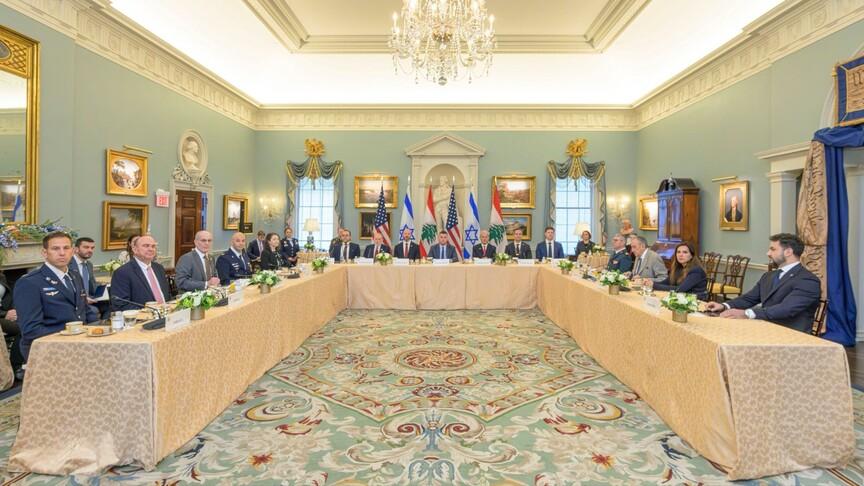
Israel-Lebanon fourth round talks, 2 June 2026 – (Anadolu Agency)
According to data released by Lebanon’s Ministry of Health as of 2 June 2026, the number of people killed in Israeli attacks since 2 March has reached 3,468.
U.S. Department of State Spokesperson Tommy Pigott announced on 3 June 2026 that delegations from both countries met at the Department on Tuesday. Representing Lebanon were Lebanon’s Ambassador to Washington Nada Hamadeh and Presidential Special Representative Simon Karam. Representing Israel was Israel’s Ambassador to Washington Yechiel Leiter. From the United States, U.S. Ambassador to Lebanon Michel Issa and U.S. Department of State Under Secretary Daniel Holler attended the meeting.
Spokesperson Pigott, in his statement on the talks, said: "We are making progress in political and security channels as we move toward a comprehensive agreement aimed at reestablishing Lebanon’s sovereignty and ensuring Israel’s security, moving beyond the failures of the past 20 years."
Following the fourth round, on 4 June 2026, the U.S. Department of State announced that Israel and Lebanon had reached an agreement on a comprehensive ceasefire. The statement read: "The ceasefire is contingent upon Hezbollah fully halting its attacks and withdrawing all its forces south of the Litani River."
It was also reported that the parties agreed, under U.S. guidance, to establish "pilot zones" where the Lebanese Armed Forces would assume sole authority. The statement indicated that these steps would lay the groundwork for a broader peace and security agreement and emphasized that relations between Israel and Lebanon must be determined exclusively by their respective sovereign governments. It was further noted that both parties agreed to resume political and security negotiations during the week of 22 June to reach a comprehensive agreement.
At the time of the agreement’s announcement, Israeli attacks continued. On 4 June, Israeli air strikes on various regions of Lebanon killed four people. Several hours after the announcement, air raid sirens were activated in northern Israel and a "suspicious aerial target" was detected, though no casualties were reported.
Israeli Defense Minister Yisrael Katz declared that despite the announcement of the conditional ceasefire, Israeli occupation and attacks in southern Lebanon would continue. Katz asserted that the ceasefire text included not only Hezbollah’s disarmament and withdrawal north of the Litani River but also the continuation of the Israeli military’s occupation of southern Lebanon and its "freedom of movement."
Katz stated that the Israeli military would continue to dismantle the "terror infrastructure" in the region and affirmed that it retained "U.S.-backed freedom of movement" to target Beirut in response to attacks against Israeli communities. It was also stated that displaced families would not be permitted to return to their homes.
U.S. President Donald Trump stated that negotiations regarding the conflict in Lebanon must be kept separate from U.S.-Israel talks concerning Iran. Iran, however, maintained that the two processes could not be separated.
Iran’s Foreign Minister Abbas Araghchi warned that any attack on Beirut would trigger a "full-scale resumption of war." Araghchi emphasized that communication channels with the United States remained open but noted that no "concrete progress" had been made in negotiations aimed at ending the Middle East war. According to Tasnim News Agency, Araghchi stated that returning to the negotiating table was conditional upon "guaranteeing the rights of the Iranian people, ending the war in Lebanon, and halting tensions in the region."
Iran’s Supreme Leader Ayatollah Mousavi Khamenei, in a message read on his behalf during the anniversary ceremony of the death of Iran’s founding leader Ruhollah Khomeini on 4 June, stated that the U.S. and Israel had shifted to a "comprehensive hybrid war aimed at weakening popular resistance following their defeat on the battlefield."
Lebanese President Joseph Aoun described the conditional ceasefire as the "last chance" and warned that both sides would bear responsibility if it failed. Aoun also stated that the ceasefire could enter into effect within 24 hours after all parties approved it and necessary guarantees were provided.
Hezbollah Secretary General Naim Qassem, in a message issued on 4 June on the anniversary of the death of former Iranian leader Imam Ruhollah Khomeini, rejected the direct negotiations in Washington and the conditional ceasefire. Qassem characterized the negotiations as "meaningless, humiliating, and disgraceful" and claimed they were entirely and unequivocally rejected by broad segments of the Lebanese people.
Opposing demands for the concentration of arms under state monopoly, Qassem argued that this would amount to Israel achieving through political means what it had failed to secure militarily. Qassem declared that Hezbollah’s compliance with the ceasefire and withdrawal of its forces from the south would constitute "surrender and defeat" and therefore labeled it "impossible."
Qassem stated, "We have not committed to refrain from resisting attacks or responding to them," affirming that they would respond with all available means if Israeli attacks continued. Qassem said: "As long as our villages remain unsafe, bombed, and destroyed and our people are killed, Israeli settlements will not be safe." He added that they would continue fighting until Israel was expelled from Lebanon.
Qassem listed Hezbollah’s demands for any agreement as: "Cessation of all Israeli attacks by air, land, and sea; withdrawal from Lebanese territory; deployment of the Lebanese Armed Forces south of the Litani River; release of prisoners; return of displaced persons to their villages; and initiation of a reconstruction process."
Following Qassem’s announcement rejecting the ceasefire, sirens sounded in northern Israel due to Hezbollah unmanned aerial vehicles. The Israeli military confirmed that the sirens were triggered by UAV incursions, with Israeli media reporting that three Hezbollah UAVs had infiltrated the area. It was also reported that Netanyahu had left the settlement of Shlomi in northern Israel shortly before the sirens were activated.
Israeli Defense Forces Spokesperson Avichay Adraee stated that despite the announcement of the conditional ceasefire, attacks in southern Lebanon continued and the Israeli military was persisting in targeting facilities and infrastructure it claimed belonged to Hezbollah. Residents displaced by earlier attacks were again urged not to cross south of the Zahrani River until further notice.
Israeli warplanes targeted the towns of Deyr ez-Zehrani, Shevkin, Haris, Kefre, East Zavtar, West Zavtar, Kefer Coz, Adshit, Mivedon and Aba in the Nabatieh governorate; the towns of Mansuri, Haruf, Maareke, Kana, Resknaniye, Abbasiye in the city of Sur; and the towns of Berashit and Sarife in southern Lebanon. A UAV strike targeted a vehicle in the town of Dweir. In attacks on the village of Suhmur in eastern Lebanon, five people were killed and four injured. The villages of Haddasa, Tebnin and Harin in the Bint Jbeil district were also targeted; injuries were reported in the attacks on Tebnin.
An Israeli UAV targeted a motorcycle in the village of Marub, part of Sur, killing one person and injuring another. In the early morning hours, a vehicle traveling on the road between Zefta and Numeiriye in Nabatieh was struck by a UAV, injuring three people. UAV strikes were also carried out at the Nejde Junction on the Kefer Rumman-Habbush road and at the junction in the village of Kefer Tebint. Israel also bombed the villages of Deyr Antar, Kefer Tebint, Ernun, Shevkeyn and Zubdeyn in Nabatieh using both fighter jets and UAVs. An Israeli UAV conducted low-altitude flight over Beirut’s skies. The Israeli military also targeted a vehicle near the UNIFIL headquarters in the Burj al-Qawaliba area of southern Lebanon with an air strike; a child was rescued alive from the rubble of a home during attacks in Sur.
By the end of the day, the total number of people killed in Israeli attacks reached 12.
Al Jazeera. “Iran War Live: Trump Talks to Hezbollah, Israel as Lebanon Fighting Surges.” Al Jazeera Live Blog, June 2, 2026. Accessed June 3, 2026. https://www.aljazeera.com/news/liveblog/2026/6/2/iran-war-live-trump-talks-to-hezbollah-israel-as-lebanon-fighting-surges.
Al Jazeera. “Israel and Lebanon Agree to Conditional Ceasefire.” Al Jazeera, June 4, 2026. Accessed June 4, 2026. https://www.aljazeera.com/news/2026/6/4/israel-and-lebanon-agree-to-conditional-ceasefire.
Anadolu Ajansı. "Dakika Dakika Gelişmeler: ABD-İsrail-İran-Lübnan Savaşı ve Ateşkes Süreci." Anadolu Ajansı Live Blog. Accessed June 4, 2026. https://www.aa.com.tr/tr/live-blog/dakika-dakika-gelismeler-abd-israil-iran-lubnan-savasi-ve-ateskes-sureci/3189
Anadolu Ajansı. "Lübnan ve İsrail, ABD Arabuluculuğunda Şartlı Ateşkese Vardı." Accessed June 4, 2026. https://www.aa.com.tr/tr/dunya/lubnan-ve-israil-abd-arabuluculugunda-sartli-ateskese-vardi/3956058.
Anadolu Ajansı. “İsrail-Lübnan 4. Tur Görüşmeleri, ABD’nin Ev Sahipliğinde Yapıldı.” Accessed June 3, 2026. https://www.aa.com.tr/tr/dunya/israil-lubnan-4-tur-gorusmeleri-abdnin-ev-sahipliginde-yapildi/3954829
Axios. “Israel and Lebanon Agree to Full Ceasefire, Conditioned on Steps by Hezbollah.” Accessed June 4, 2026. https://www.axios.com/2026/06/03/israel-lebanon-ceasefire-hezbollah-us.
BBC News. “Israel and Lebanon Agree to Implement Ceasefire if Hezbollah Stops Attacks.” BBC News, June 4, 2026. Accessed June 4, 2026. https://www.bbc.com/news/articles/c5y01pdqvkgo
Following the fourth round of talks held on 2–3 June, Israel’s attacks on Lebanon continued. On 18 June 2026, the US-Iran agreement text signed by US President Donald Trump and Iranian President Masoud Pezeshkian came into effect. This agreement contains a provision committing the parties to respect Lebanon’s sovereignty and territorial integrity.
As of 23 June 2026, according to data released by Lebanon’s Ministry of Health, the death toll in Lebanon has risen to 4,192 and the number of injured to 12,171.
The fifth round of direct negotiations between Israel and Lebanon began on Tuesday 23 June 2026 at the US Department of State. The US Department of State had previously announced that the talks would take place from 23 to 25 June.
The talks were opened by US Department of State Advisor Dan Holler and Assistant Secretary of Defense Daniel Zimmerman. The negotiations were structured to begin with a joint military-political session, followed by a military session and conclude with a political closing round.
An unnamed US official stated regarding the talks: "Our shared objective is to permanently end the cycle of violence. We are facilitating Israel and Lebanon to negotiate as two sovereign states and find a path to peace and security. The talks will continue to advance a comprehensive peace and security agreement between the two countries."
On 23 June 2026, Lebanese President Joseph Aoun presided over a meeting with members of his advisory team and Lebanese Armed Forces Chief of Staff Rudolph Heykel, following the negotiations in Washington. During this meeting, Aoun stated: "The only internationally accepted path to achieving national objectives and reclaiming all rights is negotiation."
Aoun emphasized that Lebanon’s goal is the full restoration of its sovereignty over every inch of its territory, declaring: "Today we clearly state that we will accept no alternative other than the complete end of Israel’s occupation of southern Lebanon and the elimination of foreign interference."
A day later, in a meeting with a delegation of British parliamentarians, Aoun clarified that the Washington negotiations were an independent process from the US-Iran talks, stating: "The negotiations underway in Washington are independent of the outcomes reached last week between the US and Iran in Switzerland." Aoun also noted that work is ongoing to define the "pilot zones" under the ceasefire, but that this requires Israeli approval; he added that Lebanon needs London’s support to sustain the international presence in southern Lebanon after UNIFIL begins its withdrawal in early 2027.
According to a 24 June 2026 report by the Israeli newspaper Maariv, the fifth round of talks in Washington focused on security issues and was expected to last until 25 June. The report stated that the talks were divided into three phases: political issues on 23 June, security issues on 24 June, and a joint political and security session on 25 June aimed at reaching consensus and final outcomes.
According to the report, a mechanism was discussed to implement a "pilot zones" plan under which the Lebanese Armed Forces would assume security responsibility in exchange for Israel’s limited withdrawal from certain occupied areas and the prevention of Hezbollah’s return. This withdrawal was envisioned to be conducted in a "limited and planned manner" under US supervision and monitoring. The parties laid out the specific zones to be included, timelines, observation and tracking mechanisms, and criteria for success or failure of the plan.
The same report alleged that Israel shared intelligence with the US regarding Hezbollah’s infrastructure in southern Lebanon, intended to test the operational capabilities of the Lebanese Armed Forces.
According to a 25 June 2026 report by the Israeli newspaper Yedioth Ahronoth, Israeli sources familiar with the negotiations claimed that the Washington administration exerted "strong pressure" on the parties to reach an agreement, making the fifth round "the worst and most difficult" from Tel Aviv’s perspective. According to the sources, the atmosphere in both the US Department of State and Pentagon negotiation rooms was "negative." The main point of disagreement between the parties was identified as Israel’s withdrawal timetable and the delineation of the "pilot zones" to be handed over to the Lebanese Armed Forces.
According to Israel’s state television KAN, the talks on 24 June lasted 11 hours. Although the negotiations were expected to last three days, they were extended into a fourth day due to prolonged discussions. Israel’s Channel 12 television reported that disagreements persisted over Israel’s withdrawal from southern Lebanon, but partial progress was achieved regarding Israel’s withdrawal from certain areas and the handover of those areas to the Lebanese Armed Forces under the US plan.
The Jerusalem Post reported that the Tel Aviv administration insisted that the Lebanese Armed Forces initially deploy only in areas where Israeli forces were not present.
An unnamed senior Lebanese official told an Anadolu Agency reporter on 26 June 2026 that the Lebanese delegation remained insistent on a timetable for Israel’s complete withdrawal from southern Lebanon, and that this stance caused the fifth round to be extended by one day: "Lebanon’s insistence on a timetable for Israel’s full withdrawal from Lebanese territory led to the extension of the fifth round of negotiations by one day."
The source stated that the Beirut administration demanded that the "pilot" or "sample" areas to be handed over to the Lebanese Armed Forces be located within the "Blue Line," and that it rejected Israel’s proposal to include areas already vacated by Israeli forces.
On the evening of 26 June, a US Department of State official confirmed to Anadolu Agency that the parties met again at the Department early that morning during the fourth day of talks, stating: "The parties came together again today to reach an agreement and continue their work. Israel and Lebanon are continuing their negotiations as two sovereign states with the goal of achieving long-term peace and security."
Following the fifth round of talks, a ceremony was held on 26 June 2026 at the US Department of State to sign a trilateral framework agreement between Lebanon and Israel. The ceremony was attended by US Secretary of State Marco Rubio, Lebanon’s Ambassador to Washington Nada Hamadeh, and Israel’s Ambassador to Washington Yechiel Leiter. The ambassadors signed the agreement in the presence of US Department of State Advisor Daniel Holler.
At the signing ceremony, US Secretary of State Marco Rubio described the agreement as "the first step in a long and arduous process", adding: "We are pleased to announce today a framework agreement between the sovereign government of Lebanon and the government of Israel, under the mediation and support of the United States of America. This marks the beginning of a process to establish a framework for lasting peace and security."
Rubio, noting the long suffering of the Lebanese people due to foreign interference, added: "As I said today, we are at the very beginning of this process. A long road lies ahead, but this first step is critical."
In the English-language press release, Rubio defined the agreement as "the beginning of the beginning" and stated: "There is much work ahead. We do not underestimate the difficulty of the task before us, but we fully understand its importance and how vital it is."
In a subsequent written statement, Rubio said that the US would facilitate the implementation of the agreement through a trilateral "Military Coordination Group for Lebanon" (MCG4L) and that Washington had committed significant resources, including an urgent $100 million in humanitarian aid coordinated with the United Nations.
Rubio also reiterated the US intention to enhance the Lebanese Armed Forces’ (LAF) capacity to "effectively establish sovereignty over all Lebanese territory," stating that more than $30 million in funding would be provided within existing US authorities and appropriations.
According to the official statement by the US Department of State, the agreement also includes provisions for "the disarmament of Hezbollah and the dismantling of its terrorist infrastructure". Rubio added: "This agreement establishes a clear and structured process to reestablish Lebanon’s sovereignty, disarm Hezbollah, dismantle its terrorist infrastructure, and ensure Israel’s withdrawal to its own borders once this threat is eliminated."
Lebanon’s Ambassador to Washington, Nada Hamadeh, assessed the agreement as a historic step toward restoring sovereignty and permanently ending hostilities, stating: "Today, the trilateral framework we have signed is the first step toward reestablishing Lebanese sovereignty and territorial integrity, achieving a permanent and final state of non-conflict, and enabling our people to return to their lands."
According to Reuters, Hamadeh described the negotiations as "long and difficult" but expressed hope that the new framework would advance peace talks: "Today’s trilateral framework is the first step toward reestablishing Lebanese sovereignty and territorial integrity, achieving a permanent and final state of non-conflict, enabling our people to return to their lands, and allowing all Lebanese to live in peace, security and prosperity."
Israel’s Ambassador to Washington, Yechiel Leiter, described Hamadeh as a "formidable negotiator" who fought for her country "like a lioness" and claimed the talks had "put the train back on the tracks", adding: "We are moving in the right direction. The final destination? Peace between our two countries — a real peace where both nations live in security, with their sovereignty respected and protected."
Leiter also stated: "In this performance-based trilateral framework agreement, Iran is out, Hezbollah is out, and the path to peace between Israel and Lebanon is in." After the signing ceremony, Leiter told journalists: "As the Lebanese Armed Forces demonstrate their capacity to dismantle and disarm Hezbollah, we will move forward with additional pilot zones and a final, internationally recognized, secure and agreed-upon border."
The full text of the agreement has not been made public. According to Al Jazeera, the final text of the Washington Framework Agreement consists of 14 articles, including that Israel has no claim to Lebanese territory and that the Lebanese Armed Forces (LAF) will become the legitimate authority in southern Lebanon following the "verified disarmament" of non-state armed groups such as Hezbollah.
According to Al Jazeera, Article 9 of the agreement commits the Lebanese government to a "strict, performance-based program" aimed at strengthening the LAF’s capacity to exercise full military and security control throughout Lebanon, with the goal of "implementing the disarmament of all non-state armed groups."
One of the proposals discussed before the talks and covered in detail in the Israeli press was the creation of "pilot zones" allowing the Lebanese Armed Forces to reestablish control over certain areas previously under Israeli occupation.
The US administration pledged to provide an urgent $100 million in humanitarian aid in coordination with the United Nations and announced that it would provide $30 million in reimbursement to the Lebanese Armed Forces to support lasting peace.
According to Reuters, the US will facilitate the implementation of the agreement through a trilateral "Military Coordination Group for Lebanon".
Israeli Prime Minister Benjamin Netanyahu claimed that under the agreement, the Lebanese Armed Forces would be permitted to begin preparations to assume control of two pilot zones, to be handed over by the Israeli military in accordance with its recommendations.
According to Netanyahu, the first pilot zone lies entirely outside the area of Israel’s ongoing ground occupation south of the Litani River; the second is located north of the Litani River. Netanyahu defended the claim that a small portion of the second zone had been occupied by Israeli forces in the past two weeks, asserting that the military command had informed him it was "unnecessary."
In a video message released after the signing ceremony, Israeli Prime Minister Benjamin Netanyahu argued that Israel would maintain its occupation of southern Lebanon "as long as Hezbollah remains armed and poses a threat to Israel", stating: "The most critical point is that Israel must remain in its security zone in southern Lebanon. This is a major achievement. We will maintain our presence here as long as Hezbollah remains armed and threatens Israel."
Netanyahu claimed the agreement dealt a "major blow to Iran," saying: "Iran tried to force us into a unilateral withdrawal from southern Lebanon. Israel, Lebanon and the US sent them this message: This is none of your business."
According to Al Jazeera, Netanyahu used similar language in his English-language statement following the announcement of the framework agreement: "The most important thing is that Israel remains in its security zone in southern Lebanon. This is a major achievement, and we will maintain it until Hezbollah is disarmed."
Hezbollah’s political wing, the "Loyalty to the Resistance Bloc", MP Hasan Fadlallah, stated in a written statement on 26 June 2026 that Hezbollah rejected direct negotiations between Lebanon and Israel, warning that such talks undermine Lebanese sovereignty and risk creating dangerous divisions within the country.
In an interview with the pro-Hezbollah television station al-Mayadeen, Fadlallah said: "This administration cannot implement the agreement signed in Washington unless it ceases its war. We will not allow this government to destroy Lebanon. We will not surrender our destiny or our country. This government cannot impose its will on the Lebanese people. The most important factor is the field, and the field belongs to us — we are the rightful owners of this land."
Fadlallah also commented on Iran’s stance, stating: "Iran will not sign any agreement until Israel withdraws from Lebanon." He accused the Lebanese government of offering Israel "a gift with no effect on the ground," adding: "We will resist every action taken by this government and cling even tighter to our resistance and our weapons. We are serious in our opposition and will not allow this government to implement its commitments."
Fadlallah argued that the Lebanese constitution designates Israel as an "enemy state," making direct negotiations with it unconstitutional. He declared: "We tell Netanyahu: You have made an agreement with those who have no authority. Israel will remain an enemy state, and anyone who shakes its hand becomes complicit in its crimes."
According to Al Jazeera, Fadlallah had previously characterized the Lebanese authorities’ stance as "unilateral, unconditional concessions", stating: "The path taken by Lebanese authorities means unilateral, unconditional concessions that will weaken the country and serve the interests of Israel, the enemy."
Hezbollah Secretary General Naim Qassem, in his first assessment on 27 June 2026, dismissed the framework agreement as "null and void and humiliating" and called for Israel’s withdrawal from Lebanon in accordance with the US-Iran agreement text.
Qassem stated that linking Israel’s withdrawal to the disarmament of Lebanon’s resistance forces was "a dangerously reckless proposal that crosses all red lines and turns Lebanon into a pawn in the hands of its enemy, Israel."
Lebanese Prime Minister Nevvaf Selam, in a social media assessment regarding the framework agreement reached in the US, stated that its purpose is the withdrawal of Israel from all occupied Lebanese territories, the reestablishment of state sovereignty over those lands, and the return of displaced persons.
Selam noted that the Lebanese state’s assertion of sovereignty over its territory through its armed forces had been previously affirmed in the Taif Agreement, UN Security Council Resolution 1701, and the 2024 agreement.
Lebanese President Joseph Aoun, in a written statement on the evening of 26 June, described the framework agreement as "the first step toward reestablishing the country’s sovereignty across all its territory."
Aoun thanked the US administration, led by President Donald Trump, for hosting and supporting the negotiations, saying: "We will continue working toward a Lebanon free of occupation, captivity, dependency and foreign interference."
Lebanese President Joseph Aoun and US President Donald Trump held a phone call on 27 June 2026 to discuss developments regarding the implementation of the framework agreement. Trump congratulated Aoun on the agreement and affirmed that the US stands with Lebanon and its people, pledging continued support for its implementation.
Trump stated during the call: "We emphasize the need for the Lebanese state to establish its authority throughout the country through its armed forces, eliminate elements threatening the country’s stability, and support the decisions of President Aoun and his government."
Aoun thanked Trump for his support of Lebanon’s legitimate government, constitutional institutions, and security forces, especially the army. He stated that pressure on Israel to withdraw from occupied areas in southern Lebanon would facilitate the Lebanese Armed Forces’ deployment up to the international border. Trump concluded the call by expressing his expectation to meet Aoun in Washington soon.
Egyptian Minister of Foreign Affairs Bedr Abdelati, in a phone call with Lebanese Prime Minister Nevvaf Selam on 27 June 2026, stated that the framework agreement must serve as the foundation for Israel’s complete withdrawal from Lebanese territory. Abdelati described the agreement as "an important beginning" and emphasized the necessity of Israel’s phased withdrawal from occupied areas, stating that this would create the conditions for the full and unconditional implementation of UN Security Council Resolution 1701.
Jordanian Minister of Foreign Affairs Eymen Al-Safadi, in a phone call with his Lebanese counterpart Yusuf Raqqi, stated that the agreement constitutes an "important step" toward supporting Lebanon’s security and stability and ensuring its sovereignty over all its territory. Safadi highlighted the importance of moving to the next phase: Israel’s full withdrawal from all occupied Lebanese territories and the implementation of UN Resolution 1701.
European External Action Service (EEAS) Spokesperson Anouar El Anouni stated that the agreement provides a "much-needed positive perspective" for reducing tensions and advancing peace efforts. The EU commended all parties for their constructive attitude and urged them to implement their commitments, including through the newly established trilateral Military Coordination Group. The EU also noted that it has provided support to the Lebanese Armed Forces through a recently approved €100 million aid package.
Al Jazeera. "In Lebanon, Framework Agreement Signed With Israel Spurs Protest, Criticism." Accessed June 29, 2026. https://www.aljazeera.com/features/2026/6/28/in-lebanon-framework-agreement-signed-with-israel-spurs-protest-criticism
Al Jazeera. "US Announces Framework Agreement Between Israel and Lebanon." Accessed June 29, 2026. https://www.aljazeera.com/news/2026/6/26/us-announces-framework-agreement-between-israel-and-lebanon
Al Jazeera. "What Israeli and Lebanese Officials Are Saying Before Washington Talks." Accessed June 29, 2026. https://www.aljazeera.com/news/2026/6/23/what-israeli-and-lebanese-officials-are-saying-before-washington-talks
Anadolu Ajansı. "5th Round of Lebanon-Israel Talks Begins in Washington." Accessed June 29, 2026. https://www.aa.com.tr/en/us-israel-iran-war/5th-round-of-lebanon-israel-talks-begins-in-washington/3975649
Reuters. "Israel, Lebanon Sign Initial Agreement After US-Mediated Talks." Accessed June 29, 2026. https://www.reuters.com/world/middle-east/israel-drops-leaflets-over-south-lebanon-town-ordering-residents-leave-2026-06-26/
Immediately after the signing of the framework agreement on 26 June 2026, it was reported that Israel had suspended its planned withdrawal from the two pilot zones outlined in the agreement. According to a report by Israel’s state television KAN, citing unnamed sources, the Israeli government decided to postpone the withdrawal of its forces from the Zavtar and Ferrun areas until a joint monitoring mechanism with Lebanon could be agreed upon.
A source speaking to KAN stated that the United States was expected to approve the personnel who would participate in the monitoring mechanism to prevent Hezbollah from gaining access to shared sensitive information. Israeli security sources emphasized that withdrawal would certainly occur but only if done “correctly and comprehensively,” asserting that “forces will not be withdrawn until clear standards are established confirming that the Lebanese Armed Forces will take immediate and concrete action against Hezbollah.”
Israeli Prime Minister Benjamin Netanyahu, during a ceremony honoring Israeli soldiers killed in Lebanon, stated that despite the framework agreement, the occupation would continue. Speaking at the same event, Defense Minister Yisrael Katz declared, “The Israeli army will not withdraw.” He claimed that Israeli forces would remain indefinitely in the “security zones” they occupy in Lebanon, Syria, and Gaza.
On 30 June, during a visit to troops in the region, Netanyahu described the security zones as a “paradigm shift,” stating: “This means there will be no terrorist army on our border. We are destroying everything that can be used to attack us, above and below ground.”
Despite the framework agreement, the ceasefire, and the US-Iran understanding, the Israeli military continued its attacks against Lebanon. On 1 July, the Israeli military targeted the village of Upper Nabatieh with a drone strike; no casualties were reported in the area. It was reported that Israel’s drone later struck the area a second time, after which Israeli soldiers opened fire on civilian defense teams attempting to extinguish fires caused by the attack.
On 13 July, it was reported that the Israeli military targeted the Sedane area of the village of Kfar Shuba in the Hasbaya district with artillery fire, and also struck the village of Kefertebnit in the Nabatieh governorate with artillery attacks. Israeli ground forces entered the outskirts of the village of Barashit and detonated explosives in numerous homes.
Regarding the humanitarian situation, the Lebanese Ministry of Health reported that the number of fatalities from attacks since 2 March had reached 4,297 by 1 July and 4,324 by 13 July. The number of injured rose to 12,221. As of 8 July, the Lebanese Ministry of Social Affairs announced that 430,600 people had been displaced.
One day before the start of the sixth round of talks, on 14 July 2026, Israeli Foreign Minister Gideon Saar stated that he believed the negotiation process in Rome would accelerate progress: “We are ready to take steps to implement these two pilot zones. We hope and believe that the Rome negotiation round will accelerate the process.”
On 13 July, Lebanese President Joseph Aoun met with Prime Minister Nawaf Salam and conveyed instructions to the Lebanese delegation. According to a written statement from the Lebanese Presidency, Aoun instructed the delegation to demand that “Israel withdraw from the two pilot zones it occupies in southern Lebanon, as stipulated in the framework agreement signed last month, before any other issue is discussed.”
The sixth round of direct negotiations between Israel and Lebanon took place on 14–15 July 2026 at the US Embassy in Rome, Italy’s capital. Five rounds of talks had previously been held in Washington, but this was the first time they were held outside the United States. Lebanese negotiators noted that moving the talks to Rome facilitated consultations with their respective governments.
Italian Deputy Prime Minister and Minister of Foreign Affairs Antonio Tajani expressed satisfaction that the talks were held in Rome, stating: “I met with the Lebanese and Israeli negotiators; they accepted Rome for these peace talks, and we hope Lebanon finally achieves peace. The decision to bring these negotiations to Italy is proof of our country’s important role in building peace.”
Italian media reported that the Israeli and Lebanese delegations primarily discussed implementation details of the framework agreement signed in Washington on 26 June, which called for Hezbollah’s disarmament and Israel’s phased withdrawal from Lebanese territory.
Journalists from both countries and international media outlets remained outside the US Embassy throughout the day, despite the heat, to follow developments. It was reported that the delegations concluded their first day’s talks around 5:00 PM local time.

The sixth round of negotiations between Israel and Lebanon is taking place in Rome, July 14 2026 - (Anadolu Agency)
The first day of the Rome talks lasted seven hours. An unnamed senior Lebanese official stated that the day had been “positive and constructive” but that further discussion was needed on the issues raised.
The same official reported that Israel had requested clarification during the session regarding the Lebanese Armed Forces’ deployment mechanism and how full control over the areas vacated by Israeli forces would be verified. Meanwhile, a Lebanese diplomatic source told AFP that the Lebanese Armed Forces were prepared to gradually assume control over the villages from which Israeli forces would withdraw.
A spokesperson for the US Department of State confirmed to Anadolu Agency that the Rome talks had taken place in a “productive and positive atmosphere,” noting that “both sides are willing to make progress,” and that talks would continue on Wednesday, 15 July. According to AFP, the US military delegation also held technical talks with the Lebanese Armed Forces in Beirut on the preceding Saturday regarding Israel’s withdrawal process from one of the pilot zones.

The sixth round of negotiations between Israel and Lebanon is taking place in Rome, July 14 2026 - (Anadolu Agency)
The second day’s talks focused particularly on the two “pilot zones”. According to Lebanon’s National News Agency NNA, discussions on various agenda items were completed between the Lebanese and Israeli delegations.
According to Reuters, a US official stated in a written statement that the two-day talks had been “productive and positive,” adding: “We have reached agreement on the structure and guiding principles of the pilot zone process; these will be finalized and implemented in the coming days.” The official also noted that the talks would now move into a technical phase aimed at implementing the framework agreement and reaching a comprehensive agreement between Israel and Lebanon.
An unnamed senior Lebanese official told Anadolu Agency after the second day of the Rome talks that implementation of the pilot zones is expected to begin “within a few days.”
The official emphasized that progress had been made during the Rome talks and that Israeli-Lebanese consensus on implementing the agreement had strengthened. The official added that whether the pilot zone model would be expanded in the future depends on the successful implementation of the initial phase.
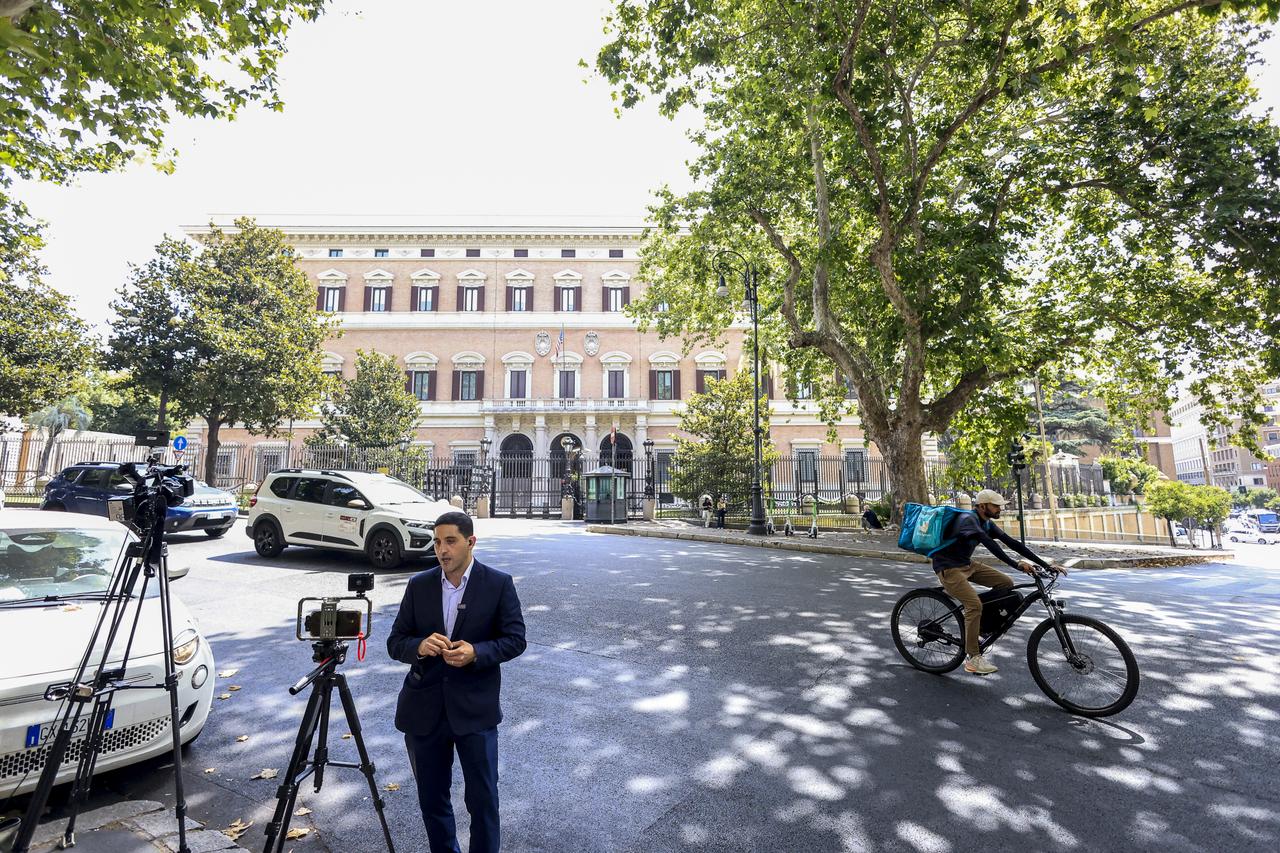
The sixth round of negotiations between Israel and Lebanon is taking place in Rome, July 14 2026 - (Anadolu Agency)
The official also stressed that the pilot zones would test Lebanon’s capacity to exercise sovereignty under the supervision of a third party, verifying whether conditions were being met by the Lebanese Armed Forces. The official added that neither the UN Interim Force in Lebanon UNIFIL nor the UN Truce Supervision Organization UNTSO would be involved in the verification mechanism. Israel’s Yedioth Ahronoth newspaper, citing an Israeli official, also described the Rome talks as “productive” and indicated that withdrawal could begin “within a few days.”
Hezbollah, as in previous rounds, has firmly rejected the Rome talks and continues to reject demands for disarmament, arguing that only pressure from Iran can end the war and compel Israel’s withdrawal. The direct negotiations continued despite Hezbollah’s strong objections and Israel’s intermittent attacks.
On 16 July 2026, the day after the conclusion of the Rome talks, the Israeli military intensified its attacks in southern Lebanon. According to Lebanon’s official news agency NNA, Israeli warplanes launched two separate waves of air strikes around the al-Deir neighborhood of Upper Nabatieh. Explosions were heard and thick plumes of smoke rose from the targeted area.
Israeli artillery also targeted the town of Rashaf, while Israeli forces set fire to numerous homes and plots of land in the outskirts of Beit Yoon in the Bint Jbeil district. Lebanese media outlets reported that Israeli aircraft flew at medium altitude over the eastern Hermel region, northern Akkar region, and southern suburbs of Beirut. Attacks were also reported against the areas around Braşit and Beit Yoon in Bint Jbeil.
Al Jazeera. “Lebanon and Israel End Sixth Round of US-Brokered Talks.” Al Jazeera. Accessed July 16, 2026.https://www.aljazeera.com/news/2026/7/15/lebanon-and-israel-end-sixth-round-of-us-brokered
Al Jazeera. “Lebanon, Israel Hold Talks in Rome on Implementing Framework Deal.” Al Jazeera. Accessed July 16, 2026.https://www.aljazeera.com/news/2026/7/14/lebanon-israel-hold-talks-in-rome-on-implementing-framework-deal
Anadolu Ajansı. "Lebanon, Israel Conclude 1st Day of Direct Talks in Rome." Accessed July 16, 2026.https://www.aa.com.tr/en/middle-east/lebanon-israel-conclude-1st-day-of-direct-talks-in-rome/3997967
Anadolu Ajansı. “Lebanese Official Says Launch of Pilot Areas to Begin Within Days After Rome Talks.” Accessed July 16, 2026.https://www.aa.com.tr/en/politics/lebanese-official-says-launch-of-pilot-areas-to-begin-within-days-after-rome-talks/3998948
Anadolu Ajansı. “Lübnanlı Yetkili: Roma'da İsrail ile Yürütülen Müzakerelerde İki Pilot Bölge İçin Mutabakat Sağlandı.” Accessed July 16, 2026.https://www.aa.com.tr/tr/dunya/lubnanli-yetkili-romada-israil-ile-yurutulen-muzakerelerde-iki-pilot-bolge-icin-mutabakat-saglandi/3999228
Anadolu Ajansı. “İsrail Basını: İsrail Ordusu, Lübnan'da İşgal Ettiği Pilot Bölgelerden Birkaç Gün İçinde Çekilebilir.” Accessed July 16, 2026.https://www.aa.com.tr/tr/dunya/israil-basini-israil-ordusu-lubnanda-isgal-ettigi-pilot-bolgelerden-birkac-gun-icinde-cekilebilir/3999480
Anadolu Ajansı. “İsrail ile Lübnan Arasındaki Müzakerelerin 6. Turu Roma'da Başladı.” Accessed July 16, 2026.https://www.aa.com.tr/tr/dunya/israil-ile-lubnan-arasindaki-muzakerelerin-6-turu-romada-basladi/3998060
France 24. “First Day of New Lebanon-Israel Talks in Rome Has Ended: US Official.” Accessed July 16, 2026.https://www.france24.com/en/live-news/20260714-israel-says-ready-to-move-on-pilot-zones-amid-new-lebanon-talks
France 24. “Lebanon and Israel Conclude Round of Talks on IDF Withdrawal.” France 24. Accessed July 16, 2026.https://www.france24.com/en/lebanon-and-israel-conclude-round-of-talks-on-idf-withdrawal
Reuters. “In Occupied Zone of Lebanon, Israeli Military Veterans See Shadow of Past Wars.” Accessed July 16, 2026.https://www.reuters.com/business/aerospace-defense/occupied-zone-lebanon-israeli-military-veterans-see-shadow-past-wars-2026-07-15/
Following the Round 6 Rome talks, the U.S. Department of State announced on 20 July 2026 that pilot zone operations had officially begun in the villages of Froun, Srifa, and Western Zavtar in southern Lebanon. This announcement coincided with the historic visit of Lebanese President Joseph Avn to Washington and his first face-to-face meeting with U.S. President Donald Trump.
On 21 July 2026, the Lebanese Armed Forces deployed to the village of Western Zavtar in the Nabatieh district under the pilot zone initiative; this village lies within the line Israel has designated as its own "Purple Line." In Froun and Srifa, the Lebanese Armed Forces established observation posts and began regular patrol operations in areas where Israeli ground forces had not yet deployed.
At the outset of Round 7, the Israeli military continued its operations of house demolition, arson, and explosive destruction in occupied areas of southern Lebanon. On 3 August, Israeli forces dropped phosphorus bombs on olive and pine groves in the towns of Yaroun and Haroun and the city of Bint Cübeyl; these attacks triggered massive fires in Yaroun’s olive orchards between Sunday night and Monday morning, destroying over 120 hectares of fruit orchards and olive groves.
On 1 August, the Israeli military carried out a large-scale detonation operation near the historic Beaufort Castle, located close to the southern Lebanese city of Nabatieh. Israel stated that the operation, which used approximately 700 tons of explosives, aimed to destroy an extensive Hizbullah tunnel network beneath the castle. Shocks were felt in nearby villages. Lebanese President Avn characterized the incident as a "direct threat" to the framework agreement and noted that the timing of the attacks was intended to send "negative signals" ahead of Round 7 negotiations.
One day before the talks, Lebanese President Joseph Avn met with Prime Minister Nevvaf Selam and conveyed his directives to the Rome delegation.
Prior to the talks, Lebanese Minister of Agriculture Nizar Hani publicly expressed the government’s dissatisfaction with developments on the ground since the previous framework agreement and emphasized that the current situation fell short of the expectations of President Avn and the Lebanese government.
Prime Minister Selam, meanwhile, stated in a cabinet meeting that efforts in Rome would focus on ensuring a phased Israeli withdrawal.
Compared to previous rounds, Round 7 saw expanded delegations. The Lebanese political delegation consisted of a structure led by former Washington Ambassador Simon Karam, including current Washington Ambassador Nada Hamadeh-Muavvad. The military delegation was headed by Brigadier General George Rizkallah, with five additional expert officers. In addition, international law advisor Antoine Sfeir and land survey expert Najib Massihi participated in the negotiations.
The Israeli delegation, led by Washington Ambassador Yechiel Leiter, included members from the Israeli Ministry of Defense and the National Security Council, as well as Israeli military representatives. The U.S. delegation comprised 15 officials from the State Department, the National Security Council, and the Pentagon.
On the first day of talks, the Lebanese and Israeli delegations met at the U.S. Embassy in Rome. According to Lebanon’s official news agency NNA, the delegations addressed key points related to the implementation of the previously signed framework agreement.
On the first day, an unnamed senior Lebanese source told Anadolu Agency that the Israeli delegation, for the first time, backed away from its previous position of linking the border dossier to Hizbullah’s disarmament and acknowledged that efforts would proceed to reestablish the internationally recognized borders established in 1923: "In the Rome negotiations, Israel stepped back from conditioning the border talks on Hizbullah’s disarmament."
The source linked this development to the presence of an international law expert within the negotiating delegation, stating that work would now proceed to reestablish the borders defined internationally in 1923.
The same source reported that technical and operational details regarding mechanisms to be implemented in the pilot zones had begun to be discussed. The Lebanese delegation’s top priority, according to the source, was making the ceasefire permanent, with halting Israeli violations also listed among the core priorities.
During the hours of the first day’s talks, the Israeli military continued its attacks on Lebanon despite the ceasefire. Two drone strikes were launched in the Rüveys neighborhood of the village of Upper Nabatieh in the afternoon. The Israeli military also carried out large explosions in the area between the villages of Mansuri and Mecdel Zun, both attached to Sur, and in the village of Haddasa in the Bint Cübeyl district, and conducted artillery attacks on the areas around Ayta el-Cebel and Haddasa.
On 4 August, the first day of Round 7, Hizbullah’s Secretary General Naim Qassem condemned the negotiations in a speech delivered during the commemoration of the 40th day of Ashura (Erbain). Qassem stated, "Direct negotiations have brought Lebanon nothing but shame, humiliation, disappointment, and consecutive concessions."
Qassem also criticized President Avn’s role, asserting that he was acting "not as an arbiter and unifier but as a source of division". He added, "We face Israeli-American aggression that targets us, Iran, Gaza, Yemen, and the entire region."
Qassem further called on the Lebanese government to engage in dialogue, saying: "We urge the Lebanese leadership to halt unilateral concessions, engage in dialogue through resistance, restore internal stability, and prioritize sovereignty." He also declared, "The enemy’s only option is withdrawal, and it will withdraw."
Prime Minister Nevvaf Selam, in a social media post, accused those who dragged Lebanon into "meaningless proxy wars" of fabricating justifications for Israeli attacks on the country. He stated, "Those who unilaterally decide on war and continue to usurp the state’s decision-making authority, binding Lebanon to external agendas and axes, have no right to lecture on patriotism and sovereignty."
Selam added, "Sovereignty for Lebanon is only possible through a single, independent decision; it is only possible with a state that has one army and extends its authority solely through its own forces across all its territory."
On 5 August, both delegations reconvened in the morning at the U.S. Embassy in Rome. It was reported that the main agenda items were the technical details of the pilot zone implementation and making the ceasefire permanent.
The key development of the day was Israel’s announcement that it would launch an attack on the village of Mansuri, attached to Sur, and demanded that its residents evacuate their homes and move at least one kilometer away from the village. Shortly afterward, the Israeli military issued a second statement declaring that it had begun attacks on southern Lebanon, citing Hizbullah’s violation of the ceasefire. This development was recorded by the United Nations as the first evacuation order issued in Lebanon since the last ceasefire declaration on 19 June.
UN Deputy Spokesperson Farhan Haq, during his daily press briefing, stated: "This is the first evacuation order issued in Lebanon since the last ceasefire declaration on 19 June." Haq noted that approximately 1,500 people were in the village where the order was issued and that this development coincided with families who had cautiously begun returning to their homes in recent weeks. Haq emphasized that this event "reveals how fragile the situation in the region remains and the uncertainty faced by civilians."
On the second day, an Israeli drone strike on a cemetery in the village of Tebnin, attached to the Nabatieh governorate, killed one person and injured eleven others. Attacks also targeted the villages of Mansuri, Mecdel Zun, and Kefertebnit, attached to Sur. That evening, two Israeli reserve officers who entered a building in the southern Lebanese village of Mecdel Zun were killed in an explosion.
On the final day of Round 7, negotiations continued under the headings of implementation of the ceasefire agreement, completion of Israel’s withdrawal from Lebanese territory, and strengthening the Lebanese Armed Forces’ deployment along the border areas.
The United Nations Interim Force in Lebanon UNIFIL reported that the Israeli military had fired 113 rounds into Lebanon the previous day, the highest daily number recorded since 21 June.
The Israeli military continued its attacks on the final day of negotiations. Two air strikes were launched on the rural outskirts of the village of Mansuri, attached to Sur, and an explosion was carried out in the Meşa area between Mansuri and Mecdel Zun. It was reported that Israeli drones had flown at low altitudes over the city of Sur and its surroundings.
The Lebanese and Israeli delegations concluded their three-day talks in Rome on the evening of 6 August.
The primary outcome of Round 7 was the failure to reach agreement on adding new pilot zones. A Lebanese source summarized the situation as follows: Lebanon had requested an increase in the number of pilot zones; Israel insisted on verifying whether security conditions had been met in the first two pilot zones before proceeding to the next phase.
In the prisoners file, it was reported that the parties exchanged preliminary lists. The Lebanese side reiterated its demand for the immediate release of the first group.
Discussions continued on determining the party responsible for monitoring security conditions in the pilot zones. It was also reported that the parties were considering the possibility of reaching a new security agreement to regulate the situation along the border.
UN Deputy Spokesperson Farhan Haq, during his evening press briefing on 6 August, reported that since the signing of the tripartite framework agreement in Lebanon, "the sharpest escalation in military activity has been observed".
Haq added that UNIFIL had recorded 120 Israeli fire violations on 6 August. He also noted that no shell fire had been detected from Hizbullah during this period.
Al Jazeera. “Seventh Round of Israel-Lebanon Talks Begins – What’s on the Agenda?” Al Jazeera. Accessed August 19, 2026.https://www.aljazeera.com/news/2026/8/4/seventh-round-of-israel-lebanon-talks-begins-whats-on-the-agenda
Al-Monitor. "What to Know About Lebanon-Israel 7th Round of Talks Held in Rome." Accessed August 19, 2026.https://www.al-monitor.com/originals/2026/08/what-know-about-lebanon-israel-7th-round-talks-held-rome
Anadolu Ajansı. "ABD Arabuluculuğunda Roma'da Düzenlenen Lübnan-İsrail Müzakerelerinin 7. Turu Sona Erdi." Accessed August 19, 2026.https://www.aa.com.tr/tr/dunya/abd-arabuluculugunda-romada-duzenlenen-lubnan-israil-muzakerelerinin-7-turu-sona-erdi/4020086
Anadolu Ajansı. "Lebanon, Israel to Hold 7th Round of Talks Tuesday on Withdrawal, Halt to Attacks." Accessed August 19, 2026.https://www.aa.com.tr/en/middle-east/lebanon-israel-to-hold-7th-round-of-talks-tuesday-on-withdrawal-halt-to-attacks/4017372
Anadolu Ajansı. “Lübnan Resmi Ajansı: İsrail'in Kullandığı Fosforlu Mühimmat Zeytinlik ve Çamlık Alanlarda Yangına Neden Oldu.” Accessed August 19, 2026.https://www.aa.com.tr/tr/dunya/lubnan-resmi-ajansi-israilin-kullandigi-fosforlu-muhimmat-zeytinlik-ve-camlik-alanlarda-yangina-neden-oldu/4016694
Anadolu Ajansı. “Lübnanlı Kaynak: İsrail, Sınır Dosyası Görüşmesinde Hizbullah'ın Silahsızlandırılması Şartından Geri Adım Attı.” Accessed August 19, 2026.https://www.aa.com.tr/tr/dunya/lubnanli-kaynak-israil-sinir-dosyasi-gorusmesinde-hizbullahin-silahsizlandirilmasi-sartindan-geri-adim-atti/4018294
Anadolu Ajansı. “İsrail Ordusu Ateşkese Rağmen Lübnan'ın Güneyine İHA Saldırıları Düzenledi.” Accessed August 19, 2026.https://www.aa.com.tr/tr/dunya/israil-ordusu-ateskese-ragmen-lubnanin-guneyine-iha-saldirilari-duzenledi/4018491
Anadolu Ajansı. “İsrail Ordusu, Ateşkese Rağmen Lübnan'ın Güneyine Saldırılar Düzenledi.” Accessed August 19, 2026.https://www.aa.com.tr/tr/dunya/israil-ordusu-ateskese-ragmen-lubnanin-guneyine-saldirilar-duzenledi/4019024
Anadolu Ajansı. “İsrail Ordusunun Ateşkese Rağmen Lübnan'ın Güneyine Düzenlediği Saldırılarda 8 Kişi Yaralandı.” Accessed August 19, 2026.https://www.aa.com.tr/tr/dunya/israil-ordusunun-ateskese-ragmen-lubnanin-guneyine-duzenledigi-saldirilarda-8-kisi-yaralandi/4019738
Anadolu Ajansı. “İsrail ile Lübnan Arasındaki Müzakerelerin 7. Turu Roma'da Sürüyor.” Accessed August 19, 2026.https://www.aa.com.tr/tr/dunya/israil-ile-lubnan-arasindaki-muzakerelerin-7-turu-romada-suruyor/4018821

Direct talks between Israel and Lebanon were held in Washington on 14 April 2026 and marked the first high-level meeting since 1993. The talks came to the agenda following a two-week ceasefire brokered by Pakistan between the United States and Iran on 8 April and as part of the process of implementing the ceasefire and managing ongoing regional tensions. Lebanon called for the implementation of the ceasefire while Israel prioritized the disarmament of Hezbollah. As the talks continued Israeli attacks on the ground persisted and Hezbollah rejected the process.
No Discussion Added Yet
Start discussion for "Israel–Lebanon Washington Talks (2026)" article
April 14, 2026
Background
April 14, 2026
Talk Process
April 14, 2026
Positions and Demands of the Parties
April 14, 2026
Outcomes of the Talks
April 14, 2026
Hezbollah’s Rejection of the Talks
April 14, 2026
Continuation of Israeli Attacks During the Talks
April 14, 2026
Historical and Diplomatic Context
June 3, 2026
Second Round Talks (23 April 2026)
June 3, 2026
Extension of the Ceasefire
June 3, 2026
Third Round Talks (14–15 May 2026)
June 3, 2026
Fourth Round of Talks (2–3 June 2026)
June 3, 2026
Conditional Ceasefire Agreement
June 3, 2026
Hezbollah’s Rejection of the Ceasefire
June 3, 2026
Military Operations Continue Despite Ceasefire Announcement
June 29, 2026
Israel-Lebanon Negotiations: Fifth Round and Washington Framework Agreement (June 2026)
June 29, 2026
Signing of the Framework Agreement (26 June 2026)
June 29, 2026
Content of the Agreement
June 29, 2026
Hezbollah’s Response to the Agreement
July 16, 2026
Developments Between the Fifth and Sixth Rounds (27 June – 13 July 2026)
July 16, 2026
Sixth Round of Talks (14–15 July 2026)
August 19, 2026
6. Developments After Round 6
August 19, 2026
Preparation for Round 7
August 19, 2026
Conduct of Round 7
August 19, 2026
Outcomes of Round 7