This article was automatically translated from the original Turkish version.
Type of Geographical İndication | Mahreç Sign | ||||||||
|---|---|---|---|---|---|---|---|---|---|
Registration Number | 1025 | ||||||||
Registration Date | 09.02.2022 | ||||||||
Product / Product Group(s) | Cheeses | ||||||||
Province(s) | Balıkesir | ||||||||
Applicant/Registrant(s) | İvrindi Municipality | ||||||||
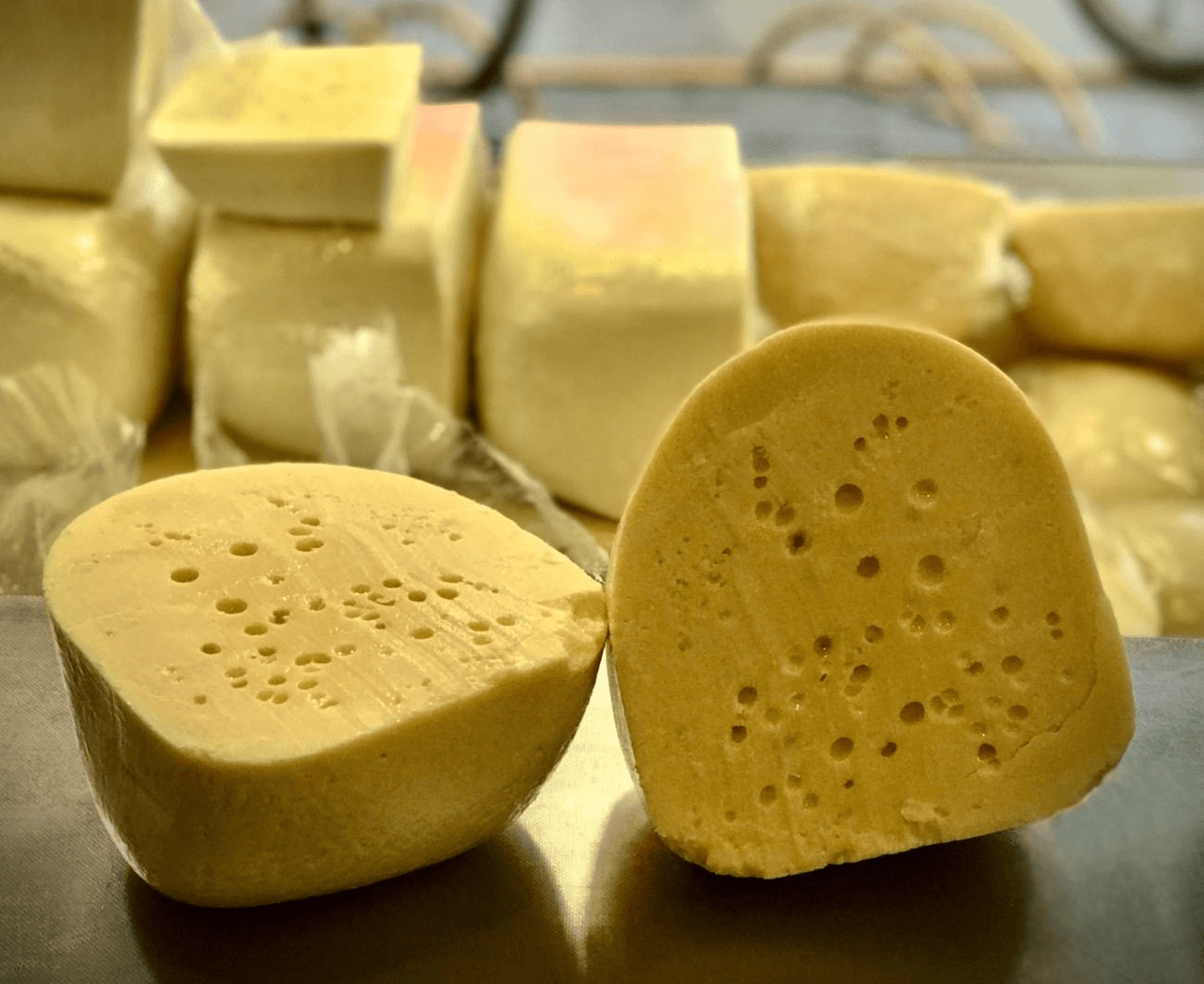
İvrindi kelle peyniri is a type of cheese traditionally produced in the İvrindi district of Balıkesir Province, characterized by a hard rind and porous structure, and matured in brine. It was officially registered with a geographical indication on 9 February 2022 and carries a geographical designation due to its unique production method and cultural significance.
The product has deep historical roots in the region’s history. Integrated into the culinary culture and local economy of İvrindi, this cheese is prepared using an original method that can only be applied within the defined geographical boundaries. The milk used is also sourced exclusively from within this area.
İvrindi kelle peyniri has a color ranging from yellow to white and a non-cracked, porous structure. The rind is hard, typically classified as hard, occasionally semi-hard. It is matured in brine for at least 120 days. The moisture content does not exceed 60 percent and the salt content in the dry matter does not exceed 7.5 percent. Fat content is classified as full-fat (45 percent or more milk fat) or semi-fat (25 to 45 percent milk fat).
Milk is preferably obtained from animals raised in the region. These animals are fed seasonally with plants such as wheat, barley, alfalfa, vetch, thyme, and chamomile. During the April–June period, milk from Kıvırcık and Kıvırcık-Merino crossbred sheep is predominant. Goat milk is also abundantly available during the same period. In other seasons, cow milk is used. The milk mixture ratio varies by producer. The milk composition is not altered; no fat removal or water addition is permitted.
Collected raw milk is filtered to remove foreign substances. It is then heat-treated at 50–55 °C for at least 30 minutes and cooled to 27–35 °C before being inoculated with şırdan yeast. The yeast quantity is 10–12 ml per 100 litres of milk. When the curd reaches the size of a rice grain, it is cooked at 80–90 °C. The whey typically remains at 38–45 °C. The cooking temperature is carefully controlled to ensure the formation of the porous structure.
The shaping of the curd is carried out using two different methods:
The shaped cheese pieces are stored in rooms at 10–20 °C for 10–21 days in brine. They are matured for at least 120 days from the production date. Packaging and storage are carried out at temperatures below 10 °C.
Inspections are conducted at least once a year under the coordination of the İvrindi Municipality, with participation from experts of the İvrindi District Directorate of Agriculture and Forestry and the Department of Food Engineering at Balıkesir University. The following criteria are evaluated during inspections:
Non-conformities are reported and communicated to the relevant authorities. The inspection body may engage public or private experts as needed.
Turk Patent and Trademark Office. "İvrindi Kelle Peyniri Mahreç İşareti Tescil Belgesi." Turk Patent and Trademark Office. Accessed October 19, 2025. https://ci.turkpatent.gov.tr/Files/GeographicalSigns/8b6bf220-1b97-4189-aac7-383fcf6e69db.pdf.
Turk Patent and Trademark Office. "İvrindi Kelle Peyniri." *Geographical Indications Portal.* Accessed October 19, 2025. https://ci.turkpatent.gov.tr/cografi-isaretler/detay/3488.

Type of Geographical İndication | Mahreç Sign | ||||||||
|---|---|---|---|---|---|---|---|---|---|
Registration Number | 1025 | ||||||||
Registration Date | 09.02.2022 | ||||||||
Product / Product Group(s) | Cheeses | ||||||||
Province(s) | Balıkesir | ||||||||
Applicant/Registrant(s) | İvrindi Municipality | ||||||||
No Discussion Added Yet
Start discussion for "İvrindi Kelle Peyniri" article
Geographical and Cultural Significance
Physical Characteristics
Milk Supply and Composition
Production Process
Shaping and Maturation
Inspection Process