


This article was automatically translated from the original Turkish version.
+1 More
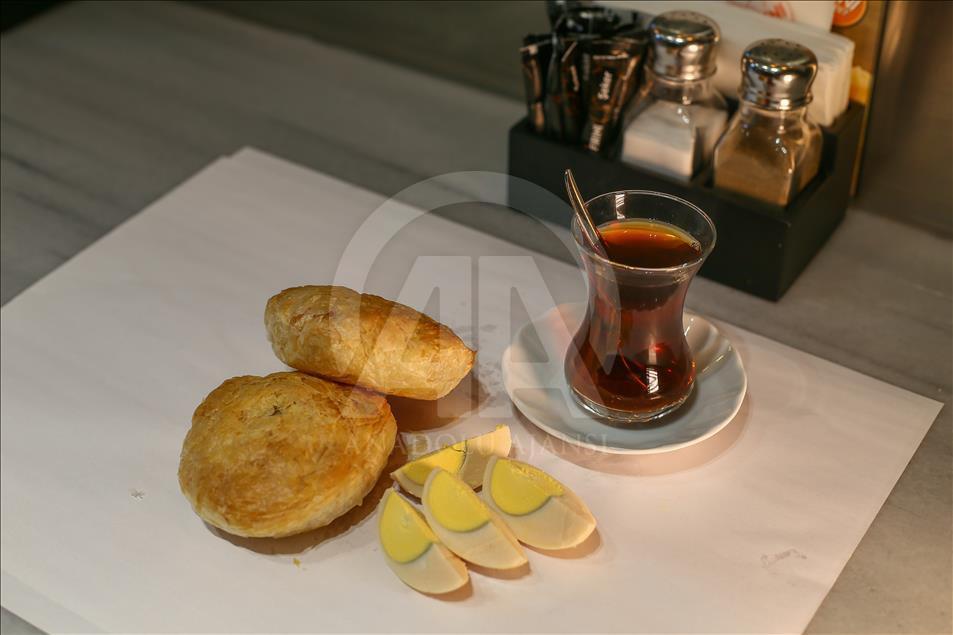
İzmir Boyozu
Name of the Geographical Indication | İzmir Boyozu | ||||||||
|---|---|---|---|---|---|---|---|---|---|
Type of the Geographical Indication | Mahreç Sign | ||||||||
Geographical Boundary | İzmir | ||||||||
Registration Date | 08.12.2017 | ||||||||
Main Materials | Flour, water, salt | ||||||||
Cooking Temperature | 180-200 °C | ||||||||
Cooking Duration | 15-25 minutes | ||||||||
Boyoz is a pastry made from unleavened dough, characteristic of İzmir cuisine. Typically prepared using basic ingredients such as flour, fat, and tahini, boyoz is recognized for its crisp outer surface and layered interior structure. Often chosen for breakfasts and snacks, boyoz is commonly served alongside boiled eggs.
İzmir Boyoz is a pastry that has developed under the influence of diverse cultures throughout history and is considered a distinctive product of İzmir Province. With a history spanning 500 years, boyoz has been passed down from the Ottoman period to the present day. Commercial production became widespread in more recent times. The name “boyoz” is derived from the Spanish word “bollos,” meaning “bundle,” and is regarded as a flavor introduced to Anatolia by Sephardic Jews during their migration from Spain in 1492.
İzmir Boyoz is a bakery product made by shaping and baking dough prepared from wheat flour, water, and salt. It has a round, layered structure. The product is produced with a light caramelized color and must be free of burnt or foreign tastes and odors. Boyoz has a diameter of 7–9 cm and a thickness of 2.5–3.5 cm, with no defects such as crumbling or cracking. Although traditionally produced with a hollow interior, variations filled with spinach or cheese also exist.

İzmir Boyoz (Anadolu Agency)
The production process of İzmir Boyoz consists of the following steps:

Preparation Process (Anadolu Agency)
İzmir Boyoz is regarded as one of the symbols of İzmir cuisine. As an important breakfast food, it is typically consumed with hard-boiled eggs and tea. Every year in May, the İzmir Boyoz Festival, organized by Konak Municipality, promotes this pastry and celebrates it as an integral part of the city’s cultural identity.
İzmir Boyoz was granted geographical indication registration on 8 December 2017, officially recognizing it as a product unique to İzmir Province. Its production method, shape, and compositional characteristics are now protected under specific standards.
İzmir Boyoz is best consumed as soon as possible after production. If not consumed immediately, it can be stored at room temperature for 1–1.5 days, covered with a clean cloth. It is recommended to lightly reheat before serving.
Kültür Portalı. "Boyoz." Kültür Portalı. Accessed May 15, 2025. https://www.kulturportali.gov.tr/turkiye/izmir/neyenir/boyoz
Mengüarslan, Emin. “İzmirlilerin 500 Yıllık Vazgeçilmez Lezzeti Boyoz.” Anadolu Ajansı. Accessed May 15, 2025. https://www.aa.com.tr/tr/pg/foto-galeri/izmirlilerin-500-yillik-vazgecilmez-lezzeti-boyoz/146
Yentürk, Nejat. “İzmirlinin Zihin Dünyasında Bir Yahudi Böreği: Boyoz.” *İzmir Akdeniz Akademisi Dergisi*, no. 6 (2019): 103–110. Accessed May 15, 2025. https://www.meltemizmeda.org/YuklenenDosyalar/Dergi/11122019_0911_Yenturk.pdf
Çelikkol, Zeynep. “İzmir'in Sembol Böreği Boyoz.” Anadolu Ajansı. Accessed May 15, 2025. https://www.aa.com.tr/tr/sokak-lezzetleri/izmirin-sembol-boregi-boyoz/2650489
İzmir İl Directorate of Culture and Tourism. "İzmir Boyozu." İzmir Provincial Directorate of Culture and Tourism. Accessed May 15, 2025. https://izmir.ktb.gov.tr/TR-199764/izmir-boyozu.html

İzmir Boyozu
Name of the Geographical Indication | İzmir Boyozu | ||||||||
|---|---|---|---|---|---|---|---|---|---|
Type of the Geographical Indication | Mahreç Sign | ||||||||
Geographical Boundary | İzmir | ||||||||
Registration Date | 08.12.2017 | ||||||||
Main Materials | Flour, water, salt | ||||||||
Cooking Temperature | 180-200 °C | ||||||||
Cooking Duration | 15-25 minutes | ||||||||
History of the Product
Description and Distinctive Characteristics
Production Method
Cultural and Social Significance
Geographical Indication Registration
Storage Conditions