


This article was automatically translated from the original Turkish version.
+2 More
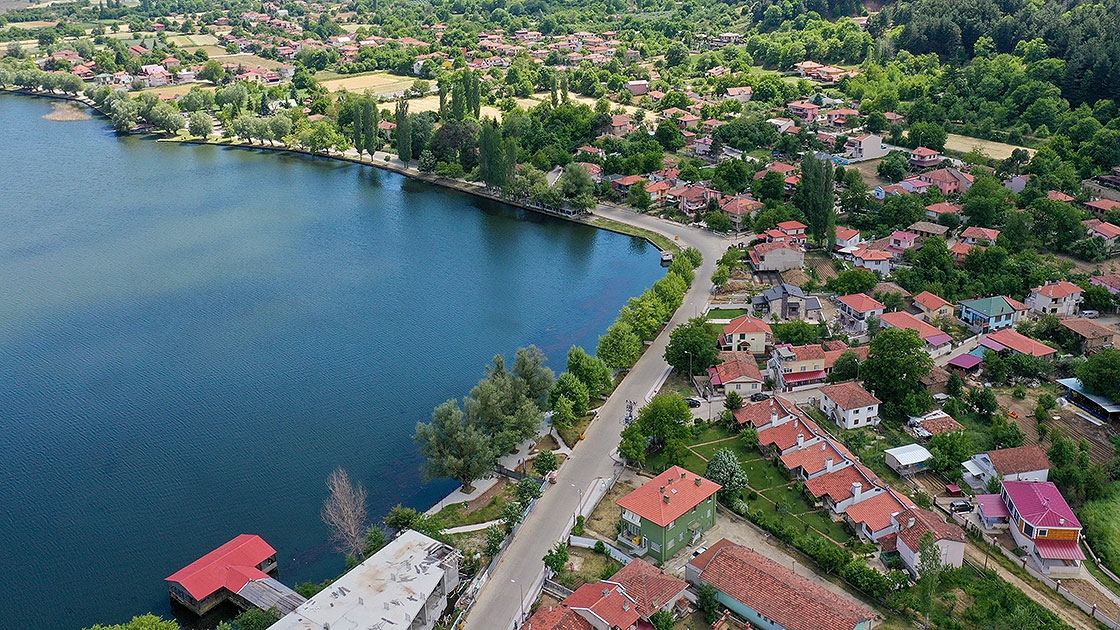
The Gölcük Lake, located in the Ödemiş district of İzmir, is situated among the natural areas of the Aegean Region and is characterized by its geological structure, hydrological features, biological diversity, and tourism potential. This wetland, situated at an elevation of approximately 1100 meters on the highlands of the Bozdağlar Mountains, is evaluated in scientific studies and monitoring of natural habitats due to its ecosystem characteristics and current conservation status.
Gölcük Lake lies within the boundaries of the Ödemiş district of İzmir Province in the Aegean Region. The lake is located at approximately 1100 meters elevation on the summit of the Bozdağlar Mountains, 5 kilometers southwest of the town of Bozdağ and 10 kilometers from Ödemiş. Gölcük Lake is 105 kilometers from İzmir, 78 kilometers from Selçuk, and 65 kilometers from Torbalı. The Gölcük Plateau, named after the lake, is the largest of the north-south oriented troughs on the Bozdağlar Plateau.

İzmir Gölcük Gölü (Ministry of Agriculture and Forestry of the Republic of Türkiye)
Gölcük Lake is part of the Tabak Çayı Basin and constitutes a small catchment area. Waters flowing from this basin reach the Gediz River via Tabak Çayı and ultimately discharge into the Aegean Sea. Therefore, the Gölcük Lake Basin is an outward-draining basin.
Fluctuations in the lake’s water level are primarily linked to snowmelt and precipitation. Water extraction from the lake during summer months for irrigation of potato and bean fields in the surrounding areas causes variations in water levels. The lake level rises during winter and spring due to increased rainfall, and under certain conditions, water is discharged via Tabak Çayı for flood control purposes.
Various scientific theories exist regarding the origin of Gölcük Lake. The main hypotheses are as follows:
In addition to these theories, the Yurt Ansiklopedisi describes the lake as a small crater lake.

İzmir Gölcük Gölü Anadolu Agency)
Gölcük Lake is a freshwater ecosystem and is particularly rich in fish diversity. The vegetation surrounding the lake is typical of the Mediterranean climate, featuring evergreen and needle-leaved trees as well as drought-resistant shrubs. The lake and its surrounding wetlands serve as habitats for numerous bird species. Additionally, analyses of sediment layers within the lake have revealed ash particles from the volcanic eruption of Santorini in the Aegean Sea approximately 3500 years ago, significantly enhancing the lake’s geological importance.
Gölcük Lake and its surroundings lie within the influence of the Mediterranean climate; however, due to its location at the summit of the Bozdağlar Mountains, it experiences a cooler climate than the surrounding valleys. Average temperatures are 19°C in July and 3°C in January. Annual precipitation averages around 1000 mm, reaching up to 1362.6 mm at the Bozdağ summit. Snowfall occurs on approximately 15 days per year.

İzmir Gölcük Gölü (Ministry of Agriculture and Forestry of the Republic of Türkiye)
Gölcük Lake and its surroundings have been declared a “Strictly Protected Sensitive Area” by presidential decree. Additionally, on 30 December 2022, the General Directorate of Nature Conservation and National Parks granted it the status of a “Locally Significant Wetland.” The registered boundary of the wetland covers 1521 hectares.
The Gölcük Plateau is used by local communities during summer months for picnics, camping, and tourism. Agriculture in the surrounding areas focuses on potato and bean cultivation. The village of Gölcük, located on the lake shore, functions as a seasonal settlement, inhabited during summer months on the plateau and relocated to the valley during winter.
Gölcük Lake attracts domestic and international visitors, particularly during summer months, due to its natural beauty and cool climate. The pine forests surrounding the lake provide ideal areas for picnics and camping. Furthermore, its proximity to Birgi, an important settlement during the Aydınoğulları Beylik and Ottoman periods (20 kilometers away), and Sart, the center of the ancient Kingdom of Lydia (30 kilometers away), enhances the region’s tourism appeal.
Geographical Location and General Characteristics
Hydrographic Features
Origin
Ecosystem and Natural Structure
Climate and Meteorological Features
Conservation Status
Economic and Social Activities
Tourism Potential