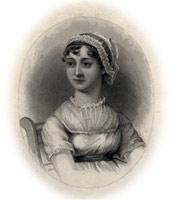



Doğum tarihi | 1775-12-16 | ||||||||
|---|---|---|---|---|---|---|---|---|---|
Place of Birth | Steventon, Hampshire, England | ||||||||
Ölüm tarihi | 1817-07-18 | ||||||||
Profession(s) | Novelist | ||||||||
Period(s) | Late 18th and early 19th century (Georgian era) | ||||||||
Jane Austen, one of the leading novelists of English literature, lived at the end of the 18th century and the beginning of the 19th century. Austen, who examined rural life in England, social class structure, and the social position of women through a literary lens, played a significant role in the development of the modern novel. Her works published during her lifetime reflected the values and interpersonal relationships of her era with realism, subtlety, and critical insight. Her literary value increased steadily after her death, and her novels are now recognized as classics worldwide.
Jane Austen was born on 16 December 1775 in the village of Steventon, in the Hampshire region of England. Her father, George Austen, was an Anglican clergyman and a graduate of Oxford. Her mother, Cassandra Leigh, belonged to the aristocratic Leigh family. Austen was the seventh of eight children, with six brothers and one older sister, Cassandra, who was two years her senior. Cassandra, with whom Austen shared a close bond, became her closest friend and lifelong confidante.
The Austen family belonged to a cultured environment that valued reading and writing. Literature held high esteem within the household, and family members regularly read books aloud and performed short theatrical plays. Jane Austen and her sister were briefly sent to different boarding schools, where they both fell seriously ill. After health problems caused by typhus, they returned home. Due to financial constraints, their formal education did not last long; however, they continued their education at home, particularly through their father’s extensive library.
Jane Austen began writing at an early age. By the time she was twelve, she was composing short stories, sketches, and parodies. She collected her early writings under the titles Volume the First, Volume the Second, and Volume the Third. These early works display an ironic approach to the popular literary genres of her time.
In the mid-1790s, Austen began writing her first serious novels. Her work Elinor and Marianne was later published as Sense and Sensibility. The subsequent manuscript, First Impressions, eventually became Pride and Prejudice. These novels marked a turning point in Austen’s literary career, particularly in their exploration of interclass relationships, women’s search for security through marriage, and individual morality. Her first works were published anonymously, under phrases such as “By a Lady” and “By the author of Sense and Sensibility.” Jane Austen’s name was only revealed to the public in a biographical note published after her death.
Jane Austen’s six major novels are:
Common features of these works include a focus on the rural gentry, psychological depth of female characters, and a critical perspective on the institution of marriage in her era. Austen addressed with realism the social pressures women faced, their lack of economic independence, and the societal compulsion to marry.
Her novels do not directly address major historical events such as war, slavery, or politics; however, their effects are subtly reflected in the lives of her characters. For instance, Mansfield Park includes a brief but notable passage on slavery. Austen’s narrative style is plain, witty, and observational; character development and dialogue form the foundation of her storytelling.
Jane Austen never married. In 1802, she accepted a marriage proposal from Harris Bigg-Wither but retracted it the following morning. Austen believed it would be wrong to marry someone with whom she did not feel emotional closeness. Although she experienced several significant romantic relationships during her life, none resulted in marriage.
The Austen family’s income was modest. After her father’s death in 1805, Austen, along with her mother and sister, faced financial difficulties and had to live with various relatives. In 1809, after moving to the home of her brother Edward in Chawton, Austen entered her most productive period. There she completed important works such as Emma, Mansfield Park, and Persuasion.
In 1816, Austen began suffering serious health problems before reaching the age of forty. Her exact illness was never definitively diagnosed. The most widely accepted theory is Addison’s disease, though tuberculosis and arsenic poisoning have also been proposed. Austen moved to Winchester for treatment and died there on 18 July 1817 at the age of 41, surrounded by her sister Cassandra. She was buried in Winchester Cathedral. Her final literary work was a short poem she wrote three days before her death.
Jane Austen’s works reached only a limited readership during her lifetime. Their widespread recognition and the full appreciation of her literary value emerged in the late 19th century, particularly during the Victorian era. The 1869 publication of A Memoir of Jane Austen portrayed her as a quiet, domestic, and contented woman, but this depiction obscured her literary sharpness and intellect. Contemporary research, based on Austen’s writings and letters, reveals her to have been a writer with strong will, keen wit, and a powerful capacity for social critique.
Austen’s novels have been translated into more than forty languages and adapted numerous times for film and television. Pride and Prejudice is among the most frequently adapted works. Because her characters explore universal themes such as love, misunderstanding, class distinction, and personal growth, her novels have been easily adapted to different eras and cultures. Modern works such as Clueless, Bridget Jones's Diary, and Bride and Prejudice were inspired by her writings.
CBC/Radio-Canada. “70 Facts You Might Not Know About Iconic British Novelist Jane Austen.” CBC Books, July 18, 2019. Accessed June 26, 2025. https://www.cbc.ca/books/70-facts-you-might-not-know-about-iconic-british-novelist-jane-austen-1.4712284.
Chicago Public Library. “Jane Austen Biography.” Accessed June 26, 2025. https://www.chipublib.org/jane-austen-biography/.
Picryl. “Jane Austen, 1870.” Picryl. Accessed June 24, 2025. https://picryl.com/media/jane-austen-1870-842f96.

Doğum tarihi | 1775-12-16 | ||||||||
|---|---|---|---|---|---|---|---|---|---|
Place of Birth | Steventon, Hampshire, England | ||||||||
Ölüm tarihi | 1817-07-18 | ||||||||
Profession(s) | Novelist | ||||||||
Period(s) | Late 18th and early 19th century (Georgian era) | ||||||||
Birth, Family, and Education
Beginnings of a Writing Career
Works
Personal Life
Health and Death
Literary Legacy