


This article was automatically translated from the original Turkish version.
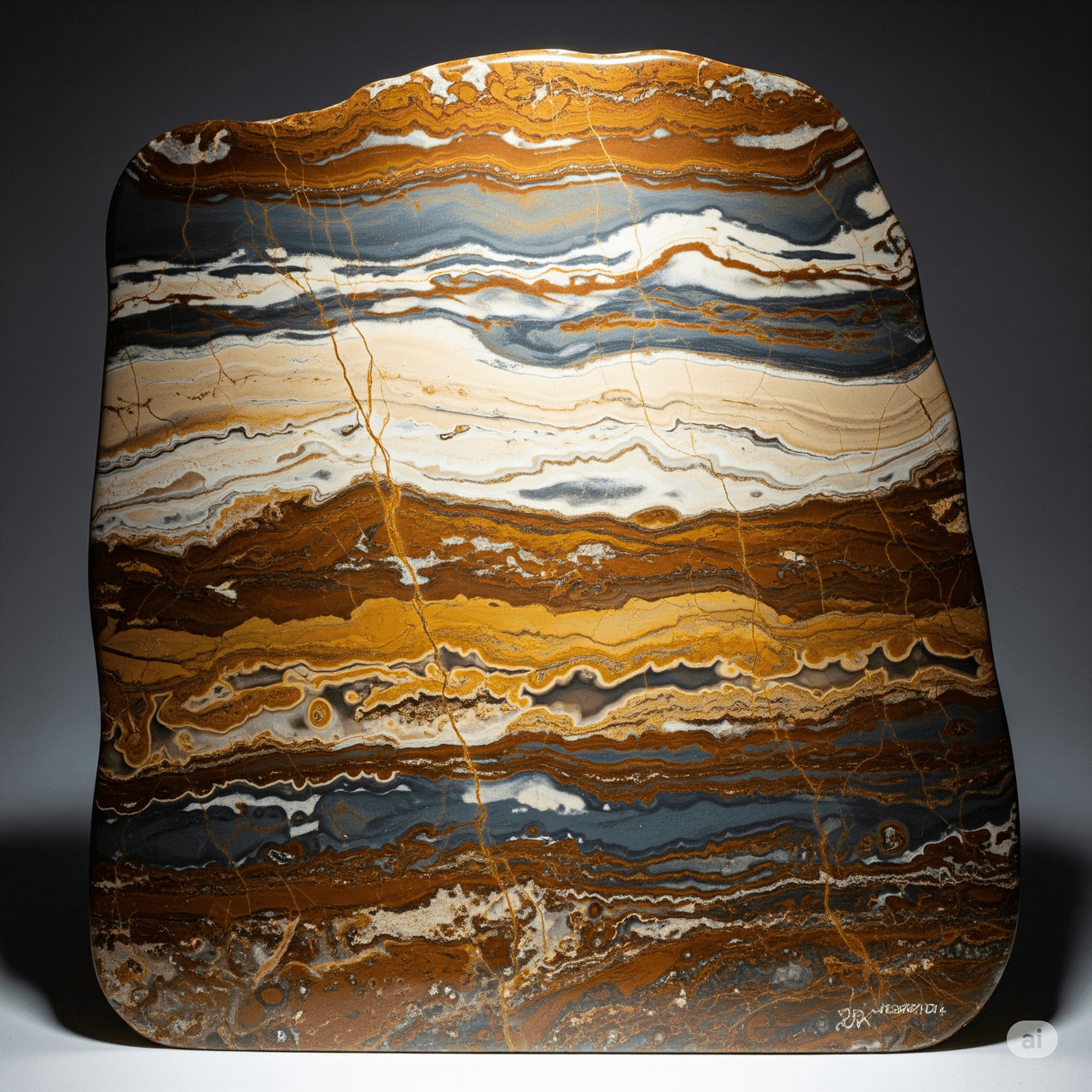
Jasper Stone
Chemical Composition | 90%+ SiO2 (microcrystalline quartz), Iron Oxide, Manganese and other trace minerals | ||||||||
|---|---|---|---|---|---|---|---|---|---|
Hardness | Mohs 6.5-7 | ||||||||
Color | Red, Yellow, Green, Brown and Mixtures | ||||||||
Geological Formation | Hydrothermal precipitation, chemical transformation of volcanic rocks | ||||||||
Main Sources | Türkiye, Brazil, India, Russia, USA | ||||||||
Area(s) of Use | Jewelry Collection Alternative Medicine Decorative Objects | ||||||||
Physical Properties | Opaque, Fine-grained, Polished Lustrous Surface, Durable | ||||||||
Jasper is a naturally occurring, opaque, and often multicolored variety of quartz. It contains silica minerals along with various iron oxides and other trace elements. Shaped by geological processes, jasper exhibits a rich diversity of colors and patterns and has been used throughout history both as ornamental objects and for medicinal purposes. Beyond its significance in mineralogy, formation processes, and global distribution, jasper is also valued for its physical properties and applications across multiple fields.
The formation of jasper is primarily associated with hydrothermal precipitation and the chemical alteration of volcanic rocks. During these processes, silica-rich fluids interact with various minerals, giving rise to jasper’s distinctive color tones and textures.
Jasper deposits are found in various regions worldwide. Countries such as Türkiye, Brazil, India, Russia, and the United States possess rich jasper reserves. The Anatolian region, in particular, is abundant in both the variety and quality of jasper. The geological structure of these deposits is typically linked to volcanic and metamorphic rocks, with hydrothermal activity in the region playing a decisive role in jasper formation.
In terms of mineralogy and physical properties, jasper has a hardness of 6.5 to 7 on the Mohs scale. This characteristic enhances the stone’s durability while also facilitating polishing and carving. Its opaque structure is a key factor distinguishing it from other quartz varieties. Additionally, its fine-grained texture and heterogeneous color distribution make jasper especially appealing for jewelry and decorative purposes.

Jasper. (Generated by artificial intelligence.)
Jasper has been used since ancient times both as ornamental objects and for medicinal and mystical purposes. In ancient Egyptian and Mesopotamian civilizations, jasper was regarded as a protective stone and healing agent. Today, it continues to be used in mineral collections, jewelry making, and alternative medicine. In recent years, research into the stone’s energetic effects and psychological benefits has increased. However, scientific evidence in this area remains limited, and more comprehensive studies are required.
The diverse colors and patterns of jasper enable its classification into numerous subtypes. Red jasper, yellow jasper, green jasper, and forest jasper are among the most common varieties. Each type may differ in its formation conditions and mineral composition. This diversity enriches the geological and cultural study of jasper.
Jasper is also studied for technological applications. Its high silica content and physical durability enhance its potential use in certain industrial processes. In geological research, the analysis of jasper deposits contributes to understanding regional geodynamics and hydrothermal systems.
Jasper is a type of microcrystalline quartz formed by the accumulation of silica minerals, primarily through hydrothermal precipitation or the chemical alteration of volcanic rocks. These processes begin when silica-rich fluids react with various minerals. The presence of iron oxides, in particular, produces jasper’s characteristic red, brown, and yellow hues.

Formation of Jasper. (Generated by artificial intelligence.)
Geologically, jasper typically forms as hydrothermal veins within volcanic rocks or through the silicification of sedimentary rocks. This formation results from complex chemical and physical processes spanning millions of years. Jasper deposits are commonly found in regions with intense volcanic activity. In Türkiye, jasper deposits are concentrated in the Aegean and Central Anatolia regions and are generally remnants of ancient volcanic platforms.
Microstructural analyses reveal that jasper has a very fine crystalline structure, which contributes to its opaque appearance and texture. Variations in color and pattern are linked to the heterogeneous distribution of minerals. For instance, the variety known as forest jasper displays complex veins in green and brown tones, indicating variability in its geological environment.
Jasper is composed primarily of microcrystalline quartz and contains iron, manganese, and other trace minerals. These minerals determine its color and chemical characteristics. With a Mohs hardness of 6.5 to 7, jasper is both durable and workable. Its opaque structure and color variety contribute to its value.
The mineral composition is dominated by silica; SiO₂ content exceeds 90%. Iron oxides within jasper occur as hematite and goethite, which produce its red and brown hues. Green tones are attributed to the presence of chlorite or other iron-bearing minerals.
Physically, jasper can be polished to a glossy finish, making it suitable for jewelry and ornamental objects. Its density typically ranges between 2.5 and 2.9 g/cm³. It is resistant to heat and chemical substances. This durability enables its use in both decorative and industrial applications.
Jasper has held significant cultural importance across many civilizations throughout history. In ancient cultures, it was used as protective amulets and healing objects. Particularly in Middle Eastern and Egyptian civilizations, jasper featured in mythological and religious symbolism. Today, it is widely used in the jewelry and decorative arts industries.
Jasper is also highly sought after by collectors. The stone’s wide range of colors and patterns ensures that each specimen is unique. In geological research, jasper samples help elucidate regional hydrothermal activity and volcanic history.

Use of Jasper in Ornamental Objects. (Generated by artificial intelligence.)
Sirisokha, Seang, Kret, Kakda, Zaw, Khin, and Watanabe, Koichiro. "Mineralogy and geochemistry of green jasper from northeastern Cambodia: implications for hydrothermal origin and jewellery." ResearchGate (2024). Accessed May 23, 2025.
Yüzbaşıoğlu, Taha Yasin, and Akbudak, İlkay Kaydu. "Mineralogical Characteristics and Their Usability as Gemstones of Jaspers in Altered Metavolcanics Belonging to the Topçam Formation, Tokat, Türkiye." *Minerals* 2024, *14*(11), 1072. Accessed May 23, 2025. https://www.mdpi.com/2075-163X/14/11/1072

Jasper Stone
Chemical Composition | 90%+ SiO2 (microcrystalline quartz), Iron Oxide, Manganese and other trace minerals | ||||||||
|---|---|---|---|---|---|---|---|---|---|
Hardness | Mohs 6.5-7 | ||||||||
Color | Red, Yellow, Green, Brown and Mixtures | ||||||||
Geological Formation | Hydrothermal precipitation, chemical transformation of volcanic rocks | ||||||||
Main Sources | Türkiye, Brazil, India, Russia, USA | ||||||||
Area(s) of Use | Jewelry Collection Alternative Medicine Decorative Objects | ||||||||
Physical Properties | Opaque, Fine-grained, Polished Lustrous Surface, Durable | ||||||||
Geological Origin and Formation Processes
Mineralogy and Physical Properties
Cultural and Utilization Areas