


This article was automatically translated from the original Turkish version.
Jeffrey Epstein Cases, encompass the chain of criminal, civil, and congressional investigations conducted in the United States between 2005 and 2025 against American financier and convicted sex offender Jeffrey Epstein. The cases involve allegations of sexual abuse of minors, human trafficking, financial crimes, and institutional complicity. The process began with the controversial 2008 non-prosecution agreement, and evolved into a broad judicial proceeding culminating in the 2025 release of the “Epstein Files”.
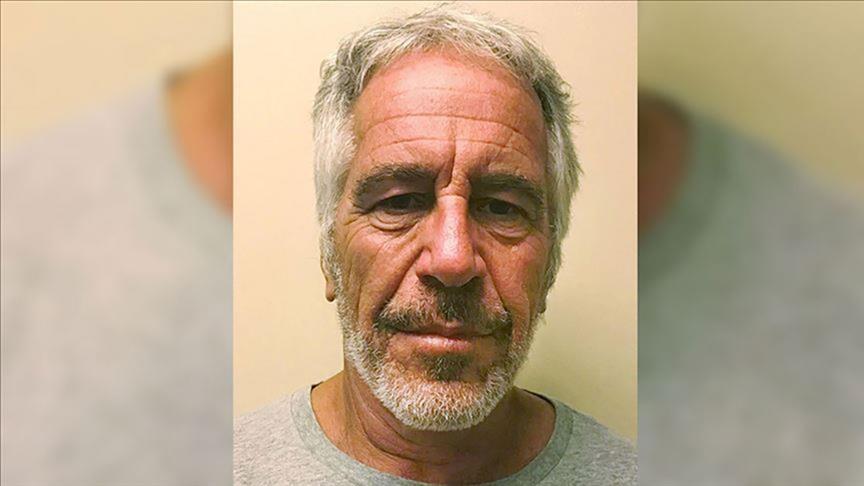
Jeffrey Epstein. (Anadolu Ajansı)
In 2005, a formal police investigation into Jeffrey Epstein was launched in the city of Palm Beach, Florida, following a complaint by the family of a 14-year-old girl. The Palm Beach Police Department (PBPD) investigated allegations that Epstein engaged in sexual abuse activities at his Palm Beach residence.
During searches authorized by a warrant, numerous photographs of underage girls were found inside the residence. According to police reports, Epstein offered money to young girls in exchange for “massages,” and the majority of these encounters resulted in sexual abuse.【1】
As the investigation progressed, victim testimonies increased, and it was determined that multiple young girls had been brought repeatedly to Epstein’s Palm Beach residence. Police concluded that the case was not merely a series of isolated abuses but involved a systematic organizational structure, leading to an expansion of the case file. The PBPD report noted that Epstein “recruited young girls through his personal assistants” and that the abuse occurred “repeatedly and regularly.”
Following the local investigation in Palm Beach County, on July 19, 2006, a grand jury issued an indictment against Jeffrey Epstein for “felony solicitation of prostitution.” Palm Beach Police Department Chief Michael Reiter found the scope of the grand jury’s indictment inadequate. Reiter stated that due to the large number of victims, the case needed to be expanded.
The PBPD’s lead detective and investigative team argued that the grand jury’s charges did not reflect the full extent of Epstein’s actions. Police presented witness statements and photographic evidence to the Florida State Attorney’s Office, demonstrating that Epstein systematically abused numerous underage girls. However, citing that the state’s indictment did not reflect the “integrity” of these acts, PBPD referred the case to the Federal Bureau of Investigation (FBI).
In 2006, after determining that the Florida State Attorney’s Office indictment was insufficient, the Palm Beach Police Department (PBPD) forwarded the case to the Federal Bureau of Investigation (FBI). The FBI initiated a federal investigation in collaboration with the U.S. Attorney’s Office for the Southern District of Florida (USAO).
The FBI expanded victim testimonies from Palm Beach and determined that similar activities occurred at Epstein’s properties in other states. During this period, an Assistant U.S. Attorney (AUSA) was assigned to lead the investigation, working alongside two FBI agents to prepare federal charges.
In May 2007, the AUSA drafted a federal indictment containing approximately 60 separate charges against Epstein. The draft alleged that Epstein “coerced girls under the age of 18 into sexual acts in exchange for money” and used his personal assistants to locate, direct, and transport victims.【2】
The 60-count indictment draft was submitted to senior prosecutors alongside a memorandum detailing the evidence collected, victim statements, locations where the abuse occurred, and the applicable legal framework.
Federal authorities determined that Epstein engaged in similar activities not only in Florida but also in New York, New Mexico, and the U.S. Virgin Islands. 【3】 FBI and USAO expanded the investigation nationwide based on new evidence gathered during this period. By mid-2007, federal prosecutors had collected evidence suggesting Epstein’s actions could be prosecuted under federal statutes for “interstate and international human trafficking.”
As the federal investigation intensified, a series of meetings were held in mid-2007 between Jeffrey Epstein’s attorneys and the U.S. Attorney’s Office for the Southern District of Florida (USAO). These discussions aimed to resolve the federal charges through a state-level agreement.
At a meeting on July 31, 2007, a foundation for a “non-prosecution agreement” (NPA) was established between Epstein’s defense team and USAO officials. It was proposed that Epstein plead guilty in Florida state court in exchange for the dismissal of federal charges.
Under the USAO’s proposed terms, Epstein was required to accept the following conditions:
Epstein’s defense team insisted that the agreement be structured to eliminate all federal charges. The USAO maintained that the agreement must be limited solely to actions in Florida. During negotiations, Epstein’s attorneys argued that resolving the case at the state level would prevent “unnecessary expansion of federal jurisdiction.” Federal prosecutors countered that Epstein’s assistants’ roles in recruiting, directing, and transporting victims constituted “interstate activity.”
At this stage, senior officials at the Department of Justice (DOJ) were also briefed on the case. As a result of the 2007 negotiations, the parties began negotiating the final text of the agreement. On September 24, 2007, a draft NPA was prepared and presented to both parties.
Victims were not informed during these negotiations. No notification was provided to victims that the case would be resolved at the state level. The DOJ’s 2020 Office of Professional Responsibility (OPR) report confirmed that no consultation was conducted with victims during this process. One of the prosecutors present at the meetings stated that the agreement needed to be “comprehensive but limited.” By the end of September 2007, the final NPA was signed by both parties.
The federal “Non-Prosecution Agreement” (NPA), signed on September 24, 2007, provided for the termination of the federal investigation and resolution of the case at the state level. The agreement was negotiated between the U.S. Attorney’s Office for the Southern District of Florida (USAO) and Epstein’s defense team.
Under the terms of the agreement, Epstein agreed to plead guilty in state court to the following charges:
The NPA also stipulated that Epstein serve an 18-month prison sentence in state court, followed by 12 months of “house arrest or home confinement.” The NPA granted federal immunity not only to Epstein but also to four named co-conspirators and “all potential co-conspirators.” This meant that individuals identified or later identified as associates of Epstein could not be federally prosecuted. The confidentiality of the agreement was emphasized between the parties. A copy of the NPA was filed under seal with the Florida State Court and not made public. Upon the agreement’s implementation, the USAO closed the federal investigation.
Following the signing of the NPA on September 24, 2007, Jeffrey Epstein’s defense team made various attempts to modify the agreement’s conditions. Epstein’s attorneys sought lighter terms and additional federal protections.
From late 2007 onward, Epstein’s attorneys contacted the USAO to request the removal or reinterpretation of certain provisions. The defense team appealed to higher DOJ divisions, arguing that the NPA exceeded federal jurisdictional limits and should be reconsidered.
The defense argued that Epstein’s alleged offenses constituted “a matter fully within state jurisdiction.” According to DOJ records, Epstein’s attorneys asserted that the federal government should not intervene and that the USAO’s authority should remain limited. The USAO held multiple meetings with the defense during this period. Documentation shows that Epstein sought additional privileges, particularly seeking a reduction in his sentence and confirmation of complete federal immunity. 【5】
The U.S. Department of Justice’s (DOJ) Office of the Deputy Attorney General reviewed the defense team’s requests. On June 23, 2008, the DOJ sent a formal letter to Epstein’s attorneys stating, “The Deputy Attorney General will not intervene in this matter,” confirming that it would not interfere with the NPA. Following this decision, Epstein accepted the obligations under the NPA. The USAO’s Florida case file was closed in accordance with the NPA terms, and federal prosecutions were terminated.
On June 30, 2008, Jeffrey Epstein pleaded guilty in a Florida state court to the charges outlined in the NPA. In accordance with a joint request from the Florida State Attorney’s Office and Epstein’s defense team, the court sentenced Epstein to 18 months in prison followed by 12 months of “house arrest.” The sentence was consistent with the NPA terms. The court also ordered Epstein to be registered as a “registered sex offender” in the Florida Department of Law Enforcement records.
Epstein was released after 13 months due to good behavior credits. His release occurred on July 22, 2009, initiating his 12-month house arrest period.
In 2009, following appeals from victims and media outlets, a request was made to the Florida State Court to unseal the NPA document. In September of that year, the court ruled that a copy of the agreement could be made public. During this period, some victims filed civil lawsuits seeking compensation. By 2010, Epstein had settled multiple civil cases brought by victims through out-of-court agreements.
Epstein’s 2008 sentence resurfaced in 2019 during new investigations conducted by the U.S. Attorney’s Office for the Southern District of New York. Federal authorities reviewed the legality of the 2008 agreement, particularly its implementation without notifying victims.
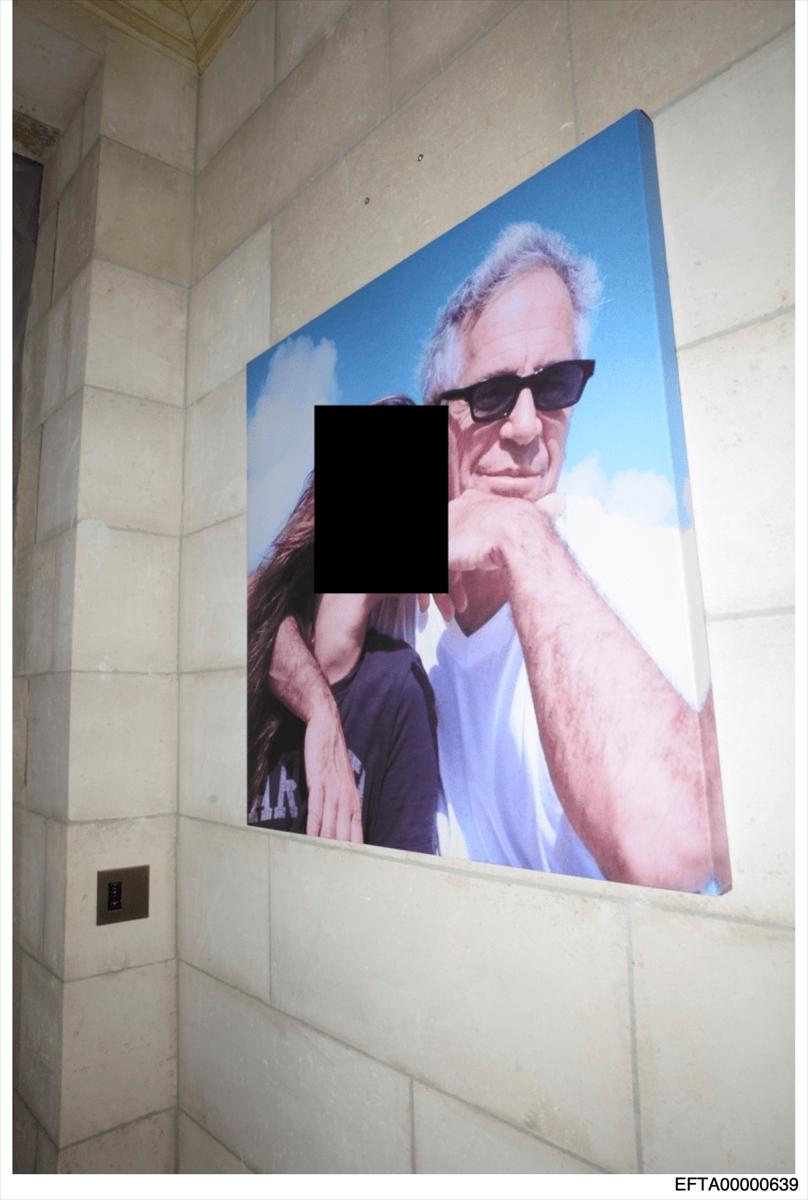
In documents released by the U.S. Department of Justice, a photograph of Jeffrey Epstein and a victim - (U.S. Department of Justice)
Following Jeffrey Epstein’s state court conviction on June 30, 2008, one of the victims filed a petition with the U.S. District Court for the Southern District of Florida on July 7, 2008. The petition was filed under the pseudonym “Jane Doe,” alleging that the U.S. Government violated its obligations under the Crime Victims’ Rights Act (CVRA), 18 U.S.C. §3771.
The petition asserted that federal prosecutors signed the NPA without notifying victims and misled them into believing the investigation was still ongoing. It claimed that victims’ rights were violated by their exclusion from the federal investigation process.
After the case was opened, federal prosecutors (USAO) disclosed the existence of the NPA to the court but did not provide the full text to the victims. The NPA copy was filed under a protective order, keeping it confidential..
The federal court temporarily stayed the case after receiving initial filings from both parties. During this period, victims filed civil lawsuits against Epstein. In these suits, victims individually sought compensation, and some reached settlements by 2010.
The CVRA lawsuit remained dormant until 2014, when it re-entered public discourse following a 2018 investigative report published by the Miami Herald. The Herald’s report, titled “Perversion of Justice,” reignited criticism of the federal authorities’ handling of the 2007–2008 Epstein case.
On February 21, 2019, the U.S. District Court for the Southern District of Florida ruled in favor of the victims. The court found that federal prosecutors had violated the CVRA by failing to notify victims of the NPA. The ruling stated: “The government violated the CVRA by failing to notify victims of its intent to enter into the NPA.”
Following this ruling, the U.S. Department of Justice removed the U.S. Attorney’s Office for the Southern District of Florida (USAO) from the case and transferred the government’s representation to the U.S. Attorney’s Office for the Northern District of Georgia. The plaintiffs requested the NPA be voided and Epstein be federally prosecuted again.
The federal court did not classify the failure to notify victims as a violation of the right to a fair trial but determined that the CVRA’s notification obligation had been clearly breached. While the CVRA case continued, on July 2, 2019, a new federal indictment was filed against Epstein by the U.S. Attorney’s Office for the Southern District of New York.
On July 2, 2019, the U.S. District Court for the Southern District of New York (SDNY) filed a two-count federal indictment against Jeffrey Epstein. Epstein was charged under 18 U.S.C. §1591 with “sex trafficking of minors” and “conspiracy to commit sex trafficking.”
The indictment alleged that between 2002 and 2005, Epstein lured girls aged 14 to 17 to his residences in New York, Palm Beach (Florida), and the U.S. Virgin Islands, sexually abused them, and paid some victims to recruit other girls. This system was described in documents as the “recruitment, abuse and payment cycle.”
According to federal prosecutors, Epstein used this abuse network to create a community of underage victims. Evidence included flight logs from Epstein’s private jet, victim testimonies, witness statements, and financial records.【6】
Epstein was arrested on July 6, 2019, at his Manhattan residence. Prosecutors announced that searches of the home uncovered thousands of photographs of adult and underage women. Epstein was ordered held without bail by the federal court and transferred to the Metropolitan Correctional Center (MCC) in Manhattan.
Jeffrey Epstein was found dead in his cell at the Metropolitan Correctional Center in Manhattan on August 10, 2019. The official statement following the incident declared that his death was caused by “suicide by hanging.” The Bureau of Prisons initiated an internal investigation into Epstein’s death.
Epstein’s death led to the dismissal of the pending criminal case, but all case files and evidence were preserved in federal archives. Investigations into Epstein’s properties, companies, and institutional connections were later used in new cases against Ghislaine Maxwell and financial institutions. Federal authorities reviewed all digital materials and documents found in Epstein’s properties after his death.
After Jeffrey Epstein’s death, the U.S. Department of Justice filed a new federal indictment against Ghislaine Maxwell on July 2, 2020. The indictment, filed in the U.S. District Court for the Southern District of New York (SDNY), was docketed as United States v. Maxwell, Case No. 1:20-cr-00330 (S.D.N.Y.).
The indictment alleged that between 1994 and 2004, Maxwell played an active role in Jeffrey Epstein’s efforts to “recruit, facilitate, and sexually abuse underage victims.”
Maxwell was arrested on July 2, 2020, in New Hampshire and transferred to New York the same day. In a press statement, the SDNY prosecutors listed charges against Maxwell including “enticing minors to travel to engage in illegal sex acts,” “transportation of minors for criminal sexual activity,” and “perjury.”
Court records show that Maxwell first appeared before a judge in July 2020 and pleaded not guilty. Federal prosecutors opposed bail, citing a “flight risk,” and she remained in custody.
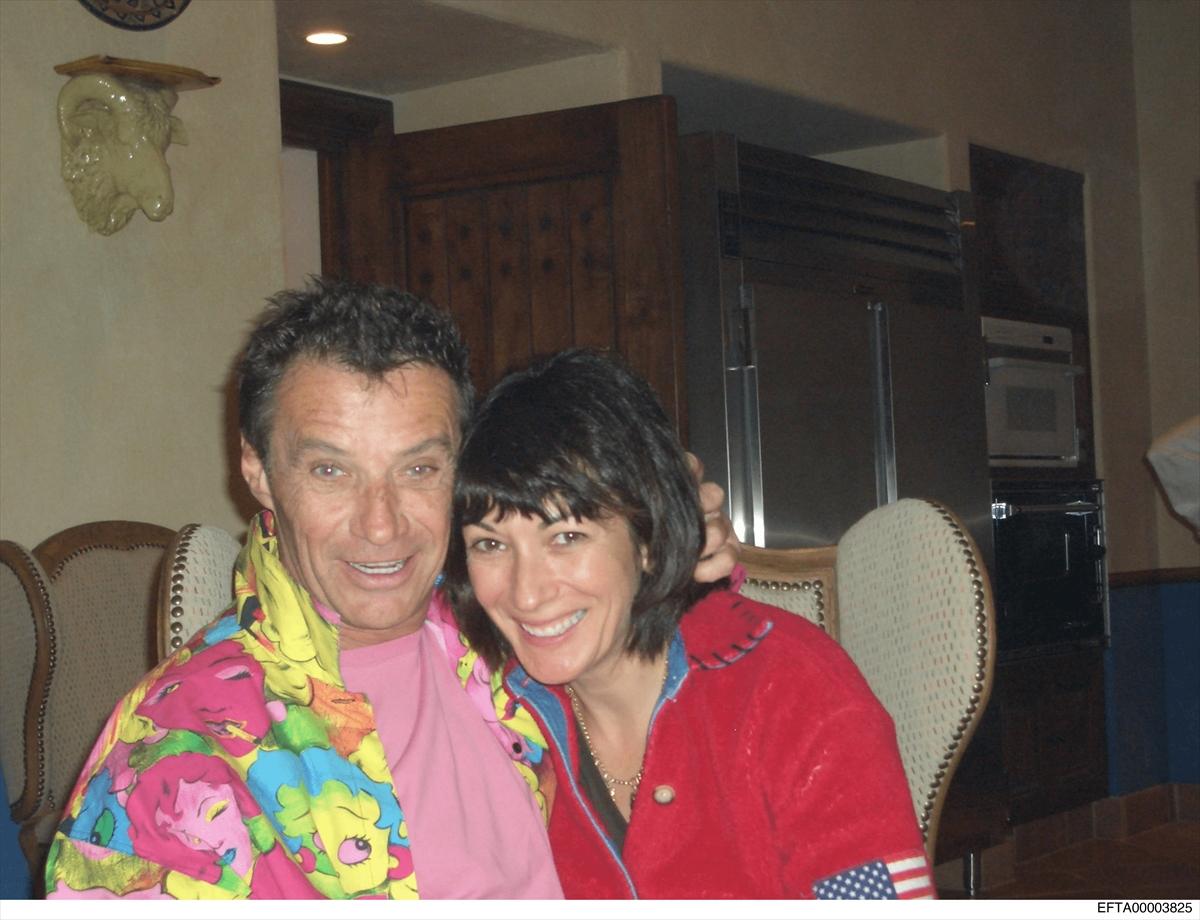
Jeffrey Epstein ve suç ortağı Ghislaine Maxwell - (U.S. Department of Justice)
Maxwell’s trial began in November 2021 in the U.S. District Court for the Southern District of New York. The trial lasted six weeks, during which four victims (“Jane,” “Kate,” “Carolyn,” and Annie Farmer) testified as witnesses.
In their testimonies, victims stated that Maxwell was present with Epstein and, in some instances, directly participated in sexual abuse. Epstein’s private pilot, Larry Visoski, also testified and provided detailed accounts of who was aboard Epstein’s aircraft. The defense argued that Maxwell was innocent and should not be held responsible for Epstein’s actions. However, the jury largely accepted the federal prosecutors’ claims.
On December 29, 2021, the jury found Ghislaine Maxwell guilty on five separate charges:
Maxwell was sentenced to 20 years in federal prison and fined $750,000. The sentence was announced by SDNY Judge Alison Nathan. Maxwell’s appeal was filed in 2022 with the U.S. Court of Appeals for the Second Circuit and remains ongoing as of 2025.
The witness testimonies, documents, and digital evidence uncovered during Maxwell’s trial formed part of the “Epstein Files” released by the Department of Justice and the Federal Bureau of Investigation (FBI) in 2025.【7】
On October 15, 2025, a class action complaint titled Jane Doe v. Bank of America, N.A. was filed in the U.S. District Court for the Southern District of New York. The lawsuit alleges that Bank of America financially benefited from Jeffrey Epstein’s sexual abuse and human trafficking activities and failed to fulfill required reporting obligations under federal law.
The plaintiffs state that the lawsuit was filed under the U.S. Trafficking Victims Protection Act (TVPA), specifically under 18 U.S.C. §§ 1591–1595. The complaint alleges that the bank failed to monitor, report, and file Suspicious Activity Reports (SARs) regarding Epstein’s financial transactions.
According to documents in the federal lawsuit, 4,725 separate wire transfers were processed through Bank of America accounts linked to Epstein between 2003 and 2019. The total value of these transactions amounted to $1.08 billion.
The lawsuit indicates that some of these transfers consisted of cash withdrawals, while others were payments made through Epstein’s accounting firm, HBRK Associates. HBRK is described as the entity managing Epstein’s business relationships and payments. The plaintiffs allege that some of these payments reached victims directly or indirectly.
Federal records indicate that frequent large cash withdrawals and transfers from personal accounts associated with Epstein were classified as “structuring” (split transfers). Documents show that although the bank categorized these transactions as “patterned activity,” it either delayed or failed to file SARs.
The complaint alleges that Bank of America provided Epstein with “privileged banking treatment.” These privileges included reduced scrutiny of account activity, higher cash transaction limits, and failure to classify Epstein’s activities as those of a “high-risk client.”
The plaintiffs further argue that the flow of funds in Epstein’s accounts matched indicators of human trafficking as defined by DOJ and FinCEN (Financial Crimes Enforcement Network) guidelines. These indicators—such as high-volume cash transfers, multiple third-party payments, and unexplained wire transfers—were reportedly detected by the bank’s internal monitoring systems but not reported.
Court records show that the majority of Epstein’s financial transactions occurred through J.P. Morgan accounts between 2003 and 2008, and through Bank of America accounts after 2008. The lawsuit notes that Bank of America did not close Epstein’s accounts even after his 2008 conviction.
The plaintiff, “Jane Doe,” alleges that she was abused between 2011 and 2019 at Epstein’s residences in Palm Beach, Manhattan, and the U.S. Virgin Islands. According to the complaint, Epstein made victims financially dependent through threats, manipulation, and psychological pressure.
The complaint states that Jane Doe was transported interstate using Epstein’s private jet, with expenses covered by Bank of America accounts. Documents show transfers made under different corporate names to conceal payments to victims. The federal court has ordered Bank of America to provide internal correspondence, SAR records, and Epstein account transaction histories for review. As of the end of 2025, the Bank of America case remains ongoing.
Jeffrey Epstein’s properties were located across the United States and the U.S. Virgin Islands. The primary properties identified in documents include his mansion in Palm Beach (Florida), the residence on East 71st Street in Manhattan, the Zorro Ranch property in New Mexico, and two island properties in the U.S. Virgin Islands. These two islands are recorded as Little Saint James and Great Saint James. Both islands are private properties accessible only by private boat or helicopter.
Documents indicate that Epstein operated on Little Saint James since 1998, with numerous structures and staff housing on the island. The island, approximately 70 acres in size, features a main residence, guest buildings, a private dock, and a helipad.
Shortly after Epstein’s arrest in 2019, the FBI conducted searches on his properties in the U.S. Virgin Islands. Documents indicate that these operations occurred on August 12, 2019, and resulted in the seizure of digital devices, computer hard drives, and hundreds of visual materials. Over 300 gigabytes of digital data were collected.
The search reports state that the materials recovered by the FBI included victim identification details, travel records, phone numbers, private photographs, and employment contracts for staff working on Epstein’s properties. Federal investigation documents indicate that the FBI transferred these materials to the DOJ’s “Epstein Files” database.
Following Epstein’s death in 2019, the U.S. Virgin Islands Attorney General’s Office filed multiple civil lawsuits targeting his properties. These lawsuits allege that Epstein committed “sexual abuse, human trafficking, and child exploitation” on the islands.
In 2020, U.S. Virgin Islands authorities initiated a process to seize Epstein’s properties. The lawsuit titled “Virgin Islands v. The Estate of Jeffrey Epstein” was filed. The complaint alleges that Epstein used the islands as a “trafficking hub.” The Attorney General’s Office stated that proceeds from the sale of the properties would be distributed to victims as compensation.
Federal records indicate that by 2023, the sale process for the island properties was completed, and the proceeds were transferred to a compensation fund. According to the DOJ’s 2025 announcement, income from Epstein’s Virgin Islands properties was distributed among victims under the “Epstein Victim Compensation Program.”
Among the materials released in the 2025 “Epstein Files” were digital records seized by the FBI during its 2019 raids on the islands. These documents contain information on the financial and logistical networks of Epstein’s activities in the Virgin Islands.
The U.S. Department of Justice (DOJ) and the Federal Bureau of Investigation (FBI) released the first batch of archival documents related to the Jeffrey Epstein case to the public in February 2025. According to the DOJ’s official press statement, the released documents totaled 341 pages and included redacted statements from over 250 victims, flight logs, digital correspondence, and Epstein’s contact lists.
U.S. Attorney General Pamela Bondi, in a press statement on February 5, 2025, stated, “We are releasing these records to ensure transparency while protecting the privacy and dignity of the victims.”
The first phase of released materials included Epstein’s private flight logs from 2002 to 2005, bank transfer records, correspondence with Ghislaine Maxwell, and photographic documentation from FBI raids on his properties in Florida and New York.
The Department of Justice stated that, following the release of the first phase, the archive containing over 300 gigabytes of digital data was being prepared for the “phase two” release. This digital data included email correspondence, audio recordings, video files, and digital transcripts of witness testimonies.【8】
The released documents are based on Epstein’s federal investigations after 2005, the 2019 New York indictment, witness testimonies from the Ghislaine Maxwell trial, and materials obtained by the Congressional Oversight Committee between 2023 and 2024. According to the DOJ, victims’ names, personal details, and images have been redacted for privacy reasons. Additionally, visual materials related to child abuse and documents related to ongoing investigations were not released.
The U.S. House of Representatives passed the “Epstein Files Transparency Act” on November 18, 2025, by a vote of 427–1. The bill was unanimously approved by the Senate on November 19, 2025, and signed into law by President Donald Trump on November 21, 2025.
The law mandates that the DOJ and FBI release all documents related to the Epstein case within 30 days. However, exceptions are made for victims’ identities, child abuse imagery, documents containing limited information under international cooperation agreements, and records related to active investigations.
Congressional records indicate that the law requires all documents to be published by December 19, 2025. Additionally, the DOJ was required to make the published documents publicly accessible through a federal archive system titled “Epstein Transparency Repository.”
On November 12, 2025, approximately 20,000 pages of Jeffrey Epstein’s emails, obtained by the House Oversight Committee, were made public. The documents contain Epstein’s personal correspondence, social interactions, and business relationships.【9】
The documents include correspondence between Epstein and various politicians, businesspeople, academics, and public figures. These emails reference Donald Trump, Prince Andrew, Larry Summers, Lawrence Krauss, Bill Clinton, Ghislaine Maxwell, and others. The correspondence covers the period from 2011 to 2019.
One email, dated January 2019 and sent by Epstein to journalist Michael Wolff, states: “Of course, he knew about the girls because I told Ghislaine to stop.”
In another email dated 2011, Epstein wrote to Maxwell: “You should realize that the dog that doesn’t bark is Trump.” These emails imply that Trump spent time with one of Epstein’s victims, Virginia Giuffre. However, the documents contain no direct statement linking Trump to criminal conduct. Following the release of the documents, Trump posted on his social media platform Truth Social: “Democrats are trying to revive the Jeffrey Epstein lie.”
The email archive includes correspondence regarding Prince Andrew Mountbatten-Windsor of the United Kingdom. A March 2011 email from Prince Andrew to Epstein and Maxwell reads: “I can’t take this anymore.” This message is linked to public allegations against Andrew at the time.
Another email from Epstein states that a 2001 photograph showing Prince Andrew with 17-year-old Virginia Giuffre is “real.” Epstein’s message reads: “Yes, that was her.”
The email documents include correspondence between Epstein and Lawrence Summers, former U.S. Treasury Secretary and former president of Harvard University. The same documents reveal that Summers’s wife, Elisa New, also emailed Epstein. Correspondence with physicist Lawrence Krauss is also included.
Documents released in 2025 include Epstein’s “contact book” and “flight logs.” The list of names includes individuals Epstein associated with, met, or had professional contact with. The publicly identified names are as follows: 【10】
On December 3, 2025, Democratic members of the U.S. House Oversight Committee released previously unpublished photographs and video footage of Jeffrey Epstein’s private island, Little Saint James.
Footage released from Little Saint James. (USA Today)
The materials, filmed during a 2020 civil lawsuit process by U.S. Virgin Islands authorities, include interior shots of the house, bedrooms, bathrooms, office/library areas, a room with a dental chair, sections of walls with masks hanging, a telephone with speed-dial buttons labeled “Darren, Mike, Patrick, Rich, Larry,” and exterior views of the property and buildings.
The Committee stated that these images were released to “shed light on dark aspects of the human trafficking and sexual abuse allegations.” The U.S. Department of Justice announced that all remaining documents would be released by December 19, 2025.
On December 19, 2025, the U.S. Department of Justice released a broad set of documents under the Epstein Files Transparency Act. The released documents include photographic archives, court records, grand jury documents, internal investigation correspondence, FBI search reports, and digital material inventories. The documents were made accessible through an online archive system established by the DOJ.
The publicly released photographs consist of images seized during searches of Epstein’s properties in New York, Florida, New Mexico, and the U.S. Virgin Islands. Court and grand jury documents include records from federal investigations against Epstein, witness testimonies from the Ghislaine Maxwell trial, and past case files.
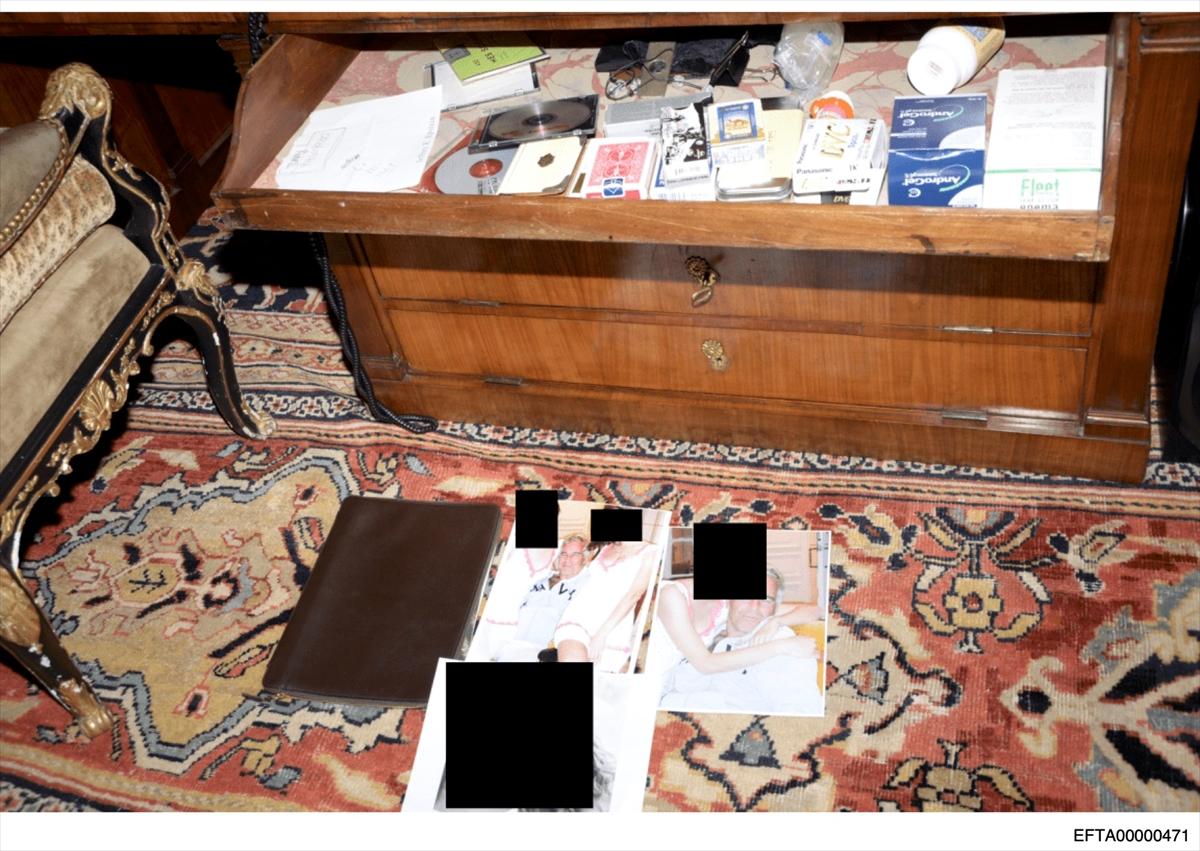
Epstein belgeleri - (U.S. Department of Justice)
The majority of documents released on December 19, 2025, underwent extensive redaction. According to DOJ statements, redactions were applied to protect victims’ identities, personal data privacy, and prevent interference with ongoing investigations. As a result, many names, faces, addresses, and historical details were blacked out.
Some documents were partially redacted, while others were completely blacked out. In particular, full-page redactions were applied to grand jury testimonies, lengthy transcripts of witness statements, and sensitive visual materials. The public archive contains some files with only titles and no content.
The DOJ stated that redactions were conducted under legal obligations and that documents will continue to be reviewed for potential future access. It also noted that access to certain documents may be updated based on new information or requests from victims’ representatives.
Among the Epstein documents released on December 19, 2025, were photographs featuring Donald Trump. These images were part of collages showing items found in Epstein’s desks and cabinets. One photograph showed Trump with a group of women, and another showed Donald Trump and his wife Melania Trump alongside Jeffrey Epstein and Ghislaine Maxwell.
Shortly after publication, a total of 16 documents containing images of Trump were temporarily removed from the U.S. Department of Justice’s website. The DOJ stated that this action was taken at the request of the U.S. Attorney’s Office for the Southern District of New York.
The Department stated that the images were flagged for potential additional review to protect victims’ rights. Numerous U.S. media outlets reported that 16 documents, including those with Trump’s images, had been removed from public access.
After review, the Department of Justice announced that the images had been re-released. The DOJ stated that after review, no evidence was found that victims of Epstein were present in the photographs. Therefore, the images of Trump were re-published without any changes, redactions, or blackouts.
In a social media post on platform X, the U.S. Department of Justice stated that the images had been “temporarily removed as a precaution” and were re-published with the same content after review.
U.S. Deputy Attorney General Todd Blanche, in statements made in December 2025, stated that all materials related to Donald Trump in the Epstein files will be released. Blanche stated that photographs, written documents, and other records, if present in the files, will be made public.
Blanche stated that no materials related to Trump have been withheld and that no special treatment has been applied to individuals during the release process. The same legal standards have been applied to all names in the Epstein files.
Deputy Attorney General Blanche stated that the primary priority in releasing the documents is protecting the identities of living victims. He confirmed that photographs or materials identified as belonging to victims have not been published or have been removed after publication.
Deputy Attorney General Blanche stated that the release of the Epstein files is not a one-time process and that documents are continuously reviewed in accordance with legal requirements.
Among the Epstein documents released on December 19, 2025, were numerous photographs of former U.S. President Bill Clinton. Some photographs show Clinton with Jeffrey Epstein’s former girlfriend Ghislaine Maxwell. Other photographs show Clinton on Epstein’s private jet.
In the released documents, some photographs of Clinton have faces redacted, while others have only limited redaction. Clinton’s spokesperson, Angel Urena, issued a written statement regarding the release. The statement indicated that Clinton ended his association with Epstein before his crimes became public.
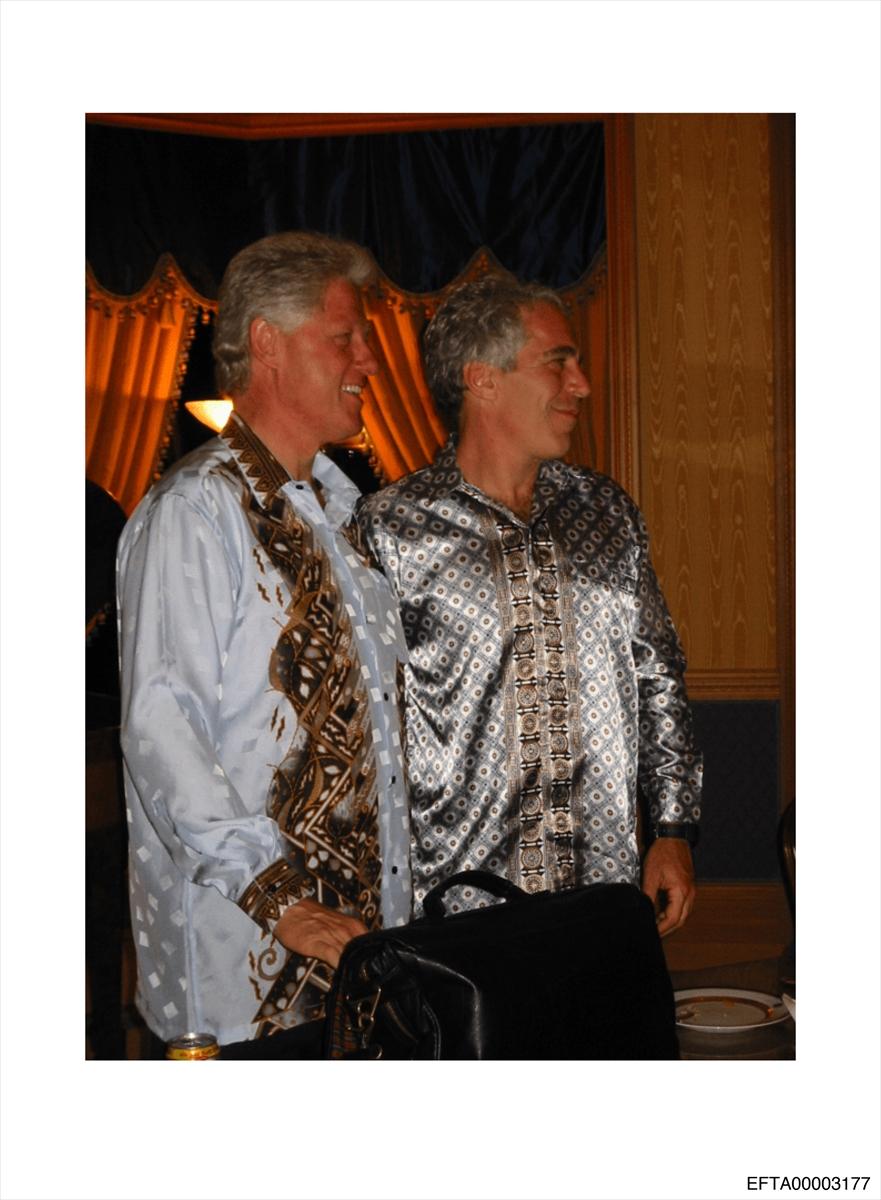
In the investigation files on Jeffrey Epstein, a photograph of former U.S. President Bill Clinton - (U.S. Department of Justice)
The photographs, flight logs, and contact book documents released in the Epstein files include the names of numerous politicians, artists, and businesspeople. Names appearing in the documents include Prince Andrew Mountbatten-Windsor, Michael Jackson, Mick Jagger, Diana Ross, Chris Tucker, Kevin Spacey, Richard Branson, Walter Cronkite, Sarah Ferguson, Naomi Campbell, and Marla Maples.
The documents state that the presence of these names does not imply criminal allegations and that the materials are records collected during the investigation.
December 19, 2025 saw the release of Epstein files containing numerous fully redacted and partially redacted documents. In the archive released by the U.S. Department of Justice, particularly grand jury testimonies, long transcripts of witness statements, and sensitive visual materials were fully blacked out.
Among the released documents, a 119-page grand jury testimony was entirely redacted. This document was listed in the archive with its file number and title, but the content was inaccessible.
In partially redacted documents, names, faces, address information, phone numbers, and identifying details of minors were blacked out with black bars.
On December 22, 2025, the U.S. Department of Justice stated that redactions were applied to protect victims’ identities, personal data privacy, and the security of ongoing investigations. The statement noted that over 1,200 victims or victim relatives appear in the documents and that their protection is a legal requirement.
The released documents also include internal communications and review notes regarding the redaction process. These documents indicate that redaction decisions were made after evaluations by the U.S. Attorney’s Office for the Southern District of New York, DOJ officials, and victims’ representatives.
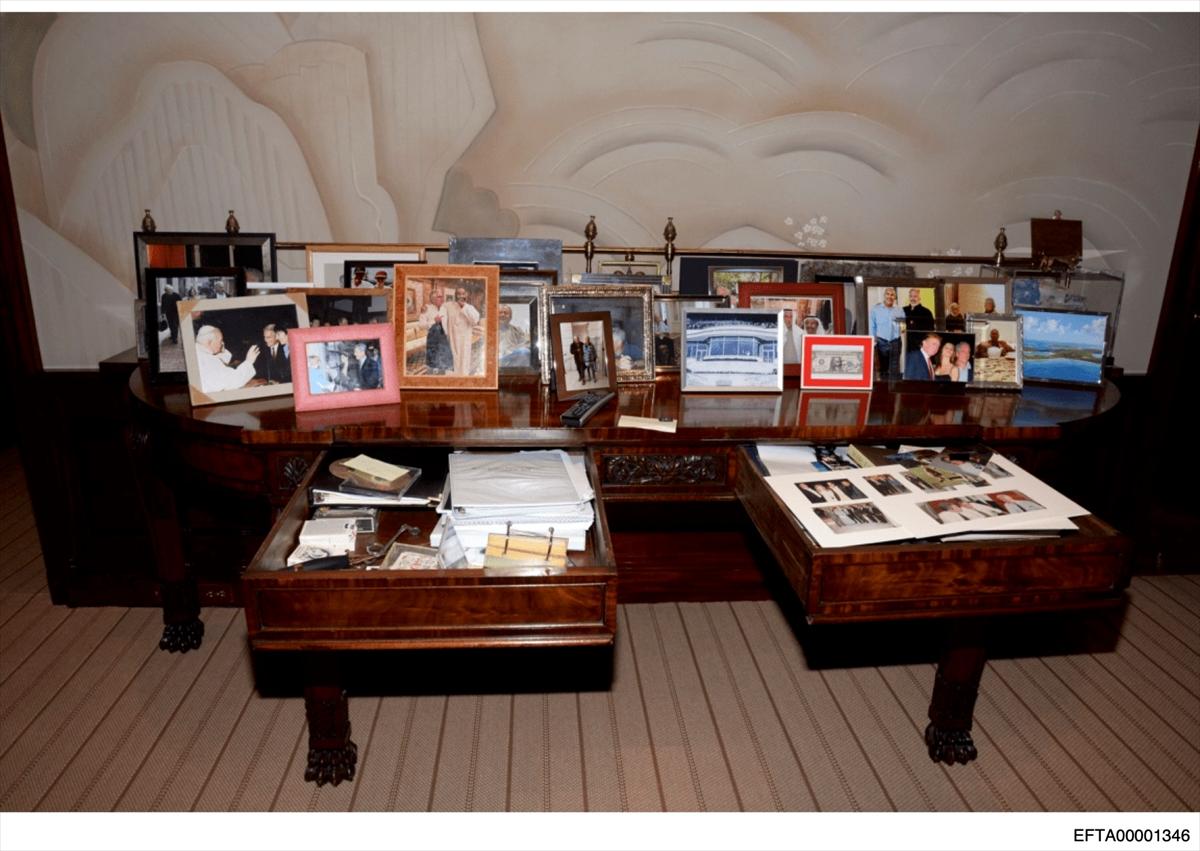
Epstein belgeleri - (U.S. Department of Justice)
December 21, 2025, Democratic members of the U.S. House Oversight and Government Reform Committee issued a joint statement on X regarding the removal of photographs of Donald Trump from the Department of Justice’s website. The statement read: “It appears that the Department of Justice has removed the photograph of Donald Trump from the Epstein files. Is this correct, Attorney General Pam Bondi? What else is being hidden?”
On the same day, U.S. Representative Thomas Massie stated in his remarks on the document release process that DOJ officials must be held accountable. Massie criticized how the law was being implemented regarding the scope of the released documents. On December 21, 2025, Representative Ro Khanna stated that the released documents did not comply with the law he and Massie had drafted. Khanna cited the complete redaction of a 119-page grand jury testimony as an example.
On December 22, 2025, U.S. Senator Jeff Merkley issued a written statement regarding the failure to release all Epstein documents by the specified date. Merkley stated: “I believe the administration has denied justice to Epstein’s victims.” Merkley also stated that he has “explored all legal avenues to ensure justice for victims and transparency for the American public.”
The U.S. Department of Justice (DOJ) released over 3 million documents, 2,000 videos, and approximately 180,000 images to the public on January 30, 2026. This release was carried out under the legal mandate of the Epstein Files Transparency Act and represents the most comprehensive data set following partial releases in 2025.
U.S. Deputy Attorney General Todd Blanche announced at a press conference in Washington that the release was completed after a comprehensive review by over 500 lawyers and experts. Blanche stated: “We followed the law. We followed the statute. We did not protect President Trump or anyone else. There are no super-secret documents on Epstein.” In the same statement, Blanche noted that President Donald Trump had issued a “transparency directive” to the Department of Justice and that actions were taken accordingly. The statement clarified that the White House had no involvement in the document release process.
Blanche stated that extensive redaction was applied to protect personal data. In the released files, victims’ personal information was concealed, and faces in photos and videos were blacked out. The Department of Justice acknowledged that “errors were inevitable” during the release process and invited the public to report any privacy violations.
The total number of documents exceeds 3 million and includes 180,000 images and 2,000 video recordings. The documents include Jeffrey Epstein’s prison records, Ghislaine Maxwell’s trial files, Epstein’s private email correspondence, witness testimonies, FBI reports, draft indictments, and records related to private properties.
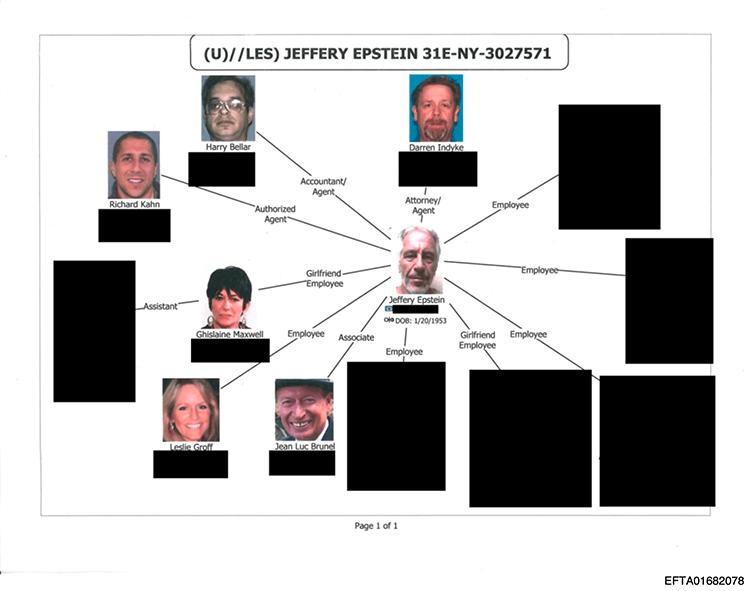
Epstein crime network. - (U.S. Department of Justice)
Among the released documents was a 60-count draft indictment prepared in the 2000s but never filed. This document charged Epstein and three unnamed employees with “luring girls under 18 into prostitution.” Victims in the draft were identified by the pseudonym “Jane Doe,” with ages ranging from 14 to 17. The draft indictment was never presented to a jury and entered the file as an unsigned document.
House members Ro Khanna and Thomas Massie sent a joint letter to the Department of Justice regarding inconsistencies in the redactions. The letter noted that some victims’ names remained unredacted while certain suspect details were unnecessarily concealed. On the same day, Blanche stated that Congressional members could review the unredacted versions privately.
The Epstein documents released on January 30, 2026, contain extensive correspondence, financial transfers, and private meeting arrangements involving numerous individuals from politics, business, and international circles. The documents detail Epstein’s personal and professional networks from the 2000s onward.
The name of U.S. President Donald Trump appears hundreds of times in the Epstein documents. Documents compiled by the FBI in August 2025 include a list of various sexual assault allegations against Trump. The DOJ statement noted: “Some documents contain unsubstantiated and sensational allegations sent to the FBI just before the 2020 elections. Clearly, these allegations are baseless and false.”
Trump’s name also appears in a 2000s draft indictment; however, no charges were brought against him. The documents also include a 1994 complaint file under the pseudonym “Jane Doe,” alleging the rape of a 13-year-old girl. This file resurfaced in the 2026 documents. Trump, on Air Force One on January 31, 2026, stated that the released documents exonerated him.
Jeffrey Epstein’s long-time house manager in Palm Beach, Juan Alessi, stated in a sworn affidavit dated September 2009 that Donald Trump never spent the night at Epstein’s Palm Beach home. Alessi also stated that Trump never received a massage at the property.
Alessi stated that Trump occasionally came to Epstein’s home for dinner but did not sit at the main table; instead, he ate in the kitchen with Alessi.
Alessi also mentioned an incident where he drove Ghislaine Maxwell to Mar-a-Lago. Alessi testified that he saw Maxwell approach a young girl entering the lobby.
The name of former U.S. President Bill Clinton appears in email records and flight manifests. Epstein’s private jet, “Lolita Express,” logs show that Clinton and his team used the flight at least 16 times. Emails sent under the heading “WJC” (William J. Clinton) were identified. Clinton stated in a public statement that he sent only two emails.
According to a New York Times report based on email correspondence in the DOJ’s released documents, in November 2012, Epstein’s assistant emailed Lutnick: “Jeffrey Epstein understands you will be on St. Thomas for your vacation. He asked me to pass along some phone numbers.”
In an email to Epstein, Lutnick wrote: “We are arriving early Saturday afternoon on St. Thomas and plan to go to St. Bart’s/Anguilla on Monday. Where are you? Would dinner on Sunday evening work?” In a reply to this email, an unnamed person wrote: “Would you like to join us for lunch on Saturday or Sunday? According to the map, Little St. James is behind Christmas Cove.”
The meeting was planned for December 23, 2012. The next day, Epstein’s assistant emailed Lutnick: “Jeffrey said it was great to see you.” The news report stated that these documents confirm the visit occurred. The newly released documents also record that Lutnick invited Epstein to a fundraising event for Hillary Clinton in November 2016.
In a December 2015 email, then-White House Counsel Kathryn Ruemmler wrote to Epstein: “I adore him… he’s like a big brother to me.” Evidence in the same file shows Epstein purchased a first-class airline ticket for Ruemmler. The email chain reveals Epstein’s regular contact with Harvard circles and his maintenance of relationships with high-profile individuals.
According to a CNN report based on DOJ-released documents, Musk emailed Epstein on December 13, 2013: “I will be in the British Virgin Islands/St. Bart’s region for the holidays. Is there a good time to visit?” Two days later, Epstein replied: “Any day between the 1st and 8th. Decide based on your schedule. There’s always room for you.” In another email, Epstein wrote: “The 2nd or 3rd of January would be perfect. I’ll come pick you up.”
In his reply, Musk initially stated he needed to return to Los Angeles on the night of January 2 but indicated he could delay his departure and asked Epstein: “When should we come to your island on the 2nd?” CNN reported that it is unclear whether Musk ultimately visited, but the correspondence shows “a level of communication previously unknown.”
Musk previously stated in response to allegations that he visited Epstein’s Caribbean islands for sexual abuse and prostitution activities: “Epstein tried to take me to his island and I refused.” Deputy Attorney General Blanche, at his January 30 press conference, stated that the DOJ released over 3 million new documents related to the Epstein investigation and made them publicly accessible.
National media reported that Epstein purchased and used two islands in the U.S. Virgin Islands, “Little St. James” and “Great St. James,” for sexual abuse and prostitution activities, and these islands have become known in public discourse as “Epstein’s Caribbean crime islands.”
In an email draft in the documents, Epstein claimed that “Gates had relationships with Russian girls and contracted a sexually transmitted disease.” Epstein recorded these claims as a “blackmail draft.” The document is not part of direct correspondence between Epstein and Gates but contains Epstein’s reference to Gates.
In 2013 email chains, Steve Tisch wrote to Epstein asking for information about “women he could meet.” These emails show Epstein sharing a “guest list” of women from his social circle.
Among the newly released documents are photographs and emails involving Andrew Mountbatten-Windsor, the British prince who lost his royal title. British public broadcaster BBC, in sharing photographs of Mountbatten-Windsor, noted that in one photo he is crouched over a fully clothed woman lying on the ground, and in another photo, he is facing the camera directly on all fours with the same woman on the ground.
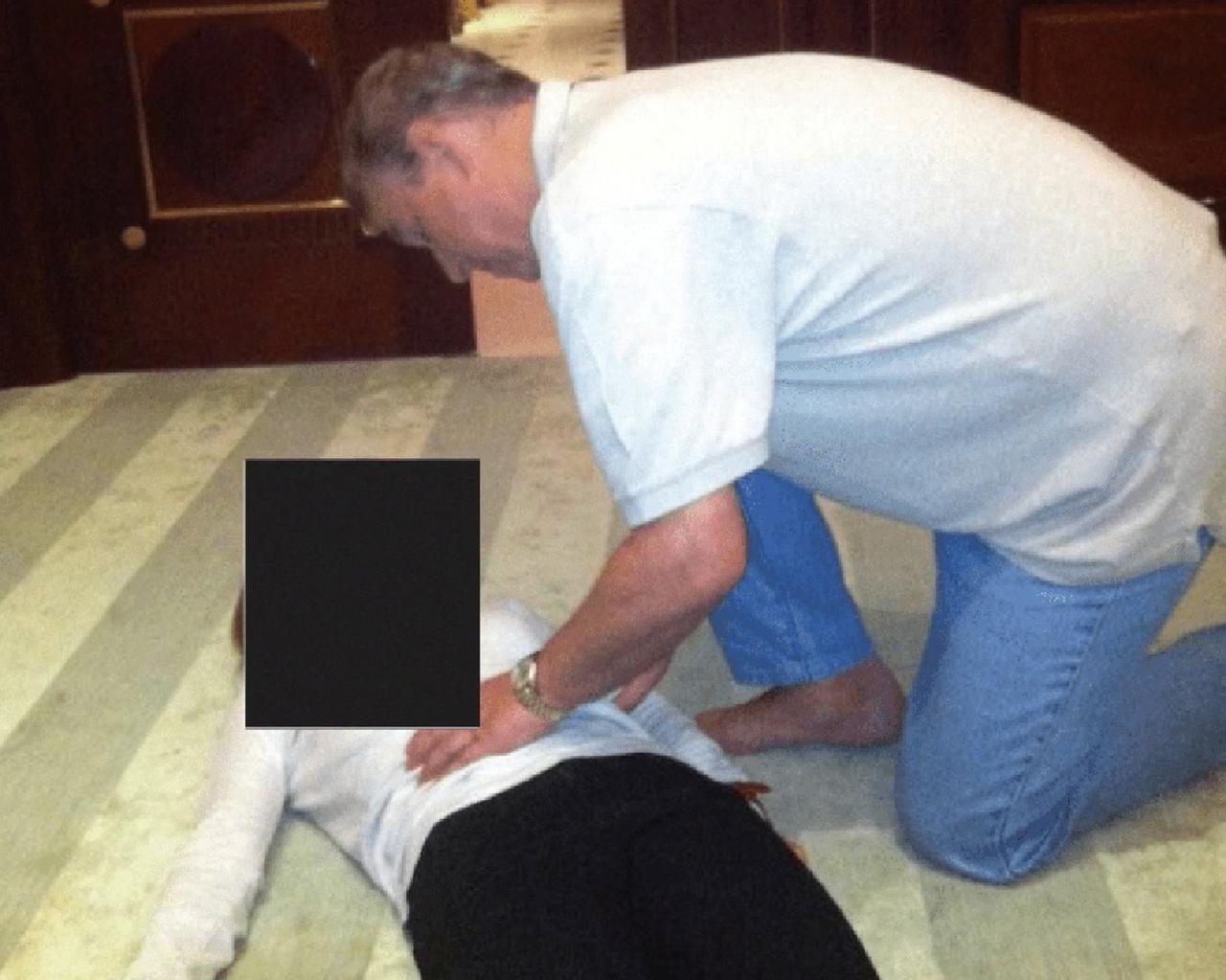
A photograph showing Andrew Mountbatten-Windsor crouched over a woman. - (U.S. Department of Justice)
BBC, noting the uncertainty of when and where the photos were taken, reported that emails were also released showing Prince Andrew inviting a 26-year-old Russian woman to dinner with Epstein. The Guardian reported that, according to the newly released documents, the former Prince invited Epstein to Buckingham Palace after his release from house arrest.
The released documents show that Mountbatten-Windsor corresponded with Epstein via email in 2010. In one correspondence, Mountbatten-Windsor wrote: “Come to BP if you can. Bring anyone you like. I’ll be there from 4 to 8 p.m.” The Guardian noted that “BP” could stand for Buckingham Palace.
In 2009 emails, Sarah Ferguson (Duchess of York) addressed Epstein as: “My dear, wonderful, and special friend Jeffrey. Love, Sarah, Redhead.” Ferguson received £15,000 from Epstein. Documents show this payment was for debt repayment.
According to a CNN report based on DOJ-released documents, former Israeli Prime Minister Ehud Barak and his wife Nili Priel stayed multiple times in an apartment owned by Epstein in New York City. According to the documents, Priel emailed Epstein in May 2017 to inform him that she and Barak would be leaving the apartment after a few days in the Harvard area and asked: “Can a cleaner come when the apartment is empty?”
Leslie Groff, Epstein’s long-time assistant, wrote in another email that she would contact Priel to replace the “cable box” with an Apple TV setup. Other emails show frequent correspondence between Groff, Epstein, and Priel arranging Barak’s visit to New York.
Barak, who served as Israeli Prime Minister from 1999 to 2001, previously stated that he met Epstein in 2003 and continued the relationship after Epstein’s conviction, asserting that he “never witnessed any inappropriate behavior.”
The documents include numerous conversations between Epstein and former Israeli Prime Minister Barak, with two references to Mossad. According to the documents, on December 17, 2018, Epstein emailed Barak: “You must clearly state that I don’t work for Mossad. :)” On November 9, 2017, Epstein wrote to Barak: “Did Boies ask you to help find former Mossad agents to conduct dirty investigations? This is getting a lot of press.” Barak did not respond to this but asked Epstein to call him.
The documents include names from Norway, Denmark, and Sweden. Norwegian broadcaster NRK highlighted that Princess Mette-Marit’s name appears hundreds of times in the new documents, noting that in a 2011 email, the princess shared with Epstein that she had searched for him online.
Norwegian Crown Princess Mette-Marit, in a statement to Norwegian media, acknowledged responsibility for Epstein’s actions, saying: “I take responsibility for not researching Epstein’s past better and not quickly understanding what kind of person he was. I am deeply sorry.” The Crown Princess stated she regrets any contact with Epstein and called the situation “extremely embarrassing.” Although she previously stated in 2019 that she regretted meeting Epstein and cut off contact in 2013, documents show she met Epstein in Florida in 2014.
The newly released Epstein documents mention King Frederik of Denmark twice. The Royal Family issued a statement to national media stating that King Frederik never met Epstein. However, the new documents suggest that during his time as prince, Frederik met one of Epstein’s business associates and attended one private dinner. Another name mentioned in the documents is Princess Sofia of Sweden. Swedish media reported that Princess Sofia attended a film premiere in New York in 2012 as a special guest of Epstein. The Swedish Royal Court previously stated that Princess Sofia met Epstein several times in 2005 but has had no contact with him for 20 years.
Email correspondence between Jeffrey Epstein and former U.S. Treasury Secretary and former Harvard University president Larry Summers, from 2016 to 2017, was made public by the U.S. Department of Justice.
In an email dated May 2017, Summers wrote to Epstein: “How guilty is Donald?” In the same correspondence, Summers described the claim that Donald Trump won the 2016 election with Russian assistance as “plausible but not certain.” The documents also note that Trump has long denied allegations of collusion with Russia in the election.
In response, Epstein wrote: “Your world doesn’t understand how truly stupid he is.”
In an earlier email from October 2016, Summers asked Epstein: “How plausible is the idea that Trump is a cocaine user?” Epstein replied: “Not possible at all.”
In another correspondence in July 2017, Summers wrote to Epstein: “I think your friend is mentally ill.” Epstein replied: “That’s not my friend, and I’ve told you that before.”
Although Trump’s name is not directly mentioned in the correspondence, the parties discussed U.S. president’s foreign policy and whether Trump was “better than Hillary.” Epstein referenced Trump’s work with Israel and India in this context.
The released documents reveal an email exchange between British billionaire businessman and Virgin Group founder Richard Branson and Jeffrey Epstein in 2013.
On September 11, 2013, Branson wrote to Epstein: “It was really great to see you yesterday.” He added: “I’d love to see you every time you come here. Just bring your harem with you.”
A Virgin Group representative told The Guardian that the email was sent shortly after Branson hosted Epstein at a group business meeting on his private island in the British Virgin Islands. The representative stated that Epstein attended the meeting with three adult women who did not participate in the meeting and that Epstein referred to them as his “harem.”
The Virgin Group representative stated that Richard and Joan Branson’s contact with Epstein occurred only a few times over 12 years ago and that these interactions were limited to group or business settings, including a charity tennis event.
Emails from November and December 2018 show that Jeffrey Epstein sent Apple Watches to Steve Bannon and his son Sean Bannon. According to the correspondence, the watches were Hermès-strapped Apple Watches valued at $1,499 each at the time. The emails indicate that the watches were the same model: 44 mm, space gray stainless steel case, and space black design.
In an email written by Epstein’s assistant Lesley Groff, it is stated: “Jeffrey will give Steve the watch next time they meet.” In another email from January 2019, with the sender’s name redacted, it is written: “Steve received the Apple Watch.”
Previously released Epstein documents revealed that Bannon and Epstein exchanged hundreds of short messages. The documents also show that Bannon played a significant role in Epstein’s efforts to rebuild his reputation. In this context, Bannon conducted hours-long interviews with Epstein for a planned documentary.
In a 2018 message, Bannon wrote: “I want to make a documentary that tells the real story.” Epstein replied: “Yes, great idea.”
In the released documents, producer Peggy Siegal wrote to Epstein that she was traveling to Nairobi. In the email, Siegal informed Epstein about the trip’s content, writing: “Thank you so much for giving me another life experience. If the Maasai warriors don’t eat us, the Somali pirates will.”
In the same email, Siegal wrote: “I can bring you one or two little babies. Girl or boy? Just like Madonna.”
Among the documents released yesterday by the U.S. Department of Justice is an email correspondence dated November 7, 2014, between Epstein and Thomas Jr., who is also a New York Times reporter. In the email, Thomas Jr. discusses Robert College’s history, writing: “In today’s Turkey, where conservative Islam is increasingly infiltrating social life and the education system, Robert College’s mission, celebrating its 150th anniversary this year, is more important than ever.”
Thomas Jr. asks Epstein for his opinion on whether to present the issue to the Gates Foundation, writing: “Turkey is moving toward a more conservative direction after DAESH. We on the board are trying harder to convey the importance of Robert College’s mission to people under a government that doesn’t see its importance and in this atmosphere.”
According to 2014 correspondence, Thomas Jr. notes that Robert College’s director will be in New York and can arrange a meeting between him and Epstein on the subject. Thomas Jr. mentions that his father is a member of Robert College’s board and that he has lived in Turkey for many years, writing: “Anyway, I just wanted to hear your thoughts and get your ideas on other foundations or billionaires I could present this story to. I’m ending this shameless fundraising pitch here.” Epstein replied to Thomas Jr.: “Tell me more when we meet.”
Following Deputy Attorney General Todd Blanche’s announcement of the release of over 3 million new documents related to the investigation, an email correspondence between Epstein and his pilot Larry Visoski on April 14, 2017, was revealed. In the correspondence, Visoski stated that the aircraft they intended to use had served the CIA in 2007. Visoski noted that the aircraft’s former registration number, “N313P,” was used by the CIA to transport prisoners to Guantanamo Bay, leading to its nickname “torture plane.” Visoski expressed concern that using the aircraft for a Middle East flight could cause problems.
Epstein documents reveal correspondence and images of many individuals from the entertainment and sports industries. Casey Wasserman’s private correspondence with Ghislaine Maxwell contained sexually explicit language. Wasserman later expressed regret over these messages. Steve Tisch’s 2013 emails show he discussed women with Epstein and shared guest lists. Brett Ratner’s candid photographs with Epstein and two women were found in the documents. Peggy Siegal’s emails to Epstein contained sexist and disturbing statements.
Several records in the documents mention Dr. Mehmet Öz. Documents show that Epstein paid for Öz’s travel expenses in 2004. It is recorded that Öz spoke at an event hosted by Epstein in 2014 and emailed Epstein in 2016. No accusatory statements about Öz are found in the documents.
Among the over 3 million newly released Epstein documents, the name of Indian author Deepak Chopra appears in over 3,000. Among the documents is an email from Chopra to Epstein dated March 8, 2017, in which he writes: “God is a fiction. Sweet girls are real.” Chopra has not made any public statement regarding this matter.
Former UK cabinet minister and politician Peter Mandelson (Lord Mandelson) announced his resignation from the Labour Party on February 2, 2026. Mandelson stated that he resigned because his past associations with the deceased and convicted sex offender Jeffrey Epstein had become an “unacceptable source of embarrassment” for the party.
Following the publication of new Epstein documents by the U.S. Department of Justice, Lord Mandelson sent a letter to the Labour Party’s General Secretary on Sunday. In the letter, he stated that recent revelations had reconnected him with Epstein and that he felt “deep sorrow and regret.”
The released documents show that Epstein made three separate payments totaling $75,000 to Lord Mandelson in 2003 and 2004. Each payment was $25,000, and bank records, first reported by the Financial Times, indicate that the payments originated from Epstein’s JP Morgan account, with Mandelson listed as a beneficiary. However, it remains unclear whether these payments were actually received.
In his letter, Mandelson stated that he believed the alleged financial payments made 20 years ago were untrue and that he felt compelled to investigate them to avoid further damaging the Labour Party. He reiterated his apology to “the women and girls whose voices should have been heard long ago.”
Mandelson previously stated that he was not certain of the authenticity of the released documents and expressed “deep regret” for having known Epstein and continuing the relationship after his conviction. The documents also reveal that Lord Mandelson and Epstein continued correspondence after Epstein’s 2008 conviction and sentencing in Florida.
New documents show that, at Epstein’s request, Lord Mandelson attempted to influence government policy in 2009 regarding tax changes for banker bonuses. The emails, written during Mandelson’s tenure as Secretary of State for Business, Innovation and Skills, indicate that the Treasury opposed the proposal but showed interest in the matter. Mandelson later told the BBC that these discussions reflected broader financial sector concerns, not those of a single individual.
The documents also include some photographs of Lord Mandelson with a woman, but it is unclear when or where they were taken. Mandelson stated he could not recall the location, person, or circumstances of these photographs.
Various politicians from within the Labour Party and the opposition commented on Mandelson’s resignation. Some MPs suggested that Mandelson should have applied to the Lords Standards Commissioner. The Conservative Party criticized Prime Minister Keir Starmer for allowing Mandelson’s resignation and called for a comprehensive investigation.
In the newly released Epstein documents, the name of Slovak diplomat Miroslav Lajčák, who served as foreign affairs and national security advisor to Slovak Prime Minister Robert Fico, is mentioned. Slovak media reported that Lajčák had email correspondence with Jeffrey Epstein.
The correspondence, frequently of a personal nature, covered various topics including women and geopolitical issues. The documents also show that Epstein invited the then-Slovak Foreign Minister Lajčák to his home and frequently referenced Slovak election processes in the correspondence.
In an interview with the Slovak news site 360.sk, Lajčák stated that he did not arrange any meetings between Prime Minister Fico and former U.S. President Donald Trump’s advisor Steve Bannon. Lajčák also denied that women were ever part of the conversations, saying: “Women were never part of the conversation.”
According to Slovak news agency TASR, opposition parties issued a joint statement calling for Lajčák’s resignation after his name appeared in the new Epstein documents. Following this development, Lajčák submitted his resignation letter to Prime Minister Robert Fico. Prime Minister Fico publicly accepted the resignation.
In his statement, Fico described Lajčák’s resignation as “an important example of diplomatic responsibility.” The Prime Minister also noted that Slovakia had lost a significant source of diplomatic experience with this resignation.
Andrew Mountbatten-Windsor, following the release of the new Epstein documents, moved out of his residence at Royal Lodge in Windsor and relocated to Wood Farm on the Sandringham Estate. It was reported that the former prince left Royal Lodge on Monday night, February 1, 2026, and began living temporarily at Sandringham while his permanent residence underwent renovations.
Although Buckingham Palace had previously announced that the move was planned for early 2026, the release of the latest Epstein documents by the U.S. Department of Justice prompted an earlier relocation. It was reported that the Sandringham Estate, a private property of the King of the United Kingdom, would cover the costs of Mountbatten-Windsor’s new residence, and his permanent residence would be Marsh Farm within the estate.
Following the release of the new Epstein documents, political and public pressure mounted for Mountbatten-Windsor to testify before the U.S. Congress. UK Prime Minister Keir Starmer stated that anyone with information should share it on any appropriate platform.
Following the release of the Epstein documents by the U.S. Department of Justice, multiple high-level resignations occurred in the United Kingdom. These resignations followed the public exposure of past connections to Jeffrey Epstein.
Prime Minister Keir Starmer’s communications director, Tim Allan, resigned from his position on February 9, 2026. Allan’s resignation occurred in the context of the political fallout from the Epstein scandal. In his brief resignation statement, Allan said: “I have decided to step down to allow a new No. 10 team to be formed.”
One day before Allan’s resignation, Prime Minister Starmer’s private secretary, Morgan McSweeney, also stepped down. McSweeney’s resignation coincided with a period of intensified political debates linked to names mentioned in the Epstein files.
Following the resignations, Prime Minister Keir Starmer addressed staff at Downing Street, offering his assessment of the situation. In his remarks, Starmer said: “We must prove that politics can be a force for good. I believe this is possible. I believe this is true. We are moving forward from here. As we continue to change the country, we move forward with confidence.”
On the same day, the Prime Minister’s spokesperson stated that Starmer had no plans to step down and added: “The Prime Minister remains focused on his mission to bring change across the country.”
Following the information revealed in the Epstein documents released by the U.S. Department of Justice, Norway’s Ambassador to Jordan and Iraq, Mona Juul, resigned from her position on February 9, 2026. The resignation followed the public exposure of her past contacts with Jeffrey Epstein.
Norwegian Foreign Minister Espen Barth Eide, in his official announcement of the resignation, stated: “Juul’s contact with the convicted sex offender Jeffrey Epstein has revealed a serious lapse in judgment.” Eide added in the same statement: “This situation makes it difficult to reestablish the trust required for the role.”
The Norwegian Ministry of Foreign Affairs stated that the Epstein documents contained multiple details about Mona Juul, but did not disclose the specific content. The ministry announced that it had launched an official investigation into Juul’s connection to Epstein. Minister Eide stated regarding the scope of the investigation: “We need to determine whether this relationship affected her professional duties.”
According to Norwegian media reports, Mona Juul’s husband, Terje Rød-Larsen, met with Jeffrey Epstein for dinner in Paris on June 20, 2019. This information is based on email correspondence in the latest document package released by the U.S. Department of Justice. The email reads: “Jeffrey says he will meet Terje and Thornborn on Thursday, June 20 in Paris.”
The released Epstein documents show that the names of Mona Juul, Terje Rød-Larsen, and former Secretary-General of the Council of Europe, Thorbjørn Jagland, appear multiple times. The documents specifically emphasize that the mere mention of names does not imply any illegal act or criminal allegation. Norwegian Foreign Minister Eide stated that Juul would continue cooperating with the ministry: “Juul will continue to work with the ministry to clarify the dossier and determine whether her previous statements align with the new information.”
Mona Juul’s lawyer, Thomas Skjelbred, stated in a written statement to journalists: “Mona Juul will continue to fully cooperate with the Ministry of Foreign Affairs to ensure all facts are brought to light.”
Other Norwegian individuals mentioned in the Epstein documents include Norwegian Crown Princess Mette-Marit and World Economic Forum President and former Foreign Minister Børge Brende. Additionally, the documents indicate that a separate police investigation has been launched into former Norwegian Prime Minister and former Secretary-General of the Council of Europe, Thorbjørn Jagland, due to his connections with Epstein.
Following the public release of new Epstein documents in the U.S., an investigation was launched into former Norwegian Prime Minister Thorbjørn Jagland. Searches were conducted at Jagland’s home. According to the Norwegian newspaper VG, the Norwegian agency combating economic crime, Okokrim, conducted searches at multiple locations linked to Jagland.
Jagland’s lawyer, Anders Brosveet, stated in a comment on the matter: “Okokrim is currently searching Jagland’s home and holiday properties. This is an expected situation and a standard procedure in such investigations.” Brosveet noted that the search meant Jagland was now formally considered a suspect and that his next step would be to give a statement to Okokrim.
Officials leaving Jagland’s residence were seen carrying boxes of seized items. Okokrim announced that it had opened an investigation into diplomats mentioned in the Epstein documents. Following this development, the Council of Europe’s Committee of Ministers revoked Jagland’s immunity due to his close association with Epstein as revealed in the new documents.
Allegations of corruption and conflicts of interest have surfaced regarding Norwegian former diplomat Terje Rød-Larsen, known as one of the architects of the Oslo Accords. According to investigations by Al Jazeera, Norwegian state broadcaster NRK, and the newspaper Dagens Næringsliv (DN), it is alleged that during Rød-Larsen’s leadership, he used his position at the New York-based International Peace Institute (IPI) to help rehabilitate the reputations of individuals connected to Epstein.
According to documents released in the Epstein investigation, Rød-Larsen wrote official reference letters to obtain U.S. visas for young Russian women connected to Epstein, describing them as possessing “extraordinary talents” suitable for research positions.
Norwegian media reports allege that these individuals had no academic background and were “victims of human trafficking and exploitation” by Epstein. One victim told NRK she believed Epstein sent her to Rød-Larsen’s institute to “manipulate” her. Another victim stated that the diplomat facilitated the visa process at the direct request of Epstein’s assistant.
The released documents also allege that Epstein owed Rød-Larsen $130,000 in 2013 and that Epstein’s will included provisions leaving $5 million each to Rød-Larsen’s two children.
In Rød-Larsen’s private archive, which contains key records of the Oslo Accords negotiations, it is alleged that documents from January to September 1993 are missing from the official foreign affairs archives. It is speculated that these missing documents may contain details on whether “personal influence or blackmail” played a role in the concessions made by the Palestinian side during secret talks.
Palestinian Legislative Council member Mustafa Barghouti, commenting on the allegations, said he was not surprised and stated: “Oslo was a trap.” Barghouti also suggested that Rød-Larsen was under Israeli influence.
Barghouti claimed that millions of dollars may have flowed from Epstein to the Rød-Larsen family through Mossad-linked channels and that this money was directed to serve Israeli interests.
Following the public release of documents related to the investigation into Jeffrey Epstein, who died in prison while facing charges of establishing a pedophile network, the documents revealed various details including genetic experimentation allegations, murder accusations, and correspondence with high-profile individuals.
In an email marked “Secret: Jeffrey Epstein” and sent to a person named Eddy Aragon, it is alleged that two foreign women were strangled to death and buried near Epstein’s Zorro Ranch in New Mexico, on Epstein’s orders. The email claims the allegations are based on information from someone who worked at Zorro Ranch.【11】
The correspondence alleges that the women were strangled during sexual intercourse and then buried near the ranch on the orders of Epstein and his former girlfriend and convicted accomplice Ghislaine Maxwell. The same email also references Epstein’s abuse of underage children, a confession of a suicide attempt by a woman, and links to a video titled “Matthew Mellon video” and similar footage.
The documents include an email sent by Epstein’s former girlfriend Eva Andersson-Dubin on August 14, 2010. In the email, Dubin writes: “Come visit next week. (Dubin’s daughter) Celina’s five friends will be coming.”
In an email sent to Epstein by Bryan Bishop, evaluations on genetic and embryo editing techniques are discussed. Bishop mentions three news links in his email, noting that due to the techniques used, the rate of mosaicism was high, meaning only a small percentage of cells in the body contained any genetic modification.
Bishop explains that his team was working on a new embryo editing technique that did not require stem cells from the testes, did not require biological father injection, and resembled cloning. He also reported observing approximately 5% efficiency in testis transfection experiments on mice in his overseas laboratory. Bishop stated that tests were ongoing but that the method lagged behind existing embryo modification techniques.
In a reply to Bishop, Epstein wrote: “I have no problem investing. The problem arises when it becomes apparent that I am leading.” In another email from Bishop, it is implied that mouse tests continued at a laboratory in Ukraine.
Among the documents released to the public is an email dated June 30, 2014, sent by an unidentified person to Epstein. The email reads: “I give you permission to kill him. Apparently… together. He lied to you and to me.”
Epstein replied to this message with: “Oh no.” The unidentified sender then replied: “No one can lie to you and get away from me. No one. ‘Wow!’ is correct.” On social media, it was speculated that the sender was Susan Hamblin.
The documents include a correspondence between Epstein and PayPal and Palantir co-founder Peter Thiel from June 2014. In his email, Epstein references Thiel’s frequently discussed “intentionality argument,” suggesting that instability in Iraq, Iran, Libya, Syria, Palestine, Lebanon, and Egypt might be a “desired outcome” of then-U.S. President Barack Obama. Epstein writes: “We must admit that this strategy has been executed magnificently.”
In his reply, Thiel stated that the “intentionality argument” he referred to was essentially based on the idea that the United States should engage less with the rest of the world. Thiel wrote: “The more chaos grows everywhere, the less we need to do.”【12】
Among the latest document sets released by the U.S. Department of Justice are correspondences between Jeffrey Epstein’s lawyers and U.S. intelligence agencies requesting official records from previous years. The documents show that Epstein’s lawyers requested records from the Central Intelligence Agency (CIA) and National Security Agency (NSA) regarding their client.
According to the released documents, Epstein’s lawyer Martin Weinberg corresponded with the CIA and Federal Bureau of Investigation (FBI) between 2010 and 2012, requesting under the Freedom of Information Act (FOIA) the following information about Epstein:
In a response dated July 29, 2011, the CIA informed Weinberg that no records were found linking Epstein to the CIA between 1999 and 2011. The same letter stated: “The CIA cannot confirm or deny the existence of records responsive to your request.”
The documents also show that Epstein’s other lawyer, Darren Indyke, made a similar request to the NSA. The request to the NSA sought records, documents, correspondence, directives, and agreements related to Epstein over a period of approximately 14 years.
In a denial letter dated July 30, 2014, the NSA rejected the request, stating that confirming or denying the existence of intelligence materials could expose sources and methods and harm national security. The denial letter stated: “Confirming or denying the existence of intelligence information could compromise sources and methods and harm national security.”
The released documents indicate that neither the CIA nor the NSA made any public statement regarding these requests, and attempts to reach Weinberg and Indyke’s representatives through news agencies were unsuccessful.
Epstein’s personal notes contain comments on some world leaders. The documents mention French President Emmanuel Macron, with Epstein claiming to have met with him on various topics. Notes from 2017 regarding Indian Prime Minister Narendra Modi sparked diplomatic controversy. The documents also show that Epstein made assessments about potential successors to Vladimir Putin during a meeting with Russian dissident politician Ilya Ponomaryov.
Among the video materials released by the U.S. Department of Justice are security recordings from the cell where Jeffrey Epstein was held. The documents indicate that these recordings show blind spots in the cell and that regular patrols were not conducted. According to the files, prison staff failed to follow proper procedures, and some recordings were marked as “missing footage.”
Epstein’s cellmate before his death, Efrain Reyes, provided statements to the FBI, which are included in the documents. Reyes described Epstein’s behavior before his death. The documents note that Epstein kept two pens in his cell, requested special privileges from guards, and sometimes behaved threateningly.
Among the documents released by the U.S. Department of Justice on January 30, 2026, it was revealed that billionaire businessman Jeffrey Epstein signed a $25 million agreement with the Rothschild firm in 2015. This agreement was executed through Epstein’s company, Southern Trust Company, and involved “risk analysis and algorithmic services.”
According to documents released after Deputy Attorney General Todd Blanche’s announcement, a document dated October 5, 2015, bears Epstein’s signature. The document states that payment would be completed three days after Rothschild’s payment to the U.S. The document also indicates that this agreement was “related to existing commercial matters between the U.S. and the Rothschild firm.”
Epstein’s financial activities through Southern Trust have resurfaced following the release of the documents. The documents show that Epstein established international connections not only through his personal wealth but also through financial and technology partnerships.
The latest Epstein documents released by the U.S. Department of Justice reveal Jeffrey Epstein’s attempts to influence media coverage of the sexual abuse allegations against him. The documents show that Epstein used his personal and financial relationship with Canadian-American billionaire media mogul Mortimer Zuckerman to shape news content in the New York Daily News.
According to the released documents, after Epstein was convicted in 2008 on charges of soliciting prostitution from a minor, he directly contacted Mortimer Zuckerman, then-owner of the New York Daily News, to prevent or shape media coverage of the allegations against him.
In an email to Zuckerman dated October 9, 2009, Epstein shared a “proposed answer” draft to address questions from the newspaper. In this email, Epstein denied all allegations against himself and Ghislaine Maxwell: “No sexual relationship occurred.”
In the same email, Epstein referred to the victim known publicly as “Jane Doe No 102,” stating: “In her statement, she admitted to being a prostitute, call girl, and massage parlor worker since age 15.” Epstein targeted the victims’ attorney, Bradley J. Edwards, writing: “All of this is malicious fabrications designed by Mr. Edwards to get his clients more money than they are entitled to.”
The documents show that Epstein requested Zuckerman to remove Ghislaine Maxwell from the news coverage. Epstein’s request in a brief reply to Zuckerman read: “If possible, remove Ghislaine.”
Zuckerman informed Epstein that “major edits were made despite significant objections,” and Epstein then requested a follow-up phone call.
New York Daily News eventually published a story on December 19, 2009. The article stated that Epstein had reached a settlement with one victim for an undisclosed amount; however, no mention was made of allegations against Ghislaine Maxwell or her role. The article only noted that Epstein faced more than a dozen lawsuits. The then-Daily News reporter George Rush, after the documents were released, confirmed that Epstein had tried to convince Zuckerman to suppress or shape the story. Rush told Al Jazeera: “Epstein tried to convince Zuckerman to bury the story or shape it as he wanted.”
The documents reveal that Epstein and Zuckerman’s relationship spanned over 20 years. According to the files:
It is reported that Epstein and Zuckerman held numerous meals and meetings at Epstein’s Manhattan home and other locations, with regular correspondence between them.
Among the Epstein documents released by the U.S. Department of Justice, records show that Jeffrey Epstein ordered a large quantity of sulfuric acid to his private island in 2018. The documents indicate that Epstein purchased six 55-gallon drums totaling 330 gallons of sulfuric acid.
According to a request form in the documents, the sulfuric acid purchase was made on June 12, 2018. The documents show that the purchase was made through a company named LSJE LLC. The total cost of the purchase was recorded as $4,373.17.
The date of the sulfuric acid purchase, June 12, 2018, coincides with the period when the U.S. Federal Bureau of Investigation (FBI) launched a federal investigation into Epstein’s human trafficking activities. The documents do not directly state or determine the purpose for which the sulfuric acid was purchased.
Some correspondence and financial ties in the Epstein documents released in the U.S. extend to topics related to critical minerals and rare earth elements.
In materials sent to Epstein, rare earth elements are defined as a critical input for energy and high-tech economies. The documents emphasize that this group of 17 elements is strategically important for global power balances. Presentations show that China controls approximately 95% of global rare earth production.
A presentation titled “Mongolia’s Growth Story,” sent to Epstein in February 2012, provides detailed information on the presence of rare earth elements in the region and global markets. The documents note that Beijing’s strategy of restricting exports to raise prices affected the market, with rare earth oxide prices reaching as high as $203,600 per ton at one point. The documents highlight that Japan is 96% dependent on China for rare earth supplies. Japan is seeking cooperation with Mongolia on rare earth projects to reduce this dependency, with government-to-government contacts ongoing.
Mongolia is the most detailed country in the documents. Materials sent to Epstein are presented in investment proposal format. In addition to rare earth elements, the presentations evaluate uranium, copper, coal, and gold resources. Mongolia is positioned as an alternative to China. The presentations describe Mongolia as: “The alpha to China’s beta.” Mongolia’s economic growth potential is presented from an investor’s perspective, with its natural resources described as “just beginning to be exploited” and offering “exceptional opportunities for global mineral diversification.” Besides Mongolia, correspondence includes briefing notes from JP Morgan and Glencore on rare earth elements.
In an email dated 2011, Epstein was directly offered an investment structure focused on rare earth elements. The message stated: “Hi Jeffrey, I hope you’re well and enjoying Paris. I thought of you last week and wanted to share information about a rare earth elements and precious metals fund that might interest you. The main reason I’m reaching out is that I think you’d find it interesting to meet François Rouge, the fund’s manager. François is a very smart portfolio manager who spent many years managing a Swiss bank. He has an entrepreneurial spirit, many good ideas, and excellent connections in Switzerland and France. He is also my ex-wife. When I heard you were in Paris, the first thing I thought of was introducing you. You can find his business plan attached. François lives in Geneva but is often in Paris and will be there this week. Please let me know if you’d like to meet him this week. If you’d like, I can connect you directly.”
In correspondence dated August 30, 2018, messages between U.S. President Donald Trump’s former advisor Steve Bannon and Epstein regarding China and critical minerals were revealed. In a message to Bannon, Epstein wrote: “I spoke with my China team; they said China is stronger and our moves have weakened. A war of attrition, etc. All players are loyal to Xi. The main complaint is that there’s no one to deal with in the U.S., either no one or newcomers.”
Bannon replied: “Did they say China is stronger today than when we started?” Epstein’s follow-up message stated: “We need to define when we started. North Korea? Stronger ties. Africa? Even stronger, buying strategic minerals. One Belt One Road. Port logistics. Eventually, they’ll turn these into military power… tariffs are ineffective.” In the same correspondence, Epstein wrote: “By the way, Argentina is the next place to collapse.” “Venezuela. It has more oil reserves than Saudi Arabia.”
The correspondence also mentions that Bill Gates’s former advisor Boris Nikolic informed Epstein that a friend planned a major investment in rare earth mining in Turkey. Nikolic wrote: “The value of alternative sources will increase significantly. I know this isn’t your area of interest, but I wanted to inform you.”
In an email in the Epstein documents, Al Seckel addresses the manipulation of Jeffrey Epstein’s Wikipedia page. The email states that Wikipedia was “hacked” to remove Epstein’s mugshot and replace it with a preferred photo of Epstein. The photo caption was to be changed to: “Jeffrey Epstein, businessman, philanthropist.”
Seckel’s email reads: “By the way, we removed you from the sex offender category and also removed the word ‘sex offender’ from the wiki headline. Now it just says ‘businessman, philanthropist.’ We recorded the IP addresses of people who reverted our edits and blocked them by hacking the site.”
Among the documents released by the U.S. Department of Justice in the Epstein investigation, it is revealed that Jeffrey Epstein paid Dr. Mark Landon, Chairman of the Obstetrics and Gynecology Department at Ohio State University, $25,000 every three months.
In a message dated April 11, 2005, from a person named “Eric” to Epstein: “It’s time for Dr. Landon’s quarterly $25,000 payment; please approve.” Another message sent the same day indicates that Epstein’s company had previously invoiced Les and Abigail Wexner for the payment to Landon. According to NBC4 records, Landon received payments of up to $25,000 every few months from Epstein in the early 2000s.
The documents show that between June 28, 2001, and April 12, 2005, at least ten packages were sent to Landon by Epstein or his associates. Records indicate that Epstein spent over $200 on postage for these packages sent to Landon’s home in Columbus. The contents of the packages are unknown.
In a statement to NBC4, Landon stated that the payments were for consulting services. Landon’s statement reads: “I did not provide clinical services for Jeffrey Epstein or any of his victims.” Landon added: “From 2001 to 2005, I was a paid consultant for New York Strategy Group on potential biotechnology investments. I had no knowledge of any criminal activity; I condemn it and feel terrible for Epstein’s victims.” Landon has worked at the Ohio State University Wexner Medical Center since 1987.
In an email in the documents, Epstein’s assistant Sarah Kellen inquired about shipping a painting purchased for the Zorro Ranch in New Mexico. In a 2011 email, Kellen asked Rich Barnett whether the painting by Cornelis Cornelisz van Haarlem titled “The Massacre of the Innocents” could be shipped to the ranch. In the email, Kellen described the painting as depicting “a scene of babies being killed.”
In another message in the documents, Epstein sent a message to a person named “Sanita” regarding the prostitution network. The message reads: “I gave Kimball another girl; she was very excited. I told her you prefer dark eyes.”
In an email examined in the documents, Ed Epstein sent a message to Ghislaine Maxwell in 2003. The message references the September 11 attacks and asks: “Would you like to join the 9/11 Shadow Commission?” The documents indicate that Maxwell declined the offer.
Following the January 30, 2026, document release, Jeffrey Epstein victims and victim representatives made public appeals for the full and unredacted release of documents. In this context, the organization World Without Exploitation released a 40-second video to the public on Super Bowl day in the United States.
Video released by World Without Exploitation on Super Bowl day in the U.S., February 8, 2026 - (World Without Exploitation)
In the video, Epstein’s victims appear on camera holding their childhood photographs, with black censor bars over their mouths.
According to BBC reports, although the video was released on Super Bowl day, it was not broadcast on television during the match due to high advertising costs. World Without Exploitation officials noted that a 30-second Super Bowl commercial costs over $8 million.
Following the January 30, 2026, document release, some members of the United States Congress initiated efforts with the U.S. Department of Justice to examine the unredacted files related to the Jeffrey Epstein investigation. The U.S. Department of Justice informed Congress members in an official letter that access to the unredacted versions of the 3 million documents would be available starting February 9, 2026.
The Department of Justice provided detailed guidelines for the investigation process. These included:
Republican Congressman Thomas Massie announced on the U.S.-based social media platform X that he would visit the Department of Justice to examine the unredacted Epstein files and asked his followers which documents they wanted him to review.
Democratic Congressman Ro Khanna also announced that he would review the files alongside Massie and conveyed to the public: “We won’t stop until Epstein’s class is held accountable.”
The limited access offered by the U.S. Department of Justice to Congress members is described as a separate investigation mechanism distinct from public document release. The Department cited document security, protection of personal data, and prevention of interference with legal proceedings as justifications for this approach.
Within the same document set, it was reiterated that numerous records of well-known individuals mentioned in the Epstein case files exist, but previous statements by the FBI and U.S. Department of Justice confirmed that no evidence of a “client list” had been found.
Following the release of the latest Epstein documents by the U.S. Department of Justice, some individuals in academic and intellectual circles issued official statements. In this context, linguist and thinker Noam Chomsky’s wife, Valeria Chomsky, published a public apology regarding past contacts with Epstein.
Valeria Chomsky, in her written statement, acknowledged that her and her husband’s past contacts with Jeffrey Epstein were a serious mistake. The statement reads: “We were careless in not researching his past thoroughly. This was a serious error.”
Valeria Chomsky stated that their contact with Epstein began in 2015 at a professional event and that Epstein introduced himself as a scientific donor and financial advisor. She stated that the full extent of Epstein’s 2008 Florida conviction and the scope of his crimes were fully understood by the couple only after the Miami Herald’s 2018 reports. The statement clarified the nature of their interactions: “Our interactions remained professional, limited to academic discussions, lunches, dinners, and brief visits related to work.”
Valeria Chomsky specifically noted in her statement that no visit was made to Epstein’s private island, that no children or minors were present during the contacts, and that no illegal activity was witnessed.
The statement also detailed the financial transactions with Epstein. Valeria Chomsky stated that Epstein:
and clarified that these transactions were technical and administrative support, not donations.
The statement clearly expressed their stance toward the victims: “We acknowledge the gravity of Jeffrey Epstein’s crimes and the profound suffering of the victims.” The statement specifically emphasized that these remarks were not intended to minimize Epstein’s crimes.
The latest Epstein documents released by the U.S. Department of Justice contain detailed correspondence and consulting activities related to Jeffrey Epstein’s connections in the energy sector. The documents show that Epstein had extensive contacts with numerous actors in global energy policy, natural gas, oil, renewable energy, and energy technologies.
The documents show that Epstein focused particularly on Israel’s natural gas reserves, oil and gas exploration activities in the occupied Golan Heights, and management structures of energy companies. Epstein’s correspondence references detailed information regarding the license for Genie Energy and its subsidiary Afek Oil and Gas in the Golan Heights.
According to the documents, the following individuals serve on the advisory board of Genie Energy:
The documents describe this advisory board as a “shadow cabinet.”
The documents also show that Epstein attempted to arrange meetings between Barclays CEO Jes Staley, Israeli economist Jacob Frenkel, and Israeli Prime Minister Binyamin Netanyahu during the 2011 legislative process for Israel’s “Sheshinski Law.” In an email to Epstein, Staley wrote: “Surprise, surprise… despite all the difficulties, I managed to arrange a meeting with Prime Minister Netanyahu.”
The documents also show that Epstein corresponded with former Israeli Prime Minister Ehud Barak in August 2013 regarding Israel’s natural gas market. In one message to Barak, Epstein emphasized risk management and stated he acted as a “filter.”
The energy-related correspondence also reveals that Epstein was not limited to fossil fuels. The documents show that in 2012, Epstein received a 26-page “highly confidential” presentation on a 1,000-megawatt solar energy investment in Chile. The presentation includes cost estimates, management structure, and profitability analysis.
Additionally, correspondence regarding the establishment of mini-LNG terminals in Norway and Kazakhstan is included in the documents. In correspondence with Norgas Carriers CEO Morits Skaugen, the importance of the “mini-LNG” concept for small-scale energy use is emphasized.
The released Epstein documents reveal Jeffrey Epstein’s connections with the cryptocurrency sector. According to information based on U.S. Department of Justice documents, Epstein was one of the early financiers of Bitcoin’s development. The documents show that Epstein invested $3 million in Coinbase in 2014 and provided a $500,000 early-stage investment to the Bitcoin-focused technology company Blockstream.
According to the documents, Epstein played a role in financing the Digital Currency Initiative program at the Massachusetts Institute of Technology (MIT) through his connections with MIT. The former director of the MIT Media Lab, Joichi Ito, wrote in correspondence with Epstein: “Epstein’s donation funds were used to finance the launch of the Digital Currency Initiative.”
In the same correspondence chain, the Digital Currency Initiative is described as “the central hub and funding source for Bitcoin.” The documents also show that Coinbase co-founder Fred Ehrsam corresponded with Brock Pierce to arrange a meeting with Epstein and that Epstein sold a portion of his shares to Blockchain Capital in 2018 for $15 million.
In statements from Blockstream, it was clarified that Epstein had no direct or indirect financial connection with the company and that the investment was later terminated due to conflict of interest concerns. Blockstream co-founder Adam Back stated that Epstein was a “limited partner.”
Following the release of the latest Epstein documents by the U.S. Department of Justice, Jeffrey Epstein’s former girlfriend and convicted accomplice Ghislaine Maxwell refused to testify before the U.S. House Oversight and Government Reform Committee on February 9, 2026.
Ghislaine Maxwell, participating via video link from a federal prison in Texas, attended a closed session of the Committee. During the session, Maxwell invoked her Fifth Amendment right to remain silent in response to nearly all questions. The video recording shows Maxwell repeatedly stating: “I invoke my Fifth Amendment right.” The Committee members publicly confirmed that Maxwell used this right to avoid providing self-incriminating evidence.
Ghislaine Maxwell's testimony before the U.S. House Oversight and Government Reform Committee, February 9, 2026 - (New York Post)
Committee Chairman James Comer, after the session, told journalists: “This is clearly very disappointing.” Comer stated the Committee’s goal: “We had many questions about her and Epstein’s crimes and possible accomplices.”
Democratic Representative Melanie Stansbury, in her post-session assessment, stated that Maxwell was using this process to push for a pardon.
Maxwell’s attorney, David Oscar Markus, stated in a written submission to the Committee that his client was willing to testify only if granted a pardon. Markus wrote: “Maxwell is ready to speak fully and honestly if President Trump grants her a pardon.” In the same statement, Markus said: “Both Trump and former President Bill Clinton are innocent of any wrongdoing.”
Ghislaine Maxwell was convicted in 2021 of aiding and abetting the sexual abuse of underage girls and human trafficking and was sentenced to 20 years in prison. Maxwell is currently serving her sentence in a minimum-security federal prison in Texas. Maxwell is the only person convicted in connection with the Epstein case.
The White House reiterated its previous statement regarding Maxwell’s pardon request, stating that “no pardon or privilege is under consideration.”
Regarding the Epstein documents, the French magazine Marianne claimed that emails belonging to Jeffrey Epstein have been in the possession of the French judiciary for six years. The report stated that a Paris Court of Appeal prosecutor explicitly mentioned in an official request for judicial assistance sent to U.S. authorities on July 8, 2020 that the email account “[email protected]” was seized during a search of Epstein’s Paris residence in September 2019. The report noted that the central French judicial document referencing these emails has received limited media coverage.
French National Assembly member from the “France Unbowed” (LFI) party, Antoine Leaument, quoted the Marianne report on the social media platform X, stating: “This information is vital and justifies the establishment of the parliamentary inquiry commission we proposed.” Leaument argued that potential irregularities in official institutions regarding this matter should be investigated. LFI member Gabrielle Cathala also stated on the same platform: “This is precisely why we proposed the establishment of a parliamentary inquiry commission.”
Cathala noted that National Assembly President Yael Braun-Pivet had opposed the establishment of such a commission and emphasized that members committed to transparency should support this initiative.
Germany’s largest bank, Deutsche Bank, issued a statement following new disclosures regarding its commercial activities with Jeffrey Epstein, describing the process as a “mistake.” A Deutsche Bank spokesperson, in a statement to the German news agency DPA, said: “As repeatedly emphasized since 2020, our bank acknowledges that we made a mistake by accepting Jeffrey Epstein as a client in 2013.”
The spokesperson noted that immediately after Epstein’s arrest in July 2019, the bank contacted authorities and fully cooperated with the investigation. According to the bank’s provided data, Epstein was added to its client portfolio in August 2013, and the relationship began to be terminated in December 2018 through a “relationship termination process.”
According to information based on the U.S. Department of Justice’s “Epstein Files,” Epstein opened over 40 accounts with Deutsche Bank and managed a significant portion of his wealth through the institution.
The Deutsche Bank spokesperson stated that mechanisms to combat financial crime have been strengthened and added: “Deutsche Bank has systematically addressed this issue in consultation with regulatory authorities. Since then, significant investments have been made to improve training, controls, and operational processes, and financial crime controls have been significantly tightened. We deeply regret this past business relationship and have learned from this mistake.”
Deutsche Bank CEO Christian Sewing previously stated regarding the matter: “Of course, there have been personnel consequences from this process.” Klaus Nieding, Deputy Chairman of the German Association of Securities Holders (DSW) and a lawyer, made a statement ahead of Deutsche Bank’s general meeting on May 28, 2026. Nieding emphasized that all financial documents and details of the business relationship with Epstein must be disclosed, stating: “To prevent further damage to the bank’s reputation, these documents must be presented.”
U.S. Attorney General Pam Bondi faced questions from the U.S. House Judiciary Committee during its oversight hearing of the Department of Justice on February 11, 2026, regarding the Epstein and Ghislaine Maxwell cases. During the hearing, several Epstein victims observed the proceedings from the public gallery. In her opening remarks, Bondi said: “I have spent my entire career fighting for victims, and I will continue to do so.”
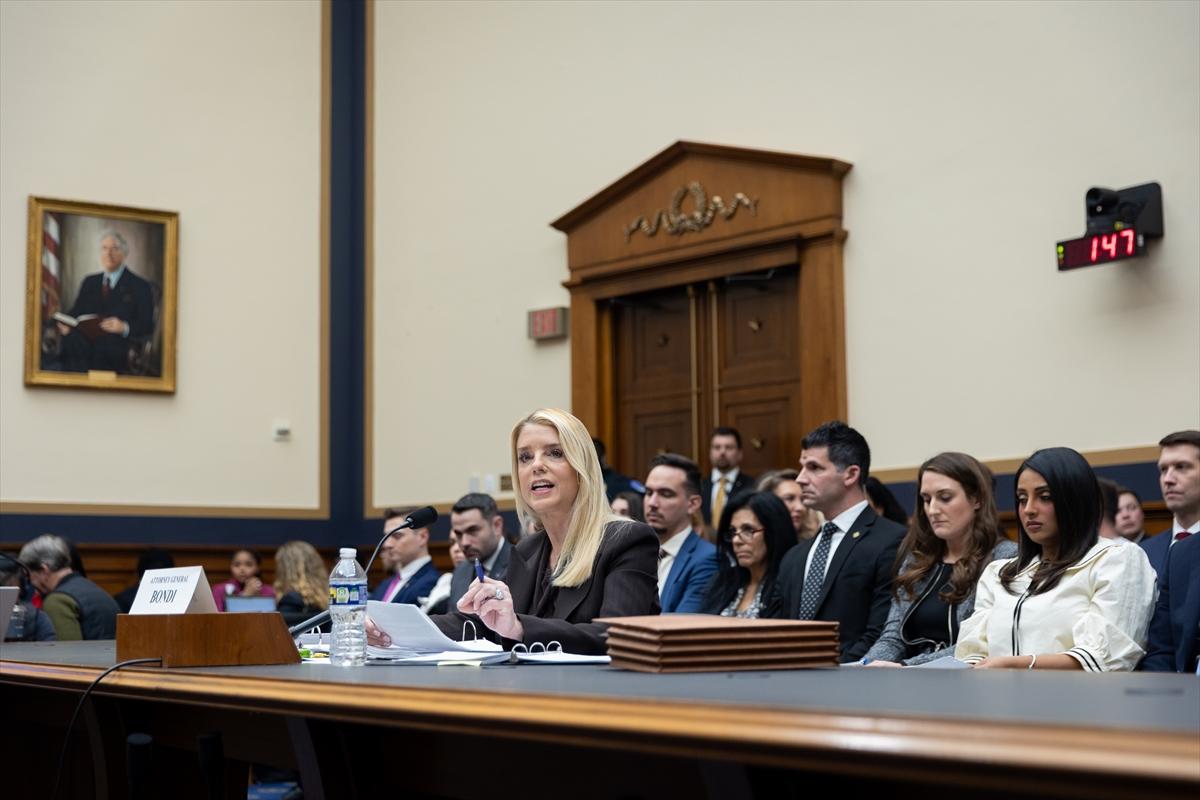
U.S. Attorney General Pam Bondi testifies before Congress during the “Department of Justice Oversight” hearing, February 11, 2026 - (Anadolu Ajansı)
Republican Representative Thomas Massie pointed out that the name of billionaire Leslie Wexner, listed by the FBI as a potential accomplice of Epstein, was redacted in a document. Massie accused the Department of Justice of “major failure” in complying with the law. Bondi responded that Wexner’s name appears many times in other released documents and that the redaction in that document was removed within “40 minutes.” Massie replied: “Forty minutes after catching you in the act.”
Democratic Representative Becca Balint asked Bondi whether the Department of Justice or the FBI had questioned Commerce Secretary Howard Lutnick regarding his connection to Epstein. Bondi stated that she personally addressed this issue with Lutnick but did not directly answer the question.
During the debate, Bondi accused Balint of being anti-Semitic; Balint responded to Bondi: “You should be ashamed.” Bondi replied: “I am the Attorney General.” Balint responded: “I didn’t notice.” As tensions rose, Judiciary Committee Chairman Jim Jordan called for a short recess.
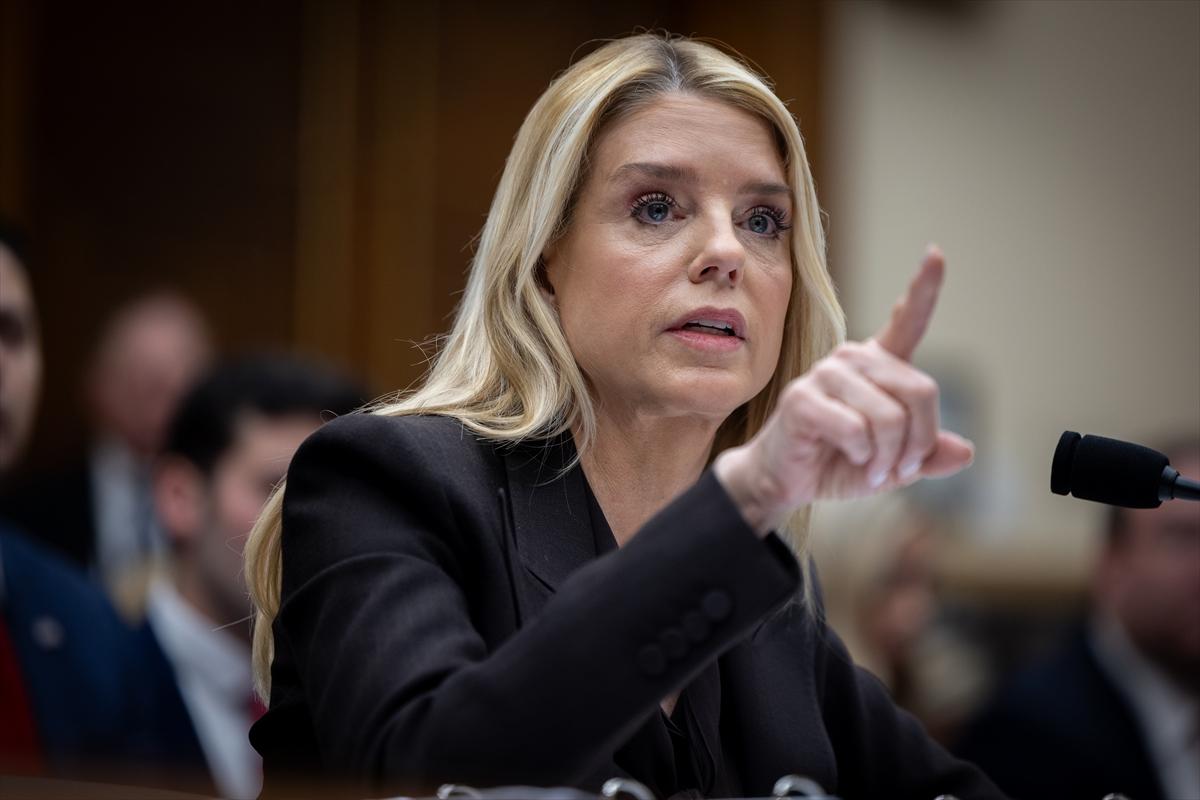
U.S. Attorney General Pam Bondi testifies before Congress during the “Department of Justice Oversight” hearing, February 11, 2026 - (Anadolu Ajansı)
Commerce Secretary Howard Lutnick stated in a 2005 statement that he would never be in the same room as Epstein again and said in a 2025 interview that he was disgusted by Epstein’s behavior. However, documents released by the Department of Justice in January show records indicating that Lutnick’s contact with Epstein continued. Lutnick admitted on February 10 during a Senate hearing that he and his family visited Epstein’s Caribbean island in 2012.
During the hearing, some Epstein victims in the chamber raised their hands in silent protest, accusing Bondi of refusing to look at them. Democratic Representative Pramila Jayapal asked Bondi to apologize to the victims. Bondi responded: “I won’t descend into the mud for her theater.” Bondi also claimed she was being “forced to apologize.”
[1]
U.S. Department of Justice, Office of Professional Responsibility. Report of Investigation: Jeffrey Epstein, OPR Case No. 2018-0156. Washington, D.C.: U.S. Department of Justice, November 2020. Erişim 4 Aralık 2025. https://www.justice.gov/opr/page/file/1336471/dl
[2]
U.S. Department of Justice, Office of Professional Responsibility. Report of Investigation: Jeffrey Epstein, OPR Case No. 2018-0156. Washington, D.C.: U.S. Department of Justice, November 2020. Erişim 4 Aralık 2025.
[3]
United States District Court for the Northern District of New York. Scott Rummler v. Jefferson County Emergency Medical Service, Case No. 5:25-cv-01062 (BKS/TWD), Document 5: Report–Recommendation and Order, Filed October 15, 2025. Washington, D.C.: U.S. Government Publishing Office. Erişim 4 Aralık 2025. https://www.govinfo.gov/content/pkg/USCOURTS-nynd-5_25-cv-01062/pdf/USCOURTS-nynd-5_25-cv-01062-0.pdf
[4]
U.S. Department of Justice, Office of Professional Responsibility. Report of Investigation: Jeffrey Epstein, OPR Case No. 2018-0156. Washington, D.C.: U.S. Department of Justice, November 2020. Erişim 4 Aralık 2025. https://www.justice.gov/opr/page/file/1336471/dl.
[5]
U.S. Department of Justice, Office of Professional Responsibility. Report of Investigation: Jeffrey Epstein, OPR Case No. 2018-0156. Washington, D.C.: U.S. Department of Justice, November 2020. Erişim 4 Aralık 2025.
[6]
U.S. Attorney’s Office for the Southern District of New York. Jeffrey Epstein Charged in Manhattan Federal Court With Sex Trafficking of Minors. New York: U.S. Department of Justice. Erişim 4 Aralık 2025.
[7]
Hurley, Bevan. “Ghislaine Maxwell Guilty of Five Charges in Sex-Trafficking Trial Linked to Jeffrey Epstein.” The Independent, 29 December 2021. Erişim 4 Aralık 2025.
[8]
U.S. Department of Justice. “Attorney General Pamela Bondi Releases First Phase of Declassified Epstein Files.” Office of Public Affairs. Erişim 4 Aralık 2025.
[9]
Holmes, Oliver. “Epstein Files: Key Takeaways from 20,000 Pages of Newly Released Emails.” The Guardian, 13 November 2025. Erişim 4 Aralık 2025.
https://www.theguardian.com/us-news/2025/nov/13/epstein-files-key-takeaways
[10]
Epstein, Jeffrey. Jeffrey Epstein’s Little Black Book (Redacted). DocumentCloud. Erişim 4 Aralık 2025.
https://www.documentcloud.org/documents/1508273-jeffrey-epsteins-little-black-book-redacted/
[11]
Anadolu Ajansı. “Genetic Experiments to Murder Allegations: New Details in Epstein Documents” Anadolu Ajansı. Erişim 4 Şubat 2026. https://www.aa.com.tr/tr/dunya/genetik-deneylerden-cinayet-iddialarina-epstein-belgelerinde-yeni-detaylar/3820010.
[12]
Anadolu Ajansı. “Genetic Experiments to Murder Allegations: New Details in Epstein Documents” Anadolu Ajansı. Erişim 4 Şubat 2026. https://www.aa.com.tr/tr/dunya/genetik-deneylerden-cinayet-iddialarina-epstein-belgelerinde-yeni-detaylar/3820010.

No Discussion Added Yet
Start discussion for "Jeffrey Epstein's Files and the Epstein Files" article
Initial Investigations (2005–2007)
Initiation of the Palm Beach Police Investigation (2005)
Initial State-Level Charges (2006)
Referral to Federal Investigation (2006–2007)
Federal Investigation and the “Non-Prosecution Agreement” (NPA) (2007–2008)
Epstein’s Defense Team and USAO Negotiations (2007)
Content of the Non-Prosecution Agreement (NPA) (2007)
Defense Team’s Attempts to Modify the NPA (2007–2008)
State Court Hearing and Sentencing on June 30, 2008
Victims’ Rights Campaign and the CVRA Lawsuit (2008–2019)
The 2008 “Jane Doe” Petition and the Crime Victims’ Rights Act (CVRA) Lawsuit
New York Federal Indictment and Developments (2019)
New York Southern District Federal Indictment
Arrest and Investigation Findings (July 6, 2019)
Epstein’s Death in Custody (August 10, 2019)
Ghislaine Maxwell Investigation
Federal Indictment and Arrest (2020)
Trial and Witness Testimonies (2021)
Jury Verdict and Sentencing (December 2021)
2025 Class Action Lawsuit Against Bank of America
Filing and Subject of the Lawsuit
Identification of Financial Transactions and Documents
Alleged Actions and Obligations of the Bank
Jane Doe’s Allegations and Legal Basis
Findings Regarding Epstein’s Island and Properties
FBI Searches and Recovered Materials
Lawsuits Filed by the U.S. Virgin Islands Government
Release of the Epstein Files (2025)
DOJ and FBI “Phase One” Document Release (February 2025)
Content of the Documents and Privacy Restrictions
Congressional Process and the “Epstein Files Transparency Act”
Release of Emails and Personal Correspondence (November 2025)
Correspondence Referencing Donald Trump
Prince Andrew and Other Names
Academics and Public Figures
Epstein’s Contact Book and Flight Logs
Release of Images from Little Saint James
Comprehensive Document Releases on December 19, 2025
Types of Released Documents
Redaction Status of the Documents
Removal and Re-release of Images Involving Donald Trump
Statements by Deputy Attorney General Todd Blanche
Statement on Release of All Materials Related to Trump
Other Prominent Names in the Epstein Files
Photographs and Records of Bill Clinton
Other Names from Politics, Arts, and Business
Redaction Practices
Fully and Partially Redacted Documents
Reasons and Legal Basis for Redactions
Statements by Congressional Members and Federal Officials
Statements by House of Representatives Members
Statements by Senate Members
Comprehensive Epstein Document Release on January 30, 2026
Prominent Names, Correspondence, and Images in the Documents
Donald Trump
Bill Clinton
Howard Lutnick (U.S. Secretary of Commerce)
Kathryn Ruemmler (Former Obama White House Counsel)
Elon Musk
Bill Gates
Steve Tisch (Owner of New York Giants)
Prince Andrew (United Kingdom)
Sarah Ferguson
Ehud Barak (Former Israeli Prime Minister)
Scandinavian Royal Families
Larry Summers
Richard Branson
Steve Bannon
Peggy Siegal
Robert College (Turkey)
CIA Aircraft Plan
Figures from Hollywood and Sports
Dr. Mehmet Öz
Deepak Chopra
Political and Diplomatic Consequences
Lord Peter Mandelson’s Resignation from the Labour Party
Slovak Diplomat Miroslav Lajčák’s Resignation
Andrew Mountbatten-Windsor’s Departure from Royal Lodge
Resignations of Prime Minister Keir Starmer’s Communications Director and Private Secretary
Resignation of Norwegian Ambassador Mona Juul
Investigation into Former Norwegian Prime Minister Thorbjørn Jagland
Allegations Against Former Norwegian Diplomat Terje Rød-Larsen
New Allegations and Correspondence in the Epstein Documents
Murder Allegations Near Zorro Ranch
Email from Eva Andersson-Dubin
Correspondence on Embryos and Genetic Research
Email Containing “Kill” Statement
Correspondence between Epstein and Peter Thiel
Epstein’s Lawyers’ Requests to Intelligence Agencies
Notes on World Leaders
Prison Surveillance Footage and Statements from Cellmate Efrain Reyes
Jeffrey Epstein’s $25 Million Agreement with Rothschild Firm (2015)
Media Influence and Manipulation Allegations
Chemical Substance Procurement in Epstein Files: Sulfuric Acid Shipment
Connection to Critical Minerals and Rare Earth Elements
Allegations of “Hacking” Wikipedia
Ohio State University and Mark Landon Payments
Zorro Ranch and the “Massacre of the Innocents” Painting
Correspondence Regarding Prostitution Network
Ed Epstein’s Proposal to Maxwell Regarding the 9/11 Commission
Reactions of Epstein Victims and Public Appeals
Investigation Initiated by the U.S. Congress
Chomsky Family’s Statement
Economic and Financial Networks Revealed in the Epstein Files
Energy Sector Connections
Cryptocurrency and Financial Technology
Ghislaine Maxwell’s Refusal to Testify Before the U.S. Congress and Request for Pardon
Emails in the Hands of the French Judiciary
Marianne Magazine’s Claim
Political Statements in France
Developments Regarding Deutsche Bank
“Department of Justice Oversight” Hearing