


+2 More

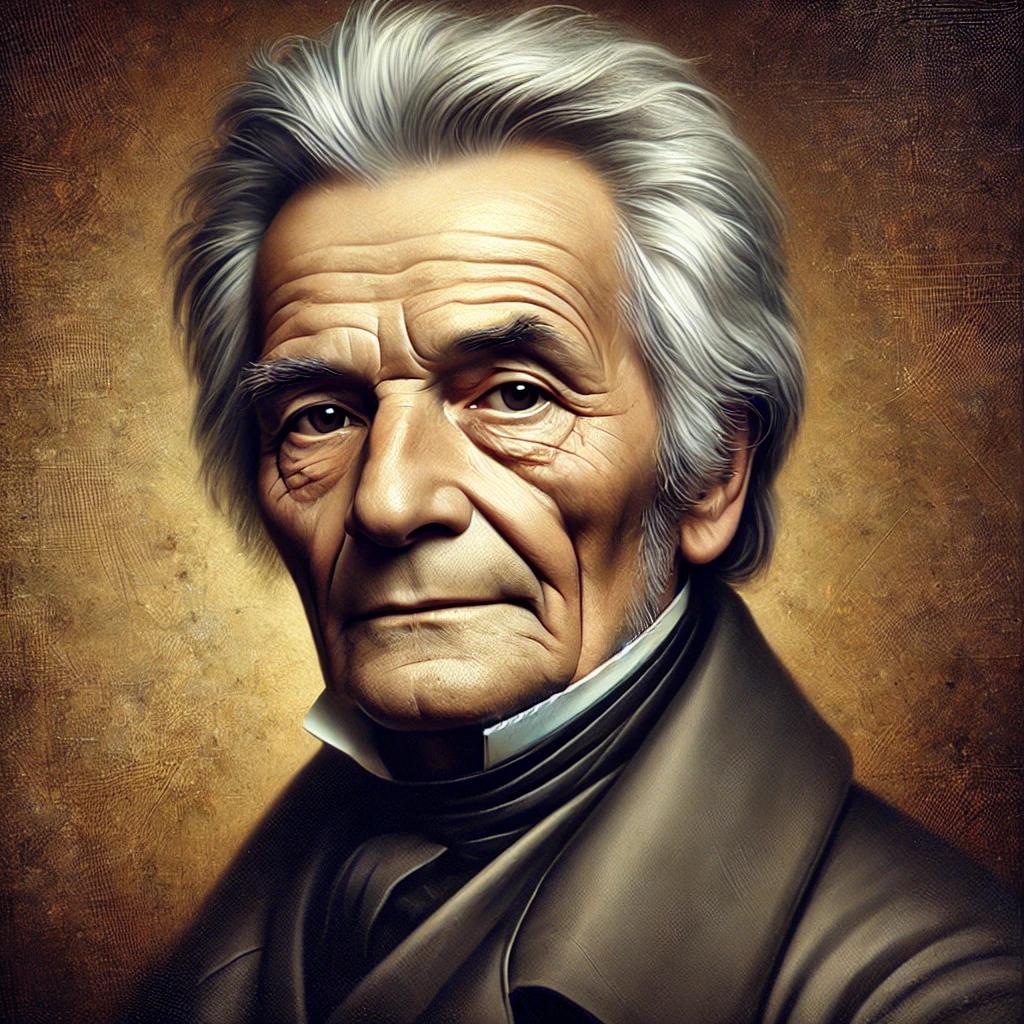
Johann Heinrich Pestalozzi
Ölüm tarihi | 1746-01-12 | ||||||||
|---|---|---|---|---|---|---|---|---|---|
Doğum tarihi | 1827-02-17 | ||||||||
Johann Heinrich Pestalozzi (12 January 1746, Zurich, Switzerland – 17 February 1827, Brugg, Switzerland) was a Swiss pedagogue renowned for his educational reforms. He argued that the fundamental purpose of education was to support the moral and emotional development of the individual and made significant contributions to the development of the modern school system. His work focused particularly on the education of poor children, and he developed pedagogical approaches by grounding his theoretical ideas in practical applications.
Pestalozzi lost his father at an early age and was raised by his mother. The economic hardships experienced by his family led him to seek solutions to poverty through education in his later years. The love and support shown by his family became one of the foundational pillars of Pestalozzi’s educational philosophy. The social inequalities he observed during childhood directed his focus toward progressive movements in education in his later life.
He studied theology at the University of Zurich but later turned toward education. He was profoundly influenced by Jean-Jacques Rousseau’s work “Emile” and developed his educational philosophy accordingly. The education he received in University years shaped his pedagogical approaches and opened the way for his advocacy of learning through direct experience. He believed that education must align with the nature of the individual and constructed his educational philosophy on this principle.
Pestalozzi began his educational career in 1774 with the founding of Neuhof, a school established to provide vocational training to poor children. However, this initiative ended in failure due to financial difficulties. He later opened educational institutions in Burgdorf and Yverdon, where he implemented the methods he had developed. These institutions became centers for pedagogical approaches that recognized individual differences among students and provided them with opportunities to learn at their own pace.
Pestalozzi’s educational philosophy influenced educators such as Friedrich Froebel, Maria Montessori and John Dewey such as famous. His child-centered approach to education made significant contributions to modern pedagogical methods. His emphasis on love and individual development in education became one of the foundational principles of modern educational systems. His ideas helped pioneer many contemporary pedagogical theories that stress the importance of a student-centered approach.
Pestalozzi argued that education was not merely about imparting academic knowledge. He based his approach on the “head-heart-hand” triad, asserting that education must encompass intellectual, emotional and physical development. Through this perspective, he brought the human dimension of education to the forefront. This model aimed to involve students not only in acquiring theoretical knowledge but also in their emotional growth and physical skill development. He maintained that education must serve as a means to support individual development.
Among his most notable works are “Lienhard und Gertrud” (1781–1787) and “Wie Gertrud ihre Kinder lehrt” (1801). In these writings, he emphasized the importance of love and individual development in education. He wrote extensively on the significance of moral values and personal growth in education and explored the role educational systems could play in addressing social issues. His work directly influenced areas such as elementary education, classroom practices and curriculum development.
Beyond his educational work, Pestalozzi enjoyed immersion in nature and participation in agricultural activities. His interest in agriculture influenced his educational philosophy, leading him to believe that students should integrate learning with direct experience of nature. He advocated for incorporating the model of learning through nature into educational systems and argued that this was beneficial for children’s development.
He married Anna Schulthess but spent the greater part of his life devoted to educational work. His commitment to his family and educational ideals shaped the direction of his efforts. Family life formed the foundation of the themes of love and compassion that permeated his educational philosophy.
After the closure of his educational institute in Yverdon, Pestalozzi continued his work on educational systems and focused in his final years on documenting his educational reforms. He wrote extensively on problems in education and developed proposals for educational methodologies.
He died on 17 February 1827 in Brugg. The reforms he introduced in education continued to exert influence after his death. His contributions to the field of education were referenced in subsequent educational reforms, and the methods he developed remained in use in many educational systems.
Pestalozzi’s educational philosophy served as an inspiration for numerous educational reforms in Europe and America. His methods continue to demonstrate their influence in contemporary educational systems. The teaching methods he developed contributed to the evolution of modern educational theories and guided educational policies in many countries.
The educational philosophy he developed laid the foundation for the pedagogical approaches of later figures such as Friedrich Froebel and Maria Montessori. His educational philosophy established the basis for the student-centered approach now implemented in many countries today.
Başalev, Serenay, and Ebru Aktan Acar. "Johann Heinrich Pestalozzi’yi Konu Alan Makaleler Üzerine Bir Betimsel İçerik Analizi." Erken Çocukluk Çalışmaları Dergisi 6, no. 1 (April 2022): 23–48. Accessed March 16, 2025.
Kuhlemann, Gerhard. “Kısa Biyografisi.” Heinrich Pestalozzi. Accessed March 17, 2025. https://tr.heinrich-pestalozzi.de/biyografi/kisa-biyografisi.
Ummanel, Azize. "Okul Öncesi Eğitimin Felsefi Temelleri." Lefke Avrupa Üniversitesi, Dr. Fazıl Küçük Eğitim Fakültesi, Okul Öncesi Öğretmenliği Bölümü, PDF, Date Not Specified. Accessed March 16, 2025.

Johann Heinrich Pestalozzi
Ölüm tarihi | 1746-01-12 | ||||||||
|---|---|---|---|---|---|---|---|---|---|
Doğum tarihi | 1827-02-17 | ||||||||
No Discussion Added Yet
Start discussion for "Johann Heinrich Pestalozzi" article
Early Life and Education
Childhood and Youth
Educational Background
Career and Achievements
Career Path
Notable Achievements
Key Works and Contributions
Contributions
Works and Projects
Personal Life
Hobbies and Interests
Private Life
Final Years and Death
Later Period
Death
Legacy and Influence
Aftermath
Source of Inspiration