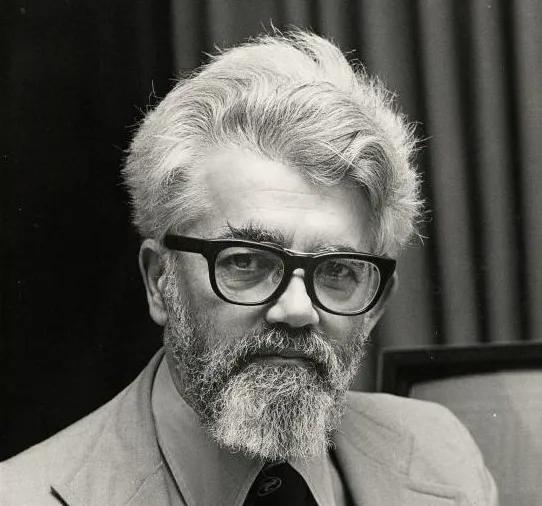



John McCarthy, an American computer scientist and mathematician, is recognized as one of the founders of the modern discipline of artificial intelligence. Born on September 4, 1927, in Boston, Massachusetts, McCarthy died on October 24, 2011, in Stanford, California. He introduced the term artificial intelligence into the literature, developed the Lisp programming language, and pioneered symbolic approaches to artificial intelligence. McCarthy’s work enabled theoretical and practical advances in computer science and established the idea that computers could model cognitive processes on an academic foundation.
John McCarthy demonstrated his scientific aptitude at a very young age. During high school, he studied university-level mathematics independently and enrolled at the California Institute of Technology (Caltech) in 1944. After earning his bachelor’s degree in mathematics in 1948, he began graduate and doctoral studies at Princeton University. In 1951, he completed his Ph.D. in mathematics with a thesis titled “Projection Operators and Partial Differential Equations”.
McCarthy began his academic career as a faculty member at Princeton University and later held positions at leading institutions including MIT, Dartmouth College, Stanford University, and the Stanford Research Institute (SRI). One of his most enduring contributions came during his faculty tenure at Stanford University starting in 1962, where he founded the Stanford Artificial Intelligence Laboratory (SAIL) and paved the way for numerous pioneering research efforts.
In 1956, the Dartmouth Conference, proposed by McCarthy and held at Dartmouth College, became a turning point in the field and is widely regarded as the birth of artificial intelligence. Organized alongside Marvin Minsky, Claude Shannon, and Nathaniel Rochester, the conference laid the groundwork for research on machines’ abilities to learn, abstract, and solve problems. The conference’s call to define learning or intelligence entirely in terms of machine behavior reflected McCarthy’s scientific vision.
McCarthy sought to explain artificial intelligence not merely through heuristic systems but through mathematical and logical foundations. This approach led the development of what later became known as symbolic artificial intelligence. He argued that modeling human-like intelligence required formal systems such as logical inference rules, symbolic manipulation, and knowledge representation. Consequently, he made pioneering contributions in areas including automatic theorem proving, knowledge representation languages, and the use of logic in artificial intelligence.
In 1958, McCarthy developed the Lisp (List Processing) programming language. Lisp is one of the earliest examples of functional programming paradigms and provided suitable data structures (trees, lists) and computational logic for artificial intelligence research. This language, whose traces remain in many modern programming languages, laid the foundation for the development of AI-focused languages such as Prolog and Scheme.
The development of Lisp was not merely a technical achievement but also a functional rebuttal to the argument that “computers cannot think.” For McCarthy, the act of thinking was not exclusive to biological organisms; machines with sufficient power and abstraction capabilities could perform similar mental functions.
McCarthy was also a proponent of another concept that democratized computer use: time-sharing computer systems. During his early work at MIT in the 1960s, he advocated for and developed systems that allowed multiple users to access a single computer simultaneously. This approach accelerated the widespread adoption of computers in both education and research.
The time-sharing concept later became one of the foundational elements of modern operating systems. This visionary approach can also be seen as a precursor to today’s cloud computing systems.
McCarthy understood that artificial intelligence was not only a technical but also a philosophical issue. He developed a more systematic and ontologically grounded perspective on the question “Can machines think?” compared to Alan Turing’s behavioral approach. For McCarthy, intelligence could be reduced not to intention, purpose, consciousness, or emotion but to problem-solving capacity.
He also expressed views on whether artificial intelligence systems could assume ethical responsibilities. McCarthy argued that ethical behavior could be grounded in intelligence, provided it was supported by appropriate programming and knowledge systems.
McCarthy’s work was honored with numerous awards and recognitions. He received the Turing Award in 1971, the National Medal of Science in 1985, and was elected to prestigious institutions including the American Academy of Arts and Sciences and the National Academy of Engineering. He was also awarded honorary doctorates by many universities.
John McCarthy’s most important legacy is his contribution to establishing artificial intelligence as a legitimate and independent research discipline in both scientific and social domains. His work is regarded as a fundamental reference not only in artificial intelligence but also in computer science, mathematical logic, and software engineering.
As he consistently emphasized, artificial intelligence is not a “future project” but an ongoing scientific reality. In this context, McCarthy’s ideas continue to influence today’s machine learning, natural language processing, robotics, and intelligent systems.
McCarthy, John. "Programs with Common Sense." Proceedings of the Teddington Conference on the Mechanization of Thought Processes, 1959.
Nilsson, Nils J. The Quest for Artificial Intelligence: A History of Ideas and Achievements. Cambridge: Cambridge University Press, 2010.

Education and Academic Career
Artificial Intelligence and Symbolic Logic Research
Contributions to Lisp and Programming Languages
Time-Sharing Computers and Shared Access
Philosophical Approaches and Ethical Views
Awards and Honors
Legacy and Scientific Impact