


This article was automatically translated from the original Turkish version.
+2 More
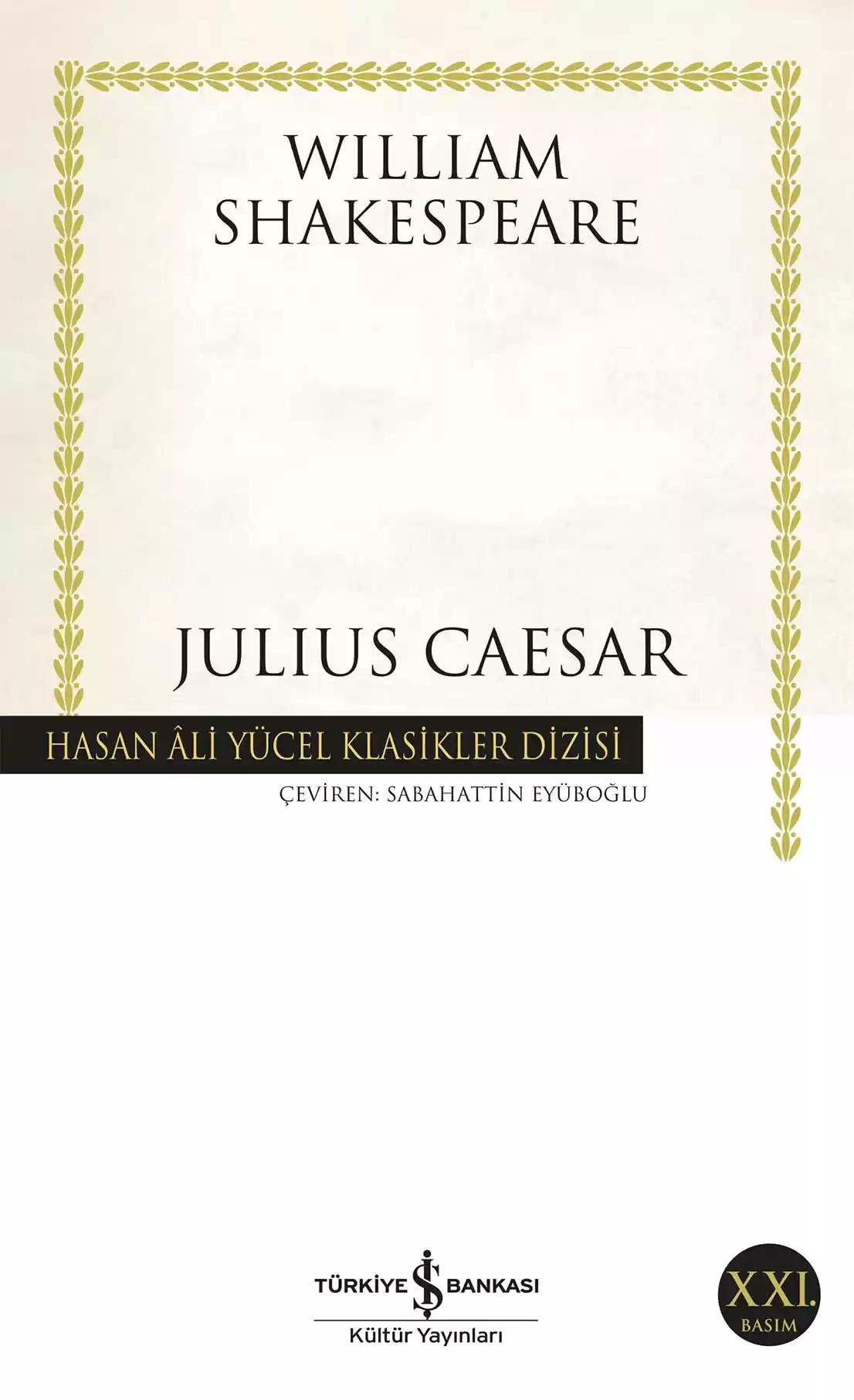
Julius Caesar
Author(s) | William Shakespeare | ||||||||
|---|---|---|---|---|---|---|---|---|---|
Publisher(s) | Türkiye İş Bankası Kültür Yayınları | ||||||||
Translator(s) | Sabahattin Eyüboğlu | ||||||||
Number of Pages | 168 | ||||||||
ISBN | 9789944880220 | ||||||||
Original Title | The Tragedy of Julius Caesar | ||||||||
Shakespeare’s play "Julius Caesar" is a historical tragedy that deals with the assassination of Julius Caesar in 44 BCE and the events that followed. The play begins with a group of senators, including Caesar’s close friend Brutus, who fear his growing power and conspire to kill him.
The play narrates the assassination of Rome’s leader Julius Caesar by members of the Senate, particularly Brutus and Cassius, and the chaos that ensues from this betrayal. Brutus justifies Caesar’s murder as an act to preserve the “freedom of Rome,” while Mark Antony incites the public to seek revenge for Caesar’s death. A civil war soon breaks out, and Brutus and Cassius are defeated at the Battle of Philippi, after which they both commit suicide.
The work is one of Shakespeare’s most renowned tragedies, presenting a drama steeped in political intrigue. The play highlights the characters’ inner conflicts, rhetorical skills, and sense of social responsibility. Through monologues and dialogues, Shakespeare interrogates individual and collective moral frameworks. While dramatizing historical events, the play also examines universal aspects of human nature.
This play is suitable for those interested in history and politics, lovers of tragedy, those drawn to the art of rhetoric and persuasion, and anyone seeking to explore Shakespeare’s timeless themes.
Shakespeare, William. *Julius Caesar*. Trans. Sabahattin Eyüboğlu. Istanbul: Türkiye İş Bankası Kültür Yayınları, 2007. ISBN 9789944880220. Accessed May 10, 2025. https://www.iskultur.com.tr/julius-caesar-2.aspx.
İş Bankası Kültür Yayınları. *Julius Caesar* (book cover). Accessed May 10, 2025. https://www.iskultur.com.tr/julius-caesar-2.aspx.

Julius Caesar
Author(s) | William Shakespeare | ||||||||
|---|---|---|---|---|---|---|---|---|---|
Publisher(s) | Türkiye İş Bankası Kültür Yayınları | ||||||||
Translator(s) | Sabahattin Eyüboğlu | ||||||||
Number of Pages | 168 | ||||||||
ISBN | 9789944880220 | ||||||||
Original Title | The Tragedy of Julius Caesar | ||||||||
No Discussion Added Yet
Start discussion for "Julius Caesar (Book)" article
Summary of the Play
Themes of the Play
a) Power and Betrayal
b) Fate and Free Will
c) Rhetoric and Manipulation
d) Republic vs. Dictatorship
Style of the Play
Target Audience