
+1 More

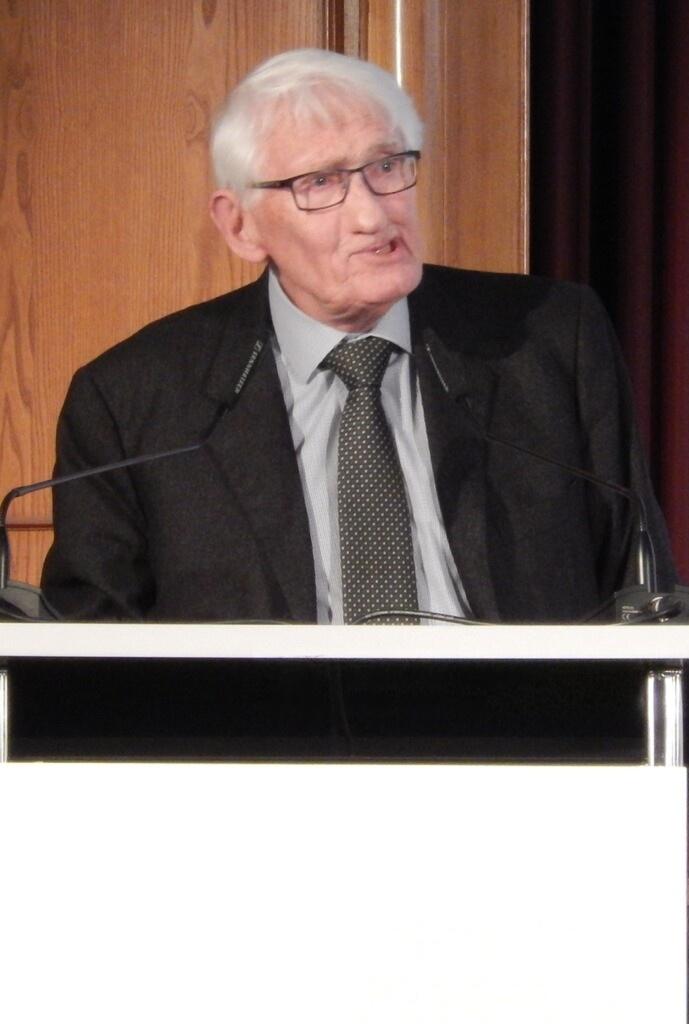
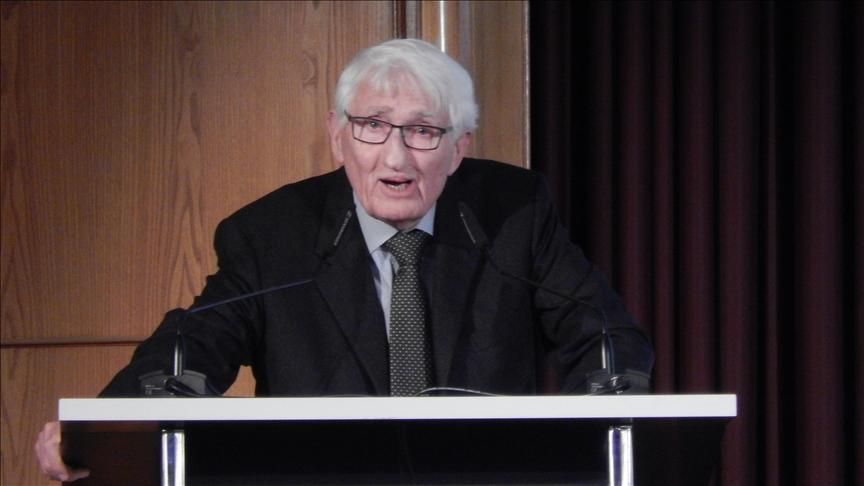
Jürgen Habermas (Anadolu Ajansı)
Jürgen Habermas (18 June 1929 – 14 March 2026) was a German philosopher sociologist and social theorist. His work shaped around the critical theory tradition the philosophy of communication the theory of democracy the analysis of the public sphere and critiques of modern society. Although associated with the Frankfurt School thinkers he developed his own theoretical framework particularly through the concepts of language communication and normative legitimacy. Habermas’s theoretical contributions focused on the role of rational discourse and public communication in generating political legitimacy in modern society.
Habermas’s thought forms a social theory centered on the concepts of communicative rationality and public debate. In this theory linguistic communication is not merely a means of transmitting information but is understood as the fundamental mechanism for social coordination and norm production. This approach rests on the idea of a public sphere in which individuals in modern society can resolve common problems through discussion.
Over a long academic career spanning from the second half of the twentieth century to the first quarter of the twenty-first Habermas published extensive works on political theory legal philosophy moral theory and debates on modernity. These works concentrate on the processes of rationalization communication forms and problems of democratic legitimacy in modern society.
Jürgen Habermas was born on 18 June 1929 in Düsseldorf Germany. His childhood coincided with the final years of Nazi Germany. During the later years of the Second World War he was associated with youth military defense organizations. The public exposure of Nazi crimes after the war marked a pivotal moment in the formation of Habermas’s political and moral thinking.
During his youth he continued his education amid Germany’s postwar reconstruction. He studied philosophy history psychology and German literature at the universities of Göttingen Zurich and Bonn. In 1954 he earned his doctorate from the University of Bonn with a thesis on the thought of Friedrich Wilhelm Joseph Schelling.
In the mid-1950s he joined the circle around the Institute for Social Research in Frankfurt and worked as an assistant to Theodor W. Adorno. This period marked the beginning of Habermas’s association with the Frankfurt School. The intellectual environment of the institute provided the foundation for his engagement with the critical theory tradition and the development of a new approach in the field of social theory.
Habermas’s academic career took shape in German universities during the 1960s. In 1964 he became a professor of philosophy and sociology at the University of Frankfurt. His writings from this period focused on the legitimacy crises of modern society the theory of knowledge and the critique of ideology.
During the 1970s he worked at the Max Planck Institute’s research center in Starnberg where he began developing a comprehensive social theory. This research culminated in the publication of his two-volume work The Theory of Communicative Action. This work is regarded as one of the most comprehensive theoretical texts of Habermas’s mature period.
In the 1980s and 1990s he continued his academic work at the University of Frankfurt. During this time he focused on law and democratic theory analyzing the legitimacy of the modern constitutional state through communicative processes. Although he retired from the university in 1994 he continued writing and participating in public debates.
One of the most important concepts in Habermas’s early work is the “public sphere.” This term refers to the social space between the state and society where individuals deliberate on common issues. The public sphere is defined as a communicative medium in which citizens form public opinion through free debate. 【1】
According to Habermas the public sphere developed in modern Europe particularly during the eighteenth century. Salons coffeehouses and the press were institutional forms of this culture of debate. In these spaces private individuals engaged in rational discussions about public matters and exerted public opinion pressure on political authority.
Habermas argued that the structure of the public sphere changed with the rise of mass media. Media and large economic actors became influential agents shaping public debate which weakened the critical function of the public sphere. 【2】
Habermas’s most comprehensive theoretical work The Theory of Communicative Action analyzes the role of communication in producing social order. In this theory social action is understood in two fundamental forms: instrumental action and communicative action. Instrumental action involves the strategic use of means to achieve goals. Communicative action refers to linguistic interaction aimed at mutual understanding and consensus.
At the center of the theory is the concept of “mutual understanding.” According to Habermas communicative action enables individuals to produce shared meanings through speech and discussion. In this process participants are required to justify their claims and the stronger argument prevails in the outcome of the debate. 【3】
Habermas also introduced the distinction between the “lifeworld” and the “system” in modern society. The lifeworld refers to the domain of everyday communication and the production of cultural meanings. The system denotes social order directed by economic and bureaucratic mechanisms. The dominance of the system over the lifeworld in modern society is regarded as a major source of social tension. 【4】
Habermas’s political theory is shaped around the concept of deliberative democracy. In this approach democratic legitimacy is generated not only through elections but through processes of public debate. The free and equal participation of citizens in discussion is accepted as the fundamental condition for democratic decision-making.
Habermas explained the legitimacy of the modern constitutional state through the relationship between law and public debate. For him the legal system emerges in connection with communication processes within society. Democratic laws are not merely the product of state authority but the institutionalized form of norms shaped through public discourse. 【5】
European integration international law and global democracy also feature prominently in Habermas’s political theory. He published writings on institutional reforms to strengthen the democratic legitimacy of the European Union and advocated for the strengthening of the international legal order. 【6】
In addition to his academic work Habermas was recognized as a thinker actively engaged in public debates. He regularly published articles in newspapers and journals on Germany’s confrontation with its Nazi past historical policy and democracy.
During the 1980s he participated in the “Historikerstreit” (historians’ dispute) in Germany concerning the historical interpretation of the Nazi era. In these debates he argued that confronting Germany’s past was essential for a democratic society. 【7】
Habermas also published views on the future of the European Union international politics and wars. He argued that Europe must be strengthened on the basis of political unity and democratic cooperation. These writings contributed to his profile as a public intellectual who connected academic work with public debate.
Jürgen Habermas’s intellectual development is closely linked to the Frankfurt School which emerged in mid-twentieth-century Germany. The Frankfurt School represents the tradition of critical theory developed by thinkers such as Max Horkheimer Theodor W. Adorno Herbert Marcuse and Erich Fromm. This tradition sought to critically examine the structures of capitalist society in the realms of ideology culture economy and politics. Habermas established direct contact with this intellectual circle when he began working at the Institute for Social Research in Frankfurt in the second half of the 1950s. 【8】
In 1956 Habermas joined the Institute for Social Research in Frankfurt as an assistant to Theodor W. Adorno. This institution is regarded as the institutional center of the Frankfurt School. The research conducted there was based on an interdisciplinary program that combined Marxist social critique with sociology philosophy and cultural theory. In this environment Habermas became familiar with the foundational concepts of critical theory and was influenced by this tradition in his early work.
Habermas’s relationship with the Frankfurt School evolved through his divergence from certain aspects of the classical critical theorists. Adorno and Horkheimer argued that rationality in modern society increasingly took on an instrumental character with restrictive consequences for freedom. Habermas however rejected the view that modernity had entirely collapsed or that rationality had become wholly oppressive. Instead he asserted that a form of communicative rationality exists which can generate freedom and legitimacy through democratic deliberative processes. 【9】
Habermas’s Theory of Communicative Action represents an intellectual orientation known as the second generation of the Frankfurt School. This approach argues that critical theory must extend beyond economic and ideological critique. Habermas proposed that the normative order of modern society could be reconstructed through linguistic communication and public deliberation. In this way he developed a new theoretical framework that integrated critical theory with the philosophy of language communication theory and democratic political theory.
Habermas’s position within the Frankfurt School is often described as that of the “second generation.” While the first-generation thinkers focused on capitalism the culture industry and ideology critique Habermas sought to reconstruct critical theory through language communication and public deliberation. His work is therefore regarded both as a continuation of the Frankfurt School tradition and as a theoretical transformation of it.
Habermas’s intellectual work expanded the classical framework of Frankfurt School critical theory into a comprehensive social theory encompassing democratic theory legal philosophy and public sphere analysis. In this regard Habermas is recognized as one of the most influential representatives of critical theory in the second half of the twentieth century and has had a decisive impact on subsequent generations of the Frankfurt School.
After retiring in the 1990s Habermas continued producing writings. He published new works on European politics religion and secularism globalization and crises of democracy. During this period his thought became especially focused on the rule of law constitutional order and democratic participation.
He died in Starnberg Germany in 2026 at the age of 96. His death provoked widespread反响 in German and international academic circles.
Habermas’s intellectual legacy continues to develop around the theory of the public sphere the theory of communicative action and the concept of deliberative democracy. His work remains actively used across many disciplines including political theory sociology law and media studies.
1962 – The Structural Transformation of the Public Sphere (Strukturwandel der Öffentlichkeit)
1963 – Theory and Practice (Theorie und Praxis)
1968 – Knowledge and Human Interests (Erkenntnis und Interesse)
1973 – Legitimation Crisis (Legitimation Crisis in Late Capitalism)
1976 – Communication and the Evolution of Society (Communication and the Evolution of Society)
1981 – The Theory of Communicative Action (Theorie des kommunikativen Handelns) – 2 volumes
1985 – The Philosophical Discourse of Modernity
1988 – Moral Consciousness and Communicative Action
1992 – Between Facts and Norms
1998 – The Inclusion of the Other
2001 – The Future of Human Nature
2005 – On Secularization and Religion
2008 – On the Constitutional Future of Europe (related essays)
2012 – On the Crisis of the European Union
2019 – A History of Philosophy (Auch eine Geschichte der Philosophie) – 2 volumes
Accessed November 26, 2025. https://www.aa.com.tr/tr/kultur/ahlatta-acilan-kurslarla-geleneksel-tas-isciligi-yasatiliyor/3116279.
Accessed November 26, 2025. https://www.aa.com.tr/tr/kultur/ahlatta-acilan-kurslarla-geleneksel-tas-isciligi-yasatiliyor/3116279.
Accessed November 26, 2025. https://www.aa.com.tr/tr/kultur/ahlatta-acilan-kurslarla-geleneksel-tas-isciligi-yasatiliyor/3116279.
Accessed November 26, 2025. https://www.aa.com.tr/tr/kultur/ahlatta-acilan-kurslarla-geleneksel-tas-isciligi-yasatiliyor/3116279.
Accessed November 26, 2025. https://www.aa.com.tr/tr/kultur/ahlatta-acilan-kurslarla-geleneksel-tas-isciligi-yasatiliyor/3116279.
Accessed November 26, 2025. https://www.aa.com.tr/tr/kultur/ahlatta-acilan-kurslarla-geleneksel-tas-isciligi-yasatiliyor/3116279.
Accessed November 26, 2025. https://www.aa.com.tr/tr/kultur/ahlatta-acilan-kurslarla-geleneksel-tas-isciligi-yasatiliyor/3116279.
Accessed November 26, 2025. https://www.aa.com.tr/tr/kultur/ahlatta-acilan-kurslarla-geleneksel-tas-isciligi-yasatiliyor/3116279.
Accessed November 26, 2025. https://www.aa.com.tr/tr/kultur/ahlatta-acilan-kurslarla-geleneksel-tas-isciligi-yasatiliyor/3116279.
Accessed November 26, 2025. https://www.aa.com.tr/tr/kultur/ahlatta-acilan-kurslarla-geleneksel-tas-isciligi-yasatiliyor/3116279.
Accessed November 26, 2025. https://www.aa.com.tr/tr/kultur/ahlatta-acilan-kurslarla-geleneksel-tas-isciligi-yasatiliyor/3116279.
Accessed November 26, 2025. https://www.aa.com.tr/tr/kultur/ahlatta-acilan-kurslarla-geleneksel-tas-isciligi-yasatiliyor/3116279.
Accessed November 26, 2025. https://www.aa.com.tr/tr/kultur/ahlatta-acilan-kurslarla-geleneksel-tas-isciligi-yasatiliyor/3116279.
BBC News. “German Philosopher and Social Critic Jürgen Habermas Dies at 96.” 2026. Accessed March 16, 2026. https://www.bbc.com/news/articles/crk8yxd2g0no
Beckerman, Gal. “Jürgen Habermas, Philosopher of the Public Sphere, Dies at 96.” The New York Times, March 14, 2026. Accessed March 16, 2026.
Boston Review. Scheuerman, William E. “Habermas and the Fate of Democracy.” Boston Review, no date. Accessed March 16, 2026.
Claeys, Gregory, ed. Encyclopedia of Modern Political Thought. Habermas, Jürgen. By Egbert Klautke. Thousand Oaks: CQ Press/Sage. Accessed March 16, 2026.
Contemporary Thinkers. "Jürgen Habermas: Biography." Accessed March 16, 2026. https://contemporarythinkers.org/jurgen-habermas/biography/
Crossman, Ashley. “Jürgen Habermas.” ThoughtCo., no date. Accessed March 16, 2026. https://www.thoughtco.com/jurgen-habermas-3026493
Daily Nous. Sigsbee, Dustin. “Jürgen Habermas (1929–2026).” March 14, 2026. Accessed March 16, 2026.
EBSCO. "Jürgen Habermas." Research Starters: Biography. Accessed March 16, 2026. https://www.ebsco.com/research-starters/biography/jurgen-habermas
Encyclopedia.com. “Jürgen Habermas.” Accessed March 16, 2026.
Euronews Türkçe. “Çağdaş Alman Düşüncesinin Öncüsü Jürgen Habermas 96 Yaşında Hayatını Kaybetti.” March 15, 2026. Accessed March 16, 2026.
Guardian, The. Jeffries, Stuart. “Jürgen Habermas Obituary.” The Guardian, March 15, 2026. Accessed March 16, 2026.
Heine, Friederike. “Habermas, the Philosopher Who Shaped Germany’s Post-War Conscience.” Reuters, March 14, 2026. Accessed March 16, 2026.
Holberg Prize. Tuori, Kaarlo. “On Jürgen Habermas.” Accessed March 16, 2026.
Jacobin. McManus, Matt. “Habermas Obituary: Critical Theory and Philosophy.” March 2026. Accessed March 16, 2026.
Mambrol, Nasrullah. “Key Theories of Jürgen Habermas.” Literariness.org, March 5, 2018. Accessed March 16, 2026.
Meaney, Thomas. “Living in a Critical Condition: Jürgen Habermas at 90.” New Statesman, 2026. Accessed March 16, 2026.
Moulson, Geir. “Jürgen Habermas, Influential German Philosopher, Dies at 96.” AP News, March 14, 2026. Accessed March 16, 2026.
NPR. Veltman, Chloe. “Jürgen Habermas, German Philosopher, Dead at 96.” March 14, 2026. Accessed March 16, 2026.
PBS NewsHour. “Influential German Philosopher Jürgen Habermas Dies at 96.” 2026. Accessed March 16, 2026.
Sociology Group. “Jürgen Habermas: Biography and Contributions.” Accessed March 16, 2026.
Specter, Matthew G. Habermas: An Intellectual Biography. Accessed March 16, 2026.
Stanford Encyclopedia of Philosophy. “Jürgen Habermas.” Accessed March 16, 2026. https://plato.stanford.edu/entries/habermas/
Sunday Guardian Live. Ahmad, Amreen. “Who Is Jürgen Habermas? All You Need to Know About the Influential Frankfurt School Philosopher Who Died Aged 96.” 2026. Accessed March 16, 2026.
https://sundayguardianlive.com/lifestyle/who-is-jurgen-habermas-all-you-need-to-know-about-the-influential-frankfurt-school-philosopher-who-died-aged-96-176339/
https://tr.euronews.com/2026/03/15/cagdas-alman-dusuncesinin-oncusu-jurgen-habermas-96-yasinda-hayatini-kaybetti
https://www.bostonreview.net/articles/william-e-scheuerman-habermas-and-fate-democracy/
https://www.newstatesman.com/world/2026/03/living-in-a-critical-condition-jurgen-habermas-at-90
https://www.npr.org/2026/03/14/nx-s1-5748043/jurgen-habermas-obituary-dead-96-german-philosopher
https://www.theguardian.com/world/2026/mar/15/jurgen-habermas-obituary
“Habermas: The Public Sphere.” Open Text BC – Media Studies 101. Accessed March 16, 2026. https://opentextbc.ca/mediastudies101/chapter/habermas-public-sphere
“Jürgen Habermas Public Sphere Concept.” Journalism University – Media and Communication Theories. Accessed March 16, 2026.
[1]
“Habermas: The Public Sphere.” Open Text BC – Media Studies 101. Access date: 16 March 2026.
https://opentextbc.ca/mediastudies101/chapter/habermas-public-sphere
[2]
“Jürgen Habermas Public Sphere Concept.” Journalism University – Media and Communication Theories. Access date: 16 March 2026.
[3]
EBSCO. “Jürgen Habermas.” Research Starters: Biography. Access date: 16 March 2026.
https://www.ebsco.com/research-starters/biography/jurgen-habermas
[4]
Mambrol Nasrullah. “Key Theories of Jürgen Habermas.” Literariness.org 5 March 2018. Access date: 16 March 2026.
https://literariness.org/2018/03/05/key-theories-of-jurgen-habermas/
[5]
EBSCO. “Jürgen Habermas.” Research Starters: Biography. Access date: 16 March 2026.
https://www.ebsco.com/research-starters/biography/jurgen-habermas
[6]
Heine Friederike. “Habermas the Philosopher Who Shaped Germany’s Post-War Conscience.” Reuters 14 March 2026. Access date: 16 March 2026.
[7]
Moulson Geir. “Jürgen Habermas Influential German Philosopher Dies at 96.” AP News 14 March 2026. Access date: 16 March 2026.
https://apnews.com/article/juergen-habermas-dead-germany-2b541721af6cb19abfaa923359d091b5
[8]
Stanford Encyclopedia of Philosophy. “Jürgen Habermas.” Access date: 16 March 2026.
[9]
Stanford Encyclopedia of Philosophy. “Jürgen Habermas.” Access date: 16 March 2026.

Jürgen Habermas (Anadolu Ajansı)
Early Life and Education
Academic Career
Theory of the Public Sphere
Theory of Communicative Action
Democracy Law and Political Theory
Role as a Public Intellectual
Relationship with the Frankfurt School
Later Years and Death
Major Works