

This article was automatically translated from the original Turkish version.
+2 More
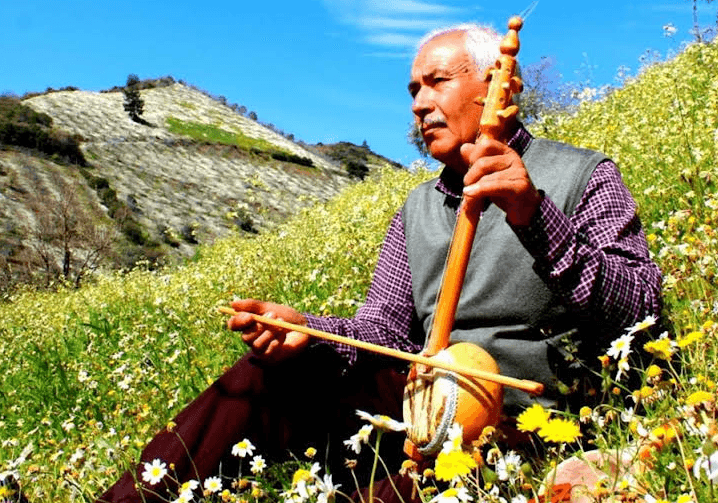
Kabak kemane is a Turkish folk music instrument with a body traditionally made from a gourd, a skin-covered soundboard, and played with a bow. Distinguished among stringed and bowed instruments by its skin covering, this instrument gained widespread popularity in Anatolia, particularly in the western and southwestern regions, and over time evolved from a local instrument into one recognized and performed throughout Türkiye.
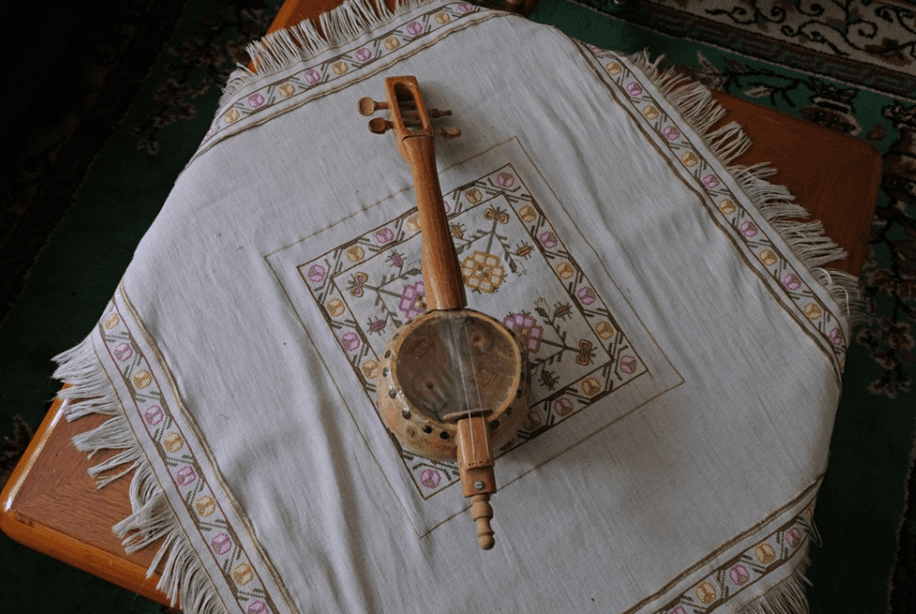
Image of Kabak Kemane (Visit İzmir)
The origins of the kabak kemane trace back to Central Asia. While the use of gourds in instrument making is widespread across a geographical area extending from Asia to Africa, it attained its most distinctive form in Türkiye under the name kabak kemane. In Anatolia, this instrument maintained continuity especially within Yörük Turkmen music and established a vibrant performance tradition around Teke Region.【1】 The kabak kemane is related to the family of bowed instruments classified as ıklık and historically evolved from two-stringed forms into three- and four-stringed variants over time.【2】
The main components of the kabak kemane are the body (resonator), soundboard, neck, pegbox, strings, and bow. The body is crafted from a dried gourd and functions as a resonating chamber. The use of animal skin for the soundboard is regarded as the primary factor determining the instrument’s timbre.
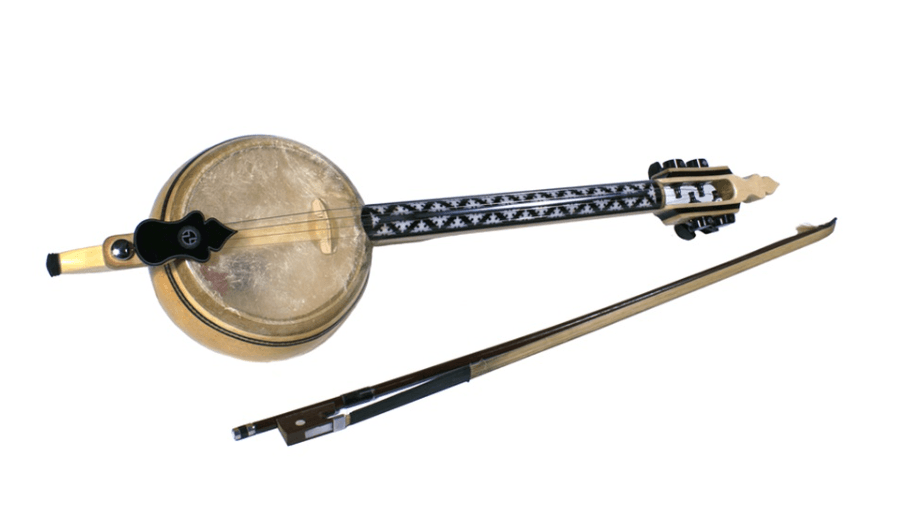
General View of the Kabak Kemane and the Bow Used (Visit İzmir)
The construction of the kabak kemane involves gourd, animal skin, hard wood species, and strings. For the neck and pegbox, woods such as juniper, walnut, hazel, and plum are preferred. The soundboard is most commonly made from the pericardium of cattle, though other animal skins may also be used.
In constructing the kabak kemane, a properly sized and thoroughly dried gourd is first selected. A section of the gourd is cut away, the inner surface is cleaned, and skin is stretched over the opening to form the soundboard. The neck is attached to the body via a metal or wooden rod that passes through the gourd; this component also enables the instrument to rest stably on the knee. Over time, a segmented wooden body technique emerged as an alternative to the gourd. However, the unique tonal qualities provided by the natural structure of the gourd cannot always be replicated in wooden bodies.
Construction Process of the Kabak Kemane (TRT 2)
Historically a two-stringed instrument, the kabak kemane gradually adopted three-stringed and later four-stringed forms. Today, four-stringed kabak kemane instruments are preferred in professional performance. String thickness and tuning systems vary depending on the melodic style performed and the vocal range being accompanied.
The kabak kemane is widely used in the Teke Region and surrounding areas, encompassing the provinces of Antalya, Isparta, Burdur, and Muğla. In this region, the instrument is regarded as an essential element of Yörük Turkmen music's. Through radio broadcasts and state-supported musical ensembles, the kabak kemane has become known throughout Türkiye.
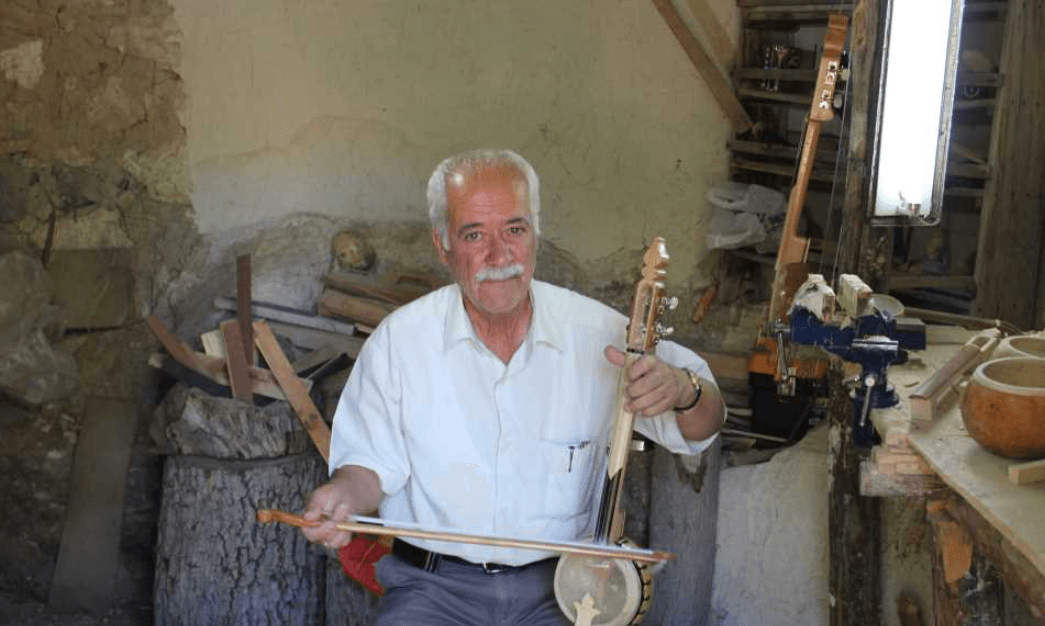
View from a Traditional Production Stage of the Kabak Kemane (Culture Portal)
The kabak kemane holds a unique place within the repertoire of Turkish folk music among plucked, bowed, and skin-covered instruments. Its adoption in educational institutions and state-supported musical ensembles has expanded its performance scope. Today, the kabak kemane has transitioned from being a regional instrument to a nationally recognized folk instrument.
Kabak Kemane Performance (TRT Avaz)
[1]
Arslan Akyol. “Kabak Kemanenin Dünü, Bugünü ve Yarını.” İnönü Üniversitesi Kültür ve Sanat Dergisi 3, no. 1 (2017): syf: 165.Erişim tarihi: 24 Ocak 2026.
[2]
Arslan Akyol. “Kabak Kemanenin Dünü, Bugünü ve Yarını.” İnönü Üniversitesi Kültür ve Sanat Dergisi 3, no. 1 (2017): syf: 163–164.Erişim tarihi: 24 Ocak 2026.

Origins and Historical Development
Structural Features
Materials Used in Construction
Construction Process
String Configuration and Tuning
Regional Distribution
Cultural Context