This article was automatically translated from the original Turkish version.
+1 More
Registration Number | 531 | ||||||||
|---|---|---|---|---|---|---|---|---|---|
Registration Date | 04.09.2020 | ||||||||
Application Number | C2018/121 | ||||||||
Application Date | 01.06.2018 | ||||||||
Name of the Geographical Indication | Kadirli Turpu | ||||||||
Product / Product Group(s) | Turp / Processed and unprocessed fruits and vegetables and mushrooms | ||||||||
Type of Geographical Indication | Place of origin | ||||||||
Applicant/Registrant(s) | Kadirli Chamber of Commerce | ||||||||
Address of the Registrant | Dervişpaşa Mahallesi 500 Sokak No: 1 Kadirli/Osmaniye | ||||||||
Geographical Boundary | Kadirli Sumbas and central districts of Osmaniye province | ||||||||
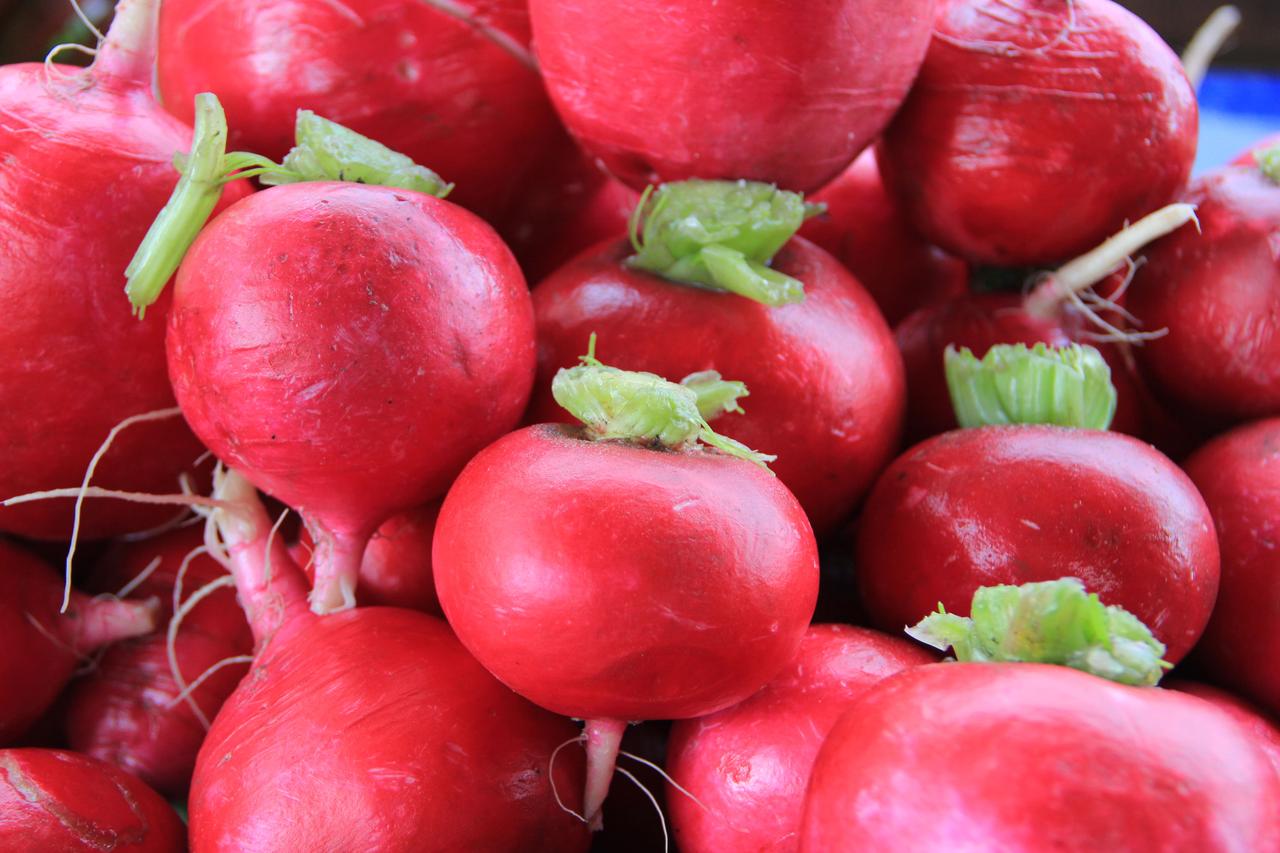
Kadirli turnip is a local turnip variety registered under its place of origin, cultivated in the districts of Kadirli, Sumbas and Central within Osmaniye Province. This turnip has a bright red skin and white flesh, is round in shape, and weighs on average 150–200 grams. It is distinguished by its slightly pungent taste and crisp texture. The soil and climatic conditions of the growing region—characterized by clayey alkaline soils rich in potassium and temperature ranges of 20–25 °C during germination and 14–16 °C during growth—determine the product’s shape, taste and aroma characteristics.
The region where Kadirli turnip is cultivated possesses specific climatic and soil properties. The temperature range during germination is 20–25 °C, while the optimal temperature during growth is 14–16 °C. The soils used for cultivation have a slightly alkaline pH and high potassium content. The soil structure is generally clayey, rich in organic matter and alkaline in nature. These characteristics play a decisive role in determining the product’s shape integrity, taste and aroma profile.
The Kadirli turnip is round in shape, with an average weight of 150–200 grams, a bright red outer skin and white inner flesh. It has a slightly pungent taste and aroma, which provides a distinctive yet non-disruptive flavor during consumption. Thanks to its high firmness value (10±0.5 N), it has a crisp texture. The dry matter content is 3.8±0.5 percent and the pH value is approximately 4.42±0.3. This moderate acidity supports the perception of the product’s sensory qualities.
Seeding is carried out manually, mechanically or using pneumatic seeders. Soil preparation involves plowing with a moldboard plow and harrowing, followed by disk harrowing. At planting, a basal fertilizer of 20 kg per hectare of 15-15-15 or 20-20-20 fertilizer is applied. Top-dressing is performed with 15–20 kg of ammonium sulfate, and this process may be repeated two to three times. Foliar fertilizers are also applied to support growth.
The planting period for Kadirli turnip occurs between August and October. When using a seeder, the planting norm is 13 cm x 12–13 cm, requiring 500–700 grams of seed per hectare. When using broadcast seeding, 800–1500 grams of seed per hectare is sufficient.
Irrigation is carried out twice using sprinkling to ensure seed germination and emergence. Depending on climatic conditions, an additional three to five sprinkling or overhead irrigations may be applied during the season. Pest and disease control is conducted through soil treatment, and no significant disease or pest infestations have been recorded.
As a member of the Brassicaceae family, the turnip has a hermaphroditic flower structure; however, cross-pollination is dominant. This is due to the sequential flowering pattern, differences in stamen lengths, the prior fertilization capacity of the pistils (protogyny), and self-incompatibility. Therefore, to maintain purity and quality in seed production, appropriate isolation distances must be observed.
Harvesting of Kadirli turnip takes place between November and March. The turnips are harvested by hand before reaching full maturity and before any lignification or corking begins. After harvesting, the root tips and leaves are trimmed. Yield varies between 3 and 5 tons per hectare depending on field conditions and management practices.
The first stage of processing is washing. Harvesting occurs in the early morning hours, and the product is cleaned of soil on the same day. Washing is carried out in two ways: first, in water-filled tanks at producer-trader processing facilities using pressurized water; second, in natural ponds formed by dams on the Savrun River, also using pressurized water.
Packaging and labeling are conducted using two distinct systems. At processing facilities, washed turnips are sorted by size, transported via conveyor belts and packed in standardized units. In the ponds along the Savrun River, packaging is done manually. Transparent polyethylene (PE) bags are used as packaging material. Each bag contains 20 kg of product, with a small amount of water added to enhance durability.
Transportation occurs in two stages. In the first stage, the product is transported in bulk by trailer from production sites to processing facilities. In the second stage, the washed and packaged product is shipped by truck to consumption centers throughout the country.
The production and commercialization of Kadirli turnip under its geographical indication are monitored through a control system coordinated by the Kadirli Chamber of Commerce. The monitoring body consists of one representative each from the Kadirli Chamber of Commerce, the Kadirli District Directorate of Agriculture and Forestry, the Kadirli Chamber of Agriculture and the Kadirli Chamber of Commerce and Industry. This committee conducts inspections at least once annually during the growing season, as well as when necessary or upon complaint.
Inspections are carried out under the following headings:
When required, support may be obtained from experts in the public or private sector, or inspection services may be procured. Legal procedures to protect rights arising from the geographical indication are carried out by the registering institution.
Turk Patent and Trademark Office. "Kadirli Turpu." Accessed July 18, 2025. https://ci.turkpatent.gov.tr/cografi-isaretler/detay/38577.
Türk Patent ve Marka Kurumu. "Kadirli Turpu Coğrafi İşaret Tescil Belgesi ve Teknik Şartnamesi." Accessed July 18, 2025. https://ci.turkpatent.gov.tr/Files/GeographicalSigns/64040a56-0177-40cb-93da-7b6a671cac41.pdf.

Registration Number | 531 | ||||||||
|---|---|---|---|---|---|---|---|---|---|
Registration Date | 04.09.2020 | ||||||||
Application Number | C2018/121 | ||||||||
Application Date | 01.06.2018 | ||||||||
Name of the Geographical Indication | Kadirli Turpu | ||||||||
Product / Product Group(s) | Turp / Processed and unprocessed fruits and vegetables and mushrooms | ||||||||
Type of Geographical Indication | Place of origin | ||||||||
Applicant/Registrant(s) | Kadirli Chamber of Commerce | ||||||||
Address of the Registrant | Dervişpaşa Mahallesi 500 Sokak No: 1 Kadirli/Osmaniye | ||||||||
Geographical Boundary | Kadirli Sumbas and central districts of Osmaniye province | ||||||||
Climate and Soil Characteristics
Morphological and Chemical Properties
Key Characteristics of Kadirli Turnip
Cultivation Method
Seed Production
Harvesting, Processing and Marketing
Transport and Distribution
Monitoring Mechanism