


This article was automatically translated from the original Turkish version.
+2 More
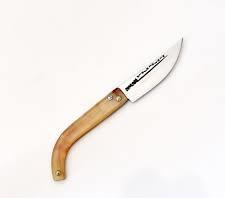
Kahramanmaraş Hartlap Knife
Product / Product Group(s) | Knife / Other | ||||||||
|---|---|---|---|---|---|---|---|---|---|
Type of Geographical Indication | Mahreç Sign | ||||||||
Geographical Boundary | Kahramanmaraş | ||||||||
Applicant/Registrant(s) | Kahramanmaraş Metropolitan Municipality | ||||||||
Registration Number | 300 | ||||||||
Registration Date | 22.12.2017 | ||||||||
Application Number | C2016/079 | ||||||||
Application Date | 19.09.2016 | ||||||||
Kahramanmaraş Hartlap Knife is one of the representatives of the traditional craft of knife-making, a long-standing artisanal practice in Kahramanmaraş. Recognized for its reputation and quality, these knives were granted protection as a "geographical indication" on 22 December 2017 under registration number 300, following an application submitted by the Kahramanmaraş Metropolitan Municipality to the Turkish Patent and Trademark Office with application number C2016/079 and application date 19 September 2016.

A knife is a tool used for cutting, with a blade made of steel and a handle crafted from horn (from buffalo, ram, or goat), shimsir wood, or fiber-based materials. The history of knife-making in Kahramanmaraş is as old as the city itself, and this tradition continues to be practiced today in Hartlap.
The distinguishing features of the Hartlap Knife are as follows:
The geographical boundary for the Kahramanmaraş Hartlap Knife is defined as Kahramanmaraş Province. The type of geographical indication is "geographical indication", signifying that the product’s reputation and specific characteristics originate from the Kahramanmaraş region, particularly from the production tradition of the village of Hartlap.
The Kahramanmaraş Hartlap Knife is produced exclusively in the village of Hartlap, with its blade made of steel and its handle crafted from horn, shimsir wood, or fiber materials using the unique production techniques of Hartlap artisans. The fact that knife-making in Kahramanmaraş dates back as far as the city’s history and that production continues today in Hartlap, through traditional master-apprentice methods passed from father to son, demonstrates the strong link between the product and its geographical origin, as well as its established reputation.
The applicant for the geographical indication of the Kahramanmaraş Hartlap Knife is the Kahramanmaraş Metropolitan Municipality. The applicant’s address is listed as İsmetpaşa Mah. Azerbaycan Blv. No:25, 46100 Merkez/Dulkadiroğlu/Kahramanmaraş.
A monitoring mechanism has been established to verify whether the Kahramanmaraş Hartlap Knife is produced in accordance with the geographical indication standards. The monitoring commission consists of three members: one representative from the Kahramanmaraş Metropolitan Municipality’s Municipal Inspection Directorate, one from the Kahramanmaraş Chamber of Commerce and Industry, and one from the Department of Handicrafts at Kahramanmaraş Karacasu Technical Sciences Vocational School.
Inspections are conducted at least twice a year, and may be carried out at any time upon request or complaint. The inspection criteria are as follows:
The monitoring commission may draw upon expertise from public or private institutions, qualified professionals employed by such organizations, or individuals and legal entities. It may procure services and initiate legal proceedings to protect the rights associated with the geographical indication.
Anadolu Ajansı. “Kahramanmaraş'ın tescilli bıçakları Kurban Bayramı'na hazır.” Anadolu Ajansı, May 23, 2025. Accessed May 24, 2025. https://www.aa.com.tr/tr/yasam/kahramanmarasin-tescilli-bicaklari-kurban-bayramina-hazir/3577135.
Turk Patent and Trademark Office. "Kahramanmaraş Hartlap Bıçağı." Geographical Indication Registration Certificate No: 300. Accessed May 24, 2025. https://ci.turkpatent.gov.tr/Files/GeographicalSigns/dbcd91a3-1030-49ef-bf42-5d3e275192f7.pdf.

Kahramanmaraş Hartlap Knife
Product / Product Group(s) | Knife / Other | ||||||||
|---|---|---|---|---|---|---|---|---|---|
Type of Geographical Indication | Mahreç Sign | ||||||||
Geographical Boundary | Kahramanmaraş | ||||||||
Applicant/Registrant(s) | Kahramanmaraş Metropolitan Municipality | ||||||||
Registration Number | 300 | ||||||||
Registration Date | 22.12.2017 | ||||||||
Application Number | C2016/079 | ||||||||
Application Date | 19.09.2016 | ||||||||
No Discussion Added Yet
Start discussion for "Kahramanmaraş Hartlap Knife" article
Definition and Distinguishing Features of the Hartlap Knife
Production Method
Geographical Indication and Regional Connection
Geographical Boundary and Indication Type
Connection to the Geographical Area
Applicant and Address
Monitoring