


This article was automatically translated from the original Turkish version.
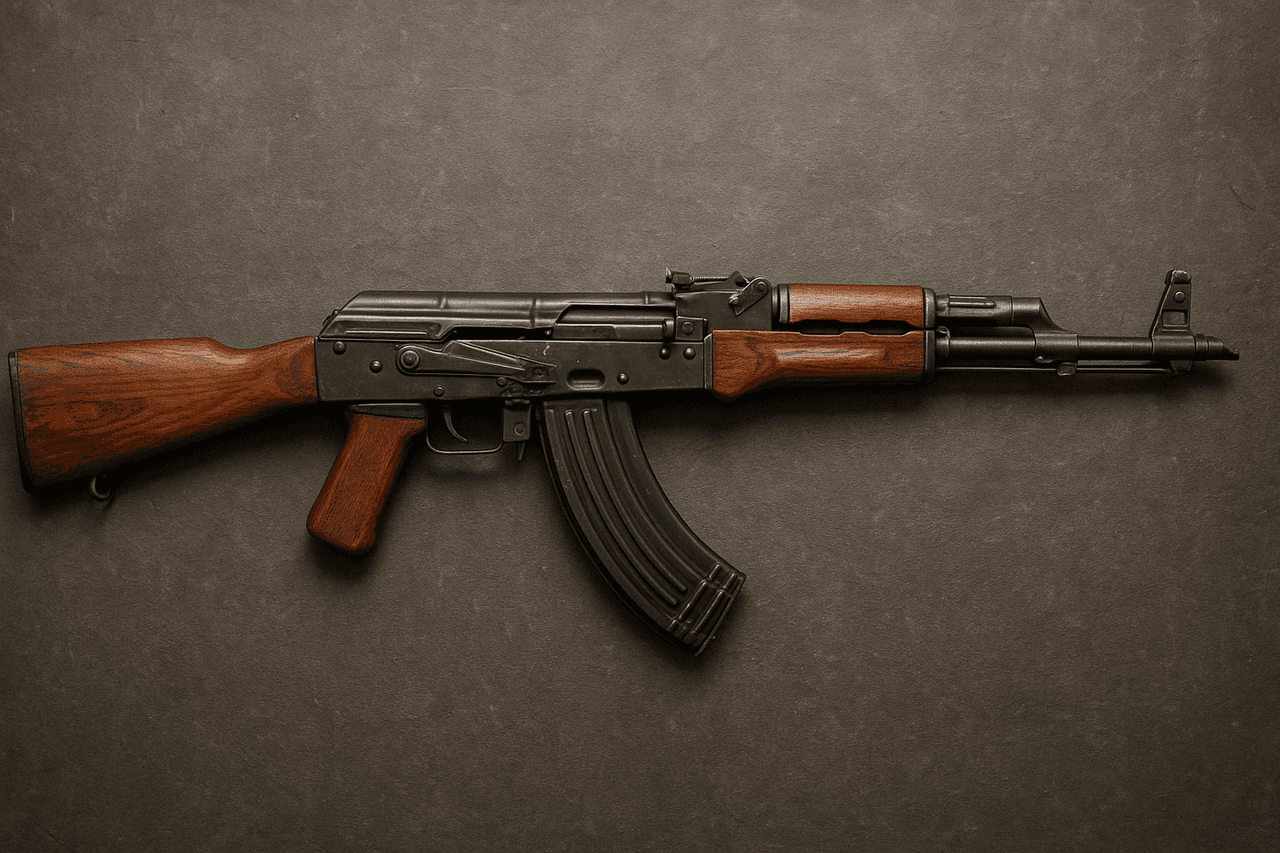
Kalashnikov (AK-47)
Name(s) | AK-47 (Avtomat Kalashnikova 1947) | ||||||||
|---|---|---|---|---|---|---|---|---|---|
Type(s) | Infantry Rifle | ||||||||
Origin(s) | Soviet Union | ||||||||
Designer | Mikhail Timofeyevich Kalashnikov | ||||||||
Design Year | 1947 | ||||||||
Ammunition | 7.62×39 mm | ||||||||
Weight(s) | Approximately 4.3 kg (unloaded) | ||||||||
Length(s) | 870 mm | ||||||||
Fire Modes | Semi-automatic, fully automatic | ||||||||
Magazine Capacity | 30-round | ||||||||
Effective Range | Approximately 300 metres | ||||||||
Known as the Kalashnikov, the AK-47 (Avtomat Kalashnikova 1947) is one of the most widely used infantry rifles of the 20th century. Its simple design cost effective production and ability to function under harsh conditions have led to its widespread adoption across the globe. Estimated to have over 100 million copies in circulation the AK-47 has drawn attention not only for its technical features but also as a symbolic instrument in various political and social contexts. The weapon was designed by Soviet engineer Mikhail Kalashnikov and this model remained in the military inventory of many countries for decades.
The AK-47 was designed in 1947 by Mikhail Kalashnikov in the Soviet Union. It was adopted as the standard infantry rifle by the Red Army in 1949. This weapon fires 7.62x39 mm ammunition and is capable of both fully automatic and semi automatic fire. The AK-47 operates on a gas operated principle and its mechanism consists of eight moving parts. This simple and functional structure facilitates maintenance and ensures reliable performance under diverse climatic conditions.
The barrel of the AK-47 infantry rifle is chrome lined; this feature renders the weapon resistant to corrosion. A latch mechanism located at the base of the stock allows the upper receiver to be easily removed enabling rapid field maintenance. The classic model of the AK-47 weighs approximately 4.3 kilograms. The variant with a folding metal stock the AKS-47 measures 645 millimeters in length and offers advantages in portability and concealability. The magazine of the weapon is characteristically curved and shaped like a banana; this magazine provides a higher cartridge capacity compared to most standard infantry rifles.

Kalashnikov (AK-47) (pexels)
Mikhail Kalashnikov’s design process for the AK-47 began when he was wounded and hospitalized during World War II. While in the hospital he heard other soldiers complain about inadequate weaponry and focused on developing a simple yet effective infantry rifle. Kalashnikov first entered a prototype called “Mikhtim” into an army competition and later developed the AK-47 model which was accepted by the Soviet military. The weapon combined the general structure of the German Sturmgewehr (StG) 44 the trigger mechanism of the M1 Garand and the safety system of the Remington Model 8 to create a hybrid design.
During the Cold War the AK-47 was heavily exported by the Soviet Union to extend its ideological influence. The AK-47 is present in the military inventories of 106 countries worldwide and is produced legally or illegally in 14 different nations. Its low cost durability and ease of use have made it a preferred choice among a wide range of users.
The uncontrolled proliferation and surplus of weapons following the dissolution of the Soviet Union significantly contributed to the weapon’s widespread availability. Terrorist organizations gangs and organized crime groups also use the AK-47 extensively and some non state actors even prefer it over conventional military firearms.
The AK-47 has become more than just a weapon; it has turned into a symbol. Its presence on the flag of Mozambique its depiction on currency and its frequent portrayal in cinema and literature attest to its status as a global icon. Kalashnikov culture is often associated with illicit organizations and resistance movements. This weapon at the center of small scale conflicts tribal clashes and urban crime has become a symbol of resistance and uncontrolled violence.
From an ethical design perspective the AK-47 represents a significant case. Mikhail Kalashnikov stated that he developed the weapon to defend his homeland from Nazi occupation and held politicians responsible for civilian casualties resulting from its use. However this weapon designed under ideal conditions has generated ethical debates worldwide due to the consequences of its global impact.
Boutwell, Jeffrey, and Michael Klare. Light Weapons and Civil Conflict. London: Rowman and Littlefield, 1999.
Jandarma Personeli. “AK-47 Kalaşnikov Piyade Tüfeği.” Accessed May 7, 2025. https://www.jandarmapersoneli.com/ak-47-kalasnikov-piyade-tufegi/.
Milliyet. “AK-47 Nedir?” Molatik Teknoloji. Accessed May 7, 2025. https://www.milliyet.com.tr/molatik/teknoloji/ak-47-nedir-83356.
World Defense Industry. "AK-47 (Kalaşnikof - Kalashnikov)." Date Published November 13, 2019. Accessed May 7, 2025. https://dunyasavunmasanayi.home.blog/2019/11/13/ak-47-kalasnikof-kalashnikov/

Kalashnikov (AK-47)
Name(s) | AK-47 (Avtomat Kalashnikova 1947) | ||||||||
|---|---|---|---|---|---|---|---|---|---|
Type(s) | Infantry Rifle | ||||||||
Origin(s) | Soviet Union | ||||||||
Designer | Mikhail Timofeyevich Kalashnikov | ||||||||
Design Year | 1947 | ||||||||
Ammunition | 7.62×39 mm | ||||||||
Weight(s) | Approximately 4.3 kg (unloaded) | ||||||||
Length(s) | 870 mm | ||||||||
Fire Modes | Semi-automatic, fully automatic | ||||||||
Magazine Capacity | 30-round | ||||||||
Effective Range | Approximately 300 metres | ||||||||
No Discussion Added Yet
Start discussion for "Kalashnikov (AK-47)" article
Design and Technical Specifications
History and Development
Global Prevalence and Usage
Kalashnikov Culture and Ethical Debates