


This article was automatically translated from the original Turkish version.
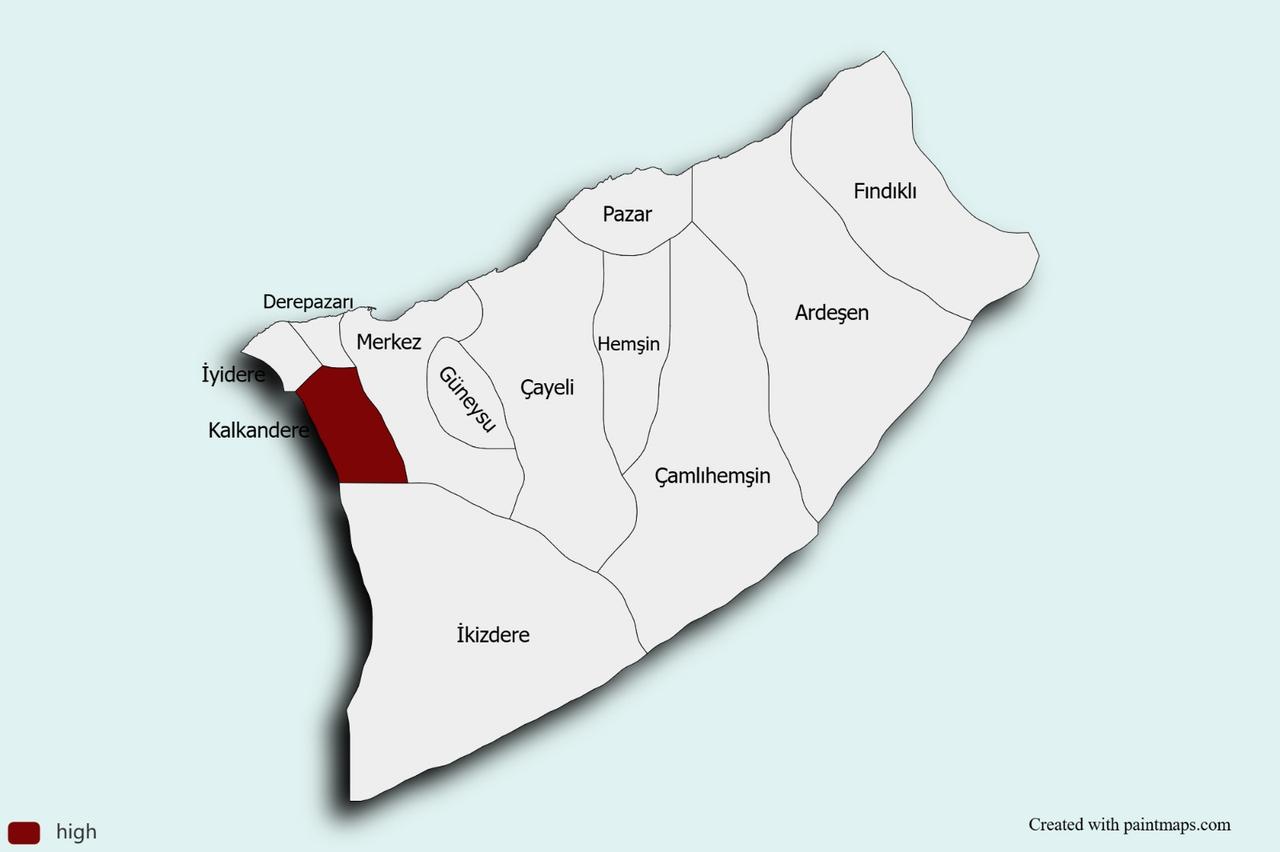
Kalkandere is a district in Black Sea Region, Türkiye, subordinate to the province of Rize and located approximately 25 kilometers from the provincial center of Rize. The district covers an area of 166 km² and has an average elevation of around 300 meters above sea. It is bordered by the Rize Center district to the east, the Of district of Trabzon to the west, and the İkizdere district to the south.
Kalkandere receives abundant rainfall throughout the year due to the influence of the Black Sea climate, which enriches and diversifies the district’s plant cover. Agriculture, primarily tea cultivation, along with kiwi, maize and hazelnut production, forms the backbone of the local economy, complemented by small-scale livestock farming. The district features diverse stream deposits, highland pastures and forested areas; particularly notable natural attractions include the Andon İçmeleri like. Transportation is provided by road, with the district accessible via internal hat roads connecting to the Rize-Trabzon highway. Kalkandere is a typical Eastern Black Sea settlement in terms of its regional geographical and climatic characteristics.

Kalkandere (Rize Provincial Directorate of Culture and Tourism)
The oldest known name of Kalkandere is “Kadere”, which is believed to derive from the dark-colored land stones in the bed of the river flowing through the district, which darken the water’s appearance. The area was successively ruled by the Kimmerians, Persians, Seljuks and the Empire of Trebizond. In 1461 it was incorporated into the territories of the Ottoman Empire. During the Republican period, it attained district status in 1957.
Kalkandere covers an area of 95 km² and has a rugged land topography. The district’s elevation is approximately 200 meters and is surrounded by hills. Region has a typical Black Sea climate, with abundant rainfall throughout the year and high moisture levels. This climate provides favorable conditions for tea cultivation.
The terrain is hilly and covered with broadleaf tree species including bearded oak, hornbeam, chestnut, linden, alder, oak and laurel. Additionally, the understory vegetation is highly diverse and includes various herbaceous and woody plant species such as the rhododendron (Rhododendron).
According to TÜİK 2021 data, the population of Kalkandere district is 6,871. The district comprises one municipality and together totaling 22 village, with a significant portion of the population residing in rural areas. This pattern has contributed to the preservation of traditional ways of life in the region.
The economy of Kalkandere is largely based on tea cultivation and the tea processing industry. The district hosts tea processing factories, while small-scale agriculture, beekeeping and livestock farming also contribute to the local economy.
With its natural beauty, green texture and traditional architecture, Kalkandere holds potential for alternative tourism. The flavors of Black Sea cuisine, particularly tea, corn bread and kale dishes, are an important part of the district’s cultural heritage.

No Discussion Added Yet
Start discussion for "Kalkandere (District)" article
History
Geography and Climate
Population and Demographics
Economy
Tourism, Culture and Cuisine