


This article was automatically translated from the original Turkish version.
+1 More
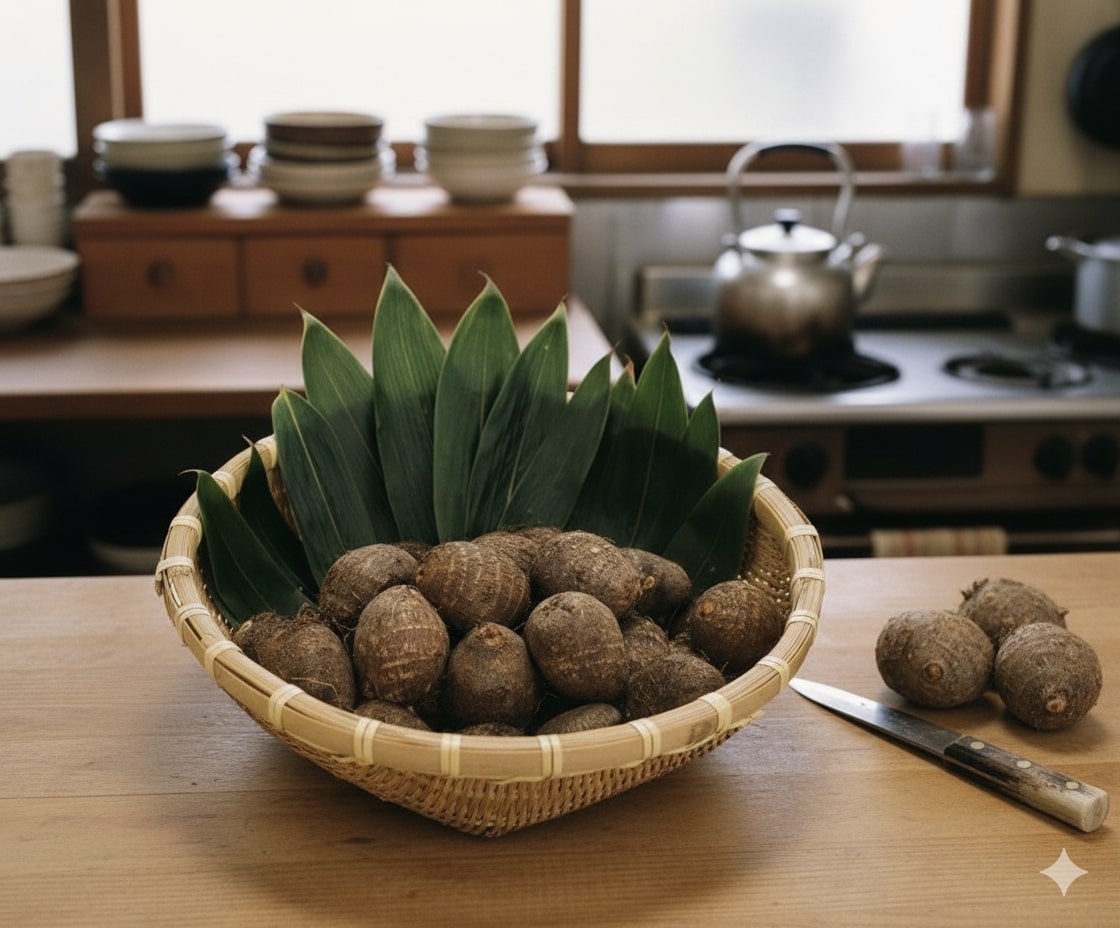
Kamisho Satoimo (Yapay Zeka ile Oluşturulmuştur.)
Kamisho Satoimo is a unique variety of taro (colocasia) from Fukui Prefecture, Japan, protected under geographical indication (GI). Locally known as "Ono-Zairi," this taro is recognized for its sticky texture and firm, dense flesh, which prevents it from breaking apart during boiling.
The production area of Kamisho Satoimo is located in the northeastern part of Fukui Prefecture. The region lies within a basin surrounded by Mount Haku, Mount Arashima, and other mountains exceeding 1,000 meters in elevation. Well-drained sandy loam soils formed by alluvial fans from these mountains are ideal for taro cultivation. Additionally, the basin’s microclimate creates a significant temperature difference between day and night throughout the growing season, which extends from April to November. This temperature variation facilitates the transport of starch produced during daylight hours. The region also benefits from abundant water sources, including the Kuzuryu River and Mana River, which enable irrigation during the summer months.
Kamisho Satoimo is known for its firm, dense flesh, sticky texture, and resistance to disintegration during boiling. In fact, the name “Kamisho Satoimo” refers specifically to the local taro variety grown in this designated production area and known as “Ono-Zairi.” Initially, seed taro selection was carried out individually by local farmers for household use. Between 1972 and 1974, organized selective breeding programs identified and preserved a high-yielding strain (Kamisho Satoimo/Ono-Zairi). Producers have established their own transportation standards for market distribution, which require adequate drying and the absence of blemishes, decay, or disease. Taro that does not meet these standards may still be supplied to food processors if no serious defects are present. This rigorous management has ensured the consistent quality of the product for over thirty years.
The exact origin of Ono-Zairi is unknown, but it originally consisted of local varieties cultivated by farmers for household consumption. In the early 1970s, the Okuetsu Agricultural Development and Extension Center organized selective breeding efforts, carefully selecting superior seed taro to preserve a high-yielding Kamisho Satoimo (Ono-Zairi) strain. Selection of this strain has continued uninterrupted since then. The local geographical and climatic conditions also serve as natural factors that reinforce the variety’s distinctive characteristics.

Kamisho Satoimo (Yapay Zeka ile Oluşturulmuştur.)
Production Area and Geographical Conditions
Characteristics and Quality Management
History and Conservation