


This article was automatically translated from the original Turkish version.
+1 More
Kara saban is a traditional agricultural tool powered by animal labor, used for tilling, aerating, and preparing soil for sowing. With a wooden body and a metal tip, it loosens the soil surface and renders it suitable for planting. In Türkiye, it is particularly used in small-scale farmlands and mountainous or rugged regions. Where modern farm machinery cannot access or is not economically viable, the kara saban is regarded as an essential tool for sustaining production.
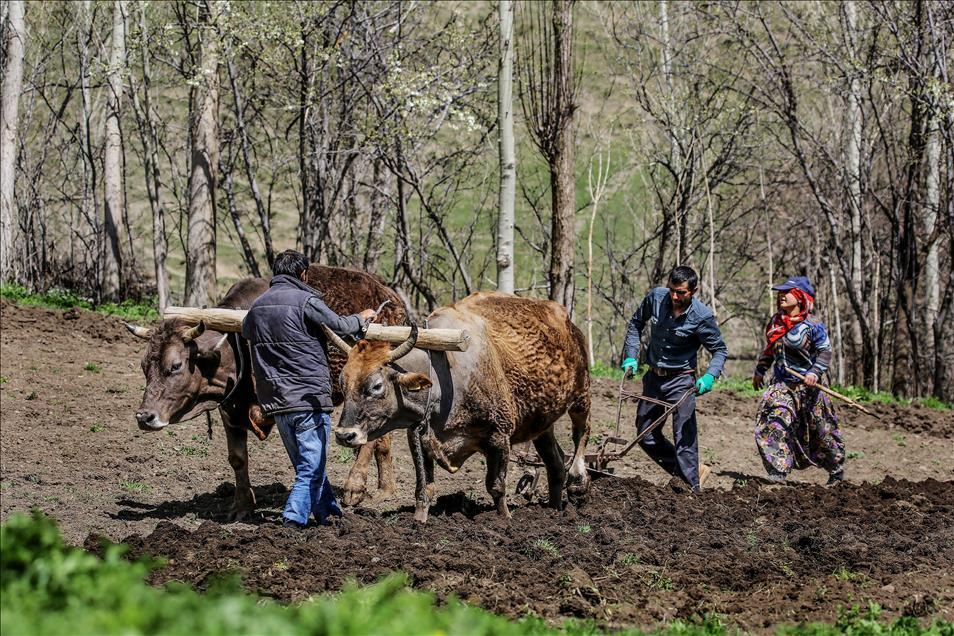
Kara Saban (AA)
The origins of the kara saban extend back to the earliest periods of human agricultural activity. The earliest examples were simple digging tools made of wood or bone. Over time, they evolved into metal-tipped ploughs that could be drawn by animals. This transformation increased production capacity and ensured continuity in agriculture. In Anatolia, the kara saban has persisted for centuries as both a means of livelihood and a cultural element.
In Türkiye, the kara saban was widely used until the mid-20th century, gradually being replaced by tractors and modern farm machinery. However, in certain areas of Eastern and Southeastern Anatolia, some farmers still use the kara saban as a production tool. This persistence is linked to both economic and geographic factors. In terrains inaccessible to large machinery, the kara saban remains the most suitable implement for soil preparation.
The kara saban typically consists of three main components:
The kara saban works superficially on the soil without deep inversion. In this way, it aerates the topsoil and helps retain moisture. Its operation relies on human guidance and animal traction.
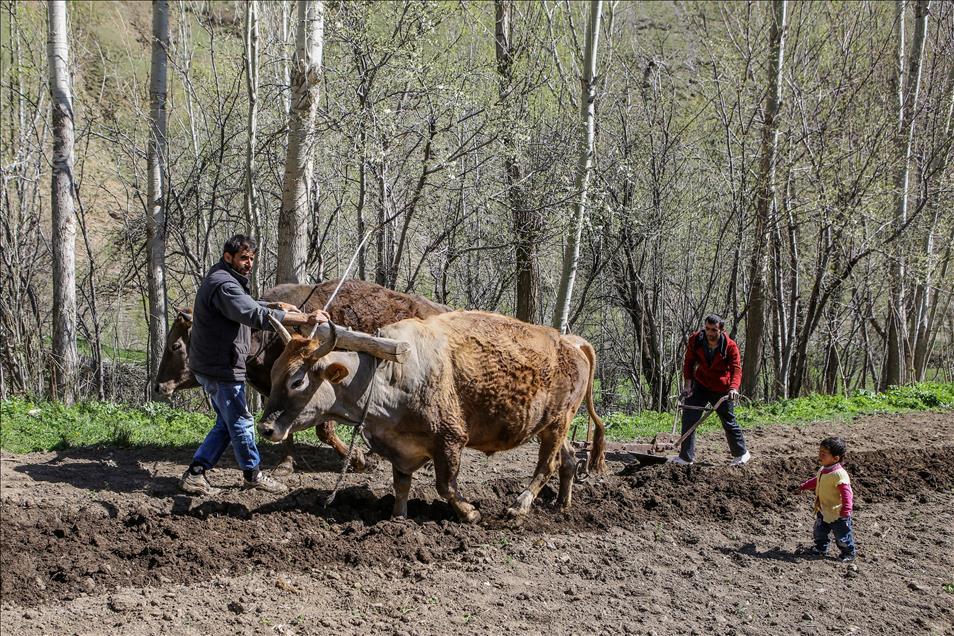
Kara Saban (AA)
The use of the kara saban depends on the coordinated effort of two elements: the draft animal and the human operator. During ploughing, the iron tip is driven into the soil, and as the animal pulls forward, the soil is furrowed. This process prepares the land for sowing by aerating the soil, removing weeds, and creating seedbeds.
In some regions, ploughing with the kara saban is performed twice a year—once in spring and once in autumn. The timing may vary according to natural cycles and rainfall patterns. In rugged terrain, the kara saban helps prevent excessive erosion by preserving the soil’s natural structure.
Examples of ongoing kara saban use exist across various regions of Türkiye. Small-scale producers in provinces such as Tatvan, Konya, Niğde, Tokat, and Erzurum continue to employ the tool using traditional methods. Some farmers prefer the kara saban over tractors due to economic reasons. This method offers a solution with no fuel costs and low maintenance expenses.
Farmers who maintain traditional production methods view the kara saban not merely as an agricultural tool but as part of family heritage and lifestyle. In some villages in Türkiye, the kara saban is preserved as a craft passed down from father to son.
In Anatolian village life, the kara saban is not only an economic instrument but also a symbol of production culture. It appears frequently in folk songs, proverbs, and local narratives. Recognized as a symbol of labor, productivity, and subsistence, the plough is central to rural life. Demonstrations involving the kara saban during traditional agricultural festivals or village celebrations help preserve its place in cultural memory.
The production process of the kara saban is itself a cultural craft. Blacksmiths shape the iron tip by hand, while carpenters construct the wooden body. This division of labor supports the continuity of local craftsmanship and village economies.
The widespread adoption of technological farming equipment has significantly reduced the use of the kara saban. However, in rural areas—particularly among small family farms and organic producers—it is still in use. Once on the verge of disappearing amid agricultural modernization, the tool has recently regained value both as cultural heritage and as a sustainable production method.
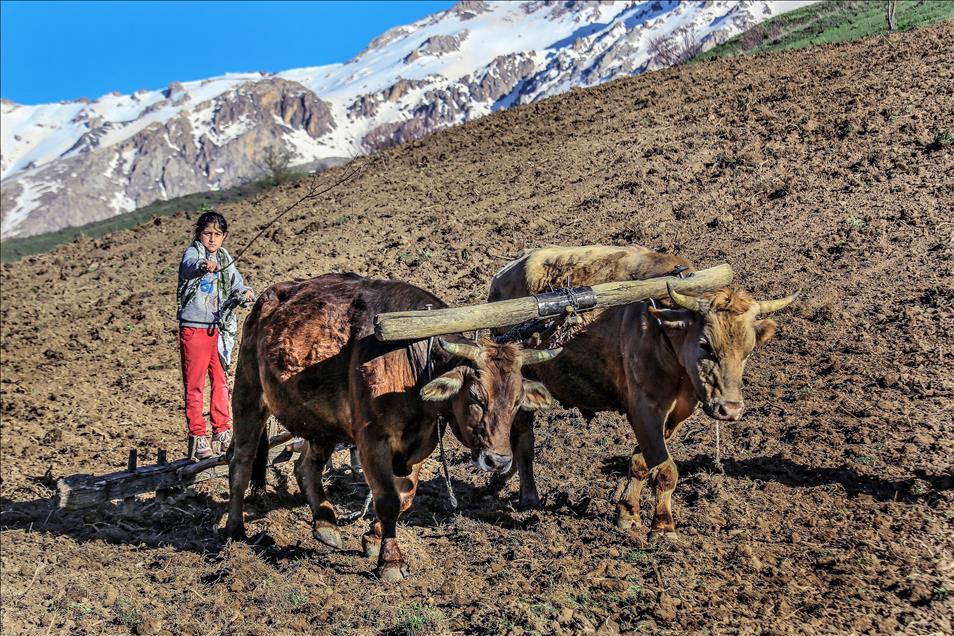
Kara Saban (AA)
Some farmers consciously choose the kara saban, continuing the philosophy of “producing as our ancestors did.” Moreover, its perception as an environmentally friendly tool aligns with organic farming principles. This trend provides a foundation for reinterpreting traditional agricultural practices within the context of contemporary environmental awareness.
The kara saban is an agricultural tool with deep historical roots in Anatolia’s farming culture, still in use in certain regions despite technological advances. Its historical continuity, connection to local production habits, and presence in cultural memory make it one of the significant elements of Turkish agricultural history. Today, it continues to serve as a symbol of traditional rural life, preserving both its functional and symbolic significance.
Anadolu Ajansı. “Ailesinin Ekmeğini ‘Kara Saban’ ile Çıkarıyor.” Accessed October 24, 2025. https://www.aa.com.tr/tr/yasam/ailesinin-ekmegini-kara-saban-ile-cikariyor/1322608
Anadolu Ajansı. “Çiftçilerin Vazgeçilmezi ‘Karasaban’.” Accessed October 24, 2025. https://www.aa.com.tr/tr/yasam/ciftcilerin-vazgecilmezi-karasaban/48911
Anadolu Ajansı. “’Engebeli Arazilerin Vazgeçilmezi, 'Karasaban'.” Accessed October 24, 2025. https://www.aa.com.tr/tr/pg/foto-galeri/engebeli-arazilerin-vazgecilmezi-quot-karasabanquot-/0/16962
Aydın Adnan Menderes University Journalism Department. "Tarımın İlk Savaşçıları: Kara Sabanın Kadim Yolculuğu." Aydın Adnan Menderes University Journalism Department. Accessed October 24, 2025. https://gzt.adu.edu.tr/haber/tarimin-ilk-savascilari-kara-sabanin-kadim-yolculugu-11461

History and Development
Structural Features
Usage and Agricultural Function
Kara Saban Usage in Türkiye
Social and Cultural Significance
Current Status and Preservation Efforts