


This article was automatically translated from the original Turkish version.
+2 More
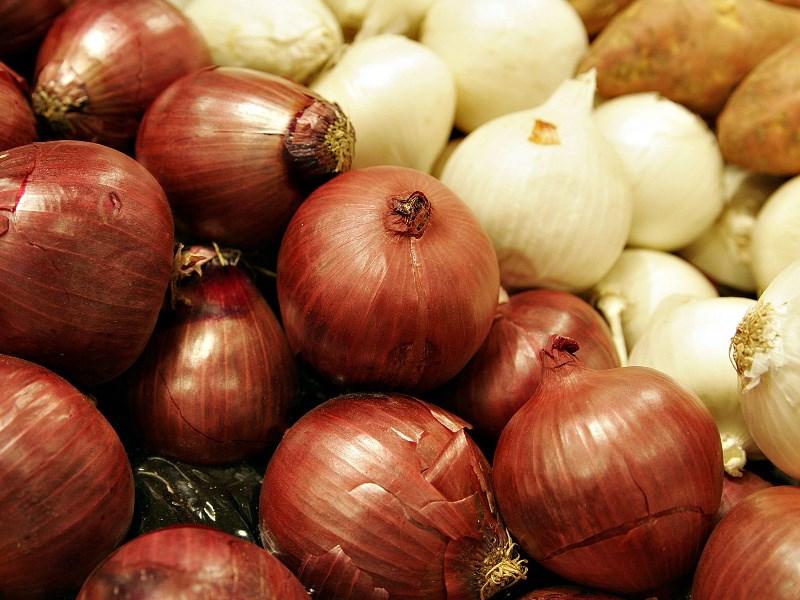
Karacabey Onion
Registration Number | 247 | ||||||||
|---|---|---|---|---|---|---|---|---|---|
Registration Date | 30.11.2017 | ||||||||
Application Number | C2014/074 | ||||||||
Application Date | 04.12.2014 | ||||||||
Name of the Geographical Indication | Karacabey Onion | ||||||||
Name of the Product | Onion | ||||||||
Type of Geographical Indication | Place of Origin | ||||||||
Applicant/Registrant(s) | Karacabey Chamber of Commerce | ||||||||
Address of the Registrant | 1st km along the Bandırma Road, Karaosmanlar Locality, Tabaklar Neighborhood, Karacabey BURSA | ||||||||
Geographical Boundary | The entire district of Karacabey and the villages of Çamlık Yörükyenicesi and Söğütpınar within the district of Mudanya Esence Eğerce Mesudiye (Ayazma) Evciler | ||||||||
Karacabey Onion is a protected geographical indication dry onion variety cultivated in the Karacabey district and its surrounding areas of Bursa Province, Türkiye. It comprises three original varieties: Kantartopu, İmralı, and İmralı Kırması. Cultivation is carried out from seedlings and spans a three-year production cycle: the first year produces seed bulbs, the second year produces seedlings, and the third year yields mature onions. Harvested in June–July, Karacabey onion is distinguished by its shape, color, and chemical composition from other onion varieties in the region and elsewhere. The protected product applies only to onions produced and labeled within the designated geographical boundaries; production and trade are monitored by the Karacabey Chamber of Commerce and Industry.
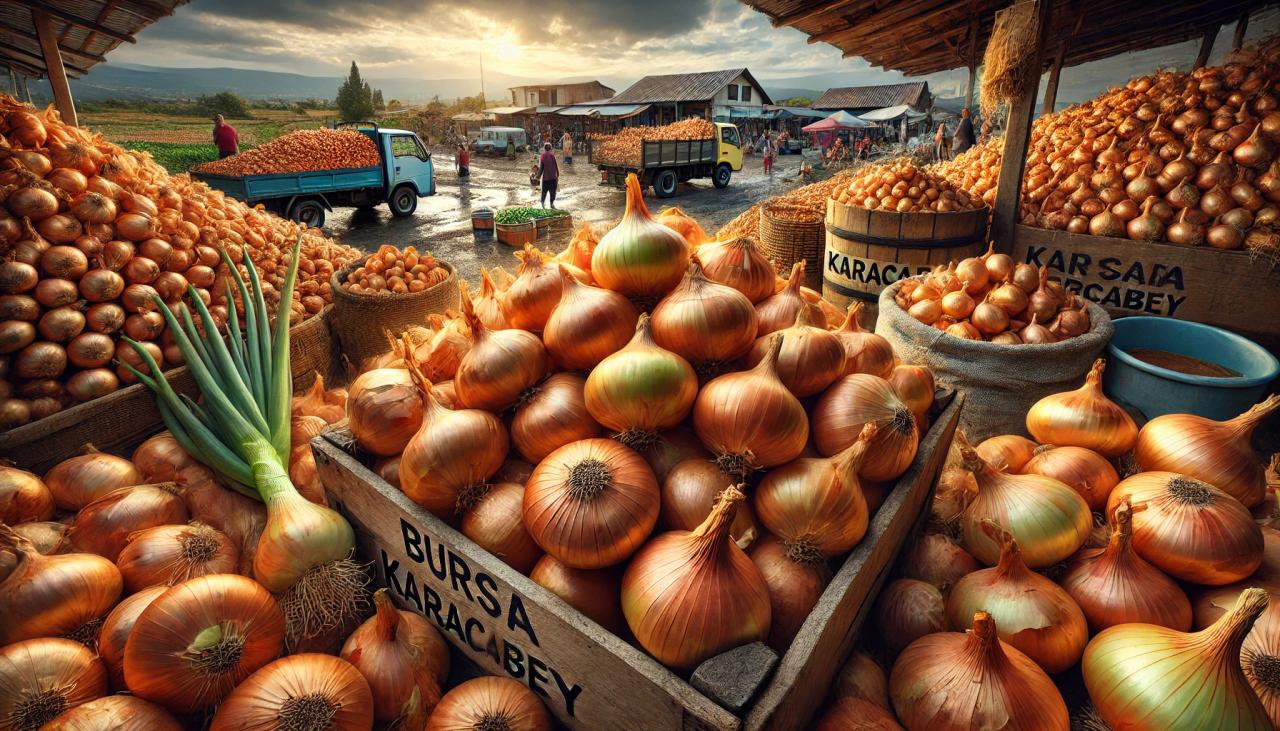
Karacabey Onion (Generated by artificial intelligence.)
The Bursa Karacabey onion is an agricultural product registered with geographical indication status on 30 November 2017, cultivated exclusively in the Karacabey district and its surrounding areas of Bursa Province, Türkiye. The registration application was submitted on 4 December 2014 by the Karacabey Chamber of Commerce and Industry under the designated origin name.
The geographical boundaries of Karacabey onion encompass the entire Karacabey district and the villages of Çamlık, Evciler, Mesudiye (Ayazma), Eğerce, Esence, Yörükyenicesi, and Söğütpınar in the Mudanya district. The registering institution is the Karacabey Chamber of Commerce and Industry, located at Tabaklar Mahallesi, Karaosmanlar Mevkii, 1st km along the Bandırma Road, Karacabey, Bursa. The product is identified on the market by its label, and branded labels for packaging are provided exclusively by the Karacabey Chamber of Commerce and Industry.
The Karacabey onion belongs to the dry onion category and consists of three original varieties grown in the region: Kantartopu, İmralı, and İmralı Kırması.
When viewed from the side, the onion is round; when viewed from above, it has a regular circular shape. The neck is slender. The skin color ranges from pink to brown tones. Skin luster, thickness, and density are medium, with two to three layers of skin. The flesh color is yellow-white, with medium firmness. The water-soluble dry matter content measures between 11.50% and 13.00%, and the total sugar content ranges from 8.00% to 9.50%.
The İmralı variety is distinguished by its pronounced elliptical shape. When viewed from the side, it has an oval form that widens toward the top. The skin color is yellow-brown, with a glossy finish and medium thickness. The flesh color ranges from yellow to pink tones, with medium firmness. The water-soluble dry matter content is between 12.50% and 16.50%, and the total sugar content ranges from 5.00% to 10.50%.
İmralı Kırması is produced in both Karacabey and the Yenişehir district of Bursa, as well as in Tekirdağ. The Karacabey variety of İmralı Kırması has darker skin and flesh color compared to the same variety produced in Tekirdağ; the Yenişehir variety is darker than the Karacabey example. When cooked, the Karacabey İmralı Kırması develops a distinct color, browns quickly, caramelizes, and exhibits a melting property. When viewed from the side, it is oval; when viewed from above, it is round. The skin color is yellow-brown, glossy, of medium thickness, and consists of two to three layers. The flesh color is yellow-pink, with medium firmness. The water-soluble dry matter content ranges from 13.00% to 17.00%, and the total sugar content is between 8.00% and 11.20%.
The production of Karacabey onion follows a three-year cycle.
Medium-sized selected seed onions are planted in ridges. From flowering mother bulbs, seeds known as “Karaca” are harvested.
Karaca seeds are planted in grid patterns to produce seedlings (small, slender onions).
Seedlings produced in the previous year are planted, and at the end of the third year, the mature onions grown from these seedlings are harvested and marketed.
The three varieties known as Karacabey onion are all cultivated from seedlings. Planting begins in December and continues until March. During planting, the distance between rows is approximately 25 cm, and the distance between plants within a row is set at 5–8 cm. Harvesting occurs in June–July, and the storage life of the harvested product ranges from 8 to 10 months. Average yield per hectare is between 2500 and 3500 kg. The production process spans three years: in the first year, medium-sized seed onions are planted in ridges, and from the flowering plants, seeds known as “Karaca” are collected. In the second year, Karaca seeds are planted to produce seedlings. In the third year, the seedlings from the previous year are planted, and at the end of this cycle, the mature onions grown from them are harvested and sold.
Monitoring of Karacabey onion is conducted under the coordination of the Karacabey Chamber of Commerce and Industry by a supervisory board composed of six members. The board includes one representative each from the Karacabey Chamber of Commerce and Industry, the Karacabey District Governorate, the Karacabey Municipality, the Karacabey District Directorate of Food, Agriculture and Livestock, the Karacabey Chamber of Commerce and Industry, and the Karacabey Agricultural Chamber.
During the monitoring process, a database is first established containing information on producers and production areas located within the registered geographical boundaries. This database is managed through a computer program. After producer information is entered into the system, annual yield figures are added each year to determine and control the total onion quantity available for market sale.
The Karacabey Chamber of Commerce and Industry prints branded labels for Karacabey onion and issues them to producers or traders based on their declaration of final consumption. The quantity of labeled product is deducted from the total production volume of the respective producer. This enables detection and control of additional products brought in from other regions. Branded labels may be applied to sacks, nets, or other packaging types.
The supervisory board has the authority to conduct regular inspections at least twice a year, as well as additional inspections when necessary or in response to complaints. In cases of unauthorized use of the registered name, the Karacabey Chamber of Commerce and Industry may pursue legal remedies under the provisions of Decree-Law No. 555 on the Protection of Geographical Indications.
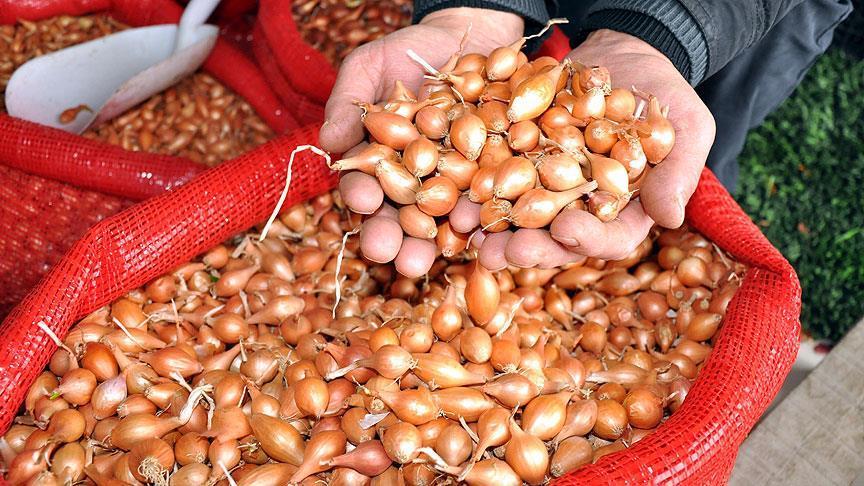
Karacabey Onion (AA)
Karacabey Kaymakamlığı Governorship. "Karacabey Onion." Karacabey District Governorship. Accessed May 30, 2025. http://www.karacabey.gov.tr/karacabey-sogani
Kaymaz, Harun. “Karacabey Soğanı Tescillendi.” Anadolu Ajansı. Accessed May 30, 2025. https://www.aa.com.tr/tr/ekonomi/karacabey-sogani-tescillendi/697620
Turk Patent and Trademark Office. “Karacabey Soğanı Coğrafi İşaret Belgesi (PDF).” Türk Patent ve Marka Kurumu. Accessed May 30, 2025. https://ci.turkpatent.gov.tr/Files/GeographicalSigns/247.pdf
Türk Patent ve Marka Kurumu. "Coğrafi İşaretler Detay Sayfası: Karacabey Soğanı." Türk Patent ve Marka Kurumu. Accessed May 30, 2025. https://ci.turkpatent.gov.tr/cografi-isaretler/detay/38146

Karacabey Onion
Registration Number | 247 | ||||||||
|---|---|---|---|---|---|---|---|---|---|
Registration Date | 30.11.2017 | ||||||||
Application Number | C2014/074 | ||||||||
Application Date | 04.12.2014 | ||||||||
Name of the Geographical Indication | Karacabey Onion | ||||||||
Name of the Product | Onion | ||||||||
Type of Geographical Indication | Place of Origin | ||||||||
Applicant/Registrant(s) | Karacabey Chamber of Commerce | ||||||||
Address of the Registrant | 1st km along the Bandırma Road, Karaosmanlar Locality, Tabaklar Neighborhood, Karacabey BURSA | ||||||||
Geographical Boundary | The entire district of Karacabey and the villages of Çamlık Yörükyenicesi and Söğütpınar within the district of Mudanya Esence Eğerce Mesudiye (Ayazma) Evciler | ||||||||
Geographical Boundaries and Registration Information
Product Description and Varieties
Kantartopu Variety
İmralı Variety
İmralı Kırması
Production Method
First Year (Seed Bulb Production)
Second Year (Seedling Production)
Third Year (Mature Onion Production)
Monitoring and Labeling