

This article was automatically translated from the original Turkish version.
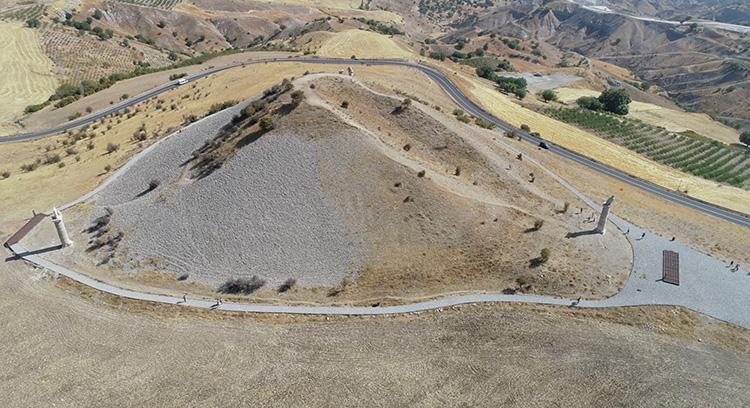
Karakuş Tumulus is a significant monumental tomb complex dating to the Kingdom of Commagene, located within the boundaries of the Kâhta district in Adıyaman Province. Built in the 1st century BCE, this tumulus is a grand burial structure dedicated to Queen Antiochis of Commagene and her family. The name “Karakuş,” meaning “Black Bird,” derives from the eagle statues atop stone columns surrounding the tumulus, which are still visible today. The eagle figure is a recurring symbolic element in Commagene art, typically representing power, protection, and celestial connection.

Karakuş Tumulus (Ministry of Culture and Tourism of Türkiye)
The tumulus is situated on the southern slopes of the Taurus Mountains, very close to Mount Nemrut. This strategic location emphasizes the grandeur of its monumental architecture and symbolizes the political and cultural influence of the era. During antiquity, this region under the dominion of the Kingdom of Commagene was rich in artistic and architectural elements reflecting a synthesis of Greco-Persian cultures.
The site of the Karakuş Tumulus occupies a dominant hill overlooking a vast valley. This elevated position ensured that the tumulus was perceived not merely as a burial structure but also as a symbolic monument of power. Especially after the death of Antiochis, the construction of the tumulus emerged as a powerful statement of the Commagene nobility’s authority and the royal family’s immortal legacy.
This tumulus is one of the rare examples that showcase the rich cultural heritage of the Kingdom of Commagene, shaped by the fusion of Hellenistic and Persian artistic traditions. Today, it holds great archaeological and touristic significance, welcoming numerous local and international visitors each year and preserving the traces of the ancient past for the present.
The Karakuş Tumulus is a significant architectural ensemble reflecting the Hellenistic architectural sensibility of the Kingdom of Commagene. The tumulus consists of a mound approximately 35 meters high, constructed from large stone blocks and covered with layered earth. This mound was planned as a sacred area for the burial of the royal family and, over time, evolved into a monumental tomb complex akin to other tumuli in the region.
Three main groups of columns surround the tumulus. Each column stands about 10 meters tall and was meticulously carved from massive stone blocks. The statues of eagles, lions, and bulls placed atop these columns illustrate the importance of animal symbolism in Commagene art. The eagle represents celestial power and protection, the lion symbolizes terrestrial strength and sovereignty, and the bull signifies fertility and abundance.
The columned structure combines architectural details from the Hellenistic period with Persian influences. The column capitals are designed as a synthesis of Ionic and Doric styles, while the precise arrangement of the stone blocks reflects the high quality of Commagene stonework. Around each group of columns, small platforms were constructed, likely used for rituals or offerings. This arrangement demonstrates that the Karakuş Tumulus served not only as a burial monument but also as a site for ritual and ceremonial functions.
These architectural features reflect the artistic and religious worldview of the Kingdom of Commagene. The columned structure unites engineering expertise and aesthetic sensibility from its time, revealing the unique cultural legacy of Commagene. Today, these columns and statues stand among the most important symbols of Anatolia’s historical and archaeological richness.
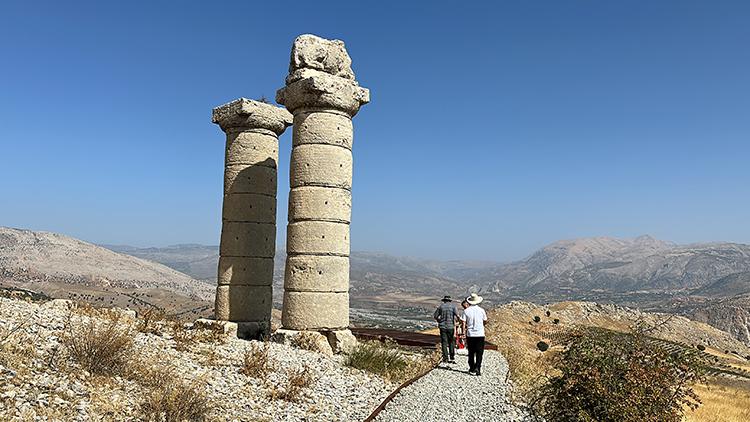
Karakuş Tumulus AA)
The Karakuş Tumulus is recognized as a key archaeological site for understanding the historical and cultural heritage of the Kingdom of Commagene. Archaeological investigations since the 19th century have revealed that the tumulus was not merely a funerary monument but also a center reflecting the social structure, artistic preferences, and religious rituals of the period. The first systematic excavations in the region were conducted in the early 20th century by the German archaeologist Otto Puchstein, whose work laid the foundational stones of Commagene archaeology.
The artifacts uncovered during these excavations demonstrate how the Kingdom of Commagene skillfully merged Hellenistic and Persian influences. The animal figures on the columns, the stonework, and structural details of the mound materialize the royal family’s sense of nobility and their belief in divine connection. Moreover, the layout and construction techniques of the burial chamber reflect the engineering knowledge and artistic aesthetics of Commagene.
The Karakuş Tumulus is valuable not only for its architectural details but also for the insights it provides into the economic and political life of the period. Ceramic fragments, metalwork remains, and ritual offering areas found around the structure shed light on the daily life and religious practices of the community that inhabited the region. These remains indicate that Commagene society was multicultural and economically vibrant.
Today, the Karakuş Tumulus is included on UNESCO’s Tentative List of World Heritage Sites alongside other Commagene monuments and serves as a vital reference point for scholarly research. Each year, numerous archaeologists and historians visit the site to uncover new findings and deepen their understanding of the cultural legacy of the Kingdom of Commagene.
The architectural arrangement and animal figures of the Karakuş Tumulus reveal the mythological and symbolic world of the Kingdom of Commagene. Figures such as the eagle, lion, and bull were commonly associated in the ancient world with concepts of power, protection, and fertility. The eagle, in particular, is linked to celestial deities and symbolizes the royal family’s connection to the heavens. The lion represents terrestrial power and the sovereign’s authority, while the bull is associated with productivity and abundance.
These symbols are not merely decorative elements but are regarded as reflections of the Commagene belief system. The fusion of Hellenistic and Persian religious traditions is clearly evident in the Karakuş Tumulus. Hellenistic cults of gods and heroes merged on Commagene soil with Persian beliefs centered on fire and the sun, forming a unique religious synthesis.
The tumulus structure and its columned arrangement are based on the concept that the dead were elevated and drawn closer to the heavens. Particularly, the eagle statues atop the columns symbolize the ascent of the souls of the deceased to the sky. This illustrates how the Commagene concepts of immortality and sanctity were expressed in architecture.
These symbolic meanings played a crucial role in the identity formation and social organization of the Kingdom of Commagene. The mythological narratives of the Karakuş Tumulus are not merely the memorial of a royal dynasty but also a monumental expression of royal ideology and belief in a cosmic order. Today, these symbols offer a valuable window into the belief systems and cultural world of the ancient era.
Today, the Karakuş Tumulus is a major tourist attraction for both local and international visitors. Alongside Mount Nemrut and other Commagene monuments, it has become an indispensable stop on regional tourism routes. Cultural tours and guided excursions held throughout the year provide visitors with an opportunity to experience firsthand the unique historical heritage of the Kingdom of Commagene.
The columned structure and colossal animal statues have also become popular subjects for photography and documentary filming. Especially at sunrise and sunset, the silhouettes of the columns against the sky create a mystical and aesthetic atmosphere. This unique landscape attracts not only history enthusiasts but also art lovers and photography aficionados.
This touristic importance contributes significantly to the local economy. In the Kâhta district, where the tumulus is located, the tourism season brings vitality to sectors such as hospitality, handicrafts, and regional cuisine. Moreover, this structure enhances awareness of the region’s cultural heritage and helps newer generations better appreciate its historical values.
The Karakuş Tumulus is not merely an archaeological site preserving traces of the past; it is also a meeting point that strengthens cultural connections in the contemporary world. The preservation of the region’s historical richness and its transmission to future generations is regarded as a major priority, both culturally and touristically.
As one of Türkiye’s most important cultural heritage sites, the Karakuş Tumulus has received various restoration and conservation efforts over the years. Particularly since the mid-20th century, initiatives led by the Ministry of Culture and Tourism of the Republic of Türkiye have aimed at ensuring the long-term preservation of both the monumental columns and the burial mound. These projects involve delicate interventions such as reinforcing weathered stone blocks and preserving the original fabric of the structure.

Restoration
In restoration work, priority was given to stabilizing the earthen layers surrounding the tumulus to prevent natural destructive forces such as erosion and landslides. Additionally, worn sections of the column capitals and animal statues have been reinforced using scientific methods. Modern materials were not employed; instead, techniques compatible with original Commagene stonework were preferred. Thus, the historical and aesthetic integrity of the tumulus has been preserved while maintaining public access.
The restoration efforts at the Karakuş Tumulus have not only ensured physical preservation but also enhanced its cultural significance. Informational panels and visitor guidance systems developed for the site contribute to a deeper understanding of its historical context. Furthermore, these conservation initiatives encourage local community participation, strengthening awareness and appreciation of cultural heritage.
Today, the Karakuş Tumulus continues to attract national and international visitors. Ongoing monitoring and maintenance work guarantee its transmission to future generations in a healthy state. These efforts sustain the region’s historical richness and the unique legacy of the Kingdom of Commagene.

Architectural Features and Columned Structure
Archaeological Significance of the Karakuş Tumulus
Mythological and Symbolic Meanings
Touristic and Cultural Significance
Restoration Efforts and Conservation Measures