


This article was automatically translated from the original Turkish version.
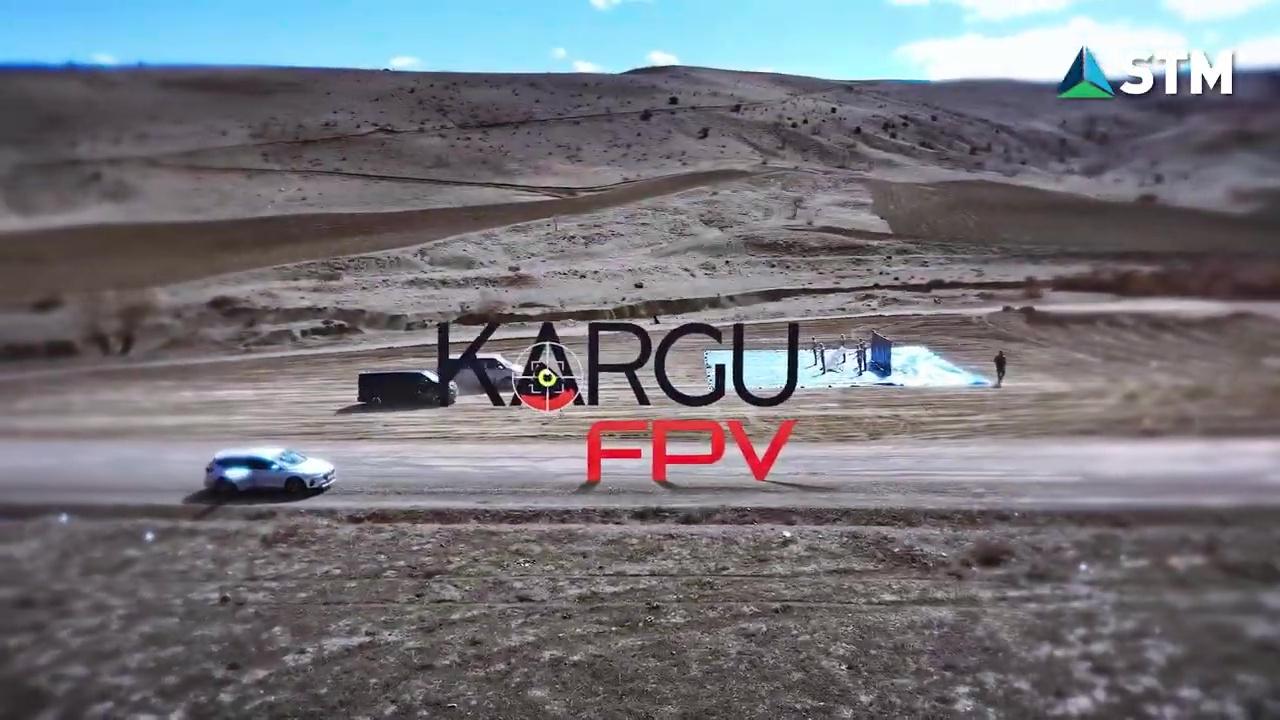
KARGUFPV
Producer(s) | STM (Defense Technologies Engineering Inc.) | ||||||||
|---|---|---|---|---|---|---|---|---|---|
Model | KARGU FPV | ||||||||
Class | Mini FPV Kamikaze UAV | ||||||||
Purpose of Use(s) | Kamikaze attack reconnaissance-observation | ||||||||
Mission Range | 10 km | ||||||||
Mission Altitude | 500 m (AGL) | ||||||||
Endurance | 20+ min (kamikaze), 44 min (observation) | ||||||||
Maximum Altitude | 5500 m (MSL) | ||||||||
Maximum Speed | 160 km/h | ||||||||
Key Features | Autonomous terminal dive, resistance to jamming, day/thermal imaging, proximity sensor | ||||||||
Wind Resistance | 30 m/s | ||||||||
First Test Launch | May 2025 – Resulted in a direct hit | ||||||||
The KARGU FPV Kamikaze UAV is a next-generation mini unmanned aerial vehicle system developed by Defense Technologies Engineering and Trade Inc. (STM), featuring a First Person View (FPV) system and kamikaze attack capability. As the first member of STM’s FPV Kamikaze UAV family, KARGU FPV is specifically designed to generate high-precision strike effects against mobile or stationary targets in asymmetric threat environments. The platform draws on STM’s prior experience with mini UAVs and is equipped with AI-assisted image processing technologies and enhanced with passive protection features such as low radar signature.
First Test Launch Video of the KARGU FPV Kamikaze UAV (YouTube / Savunmasanayiorg)
Thanks to its compact and modular design, KARGU FPV enables rapid deployment, short preparation times, and easy handling and control. The fully domestic platform features an operator-controlled FPV flight system for real-time guidance. In addition, the platform is capable of autonomous decision-making and dive execution during target detection and terminal impact phases, supported by image processing.
The system is equipped with an advanced fuze system integrated with the air vehicle and a warhead adaptable to various mission profiles. Thanks to advanced electro-optical systems (day and thermal cameras), effective mission execution is possible under both day and night conditions. To maintain mission effectiveness in electronic warfare (EW) environments, it incorporates a jamming- and spoofing-resistant data transmission infrastructure.
KARGU FPV stands out due to its low radar cross-section, high maneuverability, and dynamic mission agility. The mission range is 10 kilometers; in kamikaze mode it can remain airborne for over 20 minutes, and up to 44 minutes in reconnaissance/observation mode without payload or fuze. The operational altitude is 500 meters (AGL), with a maximum altitude of 5,500 meters (MSL).
The platform can reach a maximum speed of 160 km/h and offers portability and rapid deployment advantages with a launch weight of 3,650 grams. The onboard 1,300-gram anti-personnel fragmenting warhead produces highly effective results against soft targets. A safe fuze system, supported by a proximity sensor and capable of programmable detonation distances, can trigger explosion just before target impact to achieve optimal effect.
The first test launches of KARGU FPV were successfully conducted in May 2025, with reports confirming full target engagement accuracy. According to STM General Manager Özgür Güleryüz, this system is grounded not only in operational success but also in STM’s advanced engineering expertise in autonomous systems, image processing, and AI integration. STM aims to expand the FPV kamikaze UAV family with KARGU FPV, introducing systems with higher autonomy, greater mission flexibility, and support for new mission concepts.
Anadolu Ajansı. “STM'nin Kamikaze Dronu KARGU-FPV'den İlk Test Atışında Tam İsabet.” AA.com.tr, May 19, 2025. https://www.aa.com.tr/tr/savunma-sanayisi/stmnin-kamikaze-dronu-kargufpvden-ilk-test-atisinda-tam-isabet/3570242.
STM. "KARGU-FPV Kamikaze İHA." STM Resmi Web Sitesi. Accessed May 19, 2025. https://www.stm.com.tr/tr/cozumlerimiz/taktik-mini-iha-sistemleri/kargufpv-kamikaze-iha.
TSKGV. "Harp Sahasında Dinamik Tehditlere Caydırıcı Güç: KARGU-FPV Kamikaze Drone." Türk Silahlı Kuvvetlerini Güçlendirme Vakfı, 2025. https://www.tskgv.org.tr/savunmasanayiigundem/harp-sahasinda-dinamik-tehditlere-caydirici-guc-kargufpv-kamikaze-drone.
YouTube. "KARGU-FPV Kamikaze İHA Tanıtım Videosu." Accessed May 19, 2025. https://youtu.be/-ziTXhTmJMM.

KARGUFPV
Producer(s) | STM (Defense Technologies Engineering Inc.) | ||||||||
|---|---|---|---|---|---|---|---|---|---|
Model | KARGU FPV | ||||||||
Class | Mini FPV Kamikaze UAV | ||||||||
Purpose of Use(s) | Kamikaze attack reconnaissance-observation | ||||||||
Mission Range | 10 km | ||||||||
Mission Altitude | 500 m (AGL) | ||||||||
Endurance | 20+ min (kamikaze), 44 min (observation) | ||||||||
Maximum Altitude | 5500 m (MSL) | ||||||||
Maximum Speed | 160 km/h | ||||||||
Key Features | Autonomous terminal dive, resistance to jamming, day/thermal imaging, proximity sensor | ||||||||
Wind Resistance | 30 m/s | ||||||||
First Test Launch | May 2025 – Resulted in a direct hit | ||||||||
No Discussion Added Yet
Start discussion for "KARGUFPV Kamikaze UAV" article
Design and System Integration
Operational Capabilities and Battlefield Performance
Testing Process and Development Roadmap