This article was automatically translated from the original Turkish version.
Kastamonu Archaeology Museum
Name(s) | Kastamonu Archaeology Museum | ||||||||
|---|---|---|---|---|---|---|---|---|---|
Location | Central District Kastamonu Province | ||||||||
Year of Establishment | 1917 | ||||||||
Number of Floors | 3 (including basement level) | ||||||||
Museum Type | Archaeology Museum | ||||||||
Open Days | Open daily except Monday | ||||||||
Visiting Hour(s) | 08.30 – 17.30 | ||||||||
Special Section | Atatürk Hall | ||||||||
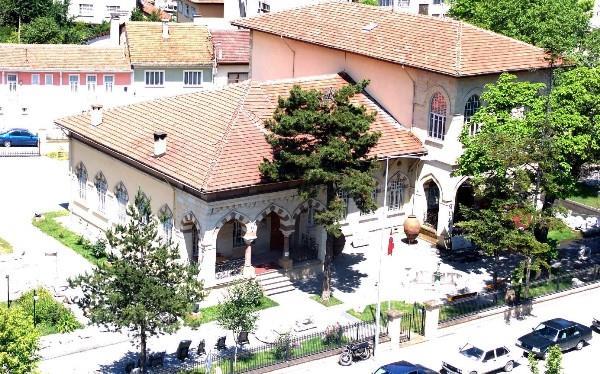
Kastamonu Archaeology Museum was opened to the public in 1963 as the Archaeology and Ethnography Museum and began operating exclusively as an archaeology museum following renovations in 2016. The collection includes artifacts spanning from the Paleolithic Age to the Ottoman period.

Kastamonu Archaeology MuseumCulture Portal
The museum building was constructed in 1910 by the Committee of Union and Progress. The structure, with a rectangular plan, consists of three floors including a basement. Materials reflecting the architectural characteristics of the period were used in its construction.
The museum collection includes artifacts from the Paleolithic, Chalcolithic, Early Bronze, Hittite, Phrygian, Hellenistic, Roman and Byzantine periods. Exhibited items include pottery, bronze objects, glassware, figurines, seals, coins and sculptures. In the museum garden, sarcophagi, grave stelae and architectural elements from various periods are displayed.
The Atatürk Room, located within a section of the museum, is dedicated to Mustafa Kemal Atatürk’s 1925 visit to Kastamonu. The room displays personal belongings used by Atatürk during this visit and photographs related to the Hat and Clothing Revolution.
Ministry of Culture and Tourism. "Kastamonu - Arkeoloji Müzesi - Atatürk Salonu." Accessed June 30, 2025. https://www.ktb.gov.tr/TR-96375/kastamonu---arkeoloji-muzesi---ataturk-salonu.html.
Ministry of Culture and Tourism. "Kastamonu Arkeoloji Müzesi Görseli 1." Accessed June 30, 2025. https://kvmgm.ktb.gov.tr/Resim/374195,kastamonu-kastamonumuze01jpg.png?0.
Ministry of Culture and Tourism. "Kastamonu Müze Müdürlüğü." Accessed June 30, 2025. https://kvmgm.ktb.gov.tr/TR-44111/kastamonu-muze-mudurlugu.html.
Müzeler.org. "Kastamonu Arkeoloji ve Etnografya Müzesi." Accessed June 30, 2025. https://muzeler.org/kastamonu-arkeoloji-ve-etnografya-muzesi--323307.
Türkiye Kültür Portalı. "Arkeoloji Müzesi." Accessed June 30, 2025. https://www.kulturportali.gov.tr/turkiye/kastamonu/gezilecekyer/arkeoloj-muzes219478.
Türkiye Kültür Portalı. "Kastamonu Arkeoloji Müzesi." Accessed July 30, 2025. https://www.kulturportali.gov.tr/repoKulturPortali/large/27022013/282d0c65-4d43-47e0-8da3-ae6c15ab004a.jpg?format=jpg&quality=50.
Kastamonu Archaeology Museum
Name(s) | Kastamonu Archaeology Museum | ||||||||
|---|---|---|---|---|---|---|---|---|---|
Location | Central District Kastamonu Province | ||||||||
Year of Establishment | 1917 | ||||||||
Number of Floors | 3 (including basement level) | ||||||||
Museum Type | Archaeology Museum | ||||||||
Open Days | Open daily except Monday | ||||||||
Visiting Hour(s) | 08.30 – 17.30 | ||||||||
Special Section | Atatürk Hall | ||||||||
No Discussion Added Yet
Start discussion for "Kastamonu Archaeology Museum" article
Architectural Features
Collection and Artifacts
Atatürk Room