

This article was automatically translated from the original Turkish version.
Type of Geographical Indication | Place of Origin | ||||||||
|---|---|---|---|---|---|---|---|---|---|
Registration Number | 1549 | ||||||||
Registration Date | 29.02.2024 | ||||||||
Product / Product Group(s) | Processed and unprocessed fruits vegetables and mushrooms | ||||||||
Province(s) | Kastamonu | ||||||||
Applicant/Registrant(s) | S.S. Cide Women Entrepreneurs and Producers Business Cooperative | ||||||||
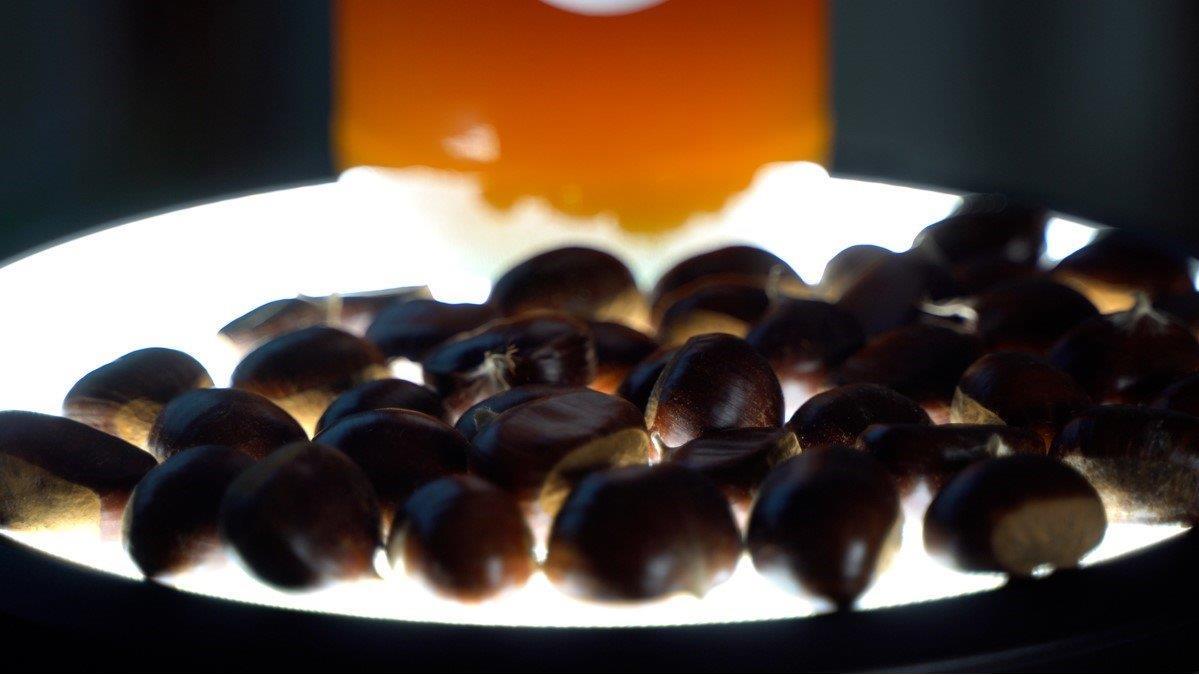
Kastamonu Lamb Chestnut, Kastamonu is a fruit of the Castanea sativa Mill. species that grows naturally in the forest areas of certain districts along the coastal strip of Kastamonu Province. It is distinguished by its small size, thin easy-to-peel shell, and sweet flavor. This product has been officially registered as a geographical indication by the Turkish Patent and Trademark Office and was registered on 29.02.2024.
Kastamonu Lamb Chestnut is typically a small-sized fruit with an average weight of 6.50 grams when still in its shell. It has an average kernel content of 80%. The outer shell is glossy light brown and the kernel color is close to white. The inner membrane is thin and easily removable. This chestnut can be peeled even without cooking and has a plump structure with a low rate of twin formation. The kernel is firm.
Among its distinguishing chemical properties, when considering the kernel without shell or inner membrane, it contains at least 13% total sugar. The protein content is at least 4.5%, while the fat content does not exceed 1%. A high moisture content of up to 50% and a minimum ash content of 0.65% have been recorded. The dominant sugars in this chestnut are, respectively, at least 7% sucrose and at least 6% maltose.
The production of Kastamonu Lamb Chestnut is carried out exclusively from naturally growing Castanea sativa Mill. chestnut trees within the forest flora of the designated districts of Cide, Doğanyurt, İnebolu, Bozkurt, Şenpazar, Çatalzeytin and Abana in Kastamonu Province.
The geographical boundary of Kastamonu Lamb Chestnut encompasses the chestnut forests located along the coastal strip of the districts of Cide, Doğanyurt, İnebolu, Bozkurt, Şenpazar, Çatalzeytin and Abana in Kastamonu Province. This region is under the influence of the Black Sea climate, characterized by cool summers and harsh winters. Annual rainfall exceeds 1000 mm. The region’s slightly acidic, non-excessively calcareous, and mineral-rich soil structure, combined with its high humidity, are the primary factors enabling the development of the chestnut’s sweet flavor and easily peelable shell. The late flowering period (early June to mid-July) protects yields from spring frosts. Chestnut trees grow at elevations between 0 and 1000 meters above sea level.
The monitoring of Kastamonu Lamb Chestnut is conducted by a monitoring body established under the coordination of the S.S. Cide Women Entrepreneurs and Producers Cooperative. This body consists of at least three members, including one expert each from the Cooperative, the Kastamonu Provincial Directorate of Agriculture and Forestry, the Cide Chamber of Agriculture, the Şenpazar Municipality, and the Çatalzeytin District Directorate of Agriculture and Forestry.
Monitoring is carried out at least once a year on a regular basis; however, inspections may be conducted at any time upon complaint or if deemed necessary. The monitoring body verifies the conformity of the product’s physical characteristics, the compliance of storage conditions with standards, and the proper use of the designation Kastamonu Lamb Chestnut and its geographical indication emblem. Production and sales processes adhere to the requirements outlined in the Non-Wood Forest Product Utilization Plan prepared by the Ministry of Agriculture and Forestry.
Turk Patent and Trademark Office. "Kastamonu Kuzu Kestanesi." Geographical Indication Registration Certificate. Accessed October 24, 2025. https://ci.turkpatent.gov.tr/Files/GeographicalSigns/fe8f7cc7-4843-4fd6-b7b3-006600d8dc5c.pdf
Turkish Patent and Trademark Office. "Kastamonu Kuzu Kestanesi." Geographical Indications Portal. Accessed October 24, 2025. https://ci.turkpatent.gov.tr/cografi-isaretler/detay/7005

Type of Geographical Indication | Place of Origin | ||||||||
|---|---|---|---|---|---|---|---|---|---|
Registration Number | 1549 | ||||||||
Registration Date | 29.02.2024 | ||||||||
Product / Product Group(s) | Processed and unprocessed fruits vegetables and mushrooms | ||||||||
Province(s) | Kastamonu | ||||||||
Applicant/Registrant(s) | S.S. Cide Women Entrepreneurs and Producers Business Cooperative | ||||||||
Product Characteristics
Production Method
Geographical Boundary
Monitoring