


This article was automatically translated from the original Turkish version.
+2 More
Kendo is a traditional martial art originating in Japan. Its name means “the way of the sword” in Japanese. Modern kendo emerged from the sporting application of sword techniques used by samurai. Athletes train and compete using flexible swords made of bamboo called “shinai” while wearing protective armor. Kendo, which emphasizes both physical and mental discipline, is a significant representative of Japan’s warrior tradition.
The origins of kendo lie in the sword techniques used by the samurai class in Japan. During the Edo Period (1603–1868), real swords were gradually replaced by bamboo swords for training purposes. In this era, bamboo swords (shinai) and protective armor (bōgu) were developed. In the 20th century, kendo became part of Japan’s educational system and after World War II was reorganized under standardized sporting rules to take its modern form. The Japan Kendo Federation was established in 1952, officially recognizing kendo as a competitive sport.
The shinai is a flexible sword composed of four bamboo slats, used in kendo training and competition. It is designed to approximate the size and weight of a real sword (katana).
Bōgu is the armor worn to protect the body during kendo practice. It consists of four main components:
Kendo practitioners wear traditional Japanese clothing: the “kendogi” (top) and “hakama” (wide pleated trousers). These garments provide freedom of movement while reflecting traditional aesthetics.
Kendo matches are typically overseen by three referees. For a strike to be valid, competitors must strike designated target areas (men, kote, dō, or tsuki) with proper technique, supported by correct posture and a vocal shout (kiai). The first competitor to score two points wins the match.
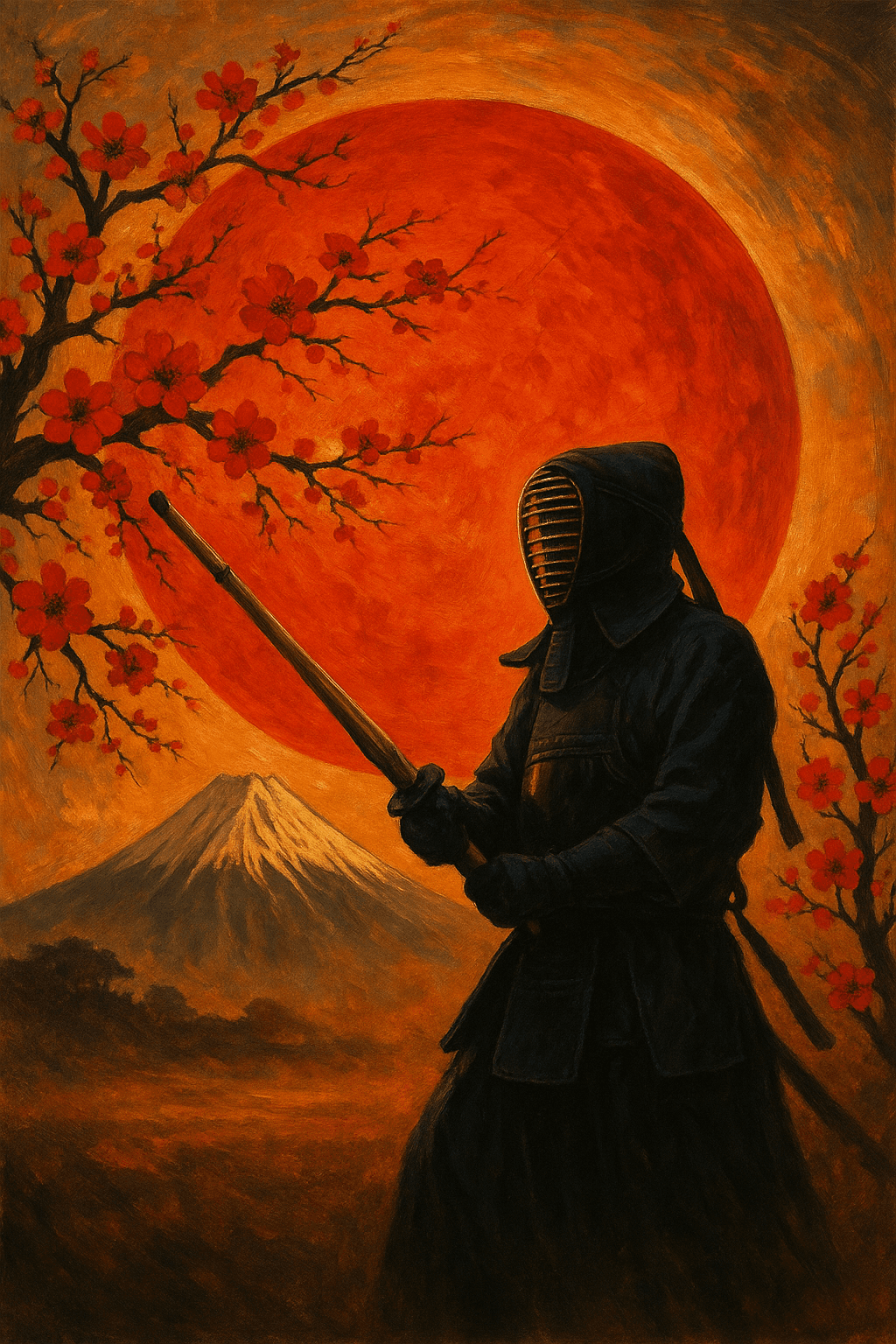
Representative kendo practice (This image was generated by artificial intelligence.)
Kendo training begins with the mastery of fundamental techniques. Students advance through standardized examinations to achieve “kyū” and “dan” ranks, which reflect their level of knowledge and skill. Ranks start at 1st kyū and can progress up to 8th dan.
Kendo is not merely a physical sport but also a discipline that fosters mental development. Personal growth, self-discipline, respect, humility, and patience are core values of kendo. Practitioners show respect toward their opponents and instructors.
All Japan Kendo Federation. “Kendo.” All Japan Kendo Federation (AJKF) Official Website. Accessed April 24, 2025. https://www.kendo.or.jp/en/
Kendo Türkiye. "Kendo." Kendo Türkiye Resmî Web Sitesi, Kendo Derneği, Accessed April 24, 2025 https://www.kendo-tr.com/kendo
Turk Japon Vakfı. "Kendo." Turk Japon Vakfı Resmî Web Sitesi, Accessed April 24, 2025 https://www.tjv.org.tr/japon-sporlari/kendo/
Turk Japon Vakfı. "Kendo." Turk JaponVakfı Resmî Website. Accessed April 24, 2025. https://www.tjv.org.tr/japon-sporlari/kendo/

History
Equipment
Shinai (Bamboo Sword)
Bōgu (Protective Armor)
Attire
Rules and Competition
Training and Ranks
The Philosophy of Kendo