

This article was automatically translated from the original Turkish version.
Registration Number(Text) | 1683 | ||||||||
|---|---|---|---|---|---|---|---|---|---|
Registration Date(Text) | 03.01.2025 | ||||||||
Applicant/Registrant(s) | Balıkesir Metropolitan Municipality | ||||||||
Province(s) | Balıkesir | ||||||||
Product / Product Group(s) | Cheeses | ||||||||
Type of Geographical Indication | Mahreç Sign | ||||||||
Balıkesir, Kepsut district’s Bükdere Neighborhood is synonymous with Kepsut Bükdere Molded Katık Cheese, a traditional cheese variety produced using time-honored methods and possessing unique characteristics.
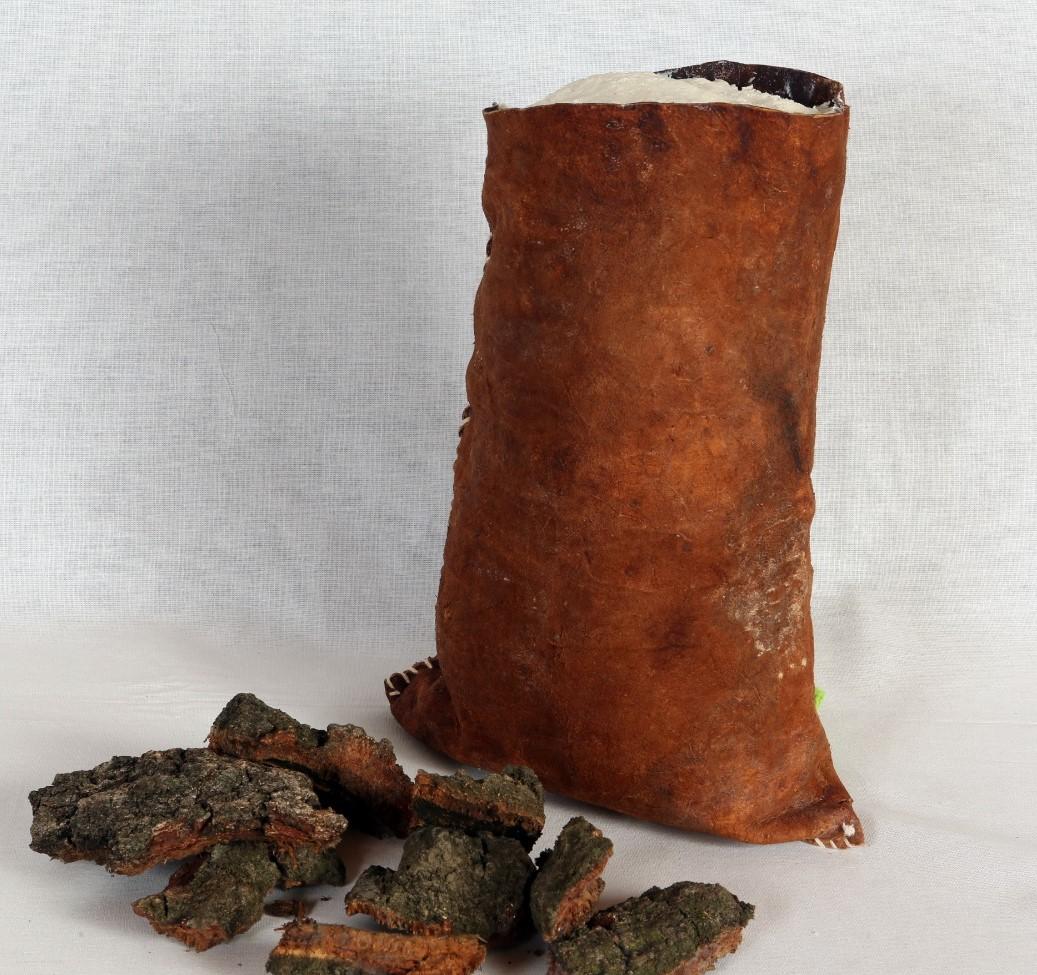
This product was registered as a geographical indication on 03.01.2025 by the Balıkesir Metropolitan Municipality. Its distinguishing feature lies in the special method of preparing the leather sacks used during the ripening process, which are made from oak bark. Kepsut Bükdere Molded Katık Cheese holds significant importance for the region’s culinary culture and economy, having established a strong association with its locality through production methods unique to its geographical boundaries.
Kepsut Bükdere Molded Katık Cheese is produced by mixing equal parts of goat and sheep milk to form yogurt, which is then strained, salted, and ripened inside goat or kid leather sacks. The cheese’s color ranges from pale cream to white and contains fine blue mold veins. Structurally, it exhibits a crumbly texture when pressure is applied.
The moisture content of the cheese is at most 45% by weight, with a pH value between 4.6 and 4.7. Total acidity (expressed as lactic acid) ranges from 1.75 to 1.90 g/100 g, while salt content in the dry matter is between 3 and 4 g/100 g. Protein content is 19–21 g/100 g (Nx6.38), and fat content in the dry matter ranges from 45% to 51%.
The milk used in production is sourced from goats and sheep grazing naturally on pastures, meadows, and grasslands within the geographical boundary, feeding on native vegetation such as thyme, wild marjoram, and fennel.
The distinguishing feature of the product lies in the preparation method of the leather sacks used for ripening: Goat or kid leather (dağarcık) is cleaned and thinned, then immersed in a red-colored solution obtained by boiling oak bark. This process imparts color to the leather, eliminates animal odors, and prevents the formation of undesirable aromas in the cheese. The treated leather is then dried, salted, and sewn into sack form.
The geographical boundary for Kepsut Bükdere Molded Katık Cheese is defined as Balıkesir Province, Kepsut District, Bükdere Neighborhood. Due to its traditional production method, long history, and use of animal resources unique to this region, all stages of production must be carried out within this geographical boundary.
Monitoring of Kepsut Bükdere Molded Katık Cheese is conducted by a minimum four-member oversight body coordinated by the Balıkesir Metropolitan Municipality, with participation of one expert each from the Kepsut Municipality, the Kepsut District Directorate of Agriculture and Forestry, and the Department of Food Engineering at Balıkesir University.
Inspections are carried out regularly at least once per year. Additional inspections may be conducted in response to complaints or as deemed necessary. During inspections, compliance with the following criteria is verified:
The oversight body has the authority to seek assistance from or procure services from public or private institutions or their qualified personnel during inspection activities. The entity that registered the product is responsible for initiating legal procedures to protect the product’s rights.
Turk Patent and Trademark Office. "Kepsut Bükdere Küflü Katık Peyniri Sicil Belgesi." Geographical Indications Portal. Accessed October 25, 2025. https://ci.turkpatent.gov.tr/Files/GeographicalSigns/91c61053-e471-4188-8dce-7e95fc4385c9.pdf
Turkish Patent and Trademark Office. "Kepsut Bükdere Küflü Katık Peyniri." *Geographical Indications Portal.* Accessed October 25, 2025. https://ci.turkpatent.gov.tr/cografi-isaretler/detay/4563

Registration Number(Text) | 1683 | ||||||||
|---|---|---|---|---|---|---|---|---|---|
Registration Date(Text) | 03.01.2025 | ||||||||
Applicant/Registrant(s) | Balıkesir Metropolitan Municipality | ||||||||
Province(s) | Balıkesir | ||||||||
Product / Product Group(s) | Cheeses | ||||||||
Type of Geographical Indication | Mahreç Sign | ||||||||
No Discussion Added Yet
Start discussion for "Kepsut Bükdere Moldy Cottage Cheese" article
Product Characteristics
Production Method
Geographical Boundary
Monitoring