

This article was automatically translated from the original Turkish version.
Type of Geographical İndication | Signpost | ||||||||
|---|---|---|---|---|---|---|---|---|---|
Registration Date | 07.02.2012 | ||||||||
Product / Product Group(s) | Meals and soups | ||||||||
Province(s) | Edirne | ||||||||
Applicant/Registrant(s) | Keşan Chamber of Commerce and Industry | ||||||||
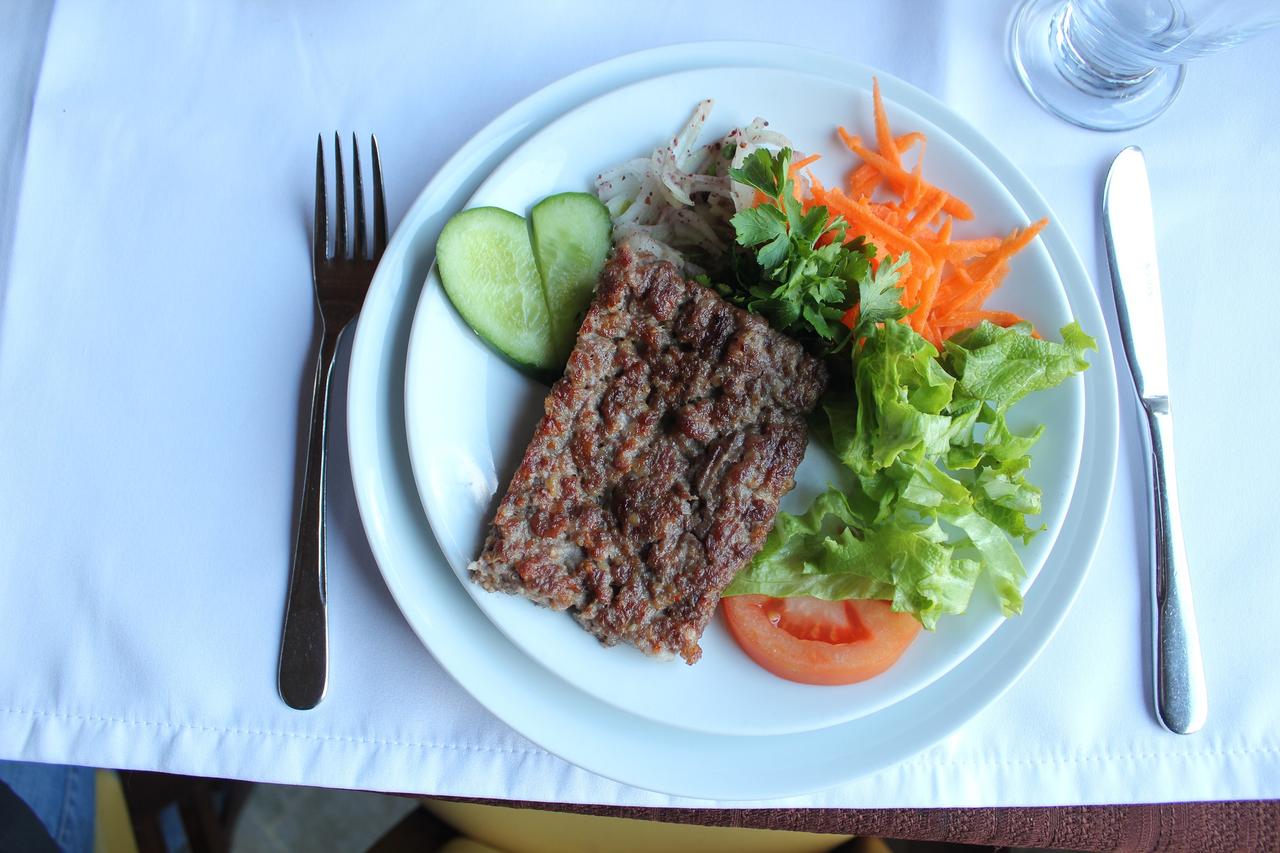
Keşan Satır Et is a protected geographical indication dish uniquely associated with the Keşan district of Edirne, registered on 7 February 2012. This product, registered under number 153, was submitted by the Keşan Chamber of Commerce and Industry under application number C2008/026. It was officially announced to the public through publication in the Official Gazette dated 19 June 2011 and numbered 27969.
The origins of Keşan Satır Et date back to the 1960s. During a time when electricity was unavailable, meat obtained from slaughtered animals was separated from the bones, sliced into thin strips, cooked over wood fires, and preserved using this method. This technique evolved into a cherished delicacy offered to guests and eventually came to be known as “Satır Et,” a name it has retained to the present day. The product is made from the meat of curly-haired milk lambs native to the Thrace region and is produced through a traditional process developed by the local community.
Keşan Satır Et is produced from the meat of curly-haired milk lambs raised in the natural environments of Thrace. These lambs are typically fed on natural feed such as alfalfa, thyme, barley, wheat, and corn in southern Thrace regions including Keşan, İpsala, and Enez. After slaughter, the meat is rested at +4°C for two days to drain blood and tenderize. Subsequently, hard materials such as nerves, blood vessels, bones, cartilage, and membranes are removed. When necessary, up to 30 percent of the lamb meat may be supplemented with meat from the hind leg of a dairy calf. The rested meat is pounded on an oak log using a satır knife until it reaches the size of a lentil grain; no machinery is used in this process. Pounding the meat while its moisture is still present ensures its tenderness. Lamb fat, comprising 20 to 30 percent by weight, is mixed in, and five grams of salt are added per kilogram of meat, after which the mixture is kneaded. No additives—such as tail fat, kidney fat, spices, or bread—are used.
Cooking is performed rapidly over oak charcoal on a double-sided wire grill; slotted or hair grills are not preferred. Rapid cooking enhances smoking and intensifies the flavor. The prepared meat is shaped into portions of 180–200 grams with a thickness of 0.8–0.9 millimeters. The cooked product has a brownish color and a distinctive soft, halva-like taste. According to analytical results, its moisture content is 58.95 percent, protein content is 15.09 percent, fat content is 24.40 percent, ash content is 1.10 percent, and carbohydrate content is 0.46 percent.
The curly-haired breed is a native sheep variety of the Thrace region, also raised in parts of the Marmara and Aegean regions. Their color is generally white, with rare black spots occasionally found on the head and legs. The sheep are polled, the rams have spiral horns, and they possess fine, long tails. The live weight of ewes ranges from 30 to 40 kilograms, while rams weigh between 45 and 50 kilograms. Lactation milk yield is 60 to 90 liters, and lambing rate is 110 to 120 percent. Among Turkey’s native breeds, it excels in meat quality and is the only native breed whose wool can be utilized in the textile industry.
The production and marketing processes of Keşan Satır Et are monitored to ensure compliance with the objectives of its geographical indication registration. These inspections are carried out every six months or as needed by one representative from the Keşan Restauranters, Coffeehouse Owners, and Hoteliers Guild, one food engineer affiliated with KOSGEB Sinerji Odağı, and one member of the Keşan Food Committee. Analysis reports confirm the product’s microbiological and chemical properties; for example, the mesophilic aerobic bacterial count has been measured at 390,000 CFU/g and cadmium levels at 0.010 mg/kg.
T.C. Keşan District Governorship. "Keşan’s Delicacy: Satır Et." T.C. Keşan District Governorship Official Website. Accessed October 19, 2025. http://www.kesan.gov.tr/kesan-in-lezzeti-satir-et.
Turk Patent and Trademark Office. "Keşan Satır Et Coğrafi İşaret Tescil Belgesi." Coğrafi İşaretler Portalı. Accessed October 19, 2025. https://ci.turkpatent.gov.tr/Files/GeographicalSigns/781bc380-9283-4f9b-b52e-e97d9b670d73.pdf.
Turk Patent and Trademark Office. "Keşan Satır Et." *Geographical Indications Portal.* Accessed October 19, 2025. https://ci.turkpatent.gov.tr/cografi-isaretler/detay/38000.

Type of Geographical İndication | Signpost | ||||||||
|---|---|---|---|---|---|---|---|---|---|
Registration Date | 07.02.2012 | ||||||||
Product / Product Group(s) | Meals and soups | ||||||||
Province(s) | Edirne | ||||||||
Applicant/Registrant(s) | Keşan Chamber of Commerce and Industry | ||||||||
Production Process and Ingredients
Cooking Method and Characteristics
Curly-Haired Breed and Regional Characteristics
Monitoring and Quality Control