This article was automatically translated from the original Turkish version.
+2 More
Construction Date(s) | Mid-13th Century (Approximately the 1240s) | ||||||||
|---|---|---|---|---|---|---|---|---|---|
Patron | Period of Anatolian Seljuk Sultan II. Gıyâseddin Keyhüsrev | ||||||||
Architectural Style(s) | Anatolian Seljuk Architecture | ||||||||
Material(s) | Regularly Cut Stone | ||||||||
Function(s) | Transportation (Bridge) Accommodation (Caravanserai) | ||||||||
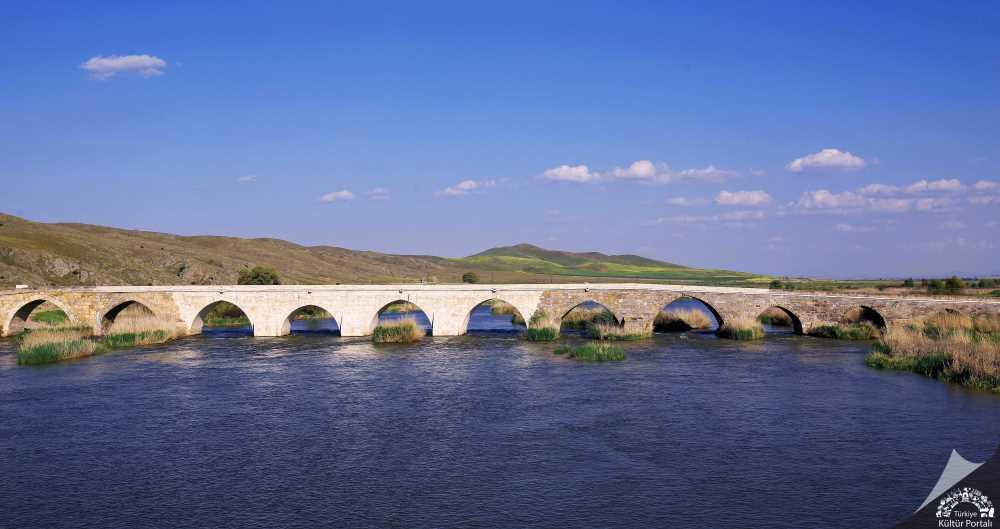
Kesikköprü is a historic stone bridge located south of the city of Kırşehir in Türkiye’s Central Anatolia Region, spanning the Kızılırmak River. Dating to the Anatolian Seljuk period, the bridge held a strategic position within the regional transportation and trade network. Its architecture, construction technique, and accompanying structures draw attention as an important component of historic caravan routes.
Kesikköprü is situated approximately 20 kilometers south of the city center of Kırşehir, across the Kızılırmak River. Throughout history, its location along the road network connecting Central Anatolia to important southern centers made it a vital transit point for travel and commerce. Geographically, it served as a natural passage along north–south caravan routes. It is also understood that, together with the caravanserai located immediately to its east, the bridge functioned as a resting station along the route.
Although no direct inscription has been found to establish the exact date of construction, the architectural features and building techniques suggest that Kesikköprü was built during the reign of Anatolian Seljuk Sultan II. Gıyâseddin Keyhüsrev (1237–1246). The structure is believed to have been constructed as part of a broader infrastructure initiative undertaken by the Seljuk sultans in the 13th century to ensure road safety and support commercial activity in Central Anatolia. At the time of its construction, Kesikköprü was not only a regional but also an international link within the caravan trade network.
Kesikköprü is a large-scale stone bridge consisting of 13 arch spans. It is approximately 400 meters long and averages 5 meters in width. The construction employed precisely cut stone blocks, and spurs were built on both sides of the piers to reduce the erosive impact of floodwaters. The arch openings are wider in the center and gradually narrow toward the ends, creating a balanced structure adapted to water flow and terrain. The bridge deck follows a gently sloping line, with the high arches ensuring continuous passage.
The construction of Kesikköprü employed advanced engineering solutions characteristic of Seljuk bridge architecture. The strong foundation set firmly into the ground, the spired piers designed to withstand floods, and the balanced distribution of arch spans are key factors that have enabled the structure to remain standing for centuries. The arches have a slightly pointed profile, reflecting the classic architectural form commonly found in Seljuk-era stone bridges. Through these features, the bridge exemplifies the engineering knowledge and aesthetic sensibility of its time.
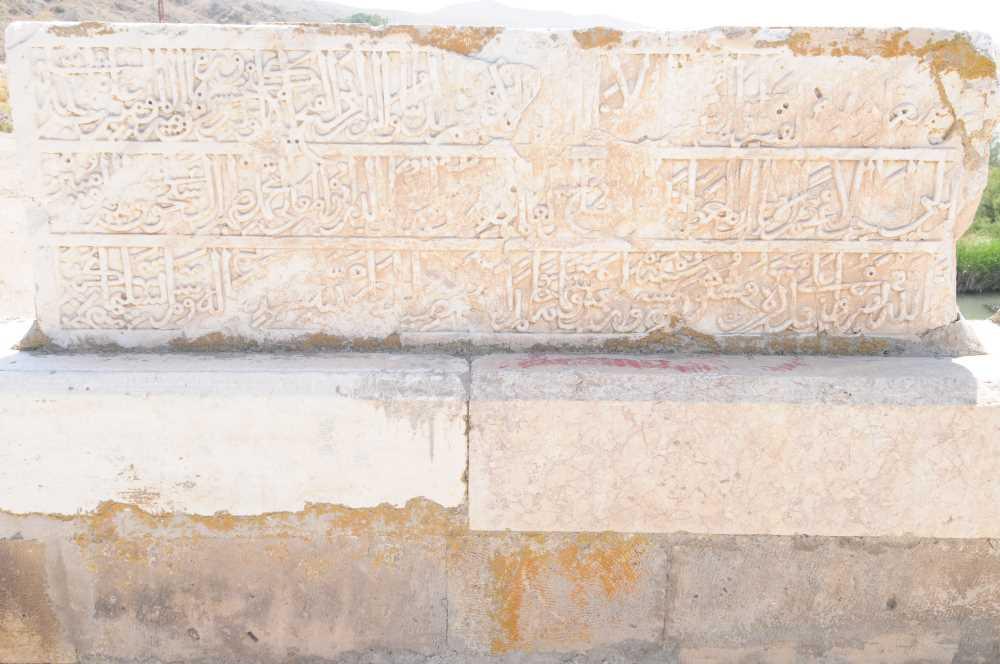
Kesikköprü Construction Inscription (Ministry of Culture and Tourism of the Republic of Türkiye)
The bridge is commonly known as “Kesikköprü” in local usage. This name is thought to have emerged in folk language, possibly referring to the structure’s function of “cutting” the flow of the Kızılırmak River. Another possibility is that the name derives from the redirection of older road routes toward the bridge. However, no written document or epigraphic evidence has been found to confirm the origin of the name.
Since its construction in the 13th century, Kesikköprü has been used for both military and commercial purposes. It played a critical role in enabling caravans to cross safely along their routes. Its function as a waystation was reinforced by the adjacent caravanserai to its east. The structure remained in active use until the mid-20th century, when it was rendered obsolete by the construction of modern transportation routes. Nevertheless, it continues to be recognized and visited by the local population.
Kesikköprü continues to stand today as a historic monument. Over time, it has undergone various restoration efforts, particularly interventions aimed at protecting it from the erosive effects of water and time. The area surrounding the bridge is currently used by the local community as a picnic and leisure site, and is regarded with cultural heritage awareness, holding potential for regional tourism.
Video Describing Kesikköprü and Its Caravanserai (Evran Media)
Kesikköprü is an original structure that provides significant insights into the engineering, architecture, and transportation networks of the Anatolian Seljuk period. Its location over the Kızılırmak reflects the strategic planning that shaped trade routes of the era, while its architectural solutions and construction techniques embody the defining characteristics of 13th-century Seljuk stone bridge design. When considered together with the caravanserai to its east, the structure reveals its dual function not merely as a crossing but as a full-fledged waystation. Today, this still-standing monument remains one of the rare and valuable examples that must be preserved and documented for both regional history and the cultural heritage of Anatolia.
Culture and Tourism Ministry. "Kesikköprü Kervansarayı." Accessed June 24, 2025. https://kirsehir.ktb.gov.tr/Eklenti/122721,kesikkoprukervansaraypdf.pdf?0.
Evran Medya. *Kesikköprü ve kervansaray tarihi*. YouTube video. Accessed June 24, 2025. https://youtu.be/qEtxxDhkH5k?si=qUxr3JJDwmUYLBMV.
Ministry of Culture and Tourism, Turkey Culture Portal. "Kesikköprü." Accessed June 24, 2025. https://www.kulturportali.gov.tr/turkiye/kirsehir/gezilecekyer/keskkopru.
Turkishhan.org. “Kesikköprü Han.” Accessed June 24, 2025. http://www.turkishhan.org/kesikkopru.htm.

Construction Date(s) | Mid-13th Century (Approximately the 1240s) | ||||||||
|---|---|---|---|---|---|---|---|---|---|
Patron | Period of Anatolian Seljuk Sultan II. Gıyâseddin Keyhüsrev | ||||||||
Architectural Style(s) | Anatolian Seljuk Architecture | ||||||||
Material(s) | Regularly Cut Stone | ||||||||
Function(s) | Transportation (Bridge) Accommodation (Caravanserai) | ||||||||
Geographical Location and Transportation Function
Historical Background
Architectural Features
Construction Technique and Engineering
Etimology and Nomenclature
Historical Use and Functional Continuity
Current Condition and Protection Status