


This article was automatically translated from the original Turkish version.
+2 More
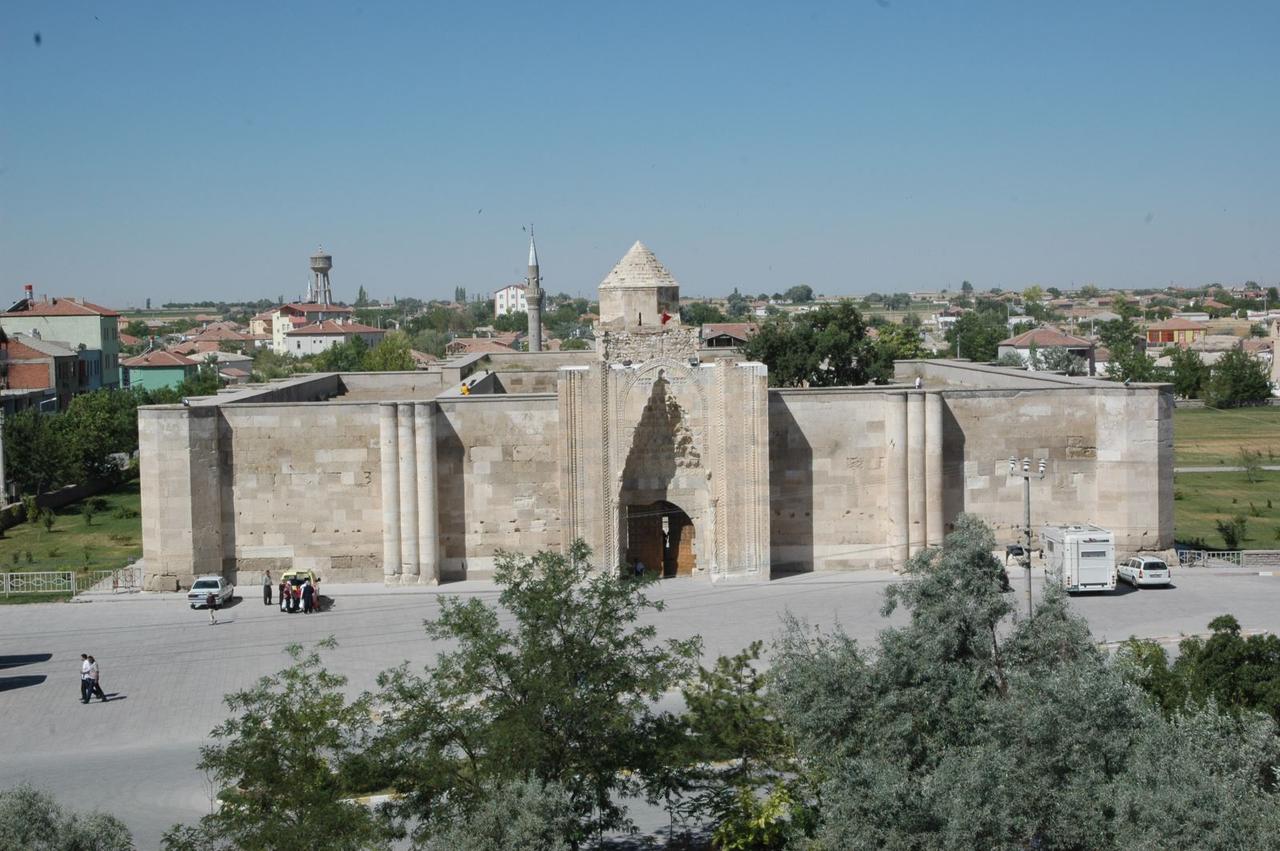
Year of Construction | 1229 | ||||||||
|---|---|---|---|---|---|---|---|---|---|
Patron | I. Alaeddin Keykubad | ||||||||
Architect(s) | Muhammed bin Havlan el-Dımeşkî | ||||||||
Building Type | Kervansaray | ||||||||
Location | On the historical Silk Road | ||||||||
Sultanhanı Caravanserai is an important link in the chain of caravanserais built during the 13th century by the Seljuk Sultans of Anatolia to enhance their political, economic, and cultural influence, ensuring the safety of trade routes and meeting the needs of traveling merchants and passengers. Located today within the boundaries of Aksaray Province in Türkiye, along the historic Silk Road route, the structure is regarded as one of the most advanced examples of Seljuk provincial architecture due to its architectural plan, decorative elements, and functional layout.
The Sultanhanı Caravanserai is situated in the Sultanhanı district of Türkiye’s Aksaray Province, along the Aksaray-Konya highway. It was constructed in 1229 during the reign of Sultan I. Alaeddin Keykubad. The building was designed by the prominent architect of the period, Muhammad ibn Hawlan al-Dimashqi. As one of the largest caravanserais in Anatolia, Sultanhanı stands as a significant example of Seljuk provincial architecture, notable both for its architectural features and its social functions.
The Sultanhanı Caravanserai is a rectangular structure comprising both open and enclosed areas, built on an area of approximately 4,900 square meters. The building features a courtyard plan and is distinguished by its monumental portal on the eastern facade. The portal is adorned with muqarnas-filled niches and geometric and vegetal decorations characteristic of Seljuk architecture. The outer walls are constructed of cut stone, presenting a robust and secure structure.
The building consists of two main sections: the courtyard and the enclosed accommodation area. The courtyard was used for lodging and commercial activities during the summer months, while the enclosed section served the same purposes during winter. At the center of the courtyard stands a small mosque with a square plan, covered by a dome resting on four columns. Service structures such as storage rooms, stables, and warehouses are located to the north of the building, while various rooms line the eastern and western sides of the courtyard. The enclosed section features a five-hall layout accessible through a vaulted corridor. This section, covered with barrel vaults, was used for lodging alongside animals.

Image of the Sultanhanı Caravanserai’s Vaulted Five-Hall Interior Space (Ministry of Culture and Tourism of the Republic of Türkiye)
During the Seljuk period, the Sultanhanı Caravanserai functioned as a key stopping point along the trade routes connecting the East and the West. Caravanserais were complexes that not only provided safe lodging for merchants but also offered social services such as food, healthcare, and worship. Sultanhanı thus served as both a commercial and a social center.
According to its foundation inscription, the structure underwent repairs during the reign of III. Gıyaseddin Keyhüsrev in 1278. It continued to function as a caravanserai after the decline of the Seljuks. Although it lost much of its importance during the Ottoman period, the overall integrity of the building has been preserved.
Excavations conducted in 1971 and 1972 under the leadership of Kutlu Emre at Sultanhan Höyük have provided significant data regarding the historical settlement history of the region where the caravanserai stands. Stratification at the mound indicates continuous occupation from the Bronze Age through the Roman and Byzantine periods. In this context, the area where the Sultanhanı Caravanserai was built was not only significant to the Seljuks but also to earlier civilizations.【1】

Image of the Sultanhanı Caravanserai’s Portal (Ministry of Culture and Tourism of the Republic of Türkiye)
Sultanhanı Caravanserai holds significant historical and cultural value as a functional center reflecting the architectural and social structure of the Anatolian Seljuk period. Its strategic location along trade routes, advanced architectural planning, and multifaceted use extend its role far beyond that of a mere lodging facility, offering comprehensive insights into the social, economic, and religious life of its time. Thanks to repairs and conservation efforts carried out in different periods, the structure has been largely preserved and continues to serve as a focal point for both scholarly research and cultural tourism.
Archnet. “Sultan Han (Aksaray).” Archnet. Accessed June 22, 2025. https://www.archnet.org/sites/4017
Emre, Kutlu. “The Excavations 1971 and 1972 at Sultanhan Höyük.” *Anadolu* 15 (1971): 119–159. Accessed June 22, 2025. https://dergipark.org.tr/tr/pub/anatolia/issue/57454/814603
“Kervansarayımız.” Sultanhanı Belediyesi Resmî Web Sitesi. Accessed June 22, 2025. https://www.sultanhani.bel.tr/sayfa/kervansarayimiz/
“Selçuklu Mimarisine Bir Örnek: Aksaray Sultan Hanı Kervansarayı.” Aksaray Üniversitesi e-Şehir Projesi. Accessed June 22, 2025. https://e-sehir.aksaray.edu.tr/2023/09/08/selcuklu-mimarisine-bir-ornek-aksaray-sultan-han-kervansarayi/
“Sultan Han - Aksaray.” *Turkish Han*. Accessed June 22, 2025. http://www.turkishhan.org/sultanaksaray.htm
“Sultan Hanı (Aksaray).” *Türkiye Diyanet Vakfı İslam Ansiklopedisi*. Accessed June 22, 2025. https://islamansiklopedisi.org.tr/sultan-hani--aksaray
“Sultanhanı.” *Republic of Turkey Ministry of Culture and Tourism Culture Portal*. Accessed June 22, 2025. https://www.kulturportali.gov.tr/turkiye/aksaray/gezilecekyer/sultanhani
[1]
Koruma ve Güncel Durum
Sultanhanı Kervansarayı, günümüzde hem mimari miras olarak hem de kültürel turizm bağlamında önem taşımaktadır. Yapı çeşitli dönemlerde restorasyon geçirmiştir. Özellikle 20. yüzyılın sonlarında ve 21. yüzyıl başlarında yapılan çalışmalarla yapı korunmuş ve ziyaretçilere açık hale getirilmiştir. Kervansaray, günümüzde çeşitli kültürel etkinliklere de ev sahipliği yapmaktadır.

Year of Construction | 1229 | ||||||||
|---|---|---|---|---|---|---|---|---|---|
Patron | I. Alaeddin Keykubad | ||||||||
Architect(s) | Muhammed bin Havlan el-Dımeşkî | ||||||||
Building Type | Kervansaray | ||||||||
Location | On the historical Silk Road | ||||||||
No Discussion Added Yet
Start discussion for "Sultanhanı Caravanserai" article
Location and General Information
Architectural Structure and Plan
Function and Historical Development
Archaeological Findings and Research