

This article was automatically translated from the original Turkish version.
Khojaly Genocide
History | 25-26 February 1992 | ||||||||
|---|---|---|---|---|---|---|---|---|---|
Location | Khojali Azerbaijan | ||||||||
Perpetrators of the Attack | Armenian Armed Forces and the 366th Motorized Regiment of the Soviet Union | ||||||||
Outcome | 613 civilians were killed, 1275 people were taken prisoner, 150 people went missing, and 487 people were seriously injured | ||||||||
The Khojaly Massacre was a large-scale massacre carried out on the night of February 25–26, 1992, in the town of Khojaly, located in the Nagorno-Karabakh region, by the Armenian Armed Forces and the Soviet Union’s 366th Motorized Regiment. It is regarded as one of the largest civilian massacres of the late 20th century and has left a deep scar in the memory of the Azerbaijani people.
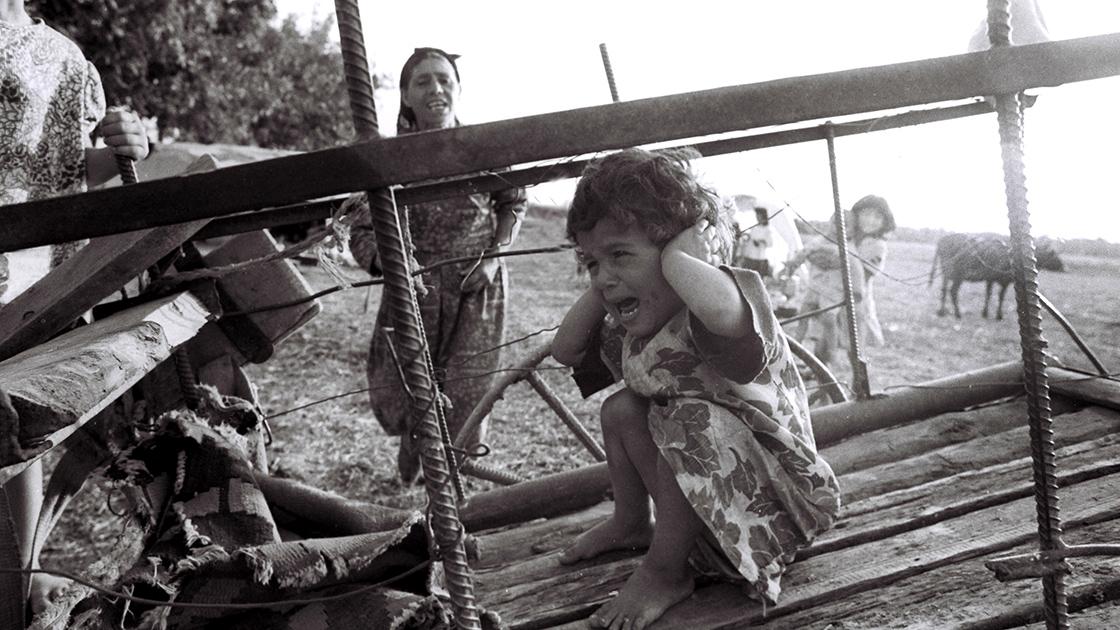
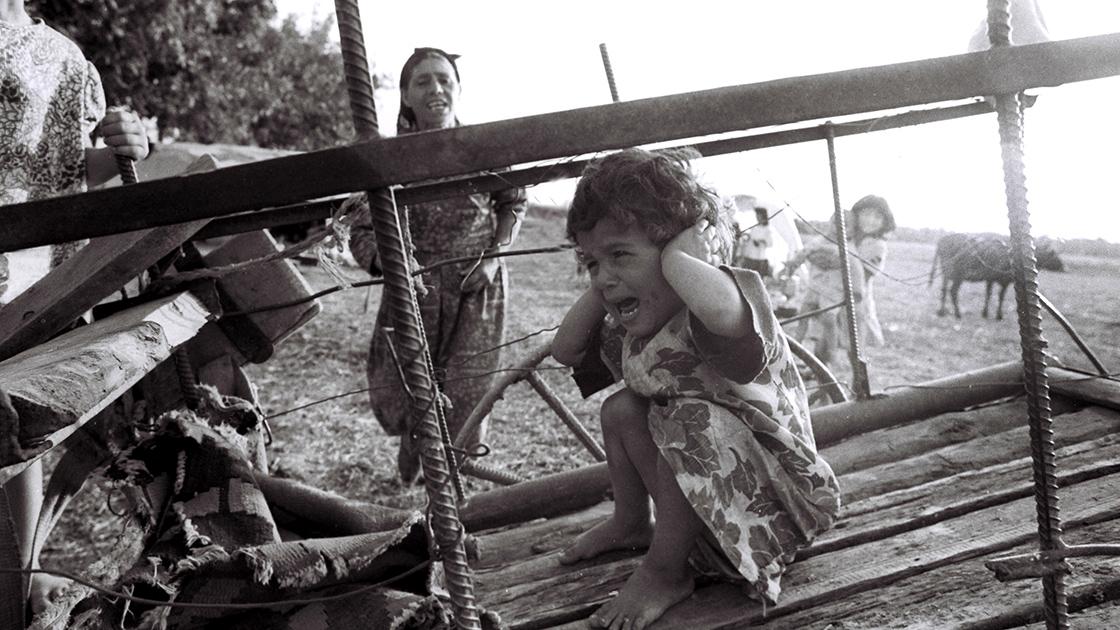
The events in Khojaly constitute one of the bloodiest tragedies in Azerbaijani history and were carried out within the framework of a systematic genocide policy. According to official figures, 613 Azerbaijani civilians were killed, 1,275 people were taken prisoner, 150 went missing, 487 were seriously injured, and hundreds suffered physical and psychological trauma.
Dürdana Agayeva, who was captured by Armenians, recounts her experiences (TRT)
This event triggered significant international concern due to its systematic torture and ethnic cleansing targeting civilians. However, a large portion of the global public remained silent in the face of the atrocities committed in Khojaly, and those responsible have never been brought to justice.
The Khojaly Massacre is one of the bloodiest phases of the Nagorno-Karabakh conflict between Azerbaijan and Armenia. The roots of this dispute extend back to the 19th century. In 1828, following the Treaty of Turkmenchay, Russia seized control of the region from Iran and began settling Armenians there.
With the collapse of the Soviet Union, Armenia launched military operations to detach Nagorno-Karabakh from Azerbaijan. During this period, the 366th Motorized Regiment, inherited from the Soviet Union, played a critical role in besieging Khojaly by supporting Armenian forces in the region.
Khojaly was one of the most important strategic areas in Nagorno-Karabakh, as it housed the region’s only airport and served as a vital link between Khankendi, Shusha, and Agdam.
Control of the region was seen by Armenian forces as a strategic opportunity, and the massacre was carried out with the aim of completely expelling the Azerbaijani Turks from the area.
On the night of February 25, 1992, Armenian units, with the support of the Russian 366th Motorized Regiment, launched artillery and tank attacks against Khojaly. As a result of these attacks, all communication and transportation links to the town were severed. In the early morning hours, Armenian forces entered Khojaly and carried out a massive massacre.
During and after the massacre, pregnant women had their abdomens slashed, children and the elderly were brutally killed, corpses were mutilated beyond recognition, the scalps of many victims were removed, some bodies were burned or their eyes gouged out.
Human Rights Watch described the events in Khojaly as “the largest civilian massacre of the Nagorno-Karabakh War.”
Countries such as Turkey, Pakistan, Mexico, and Colombia have officially recognized the Khojaly Massacre as genocide.
The Organization of Islamic Cooperation (OIC) recognized Khojaly as genocide in 2012.
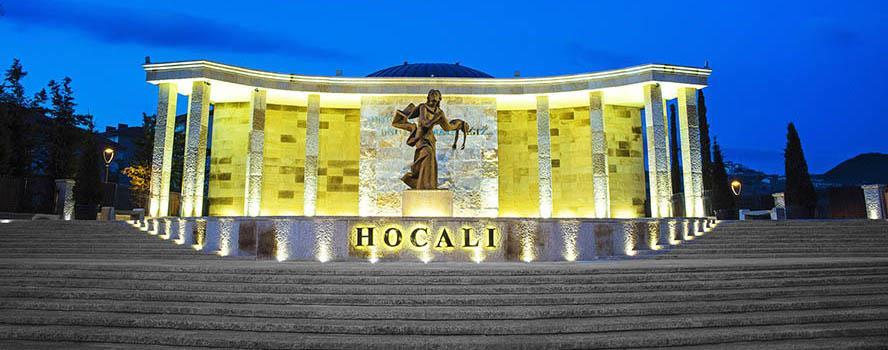
In Turkey, memorials to Khojaly have been erected in many cities, and commemorative ceremonies are held annually on February 26.
The United Nations and the Council of Europe avoided directly blaming Armenia but recognized Azerbaijan’s territorial integrity. The majority of the United States and European countries do not officially recognize the massacre as genocide due to their diplomatic relations with Armenia.
Türkiye has been one of the countries most strongly condemning the Khojaly Massacre. The Turkish government has acted in full solidarity with Azerbaijan and taken the following steps:
Türkiye closed its border with Armenia (1993),
Provided diplomatic and military support to Azerbaijan,
Supported Azerbaijan on international platforms for the liberation of Karabakh territories under Armenian occupation.
The 1948 United Nations Convention on the Prevention and Punishment of the Crime of Genocide defines genocide as a crime committed with the intent to destroy, in whole or in part, an ethnic, religious, or national group. The crimes committed in Khojaly correspond exactly to this definition.
According to international law experts, the murders in Khojaly constitute a deliberate and systematic policy of genocide. Direct responsibility must be assigned to the Armenian government. However, no international legal proceeding has been initiated to formally prosecute the Khojaly Massacre under international law.
Many individuals who witnessed the Khojaly Massacre or seek to ensure it is never forgotten continue to fight and strive to bring the suffering they endured to the attention of the international public.
Durdane Agayeva’s book “Eight Days in an Armenian Prison” recounts the torture experienced by a living witness of the Khojaly Massacre, detailing the brutality inflicted by Armenian forces on Azerbaijani civilians and the inhumane treatment endured by those taken prisoner.
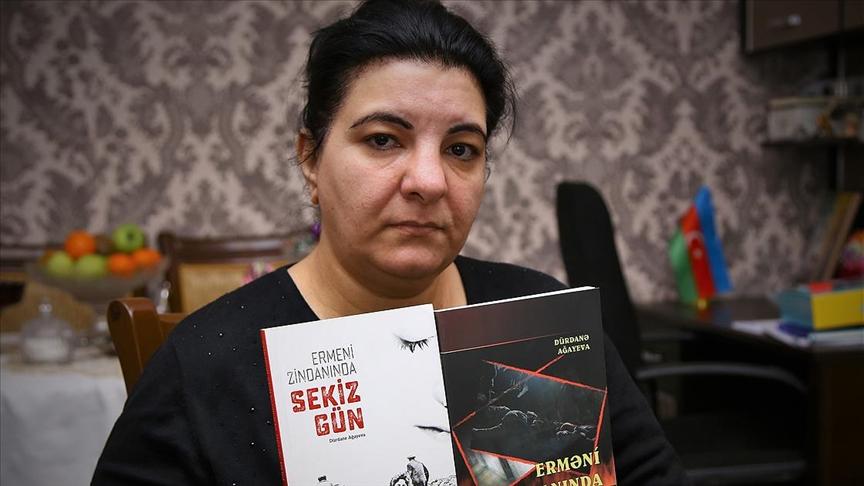
Her Book Detailing the Days She Spent in Armenian Captivity (AA)
The civil society organization “For Khojaly” has designed a project to raise awareness about the massacre and has sought to create awareness by sharing daily vlogs recorded by a young girl named Sevinch who lives in Khojaly on social media platforms.
The Khojaly Massacre has left a deep wound not only in the memory of the Azerbaijani people but in the collective memory of all humanity. Khojaly is not only one of Azerbaijan’s most horrific civilian massacres but one of the most terrible civilian massacres in world history. Azerbaijan and Türkiye continue to make international efforts to ensure the Khojaly Massacre is never forgotten. Many individuals who witnessed the massacre or seek to ensure it is never forgotten continue to fight and strive to bring the suffering they endured to the attention of the international public.
Anadolu Ajansı. "Hocalı Katliamının Tanığı Durdane Ağayeva, Ermenilerin Vahşetini ve Yaşadığı İşkenceleri Unutamıyor." Accessed March 18, 2025. https://www.aa.com.tr/tr/dunya/hocali-katliaminin-tanigi-durdane-agayeva-ermenilerin-vahsetini-ve-yasadigi-iskenceleri-unutamiyor/2156453
Anadolu Ajansı. "İnsanlık Tarihinin Kara Lekesi: Hocalı Katliamı." Accessed March 18, 2025. https://www.aa.com.tr/tr/dunya/insanlik-tarihinin-kara-lekesi-hocali-katliami/3493609
Eyvazlı, Elşad. "Hocalı Katliamı’na Giden Süreç ve Türk Basınında Hocalı Katliamı." Avrasya İncelemeleri Dergisi VIII, no. 2 (2019): 152-173.
Guliyeva, Saida. "Hocalı Soykırımının Tanınması İçin İslam İşbirliği Teşkilatının Aldığı Önlemler." TARAR Dergisi, no. 552 (2013): 64-66.
Kaynar, Mete Kaan, and Gökhan Ak. "Ermeni Terör Hareketleri ve Yakın Tarihli Bir Örneği: Hocalı Katliamı." Sosyal Bilimler Elektronik Dergisi 2, no. 2 (2018): 79-95.
Ministry of Culture and Tourism of the Republic of Turkey. "Hocalı Anıt Park & Müze." Accessed March 18, 2025. https://ankara.ktb.gov.tr/TR-259933/hocali-anit-park-muze.html
Mustafayev, Beşir. "26 Şubat 1992 Hocalı Soykırımı Üzerine." Fırat Üniversitesi Orta Doğu Araştırmaları Dergisi IX, no. 2 (2013): 23-41.
Veliyev, Cavid. "Bütün Yönleriyle Hocalı Soykırımı." Fırat Üniversitesi Orta Doğu Araştırmaları Dergisi IX, no. 2 (2013): 55-72.
YouTube. "Ermenilerin Eline Esir Düşen Hocalı Katliamı Tanığı ile Konuştuk." Published by TRT Avaz. Accessed March 18, 2025. https://www.youtube.com/watch?v=D59tRzUJPWg
YouTube. "Sevinj Stories Instagram Hesabını 320 binden fazla kişi takipte." Published by TRT Azerbaycan. Accessed March 18, 2025. https://www.youtube.com/watch?v=9UEUZiNi9mo
Yılmaz, Meşkure. "Karabağ Savaşı ve Adım Adım Hocalı Soykırımı." Fırat Üniversitesi Orta Doğu Araştırmaları Dergisi IX, no. 2 (2013): 95-104.
Özarslan, Bahadır Bumin. "Soykırım Suçunun Önlenmesi ve Cezalandırılması Sözleşmesi Açısından Hocalı Katliamı." Hacettepe Üniversitesi Hukuk Fakültesi Dergisi 4, no. 1 (2014): 187-214.
Özdaşlı, Esma. "Hocalı Soykırımı ile İlgili Türk Kamuoyunun Görüşleri Üzerine Bir Araştırma." Mehmet Akif Ersoy Üniversitesi İktisadi ve İdari Bilimler Fakültesi Dergisi 7, no. 2 (2020): 457-472.


Khojaly Genocide
History | 25-26 February 1992 | ||||||||
|---|---|---|---|---|---|---|---|---|---|
Location | Khojali Azerbaijan | ||||||||
Perpetrators of the Attack | Armenian Armed Forces and the 366th Motorized Regiment of the Soviet Union | ||||||||
Outcome | 613 civilians were killed, 1275 people were taken prisoner, 150 people went missing, and 487 people were seriously injured | ||||||||
Historical Background
Origins of the Karabakh Issue
Strategic Importance of Khojaly
Course of the Massacre
Atrocities and Torture Against Civilians
International Reactions and Recognition Process
Reactions of Western Countries and International Organizations
Türkiye’s Perspective and Support
Legal Assessment
UN Genocide Convention and Khojaly
The Imperative of Remembering the Khojaly Massacre