

This article was automatically translated from the original Turkish version.
+1 More
Type(s) | Traditional folk dance | ||||||||
|---|---|---|---|---|---|---|---|---|---|
Origin Region | Khwarezm, Uzbekistan | ||||||||
Social Role | Entertainment, social cohesion, expression of cultural identity | ||||||||
UNESCO Status | Inscription on the Representative List of the Intangible Cultural Heritage of Humanity (2019) | ||||||||
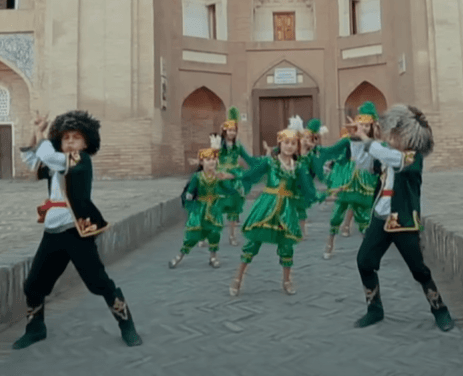
Harezm Lezgisi is a traditional folk dance native to the Harezm region in western Türkiye, renowned for its dynamic movements, rhythmic structure, and rich cultural context. This dance holds a significant place in the cultural identity of the Uzbek Turks and was inscribed on 12 December 2019 at the UNESCO Intergovernmental Committee for the Safeguarding of the Intangible Cultural Heritage meeting in Bogotá, Colombia, as part of the "Intangible Cultural Heritage of Humanity."
Harezm Lezgisi (Hulkar Abdullaeva - YouTube)
The Harezm region has historically served as a crossroads of civilizations due to its location along the Silk Road, the most important trade and cultural route connecting the East and the West. This area functioned as a cultural intersection where music, dance, belief systems, and social traditions circulated between China and Anatolia.
The main centers of Harezm—Khiva, Urgench, Shavat, and Hazarasp—emerged as key hubs of art, science, and craftsmanship within the Central Asian Turkic-Islamic civilization. The performing arts developed in these cities, particularly the rhythmic music and dance traditions, became integrated into both daily life and ritual ceremonies of the local population.
Harezm Lezgisi took shape within this historical context, blending the agile footwork techniques of the Caucasus, the elegant arm and hand movements of Iranian geography, and the spirited rhythms of the Central Asian steppe traditions. As a result, it developed a distinctive style that is both technically and aesthetically unique to the region.
Throughout history, the dance has been performed at large-scale events such as weddings, holiday celebrations, harvest festivals, and military victory ceremonies, serving both as entertainment and as a means of reinforcing social cohesion, identity, and belonging. Performances of Lezgi, accompanied by local sazende musicians and dancers, sometimes took the form of individual virtuoso displays and at other times functioned as communal ritual dances.
Its inscription by UNESCO in 2019 as part of the "Intangible Cultural Heritage of Humanity" underscores Harezm Lezgisi’s value as a cultural treasure worthy of global preservation.
Harezm Lezgisi is a folk dance characterized by high-energy step sequences and rapid tempo changes, highlighting the performer’s physical endurance and aesthetic control. The figures are typically executed with sharp, pronounced movements synchronized to the rhythmic accents of the music.
These technical features transform Harezm Lezgisi into a performing art that demonstrates a seamless visual and auditory harmony between rhythm and movement.
The musical structure of Harezm Lezgisi is one of its most fundamental elements, defining its lively and spirited character. The tempo, rhythmic accents, and instrumentation directly shape the execution of the dance figures.
The dance is typically performed in 6/8 or 2/4 time signatures, enabling both rapid and flowing step sequences. The rhythm is supported by strong percussive accents that create a continuous sense of forward motion. The tempo varies across sections: the music begins at a moderate pace, gradually accelerates through the performance, and reaches its peak intensity in the finale.
The melodies predominantly follow regional makams and melodic patterns unique to Harezm. These tunes reflect both the local identity and historical roots of the dance. Melodic lines feature short repetitions and ornamentations, facilitating the dancers’ ability to respond to sudden changes in figures.
The number and type of instruments vary depending on the performance setting: at large weddings, the combination of karnay and nagara dominates, while in enclosed spaces, more controlled instruments such as the accordion and def are preferred.
A direct interaction exists between musicians (sazendes) and dancers; musical accents are immediately reflected in the dancers’ steps and turns. At times, the music is abruptly halted during the performance, requiring dancers to continue solely through rhythm—using clapping or foot stomping—adding a dramatic effect to the performance. This musical structure enables Harezm Lezgisi to establish a unique identity as a high-energy visual and auditory performing and ritual art.
Throughout history, Harezm Lezgisi has fulfilled both a performing art function and a social ritual role. The dance expresses social identity, belonging, and cultural memory. Consequently, it has been performed in various contexts:
The dance is viewed as a unifying element that brings community members together through shared rhythm and emotion. In the Harezm region, halfe and sazende communities play a central role in the performance. The halfe directs the flow of the ceremony, the sazendes provide the music, and the dancers execute the figures. In some instances, the dance carries symbolic meanings such as "bringing prosperity" or "expelling evil spirits."
Today, Harezm Lezgisi is staged by professional folk dance ensembles, presented at national and international festivals with stage lighting, elaborate costumes, and choreographic arrangements. Nevertheless, traditional performances in villages and neighborhoods continue to preserve the dance’s living cultural context.
The folk legend explaining the origin of Lezgi dance has been brought to digital platforms through the music video Lazgi Afsonasi by Uzbek vocal artist Hülkar Abdulleyeva. The legend is introduced at the beginning of the video as follows:
Qadim o'tkan zamonda Turon degan tomonda bir o'lka bor ekan. Bu o'lkani Xvay razm ya'ni Quyosh yeri atashar ekan. Odamlari shunday yaralagan ekan. Jonga "tanaga kir" deptilar Jon tanaga kiriptiyu yugurib chiqdi. Jondan so'raptilar. "Nega yugurip chiqding?" Jon aytipti: "U yer qapqarang'u zimiston ekan, qo'rqaman" depti. Shunda ilohiydan bir kuy taralipti, Bu kuyga maftun bo'lgan jon, tanaga kirganini o'zi ham sezmay qolipti. Oldin barmoqlarga, keyin panjalarga, bilaklarga, yelkalarda azoi badaniga jon kirib, inson tirilipdi. Bu ilohiydan kelgan Lazgi kuyi edi. Bu kuyni na Eroniylar, na Yunonlar, na Arablar, na boshqalar yo'q etaolganlar. Shundan bu yon Xorazmda bu kuyning to'qiz xili mavjud ekan.
O'tmishdagi ustozlar, bu kuy ilohiy kuy bo'lgani uchun unga so'z bog'lashka jur'at etaolmagan ekanlar. Komiljon degan go'yanda unga jur'at etip so'z bog'lapti. Shundan keyin Xorazm Lazgisi manggulikka yuz tutib ketadi.【1】
Kadim geçmiş zamanda Turan denen tarafta bir ülke var imiş. Bu ülkeyi Hvay rezm, yani Güneş yeri diye adlandırırlarmış. Adamları şöyle yaratılmış. Cana "tene gir" demişler. Can tene girmiş ama geri çıkmış. Candan sormuşlar. "Niye geri çıktın?" Can söylemiş: "O yer kapkaranlık ve zemheri kış , korkuyorum." demiş. O zaman ilahiden bir ezgi yayılmış. Bu ezgiye meftun olan can, tene girdiğini kendi dahi sezmeden kalmış. Önce parmaklara, sonra ellere, bileklere, omuzlarına, bedeninin azalarına can girip insan dirilmiş. Bu ilahiden gelen Lezgi ezgisi imiş. Bu ezgiyi ne İraniler, ne Yunanlar, ne Araplar, ne de başkaları yok edememişler. Şundan bu yana Harezm'de bu ezginin dokuz türü mevcut olmuş. Geçmişteki üstatlar, bu ezgi ilahi ezgi olduğu için ona söz bağlamaya cüret edememişler. Kamilcan diye bir ozan buna cüret edip söz bağlamış. Bundan böyle Harezm Lezgisi bengiliğe yüz tutup gitmiş.【2】
In the video’s continuation, the verses of the poet Kamilcan are presented as follows:
Yetti falak burjining mehri pur anvoriman,
Pinhon sadaf durjining gavhari shaxvoriman,
Go'zal Xo'tan og‘usi novayida toriman,
Eram chamanzorining lolayi gulnoriman,
So'ylay siza ey og'am, yorning sevar yoriman.
Qora go'z bo'y bo'y bo'y, ola go'z bo'y bo'y
Zulfim aro bandadur, bog'lara sarvi ravon
La‘li labim rashkidir necha oshiq bag'ri qon
Chunki chaman sahnida bo'lsa yuzim gulfishon
Nolasin aylar fuzun shaydolarim har zamon
Jaloliddin elindan mardni sevar yoriman
Qora go'z bo'y bo'y bo'y, ola go'z bo'y bo'y
Siza amas aslinda lablarimning handasi
Yora vafodan so'ylab qalbimni taronasi
Ochildi yurak aro sevgimning gul shonasi
Bizlar Layli Majnundek bu zamon afsonasi
So'ylay siza ey og'am, mardning sevar yoriman
Qora go'z bo'y bo'y bo'y, ola go'z bo'y bo'y
Manguberdi yurtinda taralar azal navo
Mashriqning latofati asli erur bunda jo
Norin-norin lazgilar ko‘ngil dardiga davo
Shul sabab imkon olib vaqtin aylagan insho
Jaloliddin elindan mardni sevar yoriman
Qora go'z bo'y bo'y bo'y, ola go'z bo'y bo'y
Qora go‘z gal bari hey, ola go‘z gal bari【3】
Yedi felek burcunun mihri pür envarıyım
Pinhan sedef dürcünün gevher-i şahvarıyım
Güzel Hoten ağusu naveyide tarıyım
İrem çemenzarının lalesi gülnarıyım
Kara göz vay vay, vay, ala göz vay vay
Zülfüm ara bendedir, bağlara serv-i revan
La‘l-i lebim reşkidir nice aşık bağrı kan
Çünkü çemen sahninde olsa yüzüm gülefşan
Nalesin eyler füzûn şeydalarım her zaman
Celalettin elinden merdin sevdiği yariyim
Kara göz vay vay, vay, ala göz vay vay
Size değil aslında leblerimin handesi
Yare vefadan söyleyip kalbimin teranesi
Açıldı yürek ara sevgimin gül şanesi
Bizler Leyla Mecnun gibi bu zaman efsanesi
Söyliyeyim size ey ağam, merdin sevdiği yariyim
Kara göz vay vay, vay, ala göz vay vay
Mengüberdi yurdunda dağılır ezel neva
Maşrık'ın letafeti aslıdır burada ca
Narin narin lezgiler gönül derdine deva
Şu sebep imkân alıp vaktin eyleyen inşa
Celalettin elinden merdin sevdiği yariyim【4】
Video of the Lezgi Legend (Hulkar Abdullayeva - YouTube)
Many vocal artists continue to perform the verses of the poet Kamilcan in their renditions of Harezm Lezgisi.
Hulkar Abdullaeva YouTube Channel. "LAZGI Hulkar Abdullayeva/ЛАЗГИ Хулкар Абдуллаева Koncert version2016." Accessed August 13, 2025. https://www.youtube.com/watch?v=K6tSh5tN8ps&list=RDK6tSh5tN8ps&start_radio=1
Hulkar Abdullaeva YouTube Channel. "Lazgi Afsonasi Hulkar Abdullaeva/Лазги Афсонаси Хулкар Абдуллаева clip." Accessed August 13, 2025.
Khodjoeva, Surayyo, and Mehmet Yüce. “Geçmişten Günümüze Tarihi Dokusuyla Hive ve Türk Kültürüne Katkıları.” Türk Dünyası Akademik Bakış 2, no. 3 (Spring 2022): 33–52. https://dergiler.akademikyorum.com/OncekiSayilarDetay.aspx?Sayi=3
Kuleli, Nadir Hikmet. "Hulkar Abdullayeva – Lazgi Afsonasi." Accessed August 13, 2025. Lyrics Translate. https://lyricstranslate.com/tr/hulkar-abdullayeva-lazgi-afsonasi-turkish-ottoman
TRT Avaz. "Özbek Türklerinin Lazgı dansı, UNESCO İnsanlığın Somut Olmayan Kültürel Miras Listesi'nde."
Çam, Esra. *Özbekistan Harezm Bölgesi Ritüellerinin Kadın İcracı Tipi: Halfeler.* PhD thesis, Ege Üniversitesi, 2023. https://tez.yok.gov.tr/UlusalTezMerkezi/TezGoster?key=G_oJ1rKE4SgJUkomyAKpR6xDkppychwtPNf5mTgl1wKVUX2NwjocmoXdVFDtTyem
[1]
https://lyricstranslate.com/tr/hulkar-abdullayeva-lazgi-afsonasi-turkish-ottoman
[2]
https://lyricstranslate.com/tr/hulkar-abdullayeva-lazgi-afsonasi-turkish-ottoman
[3]
https://lyricstranslate.com/tr/hulkar-abdullayeva-lazgi-afsonasi-turkish-ottoman
[4]
https://lyricstranslate.com/tr/hulkar-abdullayeva-lazgi-afsonasi-turkish-ottoman

Type(s) | Traditional folk dance | ||||||||
|---|---|---|---|---|---|---|---|---|---|
Origin Region | Khwarezm, Uzbekistan | ||||||||
Social Role | Entertainment, social cohesion, expression of cultural identity | ||||||||
UNESCO Status | Inscription on the Representative List of the Intangible Cultural Heritage of Humanity (2019) | ||||||||
Origins
Dance Figures and Technical Features
Step Sequences
Arm and Hand Movements
Reflection of Rhythmic Structure
Musical Structure
Accompanying Instruments
Performance Setup
Performance Context and Ritual Framework
Ritual Context
Modern Performance Forms
From Traditional Culture to Digital Culture: The Legend of Lezgi
Uzbek
Turkish
Uzbek
Turkish