


This article was automatically translated from the original Turkish version.
+2 More
Concept Name | Kibrît-i Ahmer | ||||||||
|---|---|---|---|---|---|---|---|---|---|
Type(s) | Sufi Concept / Alchemical Term / Metaphorical Meaning | ||||||||
Origin(s) | Arabic | ||||||||
Word Meaning | Red Sulfur | ||||||||
Fields | Islamic Thought Alchemy Sufism | ||||||||
Symbolized Meanings | Rare and Precious Gem Spiritual Perfection Difficult-to-Access Spiritual Truth | ||||||||
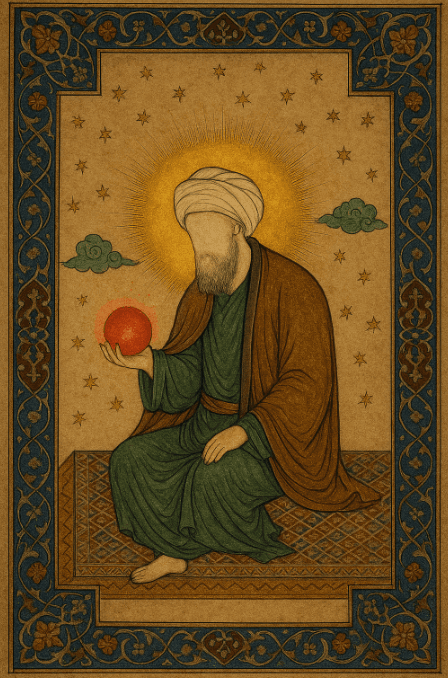
Kibrît-i Ahmer (Ar. kibrīt and ahmer, together kibrīt-i ahmer) literally means “red sulfur” and has held a special place throughout history in both alchemical and Sufi literature. In Islamic thought, this term has been particularly associated with meanings such as transformation, rarity, and spiritual maturity. Across disciplines ranging from alchemy to Sufism, it has been used as a symbolic concept representing a rare and elusive substance or a high spiritual station.
Kibrît-i ahmer translates from Arabic as “red sulfur” and was used especially in the alchemical tradition to denote a rare and transformative substance. In alchemy, red sulfur was believed to be one of the compounds capable of transmuting base materials like earth into gold. In this sense, kibrît-i ahmer was regarded in alchemical sources as an extremely difficult-to-obtain and highly precious substance. Over time, the concept transcended its physical dimension and acquired a metaphorical meaning. In alchemical literature, such substances were generally regarded as keys to divine mysteries and absolute knowledge.
In Sufi terminology dictionaries, kibrît-i ahmer appears as a metaphor representing a rare and hard-to-attain spiritual truth or virtue. The concept is directly linked to the discipline of the self, inner transformation, and spiritual ascent. In this context, Sufis employed kibrît-i ahmer to symbolize the difficulties encountered and the profound insights gained on the path of abandoning base traits and attaining elevated moral qualities. Due to its rarity, kibrît-i ahmer came to be seen in Sufism as a sign of a difficult-to-reach spiritual station.
The term kibrît-i ahmer occupies an important place in the thought of Muhyiddin Ibn al-Arabi. In his works, this concept is interpreted as a symbol of the striving for spiritual knowledge and the process of attaining truth. Claude Addas, in his biography of Ibn al-Arabi titled Ibn ‘Arabī ou La Quête du Soufre Rouge (Ibn al-Arabi: In Pursuit of the Red Sulfur), treats this symbol as a fundamental element for understanding Ibn al-Arabi’s spiritual journey. In his study, Addas connects the concept of kibrît-i ahmer with Ibn al-Arabi’s travels and intellectual development, positioning the term not merely as a metaphor but as the very essence of Ibn al-Arabi’s quest.
One direct example from Ibn al-Arabi’s texts is found in his work Kitâbu’l-İsrâ: “Tell me, O friend, where do you wish me to take you? I must journey to the city of the Prophet, to find his luminous station and the kibrît-i ahmer.” 【1】 This usage demonstrates that in his thought, kibrît-i ahmer symbolizes a high spiritual truth that is deeply desired and sought after.
The concept of kibrît-i ahmer appears in Sufi sources predating Ibn al-Arabi, but it achieved a distinctive conceptualization within his thought system. In Sufi literature generally, this expression is frequently employed to describe states that are difficult to attain yet possess great spiritual value upon realization. The term often emerges in various texts as a symbol of perseverance and patience on the path to truth.
Addas, Claude. İbnü’l-Arabî: Kibrit-i Ahmer’in Peşinde. Çeviren Süleyman Derin. İstanbul: İnsan Yayınları, 2005.
El-Kasimi El-Dimeşki, Cemaleddin. Kitabu'l İsra ve'l Mi'rac. Şam: Mektebetü'l Haşimiye, 1331.
Ketenci, Feyza. “Muhyiddin İbn Arabî: Kibrit-i Ahmer’in Peşinde.” *Darülfünun İlâhiyat* 33, no. 2 (2022): 639–645. Accessed June 25, 2025. https://dergipark.org.tr/tr/download/article-file/2274754.
Özköse, Kadir. "Sûfîlerin Mi‘râc Terennümü." Somuncu Baba. Accessed June 25, 2025. https://www.somuncubaba.net/makale/sufilerin-mirac-terennumu.
İbnü’l-Arabî, Muhyiddin. Kitâbu’l-İsrâ. Çev. Ekrem Demirli. İstanbul: Litera Yayıncılık, 2007.
[1]
El-Kasimi El-Dimeşki, Cemaleddin. Kitabu'l İsra ve'l Mi'rac. Şam: Mektebetü'l Haşimiye, 1331.

Concept Name | Kibrît-i Ahmer | ||||||||
|---|---|---|---|---|---|---|---|---|---|
Type(s) | Sufi Concept / Alchemical Term / Metaphorical Meaning | ||||||||
Origin(s) | Arabic | ||||||||
Word Meaning | Red Sulfur | ||||||||
Fields | Islamic Thought Alchemy Sufism | ||||||||
Symbolized Meanings | Rare and Precious Gem Spiritual Perfection Difficult-to-Access Spiritual Truth | ||||||||
Linguistic and Alchemical Meaning
Meaning and Usage in Sufi Literature
Kibrît-i Ahmer in the Writings of Ibn al-Arabi
Inter-textual and Historical Usage