This article was automatically translated from the original Turkish version.
+1 More
Author(s) | Timur Soykan | ||||||||
|---|---|---|---|---|---|---|---|---|---|
Publisher(s) | Kırmızı Kedi Yayınevi | ||||||||
Type(s) | Novel | ||||||||
Number of Pages | 272 | ||||||||
Printing Date | 2023 | ||||||||
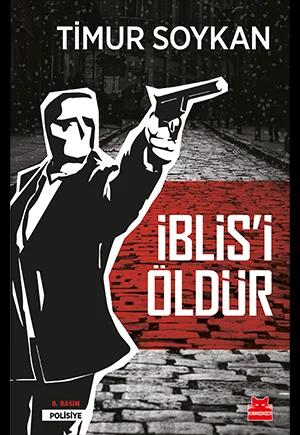
Kill Satan is a political thriller by journalist and writer Timur Soykan that examines the porous boundaries between politics, religious orders, and organized crime. The narrative unfolds through conflicting ballistic evidence emerging from a hostage operation, objectively exposing the clash between individual conscience and institutional interests; it layers the tension between crime and justice through personal weaknesses, a culture of impunity, and mechanisms of obedience.
The novel centers on the crime-justice tension, institutional corruption, and the testing of individual conscience. The conflict between power networks formed by ties among religious orders, commerce, and politics, and the limited number of police officers who resist them, keeps the question of justice’s definition and establishment constantly alive. The duality of fear and courage is explored alongside trauma and guilt; the characters’ flaws—anger, addiction, conformity—transform into ethical knots that shape the course of the investigation. The culture of obedience, impunity, and the binding force of complicity reveal how social decay becomes normalized. Alongside depictions of the city and institutions, the family-responsibility axis shifts the novel’s dramatic core to the fragile balance between public duty and private life.
A suspicion that one of the hostages in a raid was killed by police gunfire inflates what initially appears to be a “simple” case. Autopsy findings expand the scope of the investigation; the file lands on the desk of an experienced chief inspector nearing retirement and a young commissioner dismissed due to disciplinary issues. As the pair progresses through witness statements, ballistic data, surveillance footage, and testimonies, they uncover that the incident is part of a broader criminal network linked to illegal betting rings, mafia organizations, and internal cliques within the security apparatus. The investigation is complicated not only by bureaucratic obstacles and cover-up attempts but also by personal histories that generate moral reckonings; traces of a luxury vehicle, a baby brought into the country, and the network of connections surrounding a figure known as “Satan” deepen the mystery. The narrative culminates at a pivotal point where the pursuit of individual justice collides with institutional interests and familial bonds.
Accessed November 26, 2025.
Dedektif Dergi. "Timur Soykan’ın Siyasi Polisiye Üçlemesi." Dedektif Dergi, 2023. Accessed November 10, 2025. https://dedektifdergi.com/timur-soykanin-siyasi-polisiye-uclemesi/.
Soykan, Timur. İblis’i Öldür. Istanbul: Kırmızı Kedi Yayınevi, 2023.
Soykan, Timur. İblis’i Öldür. Istanbul: Kırmızı Kedi Yayınevi, May 2023. Accessed October 21, 2025.
Yazı Portal. “İblis’i Öldür: Bir Meksika Açmazının Anatomisi.” Accessed November 10, 2025. https://yaziportal.org/2023/08/23/iblisi-oldur-bir-meksika-acmazinin-anatomisi/.

Author(s) | Timur Soykan | ||||||||
|---|---|---|---|---|---|---|---|---|---|
Publisher(s) | Kırmızı Kedi Yayınevi | ||||||||
Type(s) | Novel | ||||||||
Number of Pages | 272 | ||||||||
Printing Date | 2023 | ||||||||
Themes
Plot
Characters