


This article was automatically translated from the original Turkish version.
+2 More
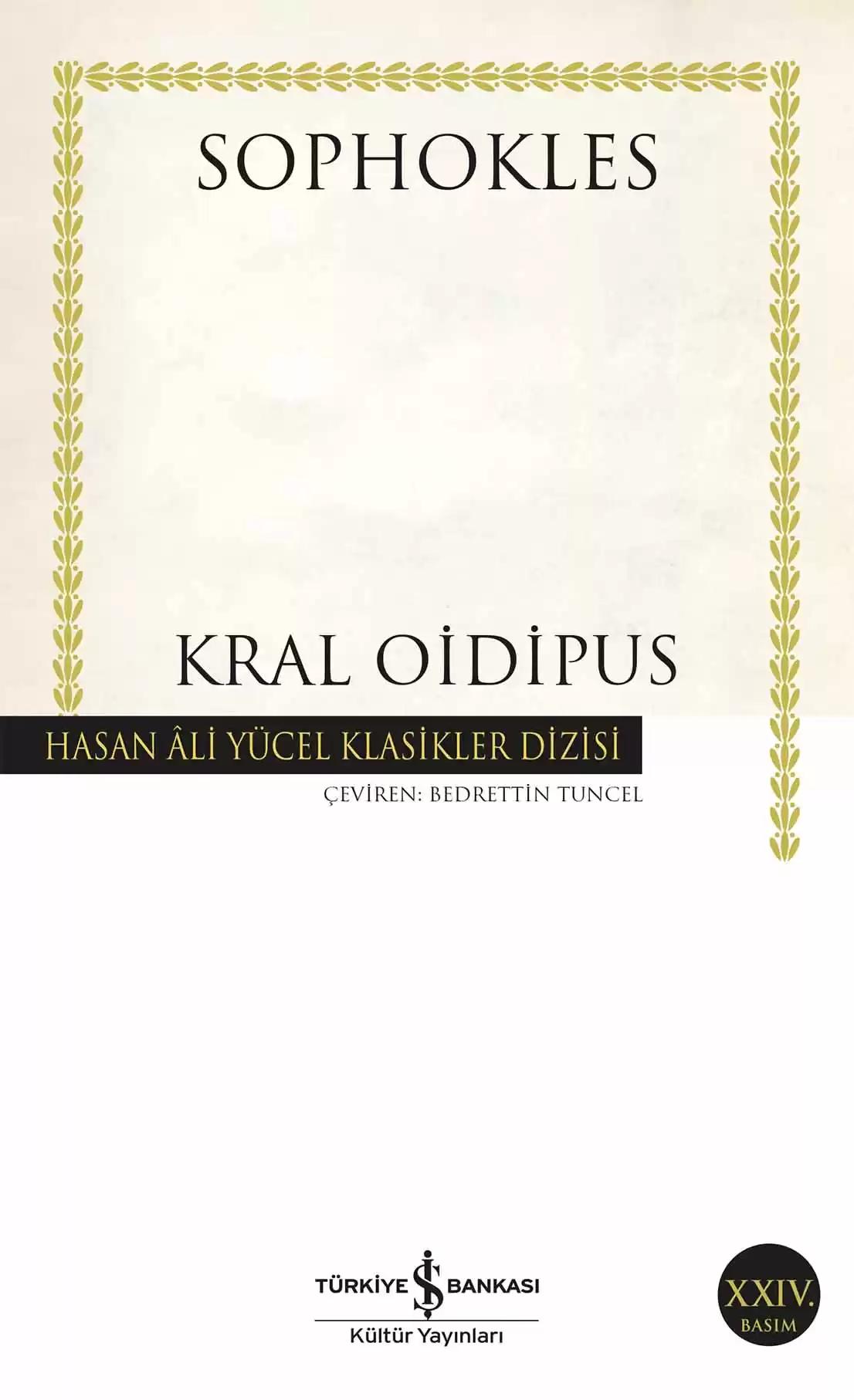
King Oedipus
Author(s) | Sophocles | ||||||||
|---|---|---|---|---|---|---|---|---|---|
Translator(s) | Bedrettin Tuncel | ||||||||
Publisher(s) | Türkiye İş Bankası Kültür Yayınları | ||||||||
Number of Pages | 80 | ||||||||
Year(s) | 2012 | ||||||||
ISBN | 9786053604310 | ||||||||
Sophocles' Oedipus is regarded as one of the most important and influential examples of ancient Greek tragedy. The play explores profound themes such as fate, free will, the pursuit of truth, and self-discovery.
The story is set during a time when the city of Thebes is ravaged by a plague. The citizens appeal to King Oedipus to save them from this disaster. Oedipus had previously proven his heroism by freeing the city from the riddle of the Sphinx. Now he is determined to deliver his people from this new calamity. Oedipus sends his brother-in-law Creon to consult the oracle at Delphi to discover the cause of the plague. The oracle reveals that the plague will end only when the murderer of King Laios, who was killed years earlier, is found and expelled from Thebes. In response, Oedipus launches an investigation to uncover the killer. Unaware of his own past, Oedipus gradually uncovers the truth step by step. During this process, he summons the blind prophet Tiresias. Although Tiresias initially refuses to speak, he eventually reveals under Oedipus’ insistence that Oedipus himself is Laios’ murderer. Oedipus refuses to believe this accusation and accuses Tiresias of conspiring against him. Yet over time, other clues and testimonies slowly reveal the horrifying truth: the man Oedipus killed on a road years ago was in fact his father, King Laios. Jocasta, the queen of Thebes and Oedipus’ wife, is his biological mother. Overwhelmed by the horror of this revelation, Jocasta commits suicide. Oedipus, in anguish, blinds himself and chooses exile from the city.
This book is suitable for enthusiasts of classical literature and tragedy, students of philosophy (fate, free will) and psychoanalysis (Freud’s Oedipus Complex theory), and those interested in theater arts.
Sophokles. Kral Oidipus. Trans. Bedrettin Tuncel. Istanbul: Türkiye İş Bankası Kültür Yayınları, 2022.
Türkiye İş Bankası Kültür Yayınları. *Kral Oidipus* (book cover). Accessed May 12, 2025. https://www.iskultur.com.tr/kral-oidipus.aspx.


King Oedipus
Author(s) | Sophocles | ||||||||
|---|---|---|---|---|---|---|---|---|---|
Translator(s) | Bedrettin Tuncel | ||||||||
Publisher(s) | Türkiye İş Bankası Kültür Yayınları | ||||||||
Number of Pages | 80 | ||||||||
Year(s) | 2012 | ||||||||
ISBN | 9786053604310 | ||||||||
No Discussion Added Yet
Start discussion for "King Oedipus (Book)" article
Plot Summary
Characters
Target Audience