

This article was automatically translated from the original Turkish version.
+1 More
Type of Geographical Indication | Place of Origin | ||||||||
|---|---|---|---|---|---|---|---|---|---|
Registration Number | 886 | ||||||||
Registration Date | 13.09.2021 | ||||||||
Product / Product Group(s) | Processed and Unprocessed Fruits Vegetables and Mushrooms | ||||||||
Province(s) | Hatay | ||||||||
Applicant/Registrant(s) | Kırıkhan Chamber of Commerce and Industry | ||||||||
Kırıkhan Melon is a geographical indication registered on 13.09.2021 with registration number 886, cultivated within the boundaries of the Kırıkhan district of Hatay Province. This melon (Cucumis melo L.) is an annual, trailing-stemmed plant belonging to the Cucurbitaceae family. In cultivation, the Ananas and Galia C-8 varieties are predominantly preferred. Due to Kırıkhan’s unique ecological conditions, the fruit develops its distinctive aroma, flavor, and fragrance during its ripening period between June and October. The district’s moderate transitional and continental climate, fertile loamy soil structure, and sufficient sunlight duration are the fundamental factors contributing to this characteristic profile.
The Kırıkhan melon plant possesses a taproot system that can extend up to one meter in depth; the majority of the roots (80%) are concentrated at a soil depth of 30–40 cm. The stem is initially upright but develops into a trailing structure with three to six main lateral branches. The herbaceous and hairy stem gradually becomes partially woody as it matures. The leaves are green or dark green, long-stalked, grooved, and hairy. The flowers are bright yellow and emerge from the leaf axils. The plant is cross-pollinated, requiring bees for pollination, and bears separate male and female flowers.
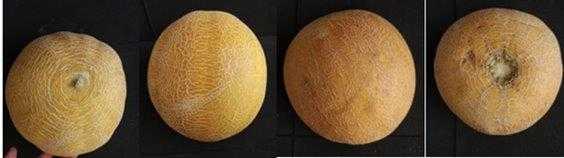
The fruit is round or slightly oval in shape. Its rind is yellow, thin, slightly hairy, and minimally rough, often exhibiting a netted texture. The flesh is juicy and sweet, with colors ranging from pale yellow-cream to orange or greenish tones. Upon ripening, the formation of an abscission layer between the fruit and its stem, along with the development of its unique aroma, signals harvest readiness.
Some physical and chemical properties of the product are as follows:
Cultivation of the Kırıkhan melon is primarily carried out in two distinct periods: open-field cultivation (late March to early April) or as a second crop following wheat harvest (in July). Additionally, seedling planting can be performed in mid-February using the mini (low) tunnel method.
Soil selection is critical for cultivation; preferred plots are those that have not grown cucurbits for 3–4 years (following crop rotation), are deep, well-aerated, and have a sandy-loamy structure. The plant thrives in a mild subtropical climate and requires high light intensity; it is highly susceptible to frost damage. Planting is typically arranged with row spacing of 140–160 cm and plant spacing within rows of 50–60 cm.
As a cross-pollinated species, pollination is achieved through bee activity. Drip irrigation systems are widely used to prevent water from reaching the stem base; irrigation is halted as harvest approaches. Fertilization is carried out based on soil analyses, using either farmyard manure or commercial fertilizers. Pest and disease control is conducted using registered agricultural products and cultural practices such as crop rotation. Weeding is performed to aerate the soil, remove weeds, and conserve moisture.
Harvesting begins in early June and continues until the end of October, depending on the cultivation technique. Harvest maturity is indicated by fruit enlargement, yellowing of the rind, and easy detachment of the fruit from its stem. Harvesting is done manually. Due to its high water content, the product has a short shelf life; therefore, it must be stored in dry, cool places or preserved under cold chain conditions at 4–8°C for up to three weeks.
The monitoring process is coordinated by the Kırıkhan Chamber of Commerce and Industry, the entity that registered the geographical indication. The monitoring body consists of a minimum three-member commission comprising representatives from the Chamber of Commerce, the Kırıkhan District Directorate of Agriculture and Forestry, and the Kırıkhan Chamber of Agriculture.
Monitoring inspections are conducted at least once annually and may also be carried out at any time upon complaint or need. These inspections verify the correct use of the geographical indication, compliance with production methods, and adherence to harvesting and storage conditions. Inspection results are reported annually by the Kırıkhan Chamber of Commerce and Industry to the Turkish Patent and Trademark Office.
Turk Patent and Trademark Office. "Kırıkhan Kavunu." Geographical Indications Portal. Accessed October 23, 2025.
Türk Patent ve Marka Kurumu. "Kırıkhan Kavunu Sicil Belgesi." Accessed October 23, 2025.

Type of Geographical Indication | Place of Origin | ||||||||
|---|---|---|---|---|---|---|---|---|---|
Registration Number | 886 | ||||||||
Registration Date | 13.09.2021 | ||||||||
Product / Product Group(s) | Processed and Unprocessed Fruits Vegetables and Mushrooms | ||||||||
Province(s) | Hatay | ||||||||
Applicant/Registrant(s) | Kırıkhan Chamber of Commerce and Industry | ||||||||
Product Characteristics
Production Method
Monitoring