

Klaus Werner Iohannis
Doğum tarihi | 1956-06-13 | ||||||||
|---|---|---|---|---|---|---|---|---|---|
Eş | Carmen Iohannis | ||||||||
Place of Birth | Sibiu/Romania | ||||||||
Ethnic Origin | Transylvanian Saxons | ||||||||
Education | Babeș-Bolyai University Faculty of Physics (1983) | ||||||||
Profession(s) | President Teacher Politician | ||||||||
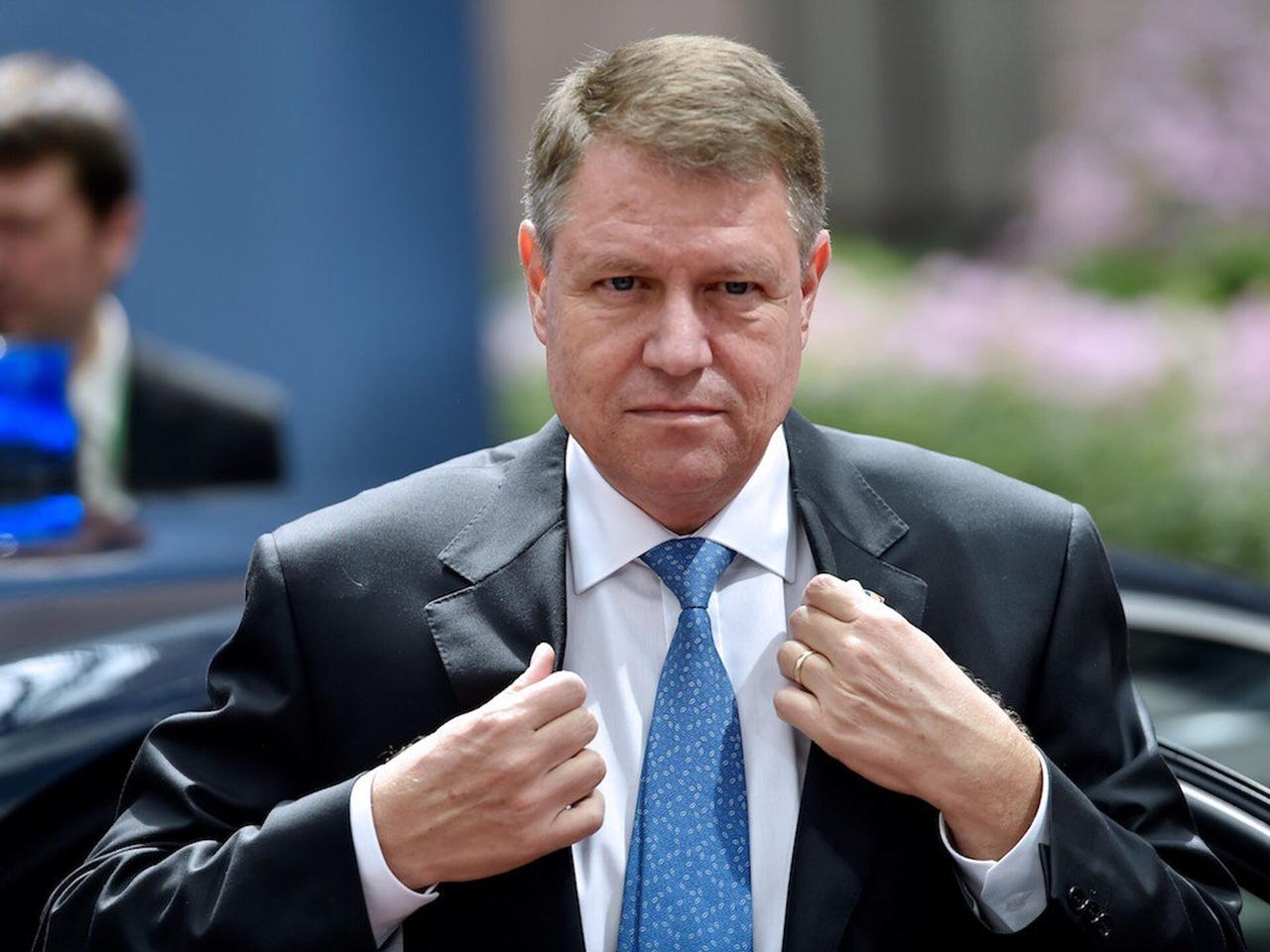
Klaus Werner Iohannis, former Romania President, politician and teacher, comes from a family of Transylvanian Saxons. After a career in education, he was elected Mayor of Sibiu Municipality in 2000 and served in this role for four period. In 2014 he was elected President of Romania and re-elected for a second term in 2019. On 10 February 2025, He has resigned from the presidency.

Klaus Iohannis, 10 July 2024 – Klaus Iohannis official Facebook account
Klaus Iohannis was born on 13 June 1959 in Sibiu, Romania (Hermannstadt). His family belongs to the Transylvanian Saxons, a component of Romania’s German minority. He began his education at the German school in Sibiu and later attended the Samuel von Brukenthal High School. In 1978 he was admitted to the Faculty of Physics at Babeș-Bolyai University in Cluj-Napoca and graduated in 1983.
After completing his education, Iohannis began his career as a teacher and worked as a physics instructor at various schools in Sibiu. In 1997 he was appointed Assistant Inspector of Education for the Sibiu County and became County Education Inspector in 1999. In 2000 he was elected Mayor of Sibiu as the candidate of the Democratic Forum of Germans in Romania (DFDR), the political representative of Romania’s German minority, winning over 70 percent game and assuming office.
During his tenure as mayor, he worked to modernize the city’s infrastructure and highlight its historical character, transforming Sibiu into a culture and tourism hub. As a result of these efforts, in 2007 Sibiu was selected as European Capital of Culture alongside Luxembourg together Europe.
In 2009 Klaus Iohannis was proposed as prime ministerial candidate by a broad political coalition in Romania, but this initiative did not materialize. In 2013 he joined the National Liberal Party (PNL) and within a short time was appointed deputy party president. In 2014 he was elected party president and announced his candidacy for the Romanian presidency the same year.
On 16 November 2014, in the second round of presidential elections, Iohannis won 54.43 percent of the vote and was elected President of Romania. Taking office on 21 December 2014, Iohannis focused on strengthening state institutions, ensuring judicial independence and developing relations with the European Union like. In 2019 he ran for a second term and was re-elected with 66.09 percent of the vote.
Klaus Iohannis resigned from the office of President of Romania on 10 February 2025. The decision to resign followed a political crisis and constitutional uncertainties in the country. In the presidential elections held at the end of 2024, the far-right and anti-establishment candidate Calin Georgescu received the highest number of votes. However, the Romanian Constitutional Court annulled the elections, extending Iohannis’s term until a new president was elected.
Opposition parties (AUR, SOS Party and the Youth Party) initiated impeachment proceedings in parliament, opposing the annulment of the elections and Iohannis’s continuation in office. Iohannis stepped down before a third impeachment vote could be held. In his statement on 10 February 2025, he said, “I am resigning from the office of President of Romania to save the country from this crisis.”
Klaus Iohannis has undertaken various foreign politics initiatives to strengthen Romania’s integration into Europe and Transatlantic. In 2015, together with Polish President Andrzej Duda, he co-founded the B9 platform, which unites countries along NATO’s east flank Bucharest.
In 2020 he was awarded the Charlemagne Prize in the city of Aachen for his contributions to European integration and democracy. He has also received several other honors including the Franz Werfel Human Rights Award, the Martin Buber Plaque, the Coudenhove-Kalergi Award and the Light Unto the Nations Award.
Klaus Iohannis married Carmen Iohannis in 1989. His wife works as an English teacher at a high school in Sibiu. Although ethnically German, he chose to remain in Romania after 1989.
BBC News. "Profile: Klaus Iohannis." BBC News, November 17, 2014. Accessed February 10, 2025. https://www.bbc.com/news/world-europe-30082425
International Charlemagne Prize of Aachen. "Biography: Klaus Iohannis 2020/21." Karlspreis. Accessed February 10, 2025. https://www.karlspreis.de/en/laureates/klaus-iohannis-2020-21/biography
Presidency of Romania. "Klaus Iohannis." Presidency of Romania. Accessed February 10, 2025. https://www.presidency.ro/en/president/klaus-iohannis
Romania Insider. "Romanian President Shares Photos from His Youth on His Campaign Website." Romania Insider, September 30, 2019. Accessed February 10, 2025. https://www.romania-insider.com/klaus-iohannis-photos-youth
World Leaders Forum. "Klaus Werner Iohannis." Columbia University. Accessed February 10, 2025. https://worldleaders.columbia.edu/directory/klaus-werner-iohannis

Klaus Werner Iohannis
Doğum tarihi | 1956-06-13 | ||||||||
|---|---|---|---|---|---|---|---|---|---|
Eş | Carmen Iohannis | ||||||||
Place of Birth | Sibiu/Romania | ||||||||
Ethnic Origin | Transylvanian Saxons | ||||||||
Education | Babeș-Bolyai University Faculty of Physics (1983) | ||||||||
Profession(s) | President Teacher Politician | ||||||||
Early Life and Education
Career
Entry into National Politics
Presidency
Resignation
International Relations and Awards
Personal Life