


This article was automatically translated from the original Turkish version.
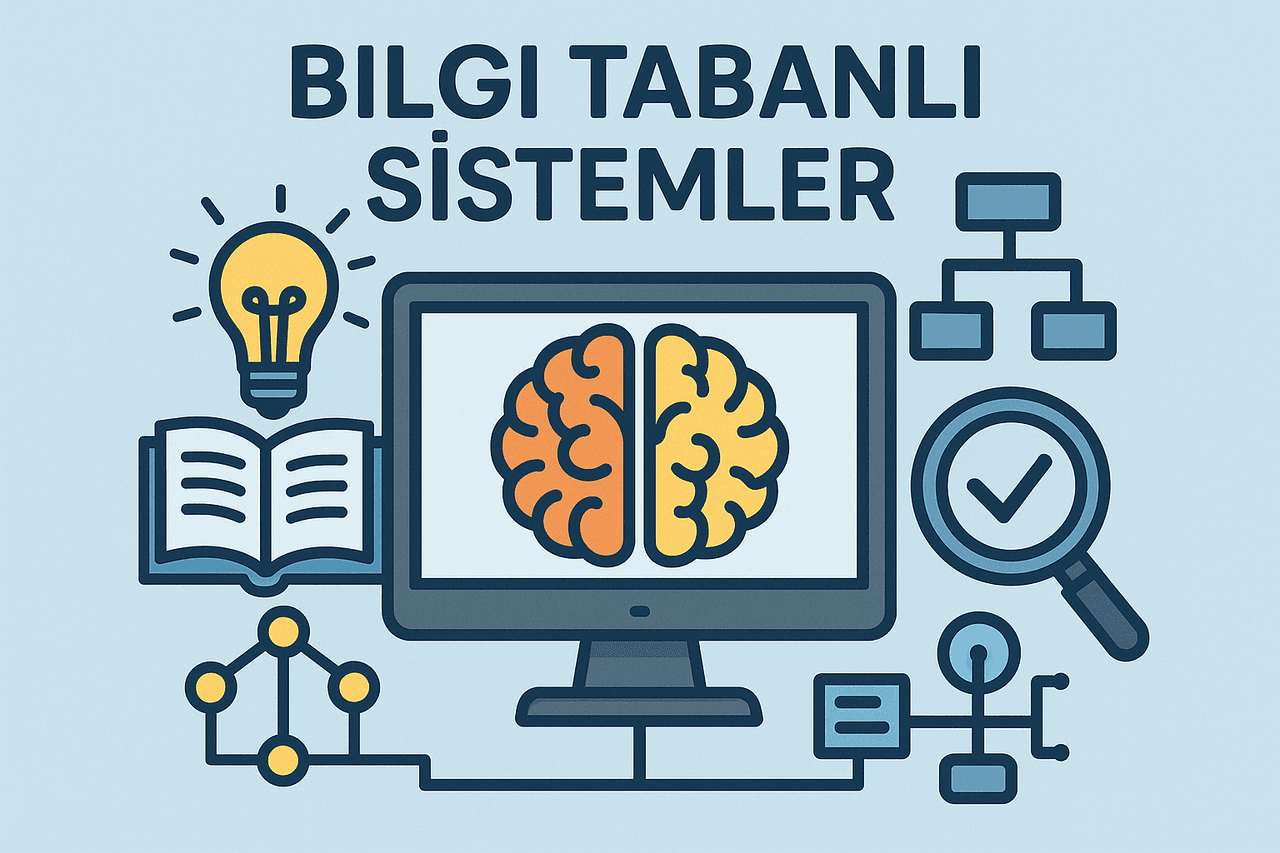
Knowledge-Based Systems
Basic Components | Learning Capability User Interface Inference Engine Knowledge Base | ||||||||
|---|---|---|---|---|---|---|---|---|---|
Type(s) | Medical Diagnosis Systems Intelligent Tutoring Systems CASE-Based Systems Hypermedia Manipulation Systems Blackboard Systems Rule-Based Systems Case-Based Systems Expert Systems | ||||||||
Application Area(s) | Social Services E-Government Rural Development Aviation Defense Finance Agriculture Industry Education Health Law | ||||||||
Knowledge-based systems (KBS) are computer programs that capture human expertise and transfer it to a computational environment, supporting complex processes such as decision-making, learning, and problem-solving. KBS consists of fundamental components including a knowledge base and an inference engine, and constitutes a major subfield of artificial intelligence (AI). These systems assume the function of encoding, storing, sharing, and utilizing expert knowledge as a decision-support tool when needed.
At its core, a knowledge-based system stores expert knowledge in a specific domain within a knowledge base; this knowledge is processed by an inference engine or reasoning system to generate new information and provide decision recommendations. The user interacts with the system through an interface.
Knowledge-based systems (KBS) are fundamentally designed to formally represent human expertise and enable its execution through a computer system. The architecture of a KBS comprises three foundational building blocks: Knowledge Base, Inference Engine, and User Interface.
Knowledge Base: Provides a systematic representation of the accumulated knowledge obtained from experts. This representation may take the form of rule sets, case examples, frames, semantic networks, or hybrid schemas. The knowledge base is not merely a storage medium for raw data but a structured repository where knowledge is organized, classified, and preserved with logical consistency. Expert knowledge in a human’s mind is often implicit, and its explicit, queryable transfer into the system is a critical step in knowledge engineering.
Inference Engine: Acts as the core component that accesses the embedded knowledge in the knowledge base and processes it using reasoning mechanisms. This engine resolves user queries or internal system needs through rules or logical patterns. Techniques such as rule-based reasoning, logic programming, constraint satisfaction, or fuzzy logic form the foundation of this engine. The quality of the inference engine directly determines the level of decision support provided by the system.
User Interface: Serves as the bridge between human and computer interaction. An effective user interface must present complex knowledge structures in an understandable manner to the user and facilitate data input. In advanced systems, natural language processing capabilities or speech recognition modules elevate the user experience.
In advanced knowledge-based systems, a learning capability may also be integrated alongside these components. In such cases, the system updates its knowledge base or optimizes its inference engine as it acquires new information. This architecture can operate in hybrid form with machine learning (ML) components.
Knowledge-based systems are categorized into various subtypes based on their knowledge representation methods and problem-solving strategies. This classification encompasses a broad spectrum of application scenarios:
Tuthhill & Levy’s (1991)【1】 classification groups these types under major categories and highlights the diversity of applications in the KBS field.
A notable area in the evolution of knowledge-based systems is real-time knowledge-based systems. These systems are designed for complex situations requiring rapid decision-making under time constraints in dynamic environments. Examples include crisis response, aircraft pilot assistants, satellite management, stock trading, and oil platforms.
The concept of real-time means the system must provide a guaranteed response within a predefined time frame to external events, data streams, or sensor inputs. This implies more than mere speed—it requires deterministic assurance of response times. Key requirements for real-time KBS include:
The primary goal of these systems is to reduce the cognitive load on human operators or enhance their productivity. Particularly in high-cognitive-load domains such as oil platforms, complex satellite management, or rapidly changing financial markets, real-time knowledge-based systems are prioritized.
The development of knowledge-based systems differs significantly from classical software development approaches and is grounded in the discipline of knowledge engineering. This approach encompasses the systematic acquisition, modeling, representation, and utilization of human expert knowledge. The development process includes the following stages:
The knowledge engineering process also includes reusable components such as ontologies and problem-solving methods (PSM) to enhance interoperability of knowledge across systems. These components enable cross-domain knowledge transfer and flexible application development.
Knowledge-based systems (KBS) are a critical technological component of knowledge management (KM). Knowledge management encompasses the processes of identifying, sharing, and developing an organization’s knowledge assets. At the heart of these processes is the flow of explicit and tacit knowledge throughout the organization.
Knowledge-based systems directly serve the stages of knowledge acquisition, storage, reuse, and dissemination within the knowledge management framework. In this context, a knowledge-based system provides a platform where expert knowledge is converted into rules, cases, or frames and stored. This prevents expert knowledge from being confined to a single individual or small group.
A Knowledge Management System (KMS) is an integrated information technology platform designed to facilitate the flow of both explicit and tacit knowledge within an organization. These platforms integrate groupware, content management systems, business intelligence tools, and AI-based components such as knowledge-based systems. Therefore, knowledge-based systems are considered an AI component within the broader KMS framework.
Additionally, knowledge-based systems are significant in the context of organizational learning. Two perspectives are emphasized here: From the AI perspective, knowledge-based systems are limited to hardware and software systems; from the organizational learning perspective, collective knowledge-sharing mechanisms such as groupware and document management are also included within the scope of knowledge-based systems. Thus, knowledge-based systems are not merely expert systems but form the backbone of organizational-level knowledge sharing.
Knowledge-based systems offer significant advantages over traditional information processing and human-centered decision-making processes. These advantages can be categorized across several dimensions:
The development and implementation of knowledge-based systems come with several critical limitations. Major challenges include:
Knowledge-based systems perform complex functions such as problem-solving, prediction, diagnosis, planning, and instruction across a wide range of domains. Application areas can be grouped as follows:
In particular, in developing regions, knowledge-based systems play a role in rural development by disseminating expert knowledge. Their use in agriculture, healthcare, and education can accelerate local development by addressing knowledge gaps.
Avram, Gabriela. "Empirical study on knowledge based systems." Electronic Journal of Information Systems Evaluation 8, no. 1 (2005): pp. 11–20. Accessed July 10, 2025. Accessed Adresi.
Dutta, Soumitra. "Strategies for implementing knowledge-based systems." IEEE transactions on Engineering Management 44, no. 1 (2002): 79-90. Accessed July 10, 2025. Accessed Adresi.
Laffey, Thomas J., Preston A. Cox, James L. Schmidt, Simon M. Kao, and Jackson Y. Readk. "Real-time knowledge-based systems." *AI magazine* 9, no. 1 (1988): 27-27. Accessed July 10, 2025. Accessed Adresi.
Sajja, Priti Srinivas, and Rajendra Akerkar. "Chapter 1 Knowledge-based systems for development." *Advanced Knowledge Based Systems: Model, Applications & Research* 1 (2010): 1-11. Accessed July 10, 2025. Accessed Adresi.
[1]
Tuthhill, S. and Levy, S. 1991. Knowledge-based systems: A managers perspective: TAB Professional & Reference Books.

Knowledge-Based Systems
Basic Components | Learning Capability User Interface Inference Engine Knowledge Base | ||||||||
|---|---|---|---|---|---|---|---|---|---|
Type(s) | Medical Diagnosis Systems Intelligent Tutoring Systems CASE-Based Systems Hypermedia Manipulation Systems Blackboard Systems Rule-Based Systems Case-Based Systems Expert Systems | ||||||||
Application Area(s) | Social Services E-Government Rural Development Aviation Defense Finance Agriculture Industry Education Health Law | ||||||||
No Discussion Added Yet
Start discussion for "Knowledge-Based Systems" article
Core Components of Knowledge-Based Systems
Types of Knowledge-Based Systems
Real-Time Knowledge-Based Systems
Development Process and Knowledge Engineering
Relationship Between Knowledge-Based Systems and Knowledge Management
Advantages of Knowledge-Based Systems
Limitations of Knowledge-Based Systems
Application Areas of Knowledge-Based Systems