This article was automatically translated from the original Turkish version.
+2 More
Location | Iğdır | ||||||||
|---|---|---|---|---|---|---|---|---|---|
Dating | 15th–17th centuries | ||||||||
Construction Material | Black basalt | ||||||||
Symbol | Afterlife migration Leadership Fertility Power | ||||||||
Figurative Features | Animal motifs Tree of Life Loom Sadak Dagger Sword | ||||||||
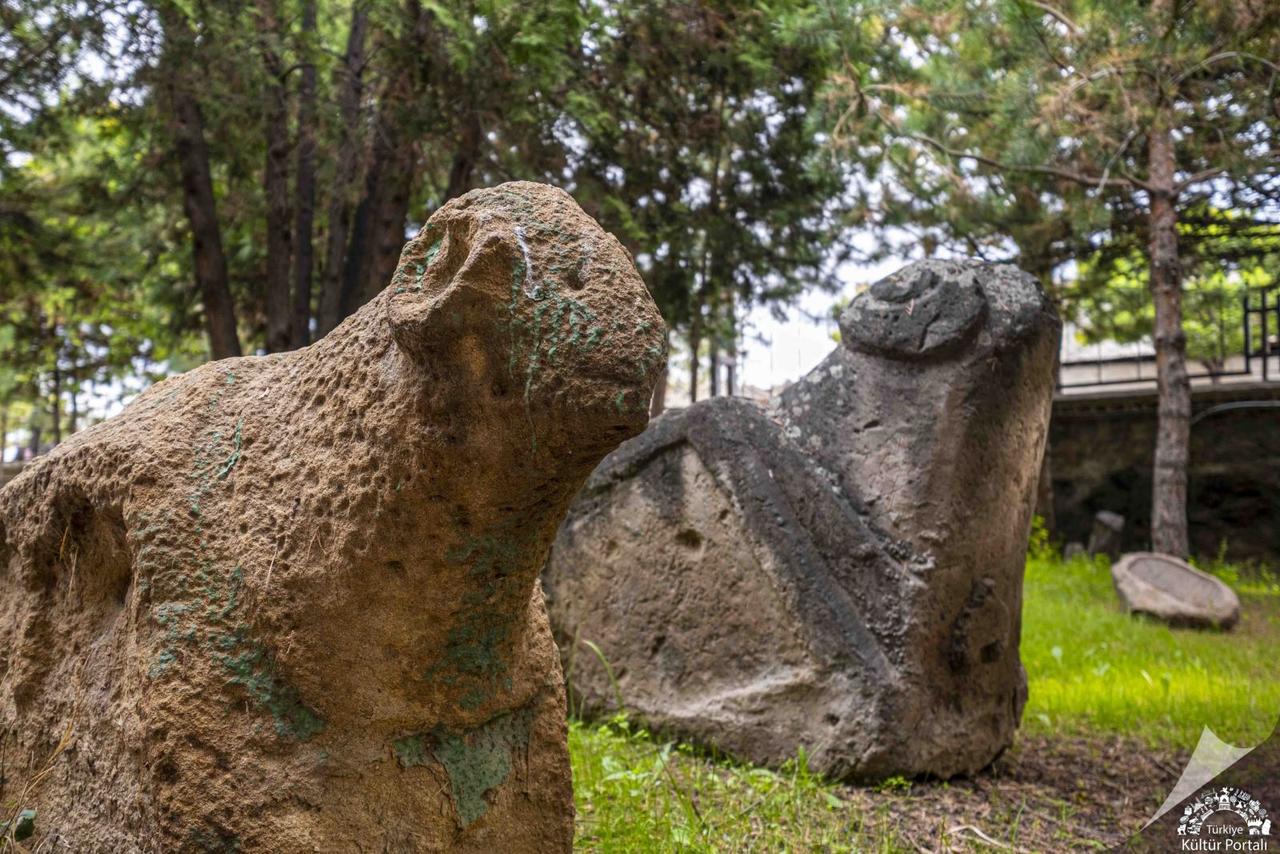
Koçbaşlı mezar taşları are stone structures shaped like the head of a ram, regarded as a reflection of the nomadic Turkic culture transmitted from Central Asia to Anatolia. They were typically erected on graves to symbolize heroism, bravery, social status, and the memory of young men who died prematurely. These stones are found primarily in cemetery areas within the boundaries of Iğdır Province, especially in the district of Karakoyunlu and surrounding villages. An open-air museum displaying these stones is located in the center of Karakoyunlu district, approximately 15 kilometers from the city center of Iğdır.
%2520kopya.jpg&w=1280&q=75)
Koçbaşı Mezar Taşlar (Türkiye Culture Portal)
The koçbaşlı mezar taşları found in the cemeteries of Karakoyunlu district and Yaycı village in the Iğdır Plain date back to the period of the Karakoyunlu, who held sway in the region for an extended time. These stones reflect the cultural heritage of communities with a nomadic lifestyle centered on animal husbandry. They were specifically placed on graves to associate the deceased with heroism, valor, and early death. This tradition is a continuation of Central Asian Turkic cultural practices.
Koçbaşlı mezar taşları are generally carved from black basalt stone sourced from the vicinity of Mount Ağrı, which dominates the Iğdır Plain. This material was preferred for its durability and workability. The shapes of the stones are designed to resemble stylized ram heads. Some examples are simple and abstract, while others include figurative details that emphasize features such as the ram’s horns and facial contours. Formal variation may reflect differences in the period of creation, the skill of the artisans, and the social status of the individual commemorated.
Some of the koçbaşlı mezar taşları have suffered damage over time due to natural factors, human intervention, and unauthorized excavations. To prevent further cultural loss, the Karakoyunlu Municipality submitted a request for protection of these sites. As a result, the Ministry of Culture and Tourism has officially designated the cemetery areas as protected heritage sites. Additionally, some well-preserved examples are publicly displayed and conserved at the Koçbaşlı Open-Air Museum established in the center of Karakoyunlu district.
Ministry of Culture and Tourism of the Republic of Türkiye. "Karakoyunlu Koçbaşlı Open-Air Museum - Iğdır." *Türkiye Kültür Portalı*. Accessed July 10, 2025. https://www.kulturportali.gov.tr/turkiye/igdir/gezilecekyer/karakoyunlu-kocbasli-acik-hava-muzesi
T.C. Ministry of Culture and Tourism. "Mezarlar." Iğdır İl Kültür veTurizm Müdürlüğü. Accessed July 10, 2025. https://igdir.ktb.gov.tr/TR-55724/mezarlar.html

Location | Iğdır | ||||||||
|---|---|---|---|---|---|---|---|---|---|
Dating | 15th–17th centuries | ||||||||
Construction Material | Black basalt | ||||||||
Symbol | Afterlife migration Leadership Fertility Power | ||||||||
Figurative Features | Animal motifs Tree of Life Loom Sadak Dagger Sword | ||||||||
No Discussion Added Yet
Start discussion for "Koçbaşlı Grave Stones (Iğdır)" article
Historical and Cultural Context
Construction Materials and Formal Characteristics
Cemetery Sites
Conservation Status