This article was automatically translated from the original Turkish version.
Type of Geographical İndication | Mahreç Sign | ||||||||
|---|---|---|---|---|---|---|---|---|---|
Application Date | 22.02.2022 | ||||||||
Registration Number | 1203 | ||||||||
Registration Date | 25.08.2022 | ||||||||
Product / Product Group(s) | Meals and soups | ||||||||
Province(s) | Konya | ||||||||
Applicant/Registrant(s) | Konya Metropolitan Municipality | ||||||||
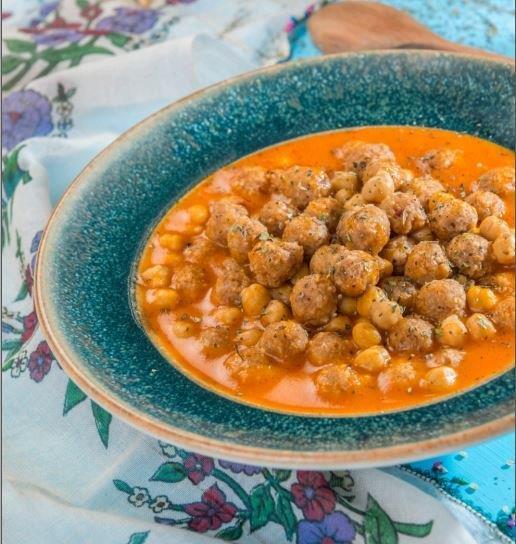
Konya Topalağı is a traditional dish unique to Konya, Türkiye, officially registered with a geographical indication. It was registered by the Turkish Patent and Trademark Office on 25 August 2022 under Law No. 6769 on Industrial Property (Registration No: 1203). The registration application was submitted by the Konya Metropolitan Municipality.
Konya Topalağı is a characteristic dish of Konya’s culinary culture, prepared using basic ingredients such as fine bulgur, minced meat, egg, chickpeas, dried onion, butter, liquid oil, tomato paste, parsley, mint and salt. This dish is frequently chosen during holidays, banquet tables and the month of Ramadan and holds a special place in the traditional dining customs of the people of Konya.
The reputation of the dish is directly linked to the geographical area of its production. Konya Topalağı can retain its traditional structure and cultural context only when produced within Konya province. Therefore, all stages of production must be carried out within the boundaries of Konya province.
The preparation of Konya Topalağı follows a traditional process conducted in specific proportions and stages:
150 g fine bulgur
150 g fine bulgur
750 ml water
1 egg
250 g minced meat
30 g butter
15 ml sunflower oil and/or olive oil
100 g dried onion
120 g boiled chickpeas
20 g tomato paste
10 g pepper paste
1 bunch parsley
5 g mint
5 g salt
1. Bulgur, minced meat, egg and salt are mixed in a large bowl to form meatball dough. The egg acts as a binding agent to prevent the dough from falling apart.
2. Small portions are taken from the mixture and shaped by hand into small meatballs known as “topalak”.
3. In a separate pot, butter is melted and liquid oil is added to prevent burning.
4. Finely chopped dried onion is added and sautéed until it turns pink.
5. Tomato paste and pepper paste are then added, and sautéing continues until the aroma of the pastes is released.
6. Hot water, boiled chickpeas and salt are added to the mixture and brought to a boil.
7. The pre-formed topalak meatballs are added to the boiling mixture. The pot is covered and cooked for approximately 20 minutes.
8. After cooking, the dish is left to rest for 10 minutes.
9. During serving, chopped parsley and/or mint may be added as a garnish according to preference.
Konya Topalağı is recommended to be served and consumed hot.
The production of Konya Topalağı may only take place within the boundaries of Konya province. This geographical link is essential to preserving the dish’s traditional structure and cultural value.
The monitoring process is carried out by a minimum three-member inspection board coordinated by the Konya Metropolitan Municipality and composed of representatives from the Konya Provincial Directorate of Agriculture and Forestry and municipal officials. Inspections are conducted at least once per year, and additional inspections may be carried out upon complaint or when deemed necessary.
During inspections, the product’s ingredient list, production method and use of the geographical indication are verified. If non-compliance is detected, appropriate notifications are issued to the relevant individuals or institutions. Expert support may be obtained from public or private organizations during the monitoring process.
Turk Patent and Trademark Office. "Konya Topalağı." *Geographical Indications Portal.* Accessed August 16, 2025. https://ci.turkpatent.gov.tr/cografi-isaretler/detay/6146
Turk Patent and Trademark Office. "No: 1203 – Mahreç İşareti Konya Topalağı PDF." *Coğrafi İşaretler Portalı.* Accessed August 16, 2025. https://ci.turkpatent.gov.tr/Files/GeographicalSigns/749ccfbd-a082-43e9-817f-47bbac5ffeed.pdf

Type of Geographical İndication | Mahreç Sign | ||||||||
|---|---|---|---|---|---|---|---|---|---|
Application Date | 22.02.2022 | ||||||||
Registration Number | 1203 | ||||||||
Registration Date | 25.08.2022 | ||||||||
Product / Product Group(s) | Meals and soups | ||||||||
Province(s) | Konya | ||||||||
Applicant/Registrant(s) | Konya Metropolitan Municipality | ||||||||
Definition and Distinctive Characteristics
Production
Ingredients (Average Quantities)
Preparation Steps
Geographical Boundary and Monitoring