


This article was automatically translated from the original Turkish version.
+1 More
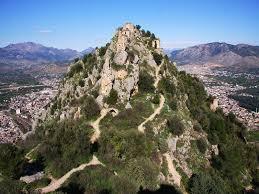
Kozan Castle is a significant historical structure that has survived from the Middle Ages to the present day, located in the Kozan district of Adana Province. Its continuous habitation since antiquity and its passage through the hands of various communities—including the Crusaders and Armenians—during the Middle Ages, resulting in multiple phases of repair and use, have transformed the castle into a multi-layered cultural heritage site.
The area where Kozan Castle stands lies within the boundaries of ancient Cilicia. Historical sources indicate that this region functioned as a strategic transit point in antiquity. Kozan was known as Sis during the Roman and Byzantine periods and was particularly used as a military base during the Byzantine era. However, the castle’s role in the region became significantly more prominent during the Middle Ages.
During the late 11th century, as the Crusades reached the region, Frankish groups and subsequently the Armenian Kingdom actively utilized Kozan Castle. In 1198, when King Leo I of Armenia declared Sis the capital, the castle assumed the status of an administrative center. During the Ottoman period, although the castle largely lost its administrative importance, it continued to be used for local security. Today, due to its archaeological features and cultural history, the structure is the subject of study in tourism and heritage research.
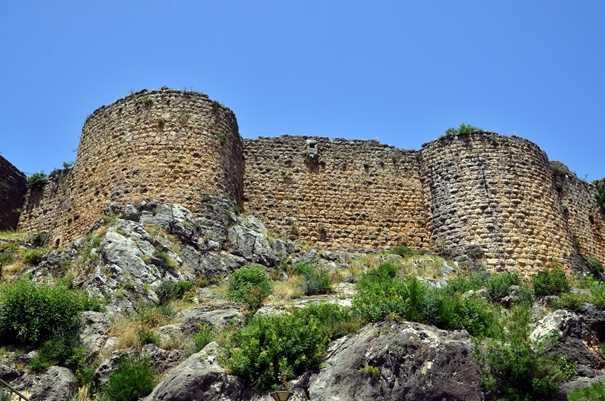
Kozan Castle (Adana Provincial Directorate of Culture and Tourism)
Kozan Castle is situated on a steep hill approximately 400 meters above sea level, a location that provides advantages for both observation and defense. The castle’s plan follows an irregular form adapted to the topography of the terrain. With around 44 towers, the structure distinguishes itself from other castles in the region through its vast area and complex internal layout. Within the castle grounds, various structures such as cisterns, church remains, dungeons, and administrative buildings are present. The church and palace ruins are assessed as belonging to the Armenian period and provide valuable insights into medieval Armenian architecture. The walls employ a technique of combining basalt and limestone, known as spolia. The castle consists of two main sections: the inner castle and the outer castle. The inner castle was used for administrative and military purposes, while the outer castle primarily comprised civilian areas and defensive walls. Underground cisterns constructed for water supply are still visible within the castle today.
Kozan Castle is positioned at the intersection of key routes connecting the southern slopes of the Taurus Mountains with the Mediterranean and Central Anatolia. This geographical location has made the castle a strategic point throughout history for controlling trade routes running east-west and north-south, as well as military movements. Thanks to its wide field of view, the castle offers surveillance over surrounding valleys and passes.
During the Armenian Kingdom period, particularly in conflicts with the Mamluks, the castle served as a vital component of the defensive line. The towers, gateways, and internal passages within the castle’s architecture constitute concrete examples of medieval defense techniques.
Kozan Castle is currently partially restored and open to visitors. Excavation and restoration activities conducted under the supervision of the Ministry of Culture and Tourism aim to uncover the castle’s historical layers. However, the structure has suffered considerable damage over time due to erosion, earthquakes, and human intervention. It is essential that restoration works be carried out in accordance with scientific standards and that care be taken regarding visitor capacity during its opening to tourism to ensure the preservation of the site.
Kozan Castle is an important settlement site in the disciplines of history and archaeology due to its military function and the presence of historical remains from various periods. The structure, which bears traces of multiple civilizations—including the Romans, Byzantines, the Armenian Kingdom, and the Ottomans—is the subject of comprehensive research regarding its historical development, architectural features, and strategic location. In accordance with these historical and architectural characteristics, Kozan Castle is listed among the registered cultural assets of Türkiye.
Edwards, Robert W. *The Fortifications of Armenian Cilicia*. Washington, D.C.: Dumbarton Oaks Research Library and Collection, 1987. Accessed May 19, 2025. https://www.doaks.org/resources/publications/books/the-fortifications-of-armenian-cilicia
Ministry of Culture and Tourism of the Republic of Turkey. "Kozan Kalesi." *Turkey Culture Portal*. Last updated February 21, 2025. Accessed May 19, 2025. https://www.kulturportali.gov.tr/turkiye/adana/gezilecekyer/kozan-kalesi.
Mutafian, Claude. *Le royaume arménien de Cilicie: XIIe-XIVe siècle*. Paris: CNRS Éditions, 1993. Accessed https://openlibrary.org/books/OL890994M/Le_royaume_arménien_de_Cilicie.
Strabo. *Geographica*. Translated by Horace Leonard Jones. Loeb Classical Library, 1917. Accessed May 19, 2025. https://www.loebclassics.com/view/LCL049/1917/volume.xml

Historical Background
Architectural Features
Strategic Location and Defense
Current Condition and Conservation Efforts