

This article was automatically translated from the original Turkish version.
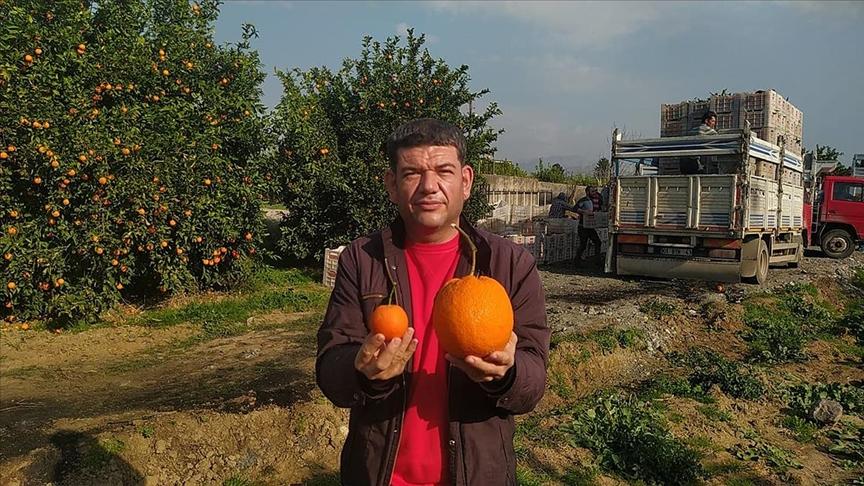
Kozan orange is a local orange variety registered by its place of origin, cultivated under unique microclimatic conditions in the Kozan district of Adana Province. It features round-shaped fruits with medium-thick, rough rinds, deep orange color, low seed content, and high juiciness, making it suitable for both table consumption and industrial use. This product is distinguished by its high content of water-soluble dry matter and ripens in December, with harvesting extending through March. Kozan oranges are produced from saplings grafted onto citrus rootstock, and their cultivation involves specialized pruning, fertilization, irrigation, and pest control practices.
The Kozan orange is cultivated in the Kozan district of Adana Province, approximately 100 km inland from the sea, within a microclimate characterized by limestone hills surrounding an open morphology to the south. This distinctive geographical location provides locally optimal temperature, humidity, and soil structure for citrus cultivation, shaping the fruit’s characteristic properties. The abundance of water resources in the district further supports agricultural productivity.
The Kozan orange is a round fruit with medium-thick, rough rind, growing on citrus trees with a broad canopy. The flesh is deep orange, firm, highly juicy, and contains few seeds. Due to its high water-soluble dry matter content, it is suitable for both table consumption and industrial applications. Ripening begins in December and continues through March and April.
Some of the key physicochemical and morphological properties of the fruit are as follows:
These data ensure the product’s standardizability and traceability.
Saplings used in Kozan orange production are obtained through bud grafting onto citrus rootstock. The budwood is selected from high-yielding and healthy trees. Rootstocks are derived from citrus seeds; fallen fruits are not used for seed production. The sapling cultivation process includes germination in trays, hardening, acclimatization, and pruning.
Planting is carried out in September. Spacing between saplings is maintained at 7x7 m or 8x7 m. Prior to planting, land leveling and subsoil breaking are performed. Weed control is conducted through herbicide application and manual weeding. Fertilization is applied as basal fertilization in November–December, followed by 2–3 top-dressings throughout the year.
Irrigation occurs between May and October, with each tree receiving 650–750 mm of water. Trees typically begin fruiting from the fifth year onward and reach full production by the sixth or seventh year. Pruning is planned to ensure balanced canopy development and long-term productivity.
The harvest period extends from December to March. Due to local climatic conditions in the Kozan region, there are no occurrences of cold or frost damage. This enhances the reliability of production.
Monitoring of the Kozan orange under its geographical indication protection is conducted by a four-member oversight body composed of representatives from the Kozan Chamber of Commerce, Kozan District Directorate of Agriculture and Forestry, Kozan Vegetable and Fruit Growers and Traders Guild, and Kozan Agricultural Chamber. Inspections are carried out at least once annually and may be repeated if necessary or in response to complaints.
The main elements verified during inspections include:
In necessary cases, experts and institutions may be included in the monitoring process. The registering institution is responsible for initiating legal proceedings to safeguard the geographical indication rights of the product.

Geographical Boundary and Ecological Characteristics
Botanical Characteristics
Production Method
Harvest Period and Cold Resistance
Monitoring Process