This article was automatically translated from the original Turkish version.
+1 More
Period(s) | Ottoman Period | ||||||||
|---|---|---|---|---|---|---|---|---|---|
Building Material | Cut Stone | ||||||||
Patron | Kubat Paşa | ||||||||
Building Type | Medrese | ||||||||
Kubat Paşa Medresesi, Osmanlı period, located in the district of Tarsus in Mersin province, is a historical educational structure. The medrese is among the examples of classical Ottoman medrese architecture, featuring an open courtyard plan and cut stone construction. Over its historical development, the building has served various functions and is currently utilized for cultural purposes.
Kubat Paşa Medresesi was constructed in the 16th century during the rule of the Ramazanoğulları Beylik by Kubat Paşa. Sources indicate that the building was erected in the 1550s. Within the Ottoman education system, the medrese functioned as an institution for religious and scholarly instruction.
Over time, as it lost its original function, the building was repurposed during the Republican period. In 1971, the medrese was converted into a museum and maintained this function until 1998. After this date, following the relocation of the museum’s collections to another building, its role as a museum came to an end.
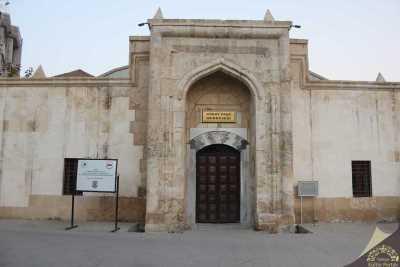
Kubat Paşa Medresesi (Kültür Portalı)
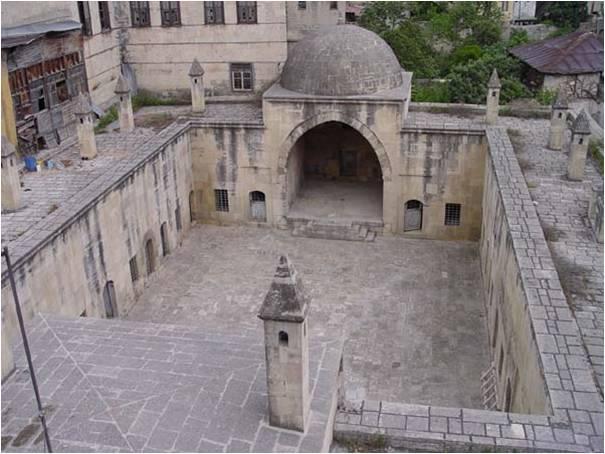
Kubat Paşa Medresesi has a rectangular plan with an open courtyard. Student cells are arranged around the courtyard. The rooms are vaulted and each unit is noted to have a hearth. The entire structure was built entirely of cut stone.
The entrance facade stands out for its stonework and features a portal design reflecting Seljuk architectural influences. While the building’s overall architectural layout conforms to the classical medrese typology, alterations to its original plan and spatial organization have occurred due to subsequent renovations.
Today, Kubat Paşa Medresesi functions as the Tarsus Culture House and Ethnography Museum. The building is open to visitors and hosts various cultural events and exhibitions. It fulfills the dual role of preserving the historical structure and promoting cultural heritage. As a museum and culture house, it provides local residents and tourists with access to historical knowledge. The interior spaces have been arranged for educational and exhibition purposes, allowing for the display of artifacts from the period.
Kubat Paşa Medresesi, with its stone and brickwork dating from the 16th century to the present, holds significant historical heritage value. Conservation efforts prioritize the preservation of the building’s original architectural fabric and materials. The medrese has been reinforced through restoration programs supervised by the Ministry of Culture and Tourism, ensuring visitor safety. During restoration, original stonework, arches, and wall masonry were carefully preserved, and necessary interventions were applied with precision. The building’s current use continues in accordance with conservation plans and it remains accessible for both educational activities and cultural events.
Accessed February 2, 2026.
Accessed February 2, 2026.
Accessed February 2, 2026.
Accessed November 26, 2025.
Kültür Envanteri. "Kubat Paşa Medresesi (Tarsus)."
Kültür Portalı. "Kubat Paşa Medresesi."
T.C. Tarsus Kaymakamlığı. "Kubat Paşa Medresesi."

Period(s) | Ottoman Period | ||||||||
|---|---|---|---|---|---|---|---|---|---|
Building Material | Cut Stone | ||||||||
Patron | Kubat Paşa | ||||||||
Building Type | Medrese | ||||||||
No Discussion Added Yet
Start discussion for "Kubat Paşa Medresesi" article
History
Architectural Features
Usage and Current Condition
Conservation Status and Restoration Efforts