


This article was automatically translated from the original Turkish version.
+1 More
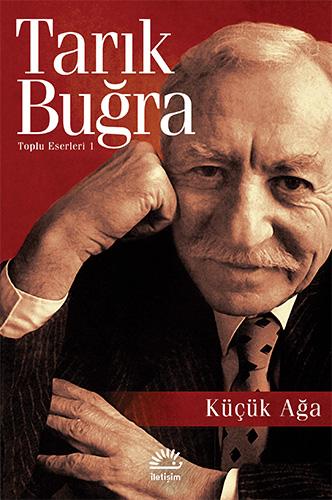
Little Lord
Küçük Ağa
Publisher(s) | İletişim Yayınları | ||||||||
|---|---|---|---|---|---|---|---|---|---|
Author(s) | Tarık Buğra | ||||||||
First Edition | 1963 | ||||||||
Tarık Buğra’s first novel, published in 1963 and titled Küçük Ağa, introduced a new dimension to the historical novel genre in Turkish literature by portraying the War of Independence not from a central perspective but from the viewpoint of a small town in Akşehir like Anatolia’s small region. Work illuminates the political and social dynamics of the era by reflecting the individual’s inner transformation in parallel with broader societal change.
The novel recounts the years of the National Struggle in the regions of Anatolia occupied following the First World War. It traces how Mehmet Reşit Efendi, a young religious figure sent from Istanbul Teacher to the town of Akşehir under Konya, gradually shifts from efforts to maintain loyalty to the Sultan to joining the ranks of the Kuvayımilliye. The novel functions both as a personal coming-of-age story and as an epic narrative of the people’s spontaneous yet heartfelt resistance against occupation and betrayal.
The protagonist of the novel, Mehmet Reşit Efendi, is known throughout the narrative as the “Istanbul Hoca.” Beginning his journey as a supporter of the Caliphate and the Sultanate, he undergoes a profound intellectual and spiritual transformation due to the realities he witnesses and the hardships endured by the people. Adopting the name “Küçük Ağa,” he joins the Kuvayımilliye. This transformation can be interpreted not merely as a political shift but also as an internal process of “maturation” within the character’s psyche.
Küçük Ağa is a work in Turkish fiction that foregrounds the human dimensions of historical events. Tarık Buğra examines events and characters with remarkable objectivity, presenting his protagonists without idealization, including their flaws and contradictions. In this regard, the novel serves as a significant object of study across literary, historical, and sociology disciplines.
Tarık Buğra’s novel Küçük Ağa is not merely the story of a resistance but also the tale of a form of awakening, a process of self-examination. Blending historical events with personal fiction, the novel occupies a prominent place among the most important works in Turkish literature that depict the War of Independence.
Accessed November 26, 2025.
Buğra, Tarık. Küçük Ağa. İstanbul: İletişim Yayınları, 2019.
Gürbüz, Adem. "‘Küçük Ağa’ Romanının Tematik ve Yapı Bakımından İncelenmesi." *The Journal of Academic Social Science Studies* (2013): 839–858. https://jasstudies.com/?mod=makale_tr_ozet&makale_id=26422#
Yalçınova, Ömer. "Büyük Ağa Tarık Buğra’nın Küçük Ağa’sı." GZT Nihayet. Accessed March 26, 2025.

Little Lord
Küçük Ağa
Publisher(s) | İletişim Yayınları | ||||||||
|---|---|---|---|---|---|---|---|---|---|
Author(s) | Tarık Buğra | ||||||||
First Edition | 1963 | ||||||||
Subject and Content
Main Character and Transformation
Other Important Characters
Themes
Structural Features
Literary and Historical Significance