


This article was automatically translated from the original Turkish version.
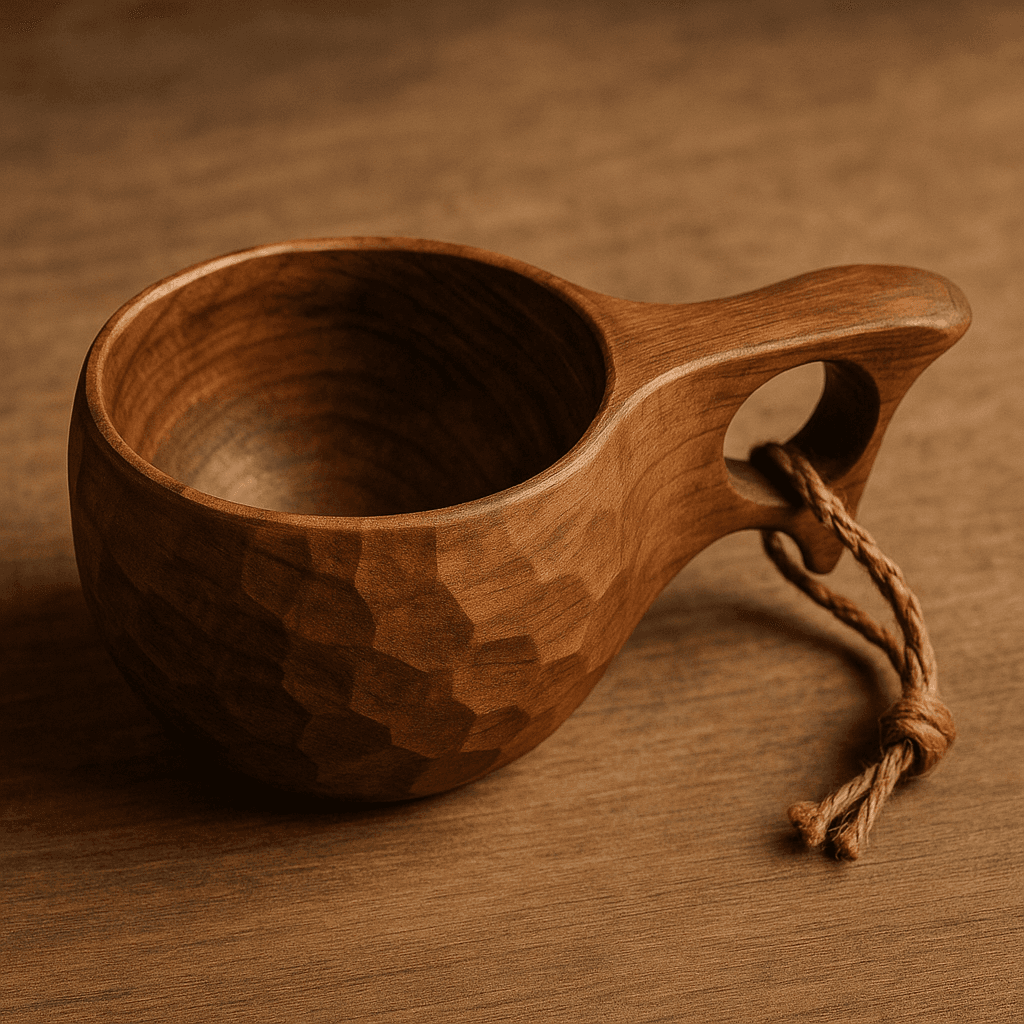
Kuksa
Usage Area | Hot/cold beverage consumption, Nature activities, Camping | ||||||||
|---|---|---|---|---|---|---|---|---|---|
Manufacturing Technique | Carving, Sanding, Processing with salt water and coffee, Coating with natural oils | ||||||||
Kuksa is a traditional Scandinavian drinking vessel, typically hand-carved from the knotted roots of birch trees. This cup, which preserves the natural wood grain, is especially common among communities living in close harmony with nature in Northern Europe, particularly in Finland. The production of kuksa relies on hand tools rather than modern machinery, and each kuksa has a unique appearance.
The kuksa emerged as part of the traditional lifestyle of the Sámi people. These indigenous communities, who lived in the Arctic region, developed durable tools and utensils from natural materials such as wood to align with their harmonious relationship with nature. For centuries, the kuksa has been used by shepherds, hunters, and wilderness dwellers in the North.
A kuksa is typically made from the knotted roots of birch trees, a part of the tree considered the strongest and most durable. The wooden piece is carefully cut, carved, and sanded using specific techniques. It is then treated with hot salt water and coffee to sterilize it and naturally stain its surface. Finally, it is coated with linseed oil or beeswax to make it waterproof.
The most notable feature of the kuksa is its ability to hold hot or cold beverages without burning the hand or cooling the drink, thanks to its natural insulating properties. This cup should never be washed with detergent; it should only be cleaned with water. Over time, the kuksa integrates with its user’s hand, developing a natural patina. This characteristic offers a deeply personal usage experience.
The kuksa is not merely a drinking vessel but also a symbol of Scandinavian culture. It remains widely used in nature-based activities such as camping, hiking, and bushcraft. With modernization, the kuksa has increasingly been chosen not only for traditional purposes but also for its aesthetic and nostalgic appeal. It is commonly given as a gift or kept as a collectible object.
“10 Things You Must Know About Handcrafted Wooden Kuksa Cup.” 194 Crafthouse. Accessed May 6, 2025. https://194crafthouse.com/blogs/inspiration/10-things-you-must-know-about-handcrafted-wooden-kuksa-cup.
“Kuksa Nedir?” *Kuksam*. Accessed May 6, 2025. https://www.kuksam.com/kuksa-nedir-pml6.
“Kuksa – Crafting the Traditional Wooden Cup.” *Finland Naturally*. Accessed May 6, 2025. https://finlandnaturally.com/finnish-culture-food-heritage/kuksa-crafting-the-traditional-wooden-cup/.
“Modernleşme Adımları: Kuksa Bardak.” Fırat Üniversitesi Gazetesi. Accessed May 6, 2025. https://gazete.firat.edu.tr/modernlesme-adimlari-kuksa-bardak.html.

Kuksa
Usage Area | Hot/cold beverage consumption, Nature activities, Camping | ||||||||
|---|---|---|---|---|---|---|---|---|---|
Manufacturing Technique | Carving, Sanding, Processing with salt water and coffee, Coating with natural oils | ||||||||
History and Origin
Manufacturing Process
Usage Characteristics
Cultural Significance and Modernization