

This article was automatically translated from the original Turkish version.
+2 More
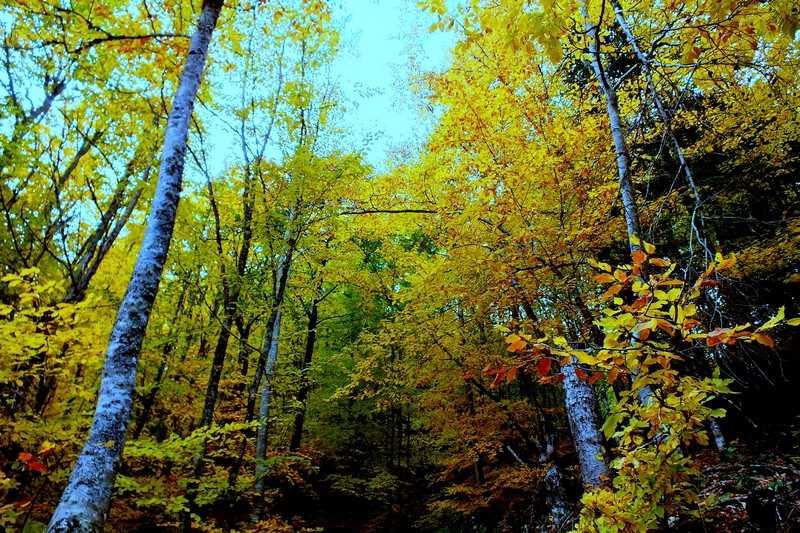
Küre Dağları Millî Parkı is located within the boundaries of Kastamonu and Bartın provinces in Türkiye. It was officially declared Türkiye’s 34th national park on 7 July 2000 through Publication No. 24268 in the Official Gazette. The national park covers an area of approximately 37,753 hectares, of which 27,000 hectares lie within Kastamonu and 10,753 hectares within Bartın. The surrounding buffer zone is defined as 134,366 hectares.

Küre Dağları Milli Parkı (Ministry of Agriculture and Forestry of Türkiye)
The Küre Mountains feature a steep and rugged terrain extending in an east-west direction along the Black Sea coast. The topography within the national park exhibits karstic characteristics and includes numerous valleys, canyons, caves, sinkholes and dolines. Among its highest points are Yaralıgöz Mountain at 1,998 metres and Göynük Mountain. Deep valleys and steep slopes are characteristic natural features of the region.

Küre Dağları Milli Parkı (Ministry of Culture and Tourism of Türkiye)
The region is dominated by the Black Sea climate, characterized by consistent rainfall throughout the year. Humidity levels are high near the coast, while transitional climate features become more pronounced toward inland areas. These climatic conditions support the development of extensive forest cover.
Küre Dağları Millî Parkı is one of the key centres of plant diversity in Europe and the Middle East. It is recognized as one of Europe’s 100 most biologically rich and most threatened forest hotspots. The park area exhibits great diversity in forest ecosystems.
Mixed forests in the region consist of species such as beech, fir, Turkish pine, oak, hornbeam, linden and chestnut. The area also provides habitat for endemic and endangered plant species.

Küre Dağları Millî Parkı (Ministry of Culture and Tourism of Türkiye)
Küre Dağları Millî Parkı is notable for its rich wildlife. The area supports a high diversity of mammals, birds, reptiles and invertebrates. Mammal species include the brown bear, wolf, lynx, wildcat, wild boar and roe deer. Various raptor and songbird species are also observed in the region.
The geological structure of the national park consists largely of limestone and dolomite. The region is described as one of Türkiye’s most developed karstic areas, with rich underground water systems and cave formations. Natural features such as Valla Canyon, Horma Canyon and Ilgarini Cave are prominent examples of this geology.

Küre Dağları Millî Parkı (Ministry of Agriculture and Forestry of Türkiye)
Küre Dağları Millî Parkı holds the national designation of “National Park” and is included in several international conservation programs. Recognized by WWF as a European Forest Hotspot, it is among the 100 priority areas identified under the Pan-European Biological and Landscape Diversity Strategy (PEBLDS). It is Türkiye’s first and only area to hold the Pan Parks certification, which was awarded in 2007; however, the Pan Parks network ceased operations in 2014.
There are no permanent settlements within the boundaries of the national park. However, numerous rural settlements exist in the surrounding buffer zone. The local population engages in livelihood activities such as forestry, animal husbandry, beekeeping, agriculture and the collection of non-timber forest products. Projects involving local community participation are implemented based on principles of sustainable use.
Küre Dağları Millî Parkı offers various opportunities for nature-based tourism. It provides suitable conditions for activities such as hiking, photography, birdwatching and camping. Natural attractions that draw visitors include Valla Canyon, Horma Canyon, Ilıca Waterfall and Ersizlerdere Nature Park.

Küre Dağları Millî Parkı (Ministry of Culture and Tourism of Türkiye)
The management of the national park is carried out by the General Directorate of Nature Conservation and National Parks under the Ministry of Agriculture and Forestry. Long-term management plans are implemented to ensure the protection of the park and the sustainable use of its resources. Management involves collaboration between central government authorities, local administrations, civil society organizations and the local population.
Accessed November 26, 2025.
Culture Portal. "Küre Dağları Milli Parkı." T.C.Kültür Portalı Turizm Bakanlığı. Accessed May 25, 2025. https://www.kulturportali.gov.tr/turkiye/kastamonu/gezilecekyer/kure-daglari-mll-parki.
Kastamonu Municipality. "Küre Dağları Milli Parkı." Kastamonu Belediyesi. Accessed May 25, 2025. https://www.kastamonu.bel.tr/kure-daglari-milli-parki/.
Ministry of Agriculture and Forestry of the Republic of Turkey. "Küre Dağları Milli Parkı." *Ministry of Agriculture and Forestry of the Republic of Turkey, 10th Regional Directorate.* Accessed May 25, 2025. https://bolge10.tarimorman.gov.tr/Menu/39/Kure-Daglari-Milli-Parki.
Ministry of Agriculture and Forestry of the Republic of Turkey. "Küre Dağları National Park Directorate." Ministry of Agriculture and Forestry of the Republic of Turkey, 10th Regional Directorate. Accessed May 25, 2025. https://bolge10.tarimorman.gov.tr/Menu/20/Kure-Daglari-Milli-Parki-Mudurlugu.
The provided content is an HTML snippet containing a transparent image tag with a citation URL. Since it contains no translatable Turkish text or structural citation elements (such as author names, titles, dates, or access phrases), and the instruction requires translating only Turkish bibliographic content while preserving URLs and non-text elements, no translation is needed.The output remains:

No Discussion Added Yet
Start discussion for "Küre Mountains National Park" article
Geographical Features
Climate
Vegetation and Biodiversity
Wildlife
Geological Structure and Karstic Formations
Conservation Status and International Significance
Settlement and Human Impact
Eco-tourism and Recreation
Management and Planning