

This article was automatically translated from the original Turkish version.
+1 More
Kurgan, etymologically derived from the Old Turkic root “korugan”, meaning “shelter” or “protection”, refers to a monumental burial structure. Found in steppe cultures, it is constructed from earth or stone mounds and typically associated with nobility or prominent individuals. Kurgans are notable for both their subterranean and above-ground architectural elements.
Documentary on Kurgans (TRT Avaz)
The kurgan tradition spread across the Eurasian steppes from the 4th millennium BCE, particularly in the Altai-Yenisei, Turkistan, Southern Siberia, Central Asia, the Caucasus and Eastern Europe. This tradition was adopted by the Scythians, Saka, Huns and Göktürks, among other early Turkic tribes. Archaeological evidence demonstrates that kurgans are among the oldest and most significant architectural elements of Turkic culture.
Kurgans generally consist of burial chambers constructed underground and covered with stone or earth. The subterranean section is designed to resemble the dwelling of the deceased. Consequently, the burial pit is lined with stone, wood or logs, and accompanied by everyday objects, weapons, food and drink, and sometimes animals. This reflects the belief that the deceased’s life would continue in the afterlife.
Kurgans can be classified according to their contents and construction purposes.
Kurgans are not merely graves but also sacred spaces. According to ancient Turkic belief, death is a transition to another world, and kurgans serve as the designated site for this passage. It is believed that the souls of the deceased embark on their journey to the afterlife through these structures. Objects within kurgans provide information about social status, economic conditions, religious beliefs and daily life.
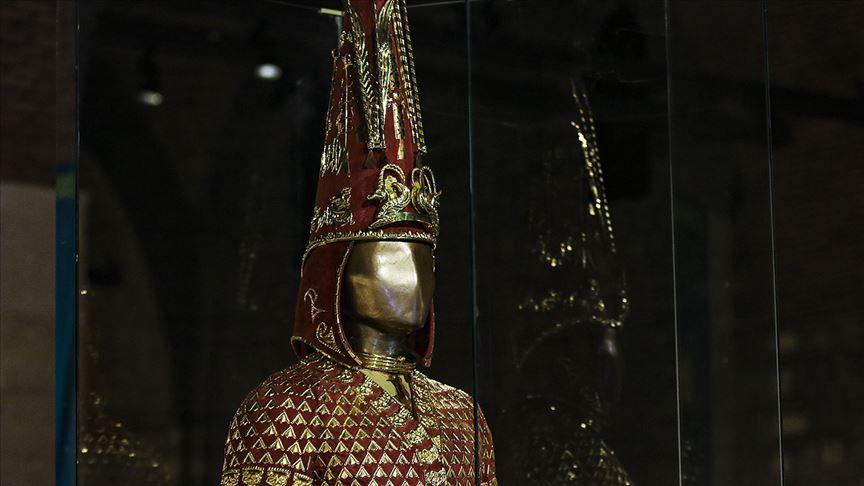
The "Man in the Golden Dress" (AA) Excavated from Esik Kurgan
Kurgans are structures that provide primary source data for archaeological and historical research. They contain material culture elements, social structures and belief systems. Furthermore, the kurgan tradition constitutes a multifaceted cultural heritage that must be examined in the context of Turkic architectural history, death rituals and mythology.
Anadolu Ajansı. "2500 yıllık Altın Elbiseli Adam Türkiye'de". Accessed June 20, 2025. https://www.aa.com.tr/tr/kultur-sanat/2500-yillik-altin-elbiseli-adam-turkiyede-/1583436
Arık, Murat. *Esik Kurganı, Buluntuları ve Kültür Tarihi Açısından Değerlendirilmesi*. Master's thesis,Gazi Üniversitesi Institute of Social Sciences, 2008. https://tez.yok.gov.tr/UlusalTezMerkezi/tezDetay.jsp?id=tZRJ-yQZa4pOIJh1eOaSuQ&no=P-jDIbuk3NsTvHuZOQLJuw
Azizsoy, Anar. “Transkafkasya Kurganlarından Bazı Buluntuların Sembolik İfadeleri.” *İnsan ve Toplum Bilimleri Araştırmaları Dergisi* 8, no. 1 (2019): 249–269. https://dergipark.org.tr/tr/download/article-file/668279
TRT Avaz YouTube Channel. "Taş Mektuplar (3. Bölüm - Kurganlar)." Accessed June 20, 2025. https://www.youtube.com/watch?v=fw-0hYcicKo
Toraman, Ali. “İslam Öncesi Türk Kültüründe ‘Anıt Kurgan’ Geleneği Üzerine Bazı Tetkikler.” *Hacettepe Üniversitesi Edebiyat Fakültesi Dergisi* 40, no. 2 (2023): 599–611. https://dergipark.org.tr/tr/download/article-file/2739962
Özfırat, Aynur. “Bozkurt Kurgan Mezarlığı Kazıları”. BELLETEN 73, no. 268 (December 2009): 635-44. https://dergipark.org.tr/tr/download/article-file/977366

Origin and Distribution
Architectural Features
Types
Cultural and Symbolic Meaning
Examples