

This article was automatically translated from the original Turkish version.
+1 More
Type of Geographical İndication | Origin Name | ||||||||
|---|---|---|---|---|---|---|---|---|---|
Registration Number | 690 | ||||||||
Registration Date | 10.03.2021 | ||||||||
Product / Product Group(s) | Other products | ||||||||
Province(s) | Bartın | ||||||||
Applicant/Registrant(s) | Bartın Chamber of Commerce and Industry | ||||||||
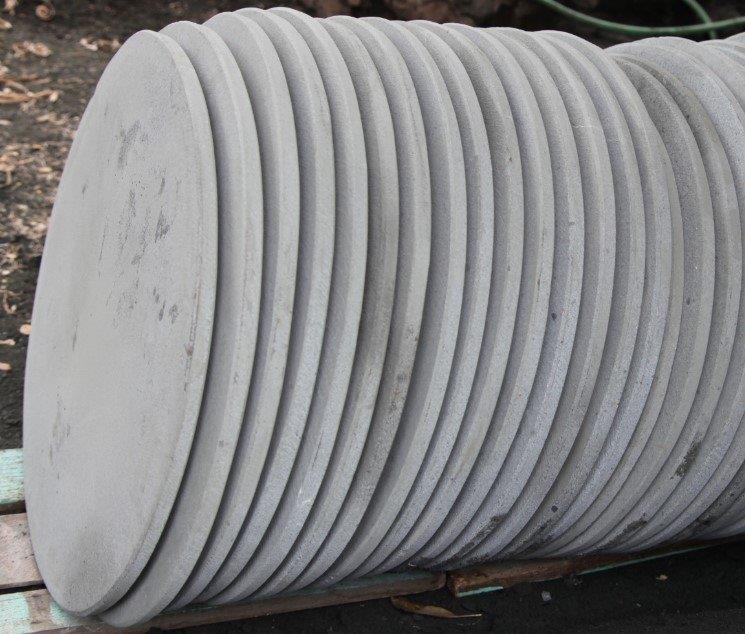
Kurucaşile Stone Slab is a stone product produced using traditional methods in the Kurucaşile district of Bartın Province, Türkiye, and is geographically registered. This product has been manufactured for over 150 years and is distinguished by its production technique and mineral composition. It has been officially registered as a geographical indication under Law No. 6769 on Industrial Property and was formally recorded on 10 March 2021 by the Bartın Chamber of Commerce and Industry.
Kurucaşile Stone Slab can legally be produced only within the boundaries of the Kurucaşile district of Bartın Province. The product, registered under number 690, is protected as a “geographical indication.” The label must bear the inscription “Kurucaşile Stone Slab” and the geographical indication emblem; if labeling is not feasible, this inscription must be visibly displayed at the production site.
Kurucaşile Stone Slab is obtained from natural stone masses with smoky, dark bluish or blackish tones. During the firing process, its color turns to yellowish hues and, upon cooling, it assumes a grayish appearance. Typically produced in circular tray shapes, these stone slabs are heat-resistant and used for cooking foods such as red and white meat, fish, börek, and gözleme.
Production is carried out using traditional techniques and involves the following steps:
The mineralogical properties of the stone used to produce Kurucaşile Stone Slab have been defined at both macroscopic and microscopic levels:
This composition constitutes the fundamental factors determining the stone’s physical durability and cooking performance.
The production and labeling of the product are monitored by a control authority established under the coordination of the Bartın Chamber of Commerce and Industry. This authority comprises the Bartın Municipality, the Bartın Provincial Directorate of Culture and Tourism, and relevant experts. Inspections are conducted at least once annually; additional inspections may be carried out as needed or in response to complaints. The inspection process includes verification of compliance with production methods, confirmation of the origin of the rock mass, and proper use of the geographical indication emblem.
Turk Patent and Trademark Office. "Kurucaşile Taş Sac." *Geographical Indications Portal.* Accessed October 19, 2025. https://ci.turkpatent.gov.tr/cografi-isaretler/detay/2462.
Turk Patent and Trademark Office. *Kurucaşile Taş Sac Coğrafi İşaret Sicil Belgesi*. Turk Patent and Trademark Office. Accessed October 19, 2025. https://ci.turkpatent.gov.tr/Files/GeographicalSigns/3d900a1d-f1e4-4455-8211-9c113b122da0.pdf.

Type of Geographical İndication | Origin Name | ||||||||
|---|---|---|---|---|---|---|---|---|---|
Registration Number | 690 | ||||||||
Registration Date | 10.03.2021 | ||||||||
Product / Product Group(s) | Other products | ||||||||
Province(s) | Bartın | ||||||||
Applicant/Registrant(s) | Bartın Chamber of Commerce and Industry | ||||||||
No Discussion Added Yet
Start discussion for "Kurucaşile Stone Sheet" article
Geographical Boundary and Registration Information
Product Definition and Usage
Production Process
Mineral Composition
Monitoring Mechanism